Take control of end of fiscal year with Xero
Every year, you prepare end-of-year accounts and financial reports to file taxes with the IRS. But it’s also a great chance to look back on how your business performed and plan for the accounting year ahead.
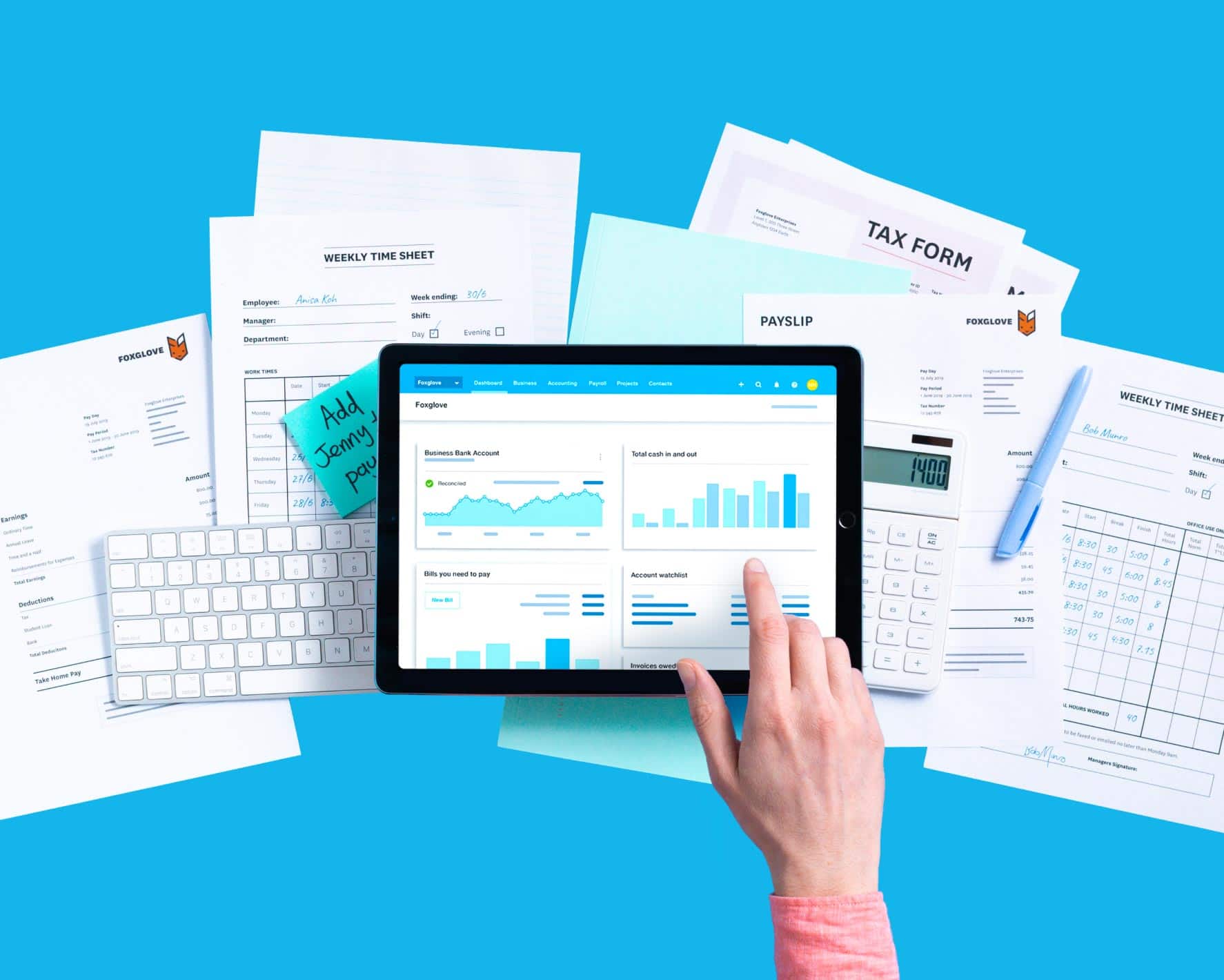
Everything in one place. Up to 30% less than QuickBooks.*
Prepare for your fiscal year end
A fiscal year for a business can be any 12-month period that ends on the last day of a month. Many businesses use the calendar year for their fiscal year start and end, from January 1 to December 31. At the end of the fiscal year, businesses close their books and prepare financial statements.

Keep accurate financial records all year
Use accounting software to capture transactions straight from your bank account to stay organized.
Get clear on the expense you can claim
Not all expenses are deductible. Learn what eligible business tax deductions are, or seek advice if unsure.
Produce end of financial year statements
These include income statement, balance sheet, cash flow statement and statement of owner’s equity.
Review and plan for the year ahead
Year-end financial reports summarize your business performance, giving you insights to refine your strategy.
Xero can help at the end of fiscal year
Make your fiscal year end the start of something better. Xero helps you pull the numbers together, streamline year-end accounting, and prepare accurate financial statements. Xero gives you the tools to manage your finances before, during, and after fiscal year end.
Automated data capture and bank reconciliation
Connect your bank account to keep your books up to date throughout the fiscal year, so you’re ready to file taxes with confidence.
Customizable financial reporting
Generate accurate and customizable financial reports in just a few clicks, making fiscal year reporting fast and easy.
Online collaboration with accountants and tax advisors
Share financial data with your accountant or advisor to streamline year-end reviews and prepare accurate info for IRS tax requirements.

What to keep in mind at fiscal year end
Filing business taxes is more than just submitting a return. It’s important to know which deadlines apply to you, what tax forms you’ll need, and what financial information to have ready. Getting organized early can make tax time less stressful and help you file with confidence.
Be aware of filing deadlines after fiscal year end
Your tax return is usually due on the 15th day of the third or fourth month after your fiscal year ends. For most, this is April 15.
Know which forms apply to your business
Tax forms vary by business type. Sole proprietors use Schedule C, while partnerships and corporations file separate business returns.
Review employee and contractor tax obligations
If you have employees or contractors, plan ahead for W-2 and 1099 deadlines. These are usually due to recipients and the IRS by January 31.

Get support from an accountant or bookkeeper
Nothing beats advice from an expert. Accountants, bookkeepers and tax professionals can help get you from the end of one fiscal year to the start of the next – dealing with all the tricky stuff in between. An accounting professional can help you:
Finalize financial statements
They can prepare or review income statements, balance sheets, and cash flow statements so they’re ready for tax reporting.
Calculate and claim depreciation expenses
An accountant can help ensure assets are depreciated correctly and allowable deductions are claimed under IRS rules.
Plan for taxes in the new fiscal year
Advisors can help with tax planning strategies that may reduce future tax liability or improve cash flow in the year ahead.

End of fiscal year jargon buster
Complicated jargon doesn’t help the stress of fiscal year end. Here are a few explanations to get you started.
Accounting period
An accounting period is any timeframe that’s used for reporting on your finances. They can be monthly, quarterly or yearly.
Accounting period full definitionIncome tax
You pay income tax on your earnings, as an individual and a business. For a business, earnings are your profit.
Income tax full definitionTax deduction
A tax deduction is a business expense that can potentially lower the amount of tax you need to pay.
Tax deduction full definitionFinancial statements
Financial statements include your income statement, balance sheet, cash flow statement, and statement of owner’s equity.
Financial statement full definitionDepreciation
Depreciation is how businesses calculate the cost of wear and tear of physical assets, like machinery.
Depreciation full definitionExpense
An expense is payment made by a business. They are deducted from revenue to calculate profit.
Expense full definitionGross and net profit
Your income statement will show gross profit and net profit (always smaller than gross).
Learn how they differ
FAQs on end of fiscal year
Fiscal year end is the last day of a small business’s 12-month accounting period. At fiscal year end, a business closes its books, reviews income and expenses, prepares financial statements, and uses this information to file taxes.
Fiscal year end is the last day of a small business’s 12-month accounting period. At fiscal year end, a business closes its books, reviews income and expenses, prepares financial statements, and uses this information to file taxes.
Not always. A calendar year runs from January 1 to December 31 and is one type of fiscal year. In the US, a fiscal year can be any 12-month accounting period that ends on the last day of a month. Many businesses use the calendar year as their fiscal year.
Not always. A calendar year runs from January 1 to December 31 and is one type of fiscal year. In the US, a fiscal year can be any 12-month accounting period that ends on the last day of a month. Many businesses use the calendar year as their fiscal year.
US businesses can often set their own tax year, which means there’s not a single day where everyone files. However, businesses are typically required to file on the 15th day of the fourth month after their fiscal year ends. So if your business year was the calendar year, you’d close your books on December 31 and file on the 15th of April. That means businesses have 3.5 months to prepare their tax return.
Learn when to file from the IRSUS businesses can often set their own tax year, which means there’s not a single day where everyone files. However, businesses are typically required to file on the 15th day of the fourth month after their fiscal year ends. So if your business year was the calendar year, you’d close your books on December 31 and file on the 15th of April. That means businesses have 3.5 months to prepare their tax return.
Learn when to file from the IRSYour income tax return needs to show the federal government how much profit your business earned in the accounting year, plus any business expenses you can claim as deductions such as business office supplies and promotional materials.
Your income tax return needs to show the federal government how much profit your business earned in the accounting year, plus any business expenses you can claim as deductions such as business office supplies and promotional materials.
Yes, you need to retain copies of your financial transactions, including receipts and invoices. These may be required in the case of an audit. You’re expected to keep records for at least three years but sometimes longer, so check with IRS. That’s another reason why digital records are handy. The documents are perfectly preserved and take up no space.
See how using Hubdoc can make this simpleYes, you need to retain copies of your financial transactions, including receipts and invoices. These may be required in the case of an audit. You’re expected to keep records for at least three years but sometimes longer, so check with IRS. That’s another reason why digital records are handy. The documents are perfectly preserved and take up no space.
See how using Hubdoc can make this simpleGood news. You don’t need to do a formal year end close or roll-up journal in Xero. But it’s important to follow a simple process to check the accounts are up-to-date before the end of the fiscal year.
See how to do a year end in XeroGood news. You don’t need to do a formal year end close or roll-up journal in Xero. But it’s important to follow a simple process to check the accounts are up-to-date before the end of the fiscal year.
See how to do a year end in XeroXero's 1099 report contains forms for 1099-NEC and 1099-MISC. The 1099-NEC form is for reporting payments you’ve made to non-employees such as freelancers and contractors. The 1099-MISC form is for reporting miscellaneous income such as rent or royalties.
Learn more about 1099 in XeroXero's 1099 report contains forms for 1099-NEC and 1099-MISC. The 1099-NEC form is for reporting payments you’ve made to non-employees such as freelancers and contractors. The 1099-MISC form is for reporting miscellaneous income such as rent or royalties.
Learn more about 1099 in Xero
Prepare for EOFY with Xero
Xero has all the features you need to manage the end of the fiscal year effortlessly.
Simple bank reconciliation
Keep track of your cash flow with daily bank reconciliation. Save time and stay current on your business.
Up-to-date accounting reports
Track your finances with accurate accounting reports and collaborate with your advisor online in real time.
Instant data capture
Automate tasks like entering bills and receipts. Take a photo of receipts or scan bills into Xero via Hubdoc.
Pay your bills at no extra cost
Free standard ACH bill payments are now included in Xero business plans.*
Early
for the first 3 months
Then $27 per month
An easy financial foundation - track cash flow with the essentials.
- Send quotes and 20 invoices†
- Accept online invoice payments^
- 5 bills
- Reconcile bank transactions
- Smart Document Capture
- View real-time reports
- W-9 + 1099 management
- Sales tax
- Visualize performance with basic graphs
- 30 day cash flow forecast
- Make online bill payments (Domestic - Free ACH)
- Make online bill payments (Cross Border)

Growing
for the first 3 months
Then $59 per month
Go beyond the basics - automate tasks and access performance dashboards.
- Send invoices and quotes
- Accept online invoice payments^
- Automate bill entry and track bills
- Reconcile bank transactions
- Smart Document Capture
- View real-time reports
- W-9 + 1099 management
- Sales tax
- Visualize performance with graphs
- 60 day cash flow forecast
- Make online bill payments (Domestic - Free ACH)
- Make online bill payments (Cross Border)
- Customize performance dashboards
- Tailored financial health scorecards
- Budget with smart suggestions
- Auto-reconcile transactions
Forecast with clarity
Forecast with clarity
Established
for the first 3 months
Then $97 per month
Future proof your scaling business - with advanced tools and analytics.
- Send invoices and quotes
- Accept online invoice payments^
- Automate bill entry and track bills
- Reconcile bank transactions
- Smart Document Capture
- View real-time reports
- W-9 + 1099 management
- Sales tax
- Visualize performance with graphs
- 180 day cash flow forecast
- Make online bill payments (Domestic - Free ACH)
- Make online bill payments (Cross Border)
- Customize performance dashboards
- Tailored financial health scorecards
- Analyze KPIs and ratios
- Use multiple currencies
- Track time and costs for projects
- Employee expense and mileage claims
- Benchmark against the industry
- Make online bill payments (International)
- Budget with smart suggestions
- Auto-reconcile transactions
*Fees apply for other payment methods.
*Based on published list prices for software subscription only. Excludes payroll and add-ons.