How crowdfunding works
Learn how crowdfunding works, the different models, and how to launch a successful campaign for your small business.
Published Monday 11 May 2026
Table of contents
Key takeaways
- Crowdfunding lets you raise money from a large number of people through an online platform, giving your business access to capital without traditional bank loans
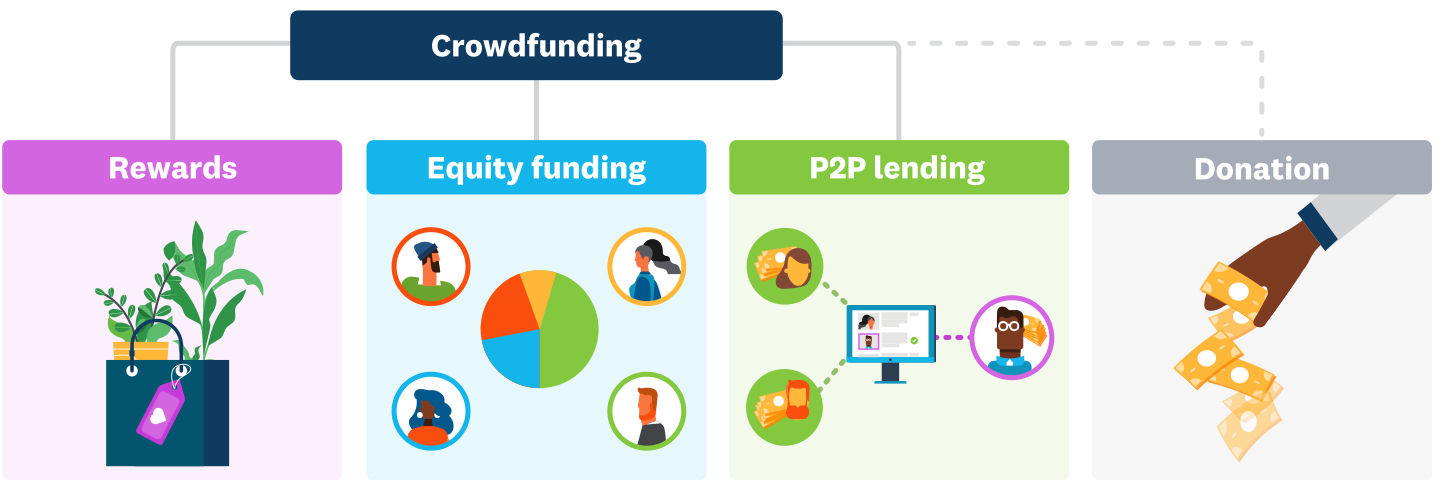
- The four main types of crowdfunding are rewards-based, equity, debt, and donation-based, each with different structures, risks, and regulatory requirements in the UK
- A successful campaign takes careful planning, from choosing the right model and platform to building a compelling page and promoting it to your audience
- Tracking crowdfunding income and expenses from day one helps you stay on top of your finances and meet any reporting obligations
What is crowdfunding?
Crowdfunding is a way to raise money by collecting small contributions from a large number of people, typically through an online platform. It connects three parties: the project creator seeking funds, the backers who contribute money, and the platform that hosts the campaign.
In the UK, crowdfunding has become a popular route for startups and small businesses looking for alternatives to traditional bank lending. Platforms like Crowdcube and Kickstarter make it possible to pitch your idea directly to potential supporters. In return, backers might receive a product, a share of your business, interest on a loan, or simply the satisfaction of supporting a cause they believe in.
The model works well for businesses at different stages. Whether you're launching a new product, expanding an existing operation, or testing demand for an idea, crowdfunding can open doors that other types of finance might not.
Types of crowdfunding
There are four main crowdfunding models, each suited to different goals and business stages. The right choice depends on what you're raising money for and what you're prepared to offer in return.
Rewards-based crowdfunding
With rewards-based crowdfunding, backers contribute money in exchange for a product, service, or perk. This is the model most people picture when they think of crowdfunding. You might offer early access to a product, a limited-edition version, or a discount on the final retail price.
This approach suits businesses launching a new product or creative project. It doubles as a marketing tool because you're building an audience while raising funds. Platforms like Kickstarter and Indiegogo are the most well-known options for this model.
Equity crowdfunding
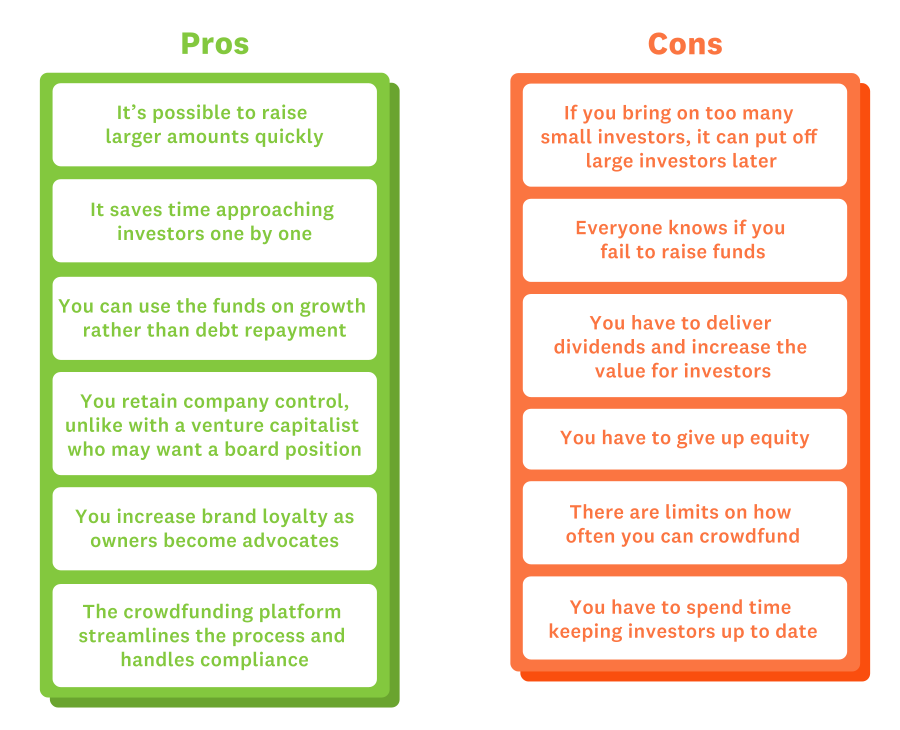
Equity crowdfunding lets you raise capital by selling shares in your business to multiple investors. Backers become part-owners and share in your company's future success or failure. This model is regulated by the Financial Conduct Authority (FCA) in the UK, so you'll need to meet specific compliance requirements.
Crowdcube is the UK's leading equity crowdfunding platform, having acquired its competitor Seedrs in 2023. Since January 2026, the UK's Public Offers of Securities (POS) regime has replaced the previous prospectus rules, changing how businesses can promote equity offers to the public. If you're considering this route, it's worth seeking legal advice to understand your obligations.
Equity crowdfunding suits businesses with strong growth potential that are comfortable sharing ownership. You can explore more about how to find investors for your business alongside this option.
Debt crowdfunding (peer-to-peer lending)
Debt crowdfunding, also called peer-to-peer lending, works like a loan. You borrow money from multiple individual lenders through a platform and repay it with interest over an agreed period. The platform matches borrowers with lenders and handles the administration.
This model suits established businesses with steady revenue that can demonstrate an ability to repay. Interest rates vary depending on your credit profile and the platform. Funding Circle is one of the best-known peer-to-peer lending platforms in the UK.
Donation-based crowdfunding
Donation-based crowdfunding involves raising money without offering anything in return. Backers donate because they support your cause or mission. This model is most common for charities, community projects, and social enterprises.
JustGiving and GoFundMe are popular platforms for donation-based campaigns in the UK. While this model isn't typical for commercial businesses, it can work well if your project has a strong social or community angle.
Benefits of crowdfunding for small businesses
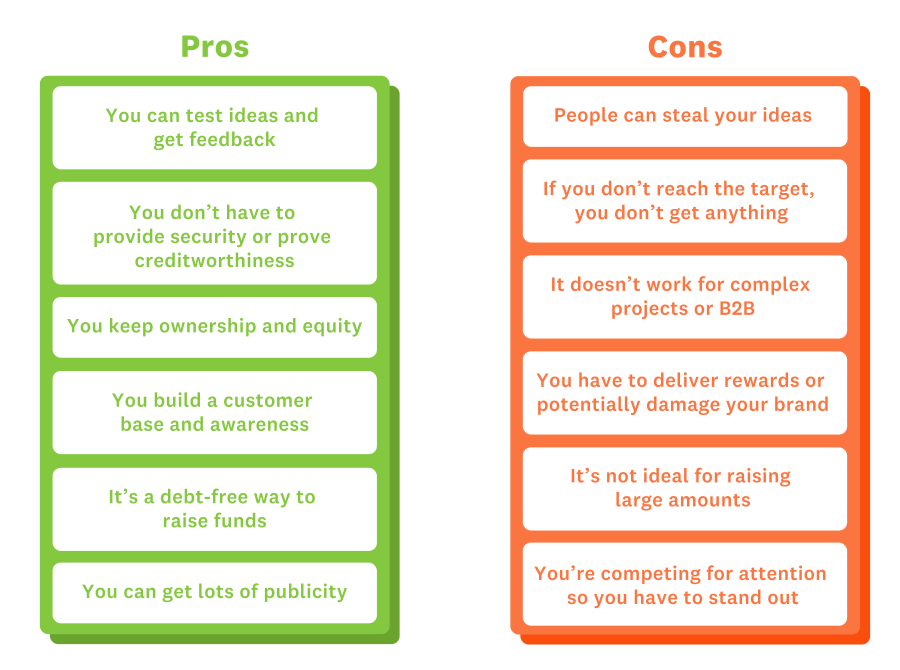
Crowdfunding offers several advantages beyond simply raising money. Here are some of the key benefits for small businesses in the UK.
- Market validation: a successful campaign proves that people are willing to pay for your product or idea before you invest heavily in production
- No debt with rewards-based models: unlike a loan, rewards-based crowdfunding doesn't require repayment, so you keep full ownership and avoid interest charges
- Built-in customer base: backers become early customers and advocates who are invested in your success
- Brand awareness: a well-promoted campaign puts your business in front of thousands of potential customers, even if they don't all contribute
- Alternative to banks: crowdfunding provides access to capital when traditional lenders might say no, making it a useful option alongside other ways to finance your business
Risks and challenges of crowdfunding
Crowdfunding isn't without its drawbacks. Before launching a campaign, consider these potential challenges.
- Platform fees: most platforms charge a percentage of the funds raised, typically between 3% and 10%, plus payment processing fees
- Intellectual property exposure: sharing your idea publicly before it's fully developed could make it easier for competitors to copy
- Campaign failure: many campaigns don't reach their target, and some platforms operate on an all-or-nothing basis, meaning you receive nothing if you fall short
- Time investment: creating a compelling campaign page, producing a video, and promoting your project takes significant effort over several weeks or months
- Regulatory requirements: equity and debt crowdfunding in the UK are regulated by the FCA, which means additional compliance obligations and costs
How to start a crowdfunding campaign
Launching a crowdfunding campaign takes planning and preparation. Follow these five steps to give your campaign the best chance of success.
1. Choose the right crowdfunding model
Start by deciding which type of crowdfunding suits your business. Think about what you can offer backers and how much control you're willing to share. If you're launching a product, rewards-based crowdfunding is often the most straightforward option. If you're looking for larger investment and you're comfortable sharing equity, equity crowdfunding could be a better fit.
Consider your business stage too. Early-stage businesses with a compelling idea may do well with rewards-based models. More established businesses with a track record may find it easier to attract peer-to-peer lenders.
2. Pick a platform
Choose a platform that matches your crowdfunding model and target audience. Each platform has its own fee structure, audience, and rules. Crowdcube is strong for equity campaigns. Kickstarter and Indiegogo are popular for rewards-based projects. Funding Circle specialises in peer-to-peer business lending. JustGiving is a go-to for donation-based fundraising.
Compare the fees, success rates, and audience size of each platform. Some platforms are all-or-nothing, meaning you only receive funds if you hit your target. Others let you keep whatever you raise.
3. Build your campaign page
Your campaign page is where you'll make your pitch. It needs to clearly explain what your business does, why you need funding, and what backers will receive in return. Use plain language and keep your message focused.
Include a short video if possible, as campaigns with videos tend to perform better. Break your funding goal into clear milestones so backers can see how their money will be used. Add high-quality images of your product or team to build trust.
4. Promote your campaign
A great campaign page won't succeed without promotion. Start building buzz before your campaign goes live. Reach out to your existing network through email, social media, and word of mouth. Getting early momentum is critical because platforms tend to feature campaigns that gain traction quickly.
Consider reaching out to journalists, bloggers, and industry influencers who cover your sector. A mention in the right publication can drive a surge of backers. Plan your promotional activity across the full campaign period, not just the launch.
5. Manage funds and deliver on promises
Once your campaign succeeds, the real work begins. You'll need to fulfil your commitments to backers, whether that's shipping products, issuing shares, or providing updates. Set up a system to track incoming funds and outgoing expenses from day one.
Keep your backers informed with regular updates. Transparency builds trust and can turn one-time supporters into long-term customers. If delays happen, communicate them early and honestly.
Popular crowdfunding platforms in the UK
The UK has a strong crowdfunding market with platforms catering to different models and industries. Here are some of the most established options.
- Crowdcube: the UK's largest equity crowdfunding platform, now incorporating Seedrs following the 2023 acquisition. Suited to startups and growth-stage businesses seeking investment from a broad pool of backers
- Kickstarter: a global rewards-based platform with a strong UK presence. Best for creative projects, tech products, and consumer goods. Operates on an all-or-nothing funding model
- Indiegogo: another rewards-based platform that offers both fixed and flexible funding options. A good choice if you'd prefer to keep funds even if you don't hit your full target
- Funding Circle: a peer-to-peer lending platform focused on small business loans in the UK. Suited to established businesses that can demonstrate revenue and creditworthiness
- JustGiving: a donation-based platform widely used across the UK for charitable and community causes. Useful if your project has a social mission
Is crowdfunding right for your business?
Crowdfunding can be a powerful funding tool, but it's not the right fit for every business. Ask yourself these questions before you commit.
- Do you have a product, service, or idea that you can explain clearly and compellingly to a wide audience?
- Are you prepared to invest several weeks into planning, building, and promoting a campaign?
- Can you deliver on your promises to backers within a realistic timeframe?
- Are you comfortable sharing your idea publicly before it's fully launched?
- If choosing equity crowdfunding, are you willing to share ownership of your business?
If you answered yes to most of these, crowdfunding could be a strong option. You might also want to explore small business grants as a complementary funding source that doesn't require repayment or giving up equity.
Manage your crowdfunding finances with Xero
Raising money through crowdfunding is just the first step. Managing those funds effectively is what turns a successful campaign into a successful business. With Xero, you can track your crowdfunding income, monitor expenses, and keep your books up to date in real time.
Xero's bank reconciliation features make it straightforward to match crowdfunding deposits with your records. You can set up tracking categories to separate crowdfunding income from other revenue streams. This gives you a clear view of how campaign funds are being spent.
If you've chosen equity or debt crowdfunding, you'll also need to stay on top of reporting obligations. Xero's financial reports can help you generate the information your investors or lenders need. Ready to take control of your finances? Get one month free and see how Xero can support your business from campaign to growth.
FAQs on crowdfunding
Here are some frequently asked questions about crowdfunding.
Do you have to pay back crowdfunding?
It depends on the model. Rewards-based and donation-based crowdfunding don't require repayment. Debt crowdfunding (peer-to-peer lending) does require repayment with interest. Equity crowdfunding doesn't involve repayment, but you give up a share of your business in exchange for investment.
How much does crowdfunding cost?
Most platforms charge between 3% and 10% of the total funds raised. You'll also pay payment processing fees, typically around 2% to 3%. Factor in the cost of creating your campaign page, producing video content, and any marketing spend on top of these fees.
Is crowdfunding regulated in the UK?
Equity and debt crowdfunding are regulated by the FCA. Platforms offering these models must be FCA-authorised, and there are rules around how investments can be promoted to the public. Rewards-based and donation-based crowdfunding are not subject to the same level of regulation, though consumer protection laws still apply.
How long does a crowdfunding campaign take?
Most campaigns run for 30 to 60 days on the platform itself. However, you should allow at least four to six weeks of preparation time before launch for building your campaign page, creating content, and building your audience. The full process from planning to completion typically takes three to four months.
What happens if a crowdfunding campaign fails?
On all-or-nothing platforms like Kickstarter, you don't receive any funds if you don't meet your target. On flexible funding platforms like Indiegogo, you keep whatever you've raised minus fees. A failed campaign doesn't create any debt, but you'll have invested time and resources without a financial return. Many business owners learn from the experience and relaunch with a stronger strategy.
Disclaimer
Xero does not provide accounting, tax, business or legal advice. This guide has been provided for information purposes only. You should consult your own professional advisors for advice directly relating to your business or before taking action in relation to any of the content provided.
How to finance your business in the UK
Need finance for your business? Learn about the types of finance, approaching lenders and investors and more.
- What is business finance?
Learn how business finance works and find the right funding for your small business.
- How much business funding do you need?
Knowing how much money you need will help you choose the right type of finance. These tips will help you find a number.
- Debt versus equity finance
Most forms of funding fall into one of two camps. Let’s look at the main pros and cons of debt versus equity.
- Main types of finance
It takes money to make money. So what sort of finance options are there? Here are the types that fund most businesses.
- How to get a business loan
Find the right business loan and put together a strong application with this step-by-step guide.
- Peer-to-peer lending
Learn how P2P lending works for UK businesses, what the risks are, and how to apply.
- Friends and family loans
Learn how to borrow from friends and family for your business, with tips on agreements, tax, and relationships.
- Invoice financing
Turn unpaid invoices into working capital. Learn how invoice financing works and which type suits your business.
- How to find investors
Find the right investors for your business with this guide to funding types, where to look, and how to prepare.
- Angel investors versus venture capitalists
Angel investors and venture capitalists are alternative finance sources. What can they offer your business?
- How crowdfunding works
Learn how crowdfunding works, the different models, and how to launch a successful campaign for your small business.
- Small business grants
Find UK small business grants, check eligibility, and apply with confidence.
- Pitching for business funding
Learn how to pitch your business to investors and lenders with practical, step-by-step guidance.
Download the guide to financing your business
Your intro to the different types of finance, including their pros and cons. Fill out the form to receive our finance guide as a PDF.
Now that you have your guide
Managing finances can feel overwhelming. With Xero’s powerful tools, small businesses can stay organised and confident.