Small business grants in the UK: how to find and apply for funding
Find UK small business grants, check eligibility, and apply with confidence.

Published Monday 11 May 2026
Table of contents
Key takeaways
- Small business grants provide funding you don't need to repay, but they're highly competitive and often come with spending conditions and reporting requirements.
- Grants are available from central government, local authorities, and organisations like Innovate UK, covering purposes from innovation and sustainability to job creation and digital adoption.
- Eligibility varies widely between programmes; you'll need to check each grant's criteria for business size, sector, location, and purpose before applying.
- Regional bodies such as Scottish Enterprise, Business Wales, and Invest Northern Ireland offer location-specific grants, so start your search with your local authority or growth hub.
- A strong application ties your project directly to the funder's objectives, includes clear financial projections, and demonstrates measurable impact.
- If grants aren't the right fit, alternatives like government-backed loans, crowdfunding, and invoice financing can also support your growth.
What is a small business grant?
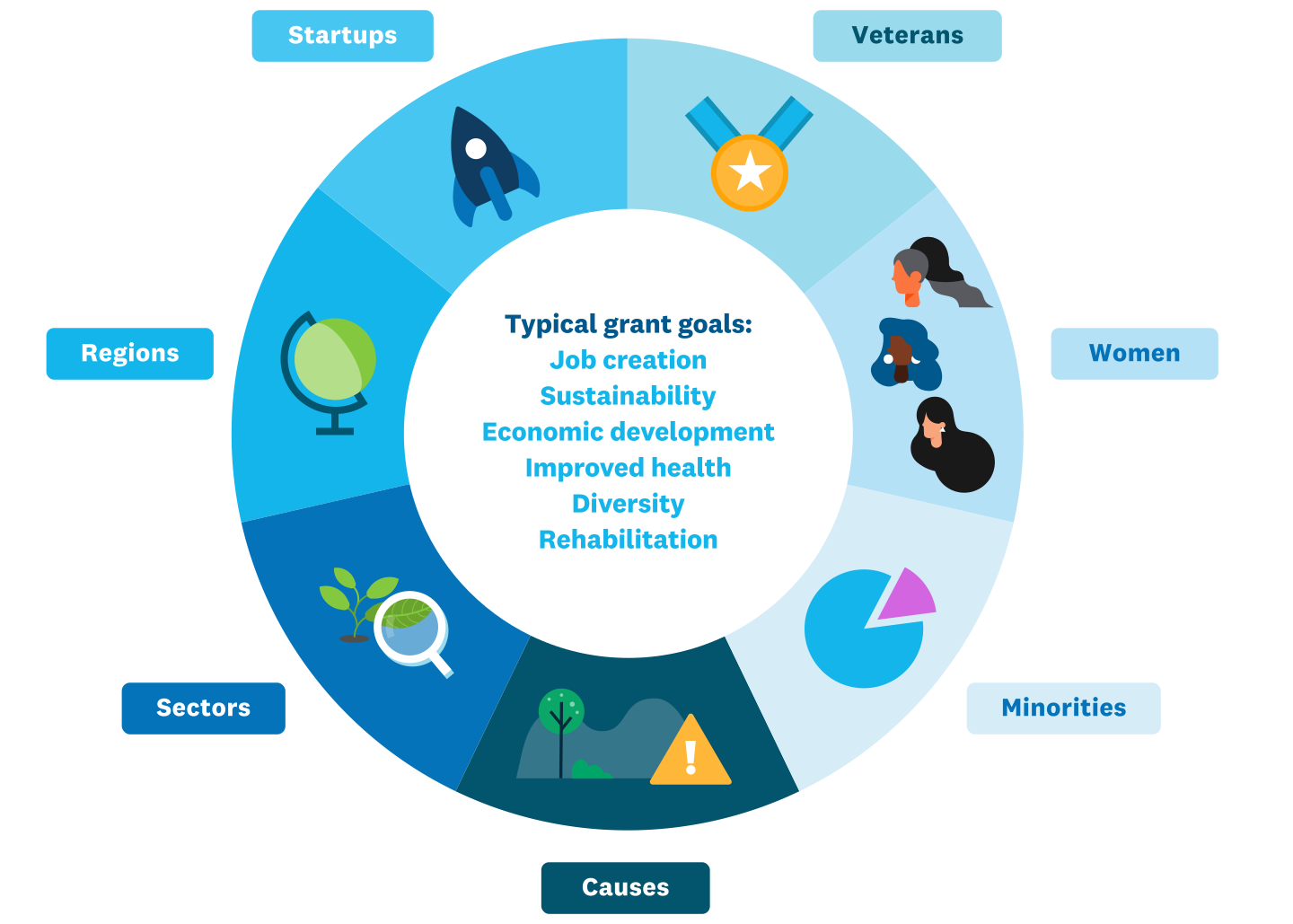
A small business grant is funding from a government body, corporation, or organisation that you don't need to repay. Unlike loans, grants are designed to support specific goals such as job creation, innovation, sustainability, or community benefit.
Grants typically cover a defined purpose rather than general business expenses. For example, you might receive a grant to develop a new product, invest in energy-efficient equipment, or hire and train staff in a particular area.
Because grants are essentially free money, competition is fierce. Most programmes receive far more applications than they can fund, so you'll need a strong case for why your business deserves support.
Types of small business grants in the UK
UK small business grants come in several forms, each suited to different needs. Understanding the types available helps you target the right opportunities for your business.
- Direct cash grants: lump-sum payments deposited into your business account for a specified purpose, such as purchasing equipment or funding a project
- Matched funding grants: the funder matches a portion of the money you invest yourself, typically at a ratio of 50:50 or 60:40
- Grants in kind: support provided as resources rather than cash, including free training, mentorship, workspace, or professional services
- Innovation and R&D grants: funding for developing new products, services, or processes, often administered through Innovate UK
- Green and sustainability grants: funding to help your business reduce its environmental impact, covering areas like energy efficiency, renewable energy, and low-carbon technology
- Tax relief schemes: not grants in the traditional sense, but they reduce what you owe, freeing up cash for growth; Employment Allowance is one example, reducing your employer National Insurance contributions
Who is eligible for a small business grant?
Eligibility criteria vary widely between grant programmes, so you'll need to check the requirements for each one individually. That said, most funders assess similar factors.
Common eligibility criteria include:
- Business size: many grants target micro-businesses (fewer than 10 employees) or SMEs (fewer than 250 employees)
- Sector: some grants focus on specific industries such as technology, manufacturing, creative industries, or social enterprise
- Location: regional grants often require your business to be registered or operating in a particular area
- Business stage: some programmes target startups, while others are only open to established businesses with a trading history
- Purpose of funding: you'll usually need to demonstrate how the grant will be spent and what outcomes it will deliver
- Match funding: some grants require you to contribute a percentage of the total project cost from your own resources
Before spending time on an application, check that your business meets all the stated criteria. Applying for grants you're not eligible for wastes your time and the funder's.
Where to find small business grants
Knowing where to look is half the challenge when searching for grants. These are the most reliable places to start your search.
- GOV.UK business finance support finder: the official government tool that lets you search for grants, loans, and other funding based on your business type, sector, and location
- Local enterprise partnerships and local authorities: your council or combined authority often administers regional grants funded by central government
- Innovate UK: the UK's innovation agency, which runs competitive grant programmes for businesses developing new products, services, or processes
- Industry and trade associations: sector-specific bodies often run grant programmes or can point you towards relevant funding
- Grant databases and directories: websites such as the Federation of Small Businesses and dedicated grant-finding platforms list current opportunities
- Accountants and business advisors: a good accountant or advisor can help you identify grants you might have missed and assess whether applying is worth your time
Small business grants by region
Grant availability varies across the UK, with each nation and region running its own funding programmes. Your location shapes which opportunities you can access.
England
In England, local growth hubs and combined authorities are the main route to regional grants. Many of these are funded through the UK Shared Prosperity Fund and distributed by local councils. Contact your local authority or growth hub to find out what's currently available in your area.
Scotland
Scottish Enterprise supports businesses across the Highlands and Lowlands with a range of grants and funding programmes. Business Gateway provides free advice and can help you navigate available funding, particularly if you're at an earlier stage.
Wales
Business Wales offers a central point for grant information and business support. The Development Bank of Wales also provides funding options, including grants and loans tailored to Welsh businesses.
Northern Ireland
Invest Northern Ireland runs a variety of grant programmes for businesses based in the region, covering areas from innovation and exports to skills development. Their website lists current opportunities and eligibility criteria.
Small business grants by sector
Certain sectors attract more grant funding than others, often because they align with government priorities. Here are the key sectors where grants are commonly available.
- Innovation and R&D: one of the largest areas for grant funding, particularly through Innovate UK, which supports businesses developing new or significantly improved products, services, and processes
- Green energy and sustainability: growing investment supports businesses transitioning to low-carbon operations, adopting renewable energy, or developing green technologies
- Digital and technology: grants help businesses adopt digital tools, improve cybersecurity, or develop software and digital products
- Export and international trade: funding supports businesses looking to enter new overseas markets or expand their international presence
- Creative industries: grants cover film, music, design, gaming, and other creative sectors, often through Arts Council England or sector-specific bodies
- Social enterprise: organisations that reinvest profits for social or environmental benefit can access dedicated grant programmes from both government and charitable foundations
How to apply for a small business grant
Applying for a grant takes preparation and attention to detail. Follow these steps to give your application the best chance of success.
- Research available grants and check eligibility. Use the GOV.UK business finance support finder and your local authority's website. Read the full eligibility criteria before committing time to an application.
- Prepare your business plan. Most funders want to see a clear business plan that outlines your goals, strategy, and how the grant fits in. If you don't have one, use a business plan template to get started.
- Gather financial information and forecasts. You'll typically need to provide recent accounts, cash flow forecasts, and a project budget showing how the grant money will be spent.
- Tailor your application to the funder's objectives. Every grant programme has stated aims. Show clearly how your project supports those aims and what measurable outcomes it will deliver.
- Submit and follow up. Double-check your application for errors and missing information before submitting. Keep a record of deadlines and follow up if you haven't heard back within the stated timeframe.
Grant writing tips for a successful application
A strong application does more than tick boxes. These practical tips can help you stand out from the competition.
- Align your proposal with the grant's stated objectives: funders want to see that your project directly supports their goals, so mirror their language and priorities in your application
- Use clear financial projections: show exactly how you'll spend the money and what return or impact the funder can expect
- Demonstrate measurable impact: include specific figures and targets, such as the number of jobs created, revenue growth expected, or carbon emissions reduced
- Get feedback on your application before submitting: ask a trusted advisor, accountant, or colleague to review your draft for clarity and completeness
- Allow plenty of time: grant applications can take weeks to prepare properly, so start early and don't rush the process
Advantages and disadvantages of business grants
Grants can be a valuable source of funding, but they're not the right fit for every business. Weigh the pros and cons before investing time in applications.
Advantages:
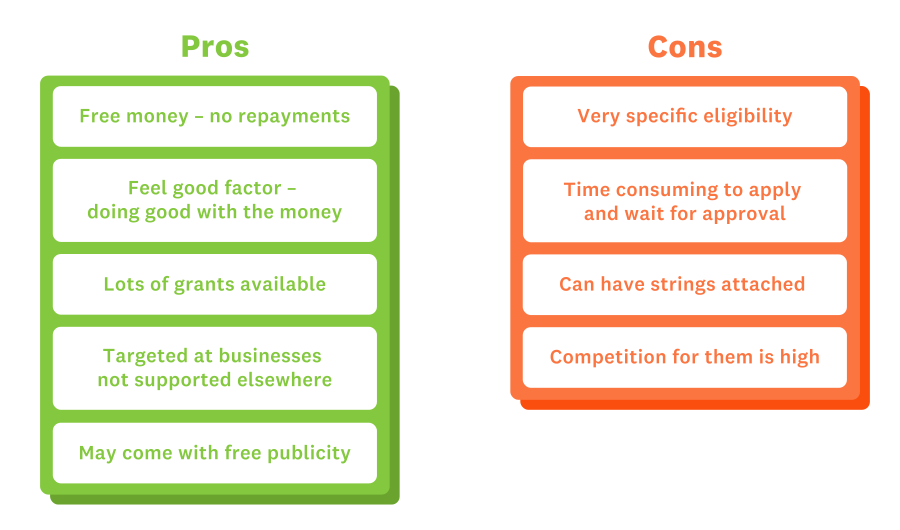
- No repayment required, unlike loans or other forms of debt finance
- Can fund growth and innovation without diluting your ownership
- Winning a grant adds credibility and can make it easier to attract further investment
- Provides a cash flow boost for specific projects without adding to your liabilities
Disadvantages:
- Highly competitive, with fewer than 10% of applicants succeeding for some programmes
- Restrictive spending conditions mean you must use the money exactly as agreed
- Applications are time-consuming and there's no guarantee of success
- Many grants require match funding, so you'll still need to invest your own money
- Reporting obligations mean you'll need to track spending and demonstrate outcomes to the funder
Alternatives to small business grants
If grants aren't available or suitable for your needs, several other funding options can help you grow. The Xero guide to financing your business covers these in more detail.
- Government-backed loans: schemes like Start Up Loans offer affordable borrowing with mentoring support, while the British Business Bank backs a range of lending programmes for SMEs
- Traditional bank loans: a straightforward option if you have a solid credit history and can provide security or a personal guarantee
- Crowdfunding: platforms let you raise money from a large number of people, either as donations, pre-orders, or equity investment
- Angel investors and venture capital: suitable if you're willing to give up a share of ownership in exchange for funding and expertise
- Invoice financing: release cash tied up in unpaid invoices, improving your cash flow without taking on traditional debt
- Friends and family loans: a common route for early-stage businesses, though it's important to put agreements in writing to protect relationships
Manage your grant funding with Xero
Once you've secured a grant, managing it properly is just as important as winning it. Xero's cloud accounting software helps you track grant spending against your budget, manage cash flow in real time, and generate the reports funders need to see. With everything in one place, you can stay on top of your obligations and focus on delivering the outcomes your grant was awarded for.
FAQs on small business grants
Here are answers to frequently asked questions about small business grants.
Are small business grants taxable?
Yes, most small business grants are taxable. You'll need to declare grant income on your tax return, and it will typically count as business income for Corporation Tax or Self Assessment purposes. Check with your accountant for advice specific to your situation.
What is the difference between a grant and a loan?
A grant is funding you don't need to repay, while a loan must be repaid with interest over an agreed period. Grants usually come with spending conditions that restrict how you use the money, whereas loans give you more flexibility once approved.
How much can you get from a small business grant?
Grant amounts vary hugely, from a few hundred pounds to hundreds of thousands. Most small business grants are under £10,000, though R&D and innovation grants from Innovate UK can reach £2 million or more for larger projects.
Are there grants for startup businesses?
Yes, grants are available for startups, but they won't fund your entire business. Startup grants typically cover specific costs like training, equipment, professional advice, or R&D. You'll still need other sources of funding to cover your broader operating costs.
Should I hire a grant bid writer?
For large, complex applications, a professional bid writer can improve your chances. Weigh the cost against the grant value and consider whether you have the time and expertise to write a business plan and application yourself.
Disclaimer
Xero does not provide accounting, tax, business or legal advice. This guide has been provided for information purposes only. You should consult your own professional advisors for advice directly relating to your business or before taking action in relation to any of the content provided.
How to finance your business in the UK
Need finance for your business? Learn about the types of finance, approaching lenders and investors and more.
- What is business finance?
Your new business idea is ready to go. Now you need to find the right small business funding. But where do you start?
- How much business funding do you need?
Knowing how much money you need will help you choose the right type of finance. These tips will help you find a number.
- Debt versus equity finance
Most forms of funding fall into one of two camps. Let’s look at the main pros and cons of debt versus equity.
- Main types of finance
It takes money to make money. So what sort of finance options are there? Here are the types that fund most businesses.
- How to get a business loan
Getting a business loan is still one of the most common ways to finance a business. So let’s look at how to get one.
- Peer-to-peer lending
Peer-to-peer lending is an alternative method of getting a business loan. How does it work?
- Friends and family loans
Friends and family loans may be available when other types of finance aren’t, but they do require some precautions.
- Invoice financing
Ever thought your cash flow would be better if everyone just paid what they owed you? Well, you may not have to wait.
- How to find investors
How do you find investors for equity financing? Let’s look at what types there are and where to locate them.
- Angel investors versus venture capitalists
Angel investors and venture capitalists are alternative finance sources. What can they offer your business?
- How crowdfunding works
Crowdfunding can get you money to build a business, and the attention to build a customer base.
- Small business grants
Find UK small business grants, check eligibility, and apply with confidence.
- Pitching for business funding
Learn how to pitch your business to investors and lenders with practical, step-by-step guidance.
Download the guide to financing your business
Your intro to the different types of finance, including their pros and cons. Fill out the form to receive our finance guide as a PDF.
Now that you have your guide
Managing finances can feel overwhelming. With Xero’s powerful tools, small businesses can stay organised and confident.