How to get a business loan in the UK
Find the right business loan and put together a strong application with this step-by-step guide.

Published Monday 11 May 2026
Table of contents
Key takeaways
- Business loans come in several forms, including term loans and lines of credit, and the right choice depends on whether you need a lump sum or flexible, ongoing access to funds.
- Your credit score, business age, and annual turnover all affect your eligibility, so check these before you apply to save time and avoid unnecessary credit checks.
- A strong application includes a clear business plan, up-to-date financial statements, and accurate records, all of which increase your chances of approval and better rates.
- Beyond traditional banks, you can explore online lenders, peer-to-peer platforms, and government-backed schemes such as Start Up Loans and the Growth Guarantee Scheme.
Types of business loans
Getting a business loan is one of the most common ways to fund growth, cover cash flow gaps, or invest in new equipment. The type of loan you choose shapes how you'll receive and repay the money, so it's worth understanding your options before you apply. For a broader look at what business finance involves, it helps to start with the basics.
What are term loans?
A term loan gives you a lump sum upfront that you repay over a set period, usually with interest. It's the most straightforward type of business loan and suits one-off investments like buying equipment, renovating premises, or hiring staff.
Term loans come with either fixed or floating interest rates. A fixed rate stays the same throughout the loan, making it easier to budget your repayments. A floating rate moves up or down with the Bank of England base rate, which means your repayments could change over time.
You'll also need to decide between a secured and an unsecured loan. Secured loans require you to put up an asset, such as property or equipment, as collateral. They tend to offer lower interest rates and higher borrowing limits. Unsecured loans don't require collateral, but they typically come with higher rates and lower borrowing amounts because the lender takes on more risk.
What is a line of credit?
A business line of credit gives you access to a set amount of money that you can draw from as needed, rather than receiving a lump sum. You only pay interest on what you actually use, and once you repay it, the funds become available again.
This revolving structure works well for managing cash flow fluctuations, covering seasonal dips, or handling unexpected expenses. A business overdraft works in a similar way, letting you spend beyond your account balance up to an agreed limit.
It's also worth comparing a line of credit with a business credit card. Both offer flexible, short-term borrowing. Credit cards can be useful for smaller, everyday purchases and often come with rewards or cashback. However, they typically carry higher interest rates than a line of credit and lower borrowing limits. For larger or ongoing funding needs, a line of credit usually offers better value. You can explore more types of finance to find the right fit.
How to check your eligibility
Before you start an application, check whether you're likely to meet the lender's requirements. Every lender sets its own criteria, but most will assess a similar set of factors.
Your business credit score is one of the first things lenders review. In the UK, business credit scores are provided by agencies such as Experian, Equifax, and Creditsafe. A higher score signals lower risk and can help you access better rates. Your personal credit score may also be checked, especially if your business is relatively new.
Lenders typically look at the following when assessing your eligibility:
- your business credit score and personal credit history
- how long your business has been trading (most lenders require at least two years, though some accept less)
- your annual turnover and profitability
- your existing debts and financial commitments
- the industry your business operates in
- whether you can offer security or a personal guarantee
If your business is younger than two years, you may find it harder to qualify with traditional lenders. In that case, government-backed options such as Start Up Loans could be a better route.
It's also a good idea to check your eligibility informally before submitting a full application. Some lenders offer eligibility checkers that use a soft credit search, which won't affect your credit score. This lets you gauge your chances without leaving a mark on your credit file.
How to apply for a business loan
Applying for a business loan takes preparation, but following a clear process improves your chances of approval. Here's how to apply for a business loan step by step.
- Assess your needs. Work out exactly how much you need to borrow and what you'll use it for. Lenders want to see a clear purpose, and borrowing more than you need increases your costs.
- Check your credit. Review both your business and personal credit reports before applying. Look for errors and take steps to improve your score if needed, such as paying down existing debts and making sure you're on the electoral register.
- Prepare your documents. Gather your financial statements, bank statements, tax returns, and proof of identity. Having these ready speeds up the process and shows lenders you're organised.
- Write a business plan. Your business plan should explain what the loan is for, how it will generate returns, and how you'll repay it. Include financial forecasts for the next 12 to 24 months. For tips on presenting your case effectively, read this guide on pitching for business funding.
- Compare lenders. Don't apply to the first lender you find. Compare interest rates, repayment terms, fees, and eligibility requirements across several options. Look at banks, online lenders, and government-backed schemes.
- Submit your application. Complete the application with accurate, consistent information. Double-check that your figures match your supporting documents. Inconsistencies can delay or derail your application.
Documents you need for a business loan application
Having the right paperwork ready before you apply makes the process smoother and demonstrates that your business is well managed. Most lenders in the UK will ask for a similar set of documents.
Here's a checklist of what you'll typically need:
- a detailed business plan with financial projections
- profit and loss statements, balance sheets, and cash flow statements for the past two to three years
- your business and personal credit reports
- bank statements covering the last three to six months
- company tax returns (SA302 for sole traders, CT600 for limited companies)
- proof of identity and proof of address for all directors or owners
- details of any existing loans or financial commitments
If you're a sole trader or partnership, lenders may also ask for personal financial statements. For limited companies, you may need to provide your Companies House filing history and articles of association.
Types of lenders
You have more choices than ever when it comes to where you borrow. Each type of lender has different strengths, so it's worth understanding your options.
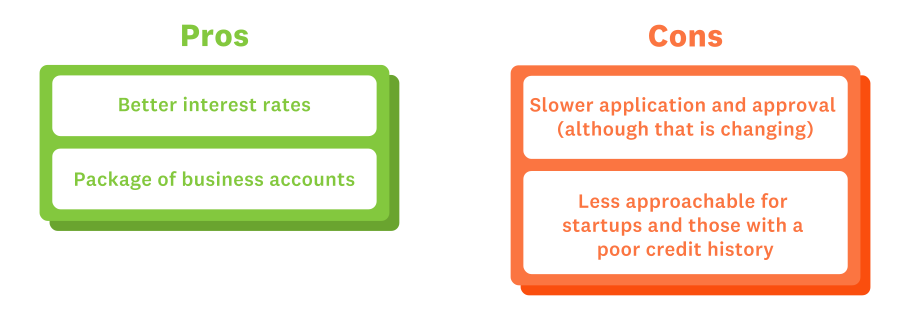
Traditional banks remain the most established option. They tend to offer competitive rates, especially for businesses with strong credit histories and assets to secure the loan. However, the application process can be slower and the eligibility criteria stricter than other options.
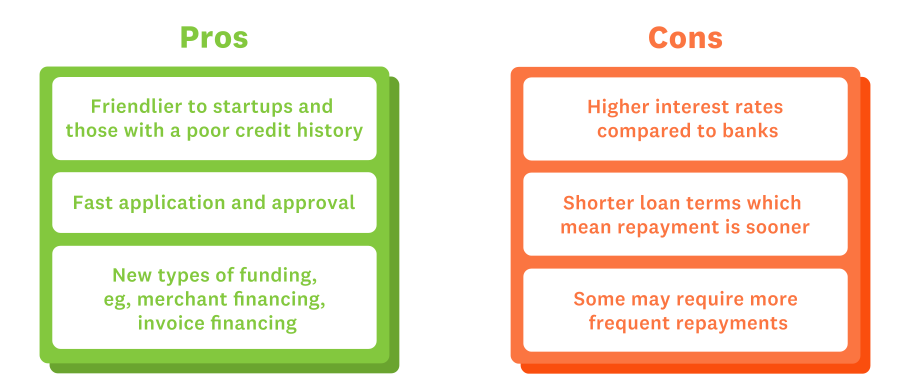
Online and alternative lenders have grown significantly in the UK. Companies such as Funding Circle, iwoca, and Tide offer faster decisions, sometimes within 24 hours, and more flexible criteria. Interest rates may be higher than traditional banks, but the speed and accessibility can make them worthwhile for businesses that need funding quickly.
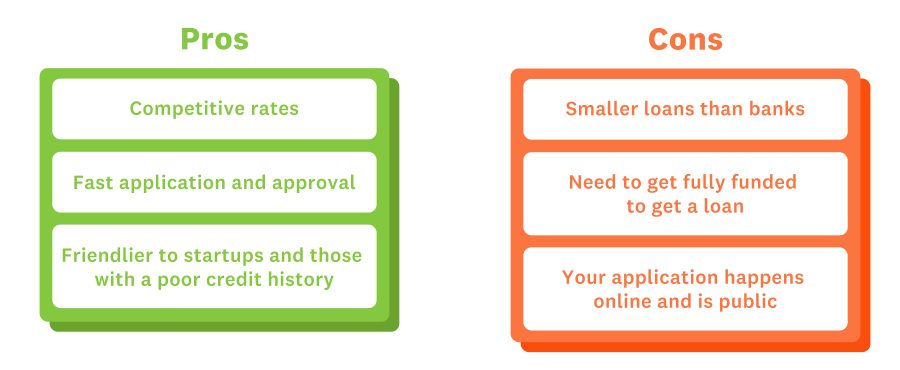
Peer-to-peer lenders connect borrowers directly with individual investors through online platforms. Rates can be competitive, and the process is typically faster than banks. Learn more about how peer-to-peer lending works and whether it suits your business.
Government-backed lenders and schemes are designed to support businesses that might struggle to access mainstream finance. Two key options in the UK include:
- Start Up Loans: offering up to £25,000 per person (up to £100,000 per business) at a fixed interest rate of 6%, plus free mentoring
- Growth Guarantee Scheme: covering loans of up to £2 million, where the government guarantees 70% of the loan to encourage lenders to support viable businesses that lack sufficient security
If you're exploring other funding routes, small business grants offer money you don't need to repay, though competition can be high.
How to choose the right lender
With so many lending options, it pays to compare carefully before committing. The right lender depends on your business circumstances, how quickly you need the money, and how much the loan will cost in total.
Consider these factors when comparing lenders:
- interest rate: fixed or variable, and what's the annual percentage rate (APR) including all fees
- repayment terms: how long you have to repay, whether there's flexibility, and what penalties apply for early repayment
- speed of funding: how quickly the lender can approve and release the funds
- eligibility requirements: minimum trading history, turnover thresholds, and credit score expectations
- fees: arrangement fees, monthly fees, and any charges for missed payments
- customer support: whether you'll have a dedicated contact or rely on self-service tools
- security requirements: whether the lender requires collateral or a personal guarantee
Don't just look at the headline interest rate. Calculate the total cost of the loan over its full term, including all fees. A loan with a slightly higher rate but no arrangement fee could work out cheaper overall.
It's also worth reading reviews and checking whether the lender is authorised by the Financial Conduct Authority (FCA). An FCA-regulated lender must follow rules designed to protect borrowers, giving you more recourse if something goes wrong.
How technology can help with your loan application
Accurate, up-to-date financial records are one of the best things you can bring to a loan application. Accounting software makes it straightforward to keep your books in order, generate reports on demand, and show lenders a clear picture of your financial health.
Cloud-based tools automate bank reconciliation, so your records match your bank transactions without manual data entry. This means your profit and loss statements, balance sheets, and cash flow reports are always current and ready to share.
When a lender asks for three months of financial data, you can pull it together in minutes rather than spending days compiling spreadsheets. Clean, well-organised records also signal to lenders that your business is well run, which can work in your favour during the assessment.
Financial reporting tools can also help you forecast future cash flow, showing lenders that you've thought carefully about repayment. If your application includes projections backed by real-time data, it carries more weight than estimates based on outdated figures.
Beyond the application itself, keeping your finances organised year-round means you're always ready if an opportunity arises. Rather than scrambling to pull records together, you can respond quickly when a lender asks for information, which gives you an edge in competitive funding rounds.
What to do if your business loan application is rejected
A rejection doesn't mean you can't access funding. It means you need to understand what went wrong, make improvements, and try again or explore other routes.
Start by asking the lender for specific feedback on why your application was declined. Common reasons include:
- a low credit score, either business or personal
- insufficient trading history
- weak cash flow or profitability
- incomplete or inconsistent documentation
- too much existing debt
Once you know the reason, you can take targeted action. If your credit score is the issue, focus on paying bills on time, reducing outstanding balances, and checking your credit report for errors. If the lender wanted a stronger business plan, revisit your forecasts and make them more detailed.
Under the Bank Referral Scheme, if one of the nine major UK banks declines your application, they're required to offer to refer you to alternative finance platforms. These platforms, such as Funding Xchange, can match you with lenders who may be more suited to your circumstances.
You might also consider alternative funding options while you strengthen your application. Invoice financing, crowdfunding, and small business grants are all worth exploring.
Simplify your business finances with Xero
Keeping your finances accurate and organised puts you in a stronger position when applying for a business loan. Xero's cloud accounting software automates bookkeeping, reconciles bank transactions, and generates the financial reports lenders ask for. Get one month free and see how cleaner records can support your next funding application.
FAQs on getting a business loan
Here are answers to some of the most common questions about getting a business loan in the UK.
How long does it take to get a business loan?
It depends on the lender. Traditional banks can take two to six weeks to process an application, while online lenders often approve and release funds within one to three business days. Having your documents ready before you apply speeds things up regardless of the lender.
Can you get a business loan with bad credit?
Yes, though your options may be more limited and interest rates higher. Some online and alternative lenders specialise in working with businesses that have lower credit scores. Government-backed schemes like Start Up Loans also focus on the strength of your business plan rather than credit history alone.
How much can you borrow with a business loan?
Borrowing limits vary widely. Start Up Loans offer up to £25,000 per person, while the Growth Guarantee Scheme covers loans up to £2 million. Banks and online lenders may offer anything from £1,000 to several million pounds, depending on your turnover, credit profile, and what security you can provide.
Do you need a business plan to get a loan?
Most lenders expect a business plan, especially for larger loans. Your plan should explain what the funding is for, how it will benefit the business, and how you'll repay the loan. Even lenders that don't formally require one will look favourably on applicants who present a clear, well-reasoned case.
What interest rates should you expect on a business loan?
Rates in the UK typically range from around 3% to 15% APR for established businesses with good credit. Start Up Loans carry a fixed rate of 6%. If your credit history is limited or your business is newer, expect rates at the higher end. Always compare the total cost of the loan, not just the headline rate, as fees can add significantly to what you pay.
Disclaimer
Xero does not provide accounting, tax, business or legal advice. This guide has been provided for information purposes only. You should consult your own professional advisors for advice directly relating to your business or before taking action in relation to any of the content provided.
How to finance your business in the UK
Need finance for your business? Learn about the types of finance, approaching lenders and investors and more.
- What is business finance?
Learn how business finance works and find the right funding for your small business.
- How much business funding do you need?
Knowing how much money you need will help you choose the right type of finance. These tips will help you find a number.
- Debt versus equity finance
Most forms of funding fall into one of two camps. Let’s look at the main pros and cons of debt versus equity.
- Main types of finance
It takes money to make money. So what sort of finance options are there? Here are the types that fund most businesses.
- How to get a business loan
Find the right business loan and put together a strong application with this step-by-step guide.
- Peer-to-peer lending
Learn how P2P lending works for UK businesses, what the risks are, and how to apply.
- Friends and family loans
Learn how to borrow from friends and family for your business, with tips on agreements, tax, and relationships.
- Invoice financing
Turn unpaid invoices into working capital. Learn how invoice financing works and which type suits your business.
- How to find investors
Find the right investors for your business with this guide to funding types, where to look, and how to prepare.
- Angel investors versus venture capitalists
Angel investors and venture capitalists are alternative finance sources. What can they offer your business?
- How crowdfunding works
Learn how crowdfunding works, the different models, and how to launch a successful campaign for your small business.
- Small business grants
Find UK small business grants, check eligibility, and apply with confidence.
- Pitching for business funding
Learn how to pitch your business to investors and lenders with practical, step-by-step guidance.
Download the guide to financing your business
Your intro to the different types of finance, including their pros and cons. Fill out the form to receive our finance guide as a PDF.
Now that you have your guide
Managing finances can feel overwhelming. With Xero’s powerful tools, small businesses can stay organised and confident.