Invoice financing: a guide for small businesses
Turn unpaid invoices into working capital. Learn how invoice financing works and which type suits your business.

Published Monday 11 May 2026
Table of contents
Key takeaways
- Invoice financing lets you unlock cash tied up in unpaid invoices, with providers typically advancing 80–90% of the invoice value within 24–48 hours
- The two main types are invoice factoring, where the provider manages collections, and invoice discounting, where you keep control of credit collection yourself
- Costs usually include a service charge of 0.5–5% of the invoice value plus interest on the advance, and they vary based on volume, customer creditworthiness, and contract terms
- Invoice financing suits B2B businesses that invoice on credit terms and want to improve cash flow without taking on traditional debt
What is invoice financing?
If your business invoices other businesses on credit terms, you've likely dealt with the frustration of waiting 30, 60, or even 90 days to get paid. Invoice financing is one way to bridge that gap.
Invoice financing is a form of business funding where you sell your unpaid invoices to a third-party provider in exchange for an immediate cash advance. The provider typically advances 80–90% of the invoice value upfront, giving you access to working capital without waiting for your customers to pay.
Once your customer settles the invoice, the provider releases the remaining balance minus their fees. It's not a loan in the traditional sense, because the invoices themselves act as security.
This makes it a practical option for businesses that might not qualify for traditional bank loans or overdrafts. Unlike cash flow financing, which is secured against future revenue, invoice financing is tied specifically to your sales ledger, so it can also grow alongside your business as your invoicing volume increases.
How does invoice financing work?
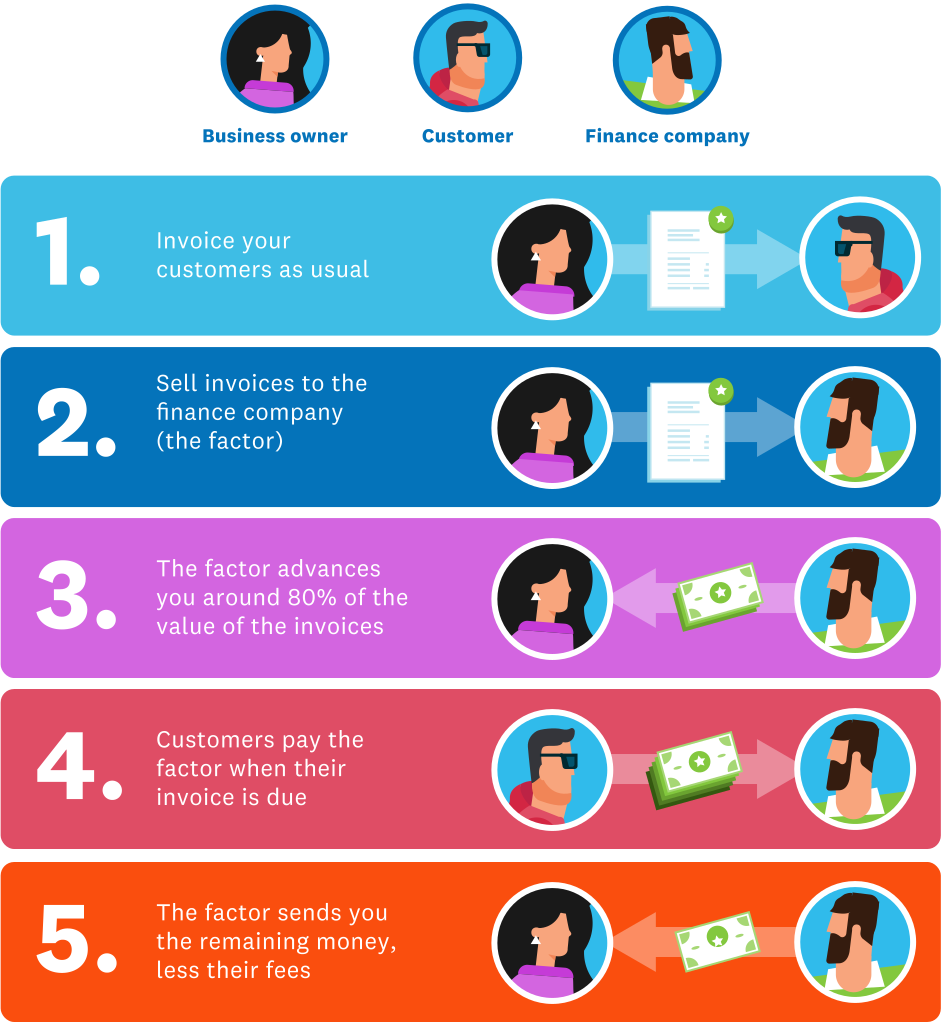
The process is straightforward and typically follows five steps. Here's how it works from start to finish:
- You issue invoices to your customers for goods or services as normal
- You submit those unpaid invoices to your chosen financing provider
- The provider advances you 80–90% of the invoice value, usually within 24–48 hours
- Your customer pays the invoice, either directly to the provider or to you, depending on the arrangement
- The provider releases the remaining balance to you, minus their service fees and any interest charges
The speed of this process is one of its biggest draws. Rather than waiting weeks or months for payment, you can access the majority of the cash within a day or two of raising the invoice. This can make a real difference when you need to cover payroll, pay suppliers, or invest in growth opportunities.
Types of invoice financing
Invoice financing isn't a one-size-fits-all product. There are several variations, each designed to suit different business needs and preferences around confidentiality and control.
Invoice factoring
This is the most well-known form of invoice financing. With invoice factoring, the provider buys your unpaid invoices and takes over credit control and collections on your behalf.
Your customers are aware of the arrangement because the provider contacts them directly to collect payment. This can free up significant time if you'd rather not chase payments yourself, and many providers offer professional credit management services as part of the deal. Factoring is popular with growing businesses that want to focus resources on operations rather than accounts receivable.
Invoice discounting
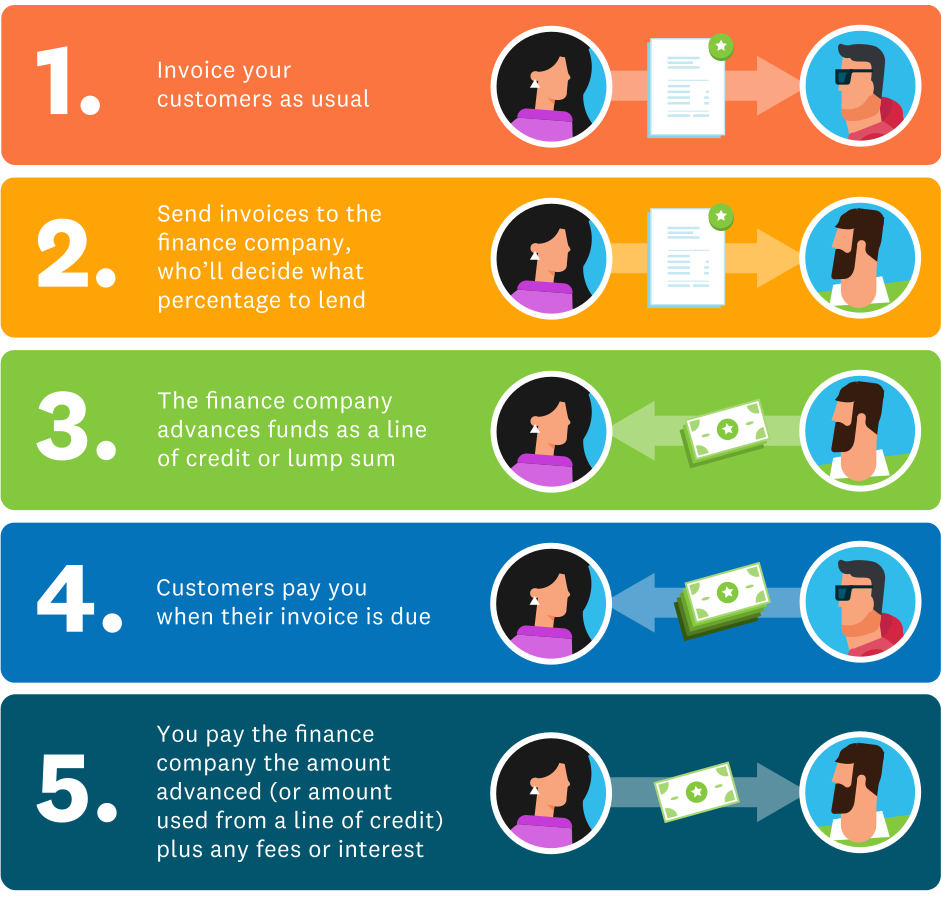
Invoice discounting works similarly to factoring, but with one key difference: you retain control of your own credit collection. Your customers continue to pay you directly and are usually unaware that a financing provider is involved.
This option suits businesses that want to maintain direct relationships with their customers and prefer a more confidential arrangement. It's often favoured by larger or more established businesses with reliable credit control processes already in place.
Selective invoice financing (spot factoring)
Selective invoice financing, sometimes called spot factoring, lets you choose individual invoices to finance rather than your entire sales ledger. There's no need to commit to a long-term contract.
This is a flexible option if you only need funding occasionally, for example when a large invoice creates a temporary cash flow gap. You pick which invoices to finance and when, giving you full control over costs.
Confidential invoice discounting
Confidential invoice discounting is similar to standard invoice discounting, but the relationship with the provider stays completely undisclosed to your customers. There's no indication on invoices or communications that a third party is involved.
This option is ideal if maintaining the appearance of fully independent financial operations is a priority for your business.
Benefits of invoice financing
Invoice financing offers several advantages for small businesses dealing with cash flow pressure. Here are the main benefits:
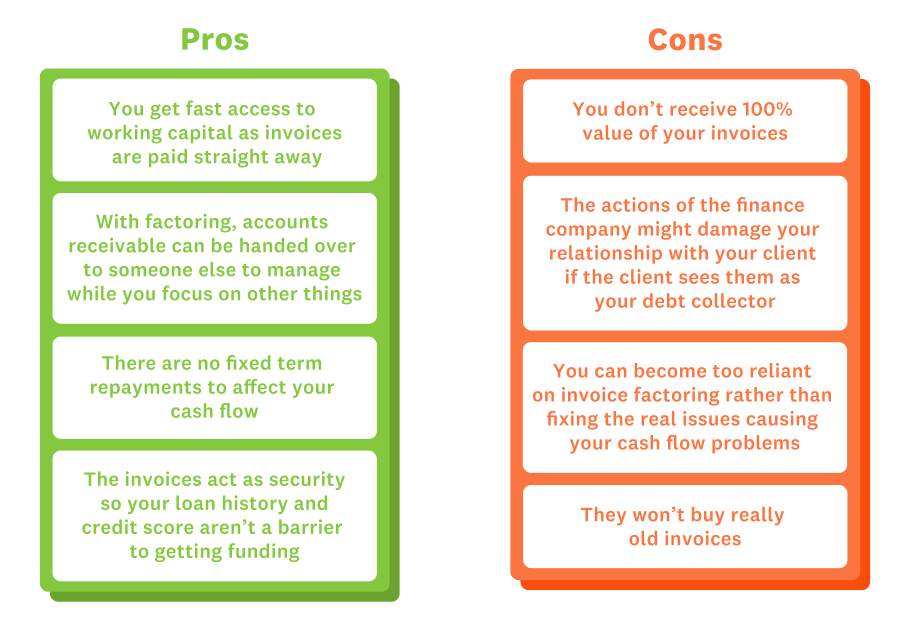
- Improved cash flow: you can access funds tied up in unpaid invoices instead of waiting 30–90 days for customers to pay
- Quick access to funds: most providers release the advance within 24–48 hours of submitting invoices
- No need for traditional collateral: your invoices act as the security, so you don't need to put up property or other assets
- Scalable with sales volume: the more you invoice, the more funding you can access, so it grows with your business
- Professional credit control: with factoring, the provider handles collections, freeing up your time to focus on running your business
Disadvantages of invoice financing
While invoice financing can be a useful tool, it's worth understanding the potential downsides before committing. Consider the following:
- Fees can add up: service charges of 0.5–5% of each invoice value, plus interest on the advance, can reduce your profit margins over time
- Customer awareness: with factoring, your customers know a third party is involved in collecting payments, which some businesses prefer to avoid
- Dependency risk: relying too heavily on invoice financing can mask underlying cash flow issues that need addressing
- Not suitable for all businesses: if you primarily sell to consumers (B2C) or have very few invoices, providers may not offer terms that work for you
Invoice factoring vs invoice discounting
Factoring and discounting are the two most common forms of invoice financing, and choosing between them depends on your priorities around control, confidentiality, and cost. Here's how they compare:
- Collections: with factoring, the provider manages credit control and chases payments on your behalf; with discounting, you handle collections yourself
- Customer awareness: factoring means your customers know a third party is involved; discounting is typically confidential
- Confidentiality: discounting is the more discreet option, as your customers continue to deal directly with you
- Typical costs: factoring fees tend to be slightly higher because the provider takes on the additional work of credit control; discounting fees are often lower
- Suitability: factoring can suit smaller businesses that want help with collections; discounting often works better for established businesses with strong internal credit processes
Both options give you faster access to cash, and both are forms of debt financing. The right choice comes down to how much control you want to keep over your customer relationships and how important confidentiality is to your business.
How much does invoice financing cost?
The cost of invoice financing varies depending on your business and the provider you choose. There are typically two main charges to be aware of.
The first is a service charge, which usually ranges from 0.5–5% of the invoice value. This covers the provider's administration and, in the case of factoring, credit control. The second is an interest charge on the cash advance, which is calculated on the amount you've drawn down until your customer pays the invoice.
Several factors affect what you'll pay:
- Invoice volume: higher volumes often attract lower rates
- Customer creditworthiness: the stronger your customers' payment history, the lower the perceived risk to the provider
- Industry sector: some industries are seen as higher risk than others
- Contract terms: longer commitments or whole-ledger agreements may come with preferential rates compared to selective or short-term arrangements
It's worth comparing several providers and asking for a full breakdown of fees before signing anything. Some providers also charge setup fees or early termination penalties, so read the small print carefully.
Is your business eligible for invoice financing?
Not every business will qualify for invoice financing, but the eligibility criteria are generally more accessible than those for traditional bank loans. Providers typically look for the following:
- B2B business model: you invoice other businesses, not individual consumers
- Credit terms on invoices: your customers pay on standard terms (for example, 30, 60, or 90 days)
- Creditworthy customers: providers assess the payment reliability of your customers, not just your own financial position
- Minimum turnover: thresholds vary by provider, but many work with businesses turning over as little as £50,000 per year
- Established trading history: most providers prefer businesses that have been trading for at least six months, though some cater to newer businesses
If your business meets these criteria, it's worth exploring your options. Even if you don't qualify with one provider, another may be able to help. It's also worth noting that some providers specialise in certain industries, so a sector-specific provider may offer more favourable terms.
How to choose an invoice financing provider
Choosing the right provider can make a significant difference to your experience and costs. Here's what to look for when comparing options:
- Recourse vs non-recourse: with recourse factoring, you're liable if your customer doesn't pay; with non-recourse, the provider absorbs the bad debt risk (though fees are typically higher)
- Fee transparency: look for providers that clearly break down all charges, including service fees, interest rates, and any hidden costs
- Contract flexibility: some providers lock you into long-term contracts; others offer rolling or pay-as-you-go arrangements
- Provider reputation: check reviews, ask for references, and look for providers regulated by the Financial Conduct Authority (FCA)
- Industry experience: a provider familiar with your sector will better understand your invoicing patterns and customer payment behaviour
- Integration with accounting software: seamless integration can save time on administration and give you a clearer picture of your cash flow in real time
Manage your invoices and cash flow with Xero
Staying on top of invoicing and cash flow is essential when you're exploring financing options. Xero's invoicing tools let you create and send professional invoices, set up automatic payment reminders, and track what's owed to you in real time.
With cash flow forecasting and reporting built in, you can spot gaps early and make informed decisions about whether invoice financing is the right move for your business. Xero also connects with over 1,000 apps, so you can link your accounting data with financing providers and other business tools.
FAQs on invoice financing
Here are answers to frequently asked questions about invoice financing.
What is the difference between invoice factoring and invoice discounting?
With invoice factoring, the provider takes over credit control and collects payments from your customers directly. With invoice discounting, you retain control of collections and your customers are usually unaware a third party is involved.
How quickly can I access funds through invoice financing?
Most providers release an advance of 80–90% of the invoice value within 24–48 hours of submission. The remaining balance is paid once your customer settles the invoice, minus fees.
Do my customers need to know I use invoice financing?
It depends on the type you choose. With invoice factoring, your customers are aware because the provider contacts them to collect payment. With invoice discounting or confidential invoice discounting, customers typically don't know a third party is involved.
What happens if my customer doesn't pay the invoice?
This depends on whether you have a recourse or non-recourse agreement. With recourse financing, you're responsible for repaying the advance if your customer defaults. With non-recourse financing, the provider takes on the risk of non-payment, though fees tend to be higher.
Is invoice financing suitable for small businesses?
Yes, invoice financing can work well for small businesses that invoice other businesses on credit terms. It's particularly useful if you have reliable customers but need faster access to cash. Many providers cater specifically to smaller businesses with lower turnover thresholds.
Disclaimer
Xero does not provide accounting, tax, business or legal advice. This guide has been provided for information purposes only. You should consult your own professional advisors for advice directly relating to your business or before taking action in relation to any of the content provided.
How to finance your business in the UK
Need finance for your business? Learn about the types of finance, approaching lenders and investors and more.
- What is business finance?
Learn how business finance works and find the right funding for your small business.
- How much business funding do you need?
Knowing how much money you need will help you choose the right type of finance. These tips will help you find a number.
- Debt versus equity finance
Most forms of funding fall into one of two camps. Let’s look at the main pros and cons of debt versus equity.
- Main types of finance
It takes money to make money. So what sort of finance options are there? Here are the types that fund most businesses.
- How to get a business loan
Find the right business loan and put together a strong application with this step-by-step guide.
- Peer-to-peer lending
Learn how P2P lending works for UK businesses, what the risks are, and how to apply.
- Friends and family loans
Learn how to borrow from friends and family for your business, with tips on agreements, tax, and relationships.
- Invoice financing
Turn unpaid invoices into working capital. Learn how invoice financing works and which type suits your business.
- How to find investors
Find the right investors for your business with this guide to funding types, where to look, and how to prepare.
- Angel investors versus venture capitalists
Angel investors and venture capitalists are alternative finance sources. What can they offer your business?
- How crowdfunding works
Learn how crowdfunding works, the different models, and how to launch a successful campaign for your small business.
- Small business grants
Find UK small business grants, check eligibility, and apply with confidence.
- Pitching for business funding
Learn how to pitch your business to investors and lenders with practical, step-by-step guidance.
Download the guide to financing your business
Your intro to the different types of finance, including their pros and cons. Fill out the form to receive our finance guide as a PDF.
Now that you have your guide
Managing finances can feel overwhelming. With Xero’s powerful tools, small businesses can stay organised and confident.