What is business finance?
Learn how business finance works and find the right funding for your small business.
Published Monday 11 May 2026
Key takeaways
- Business finance covers how you raise, manage, and invest money to keep your company running and growing. Understanding the basics helps you make confident decisions about funding, spending, and planning ahead.
- UK small businesses can access several types of funding, including bank loans, equity investment, asset finance, invoice financing, and government-backed schemes like the Growth Guarantee Scheme.
- Choosing the right finance depends on your business stage, how quickly you need funds, and what you can afford to repay. Short-term options suit cash flow gaps, while long-term finance supports bigger investments.
- Staying on top of your business finances means separating personal and business money, monitoring cash flow regularly, and using accounting software to see everything in one place.
What is business finance?
Business finance is the practice of raising, managing, and investing money to run and grow a business. It covers everything from securing startup funding to managing daily cash flow and planning for long-term growth.
For small business owners, understanding business finances basics is essential. You need money to launch, operate, and expand your company. How you source that money, and how you manage it once it's in your account, directly affects whether your business survives its first few years or thrives for decades.
Business finance isn't just about big funding rounds or complex investments. It includes everyday decisions like when to pay suppliers, how to price your products, and whether to take on a business loan or use your own savings.
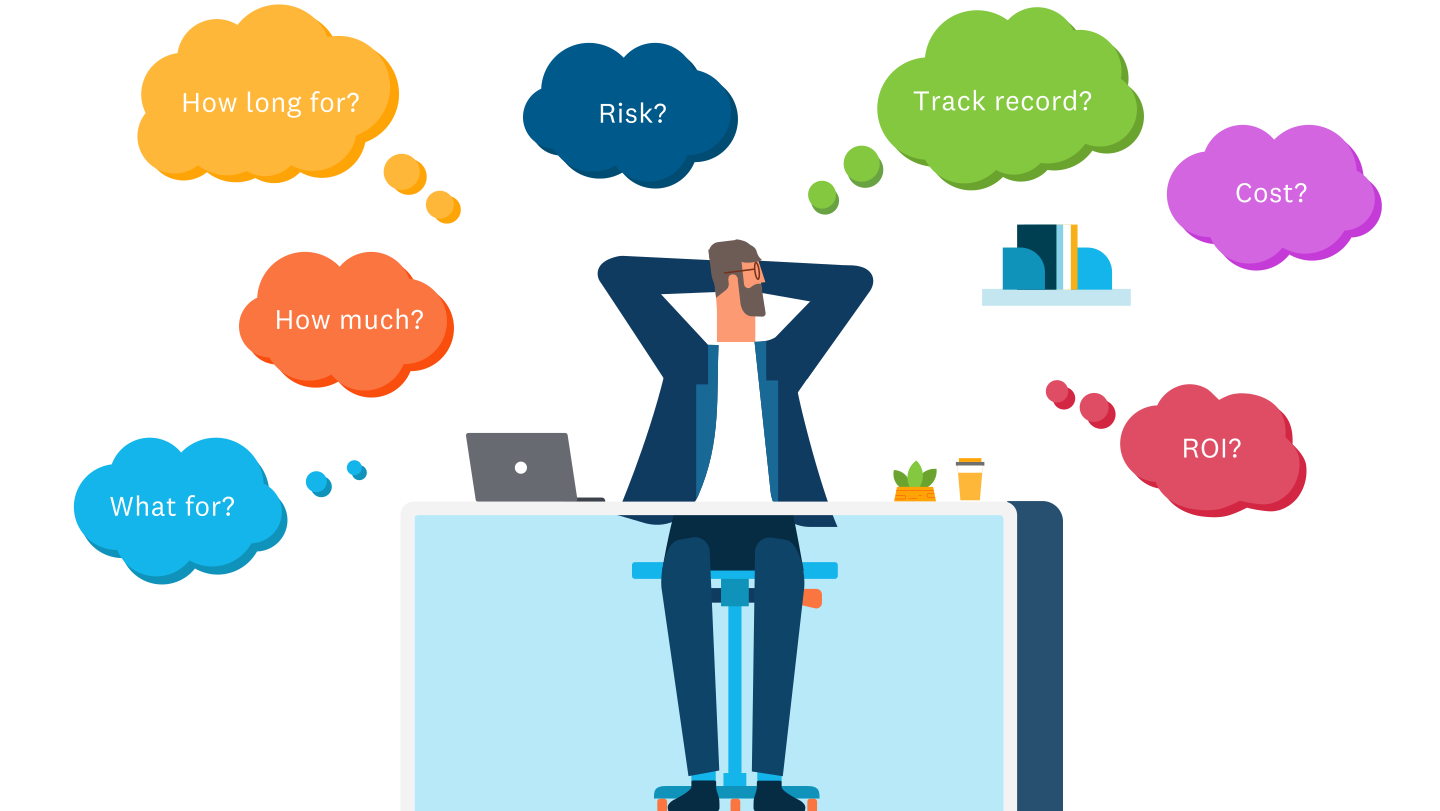
You don't need a finance degree to get this right. With a clear understanding of the main concepts and the right tools, you can take control of your business finances and make decisions that support your goals.
Why business finance matters for small businesses
Strong financial management is the foundation of a healthy business. Without it, even profitable companies can run into trouble when cash flow dries up or unexpected costs hit.
Getting your business finances right makes a real difference:
- Cash flow management keeps your business running day to day. Knowing what's coming in and going out helps you pay staff, cover bills, and avoid nasty surprises.
- Growth depends on funding. Whether you're hiring your first employee or opening a second location, you'll need capital, and understanding your finance options helps you access it at the right time.
- Financial stability protects your business during tough periods. Building reserves and managing debt wisely means a quiet month or an economic dip doesn't put you at risk.
- Informed decisions come from clear financial data. When you can see your numbers clearly, you can spot trends, cut waste, and invest in what's actually working.
- Compliance readiness keeps you on the right side of HMRC. With Making Tax Digital (MTD) for VAT already in place and MTD for Income Tax on the way, having organised financial records isn't optional.
Types of business finance
There are several ways to fund your business, each suited to different needs and stages of growth. These are the main options available to UK small businesses.
Debt financing
Debt financing means borrowing money that you'll repay with interest over a set period. It's one of the most common ways small businesses access funding.
Bank loans are a popular choice for established businesses with a solid credit history. You'll typically repay them in monthly instalments over one to five years, or longer for larger amounts. Overdrafts offer flexible, short-term borrowing linked to your business bank account, handy for covering temporary cash flow gaps.
Short-term loans (repaid within 12 months) work well for seasonal stock purchases or bridging a gap between invoices. Long-term loans suit bigger investments like equipment or property, with repayment terms stretching over several years.
Equity financing
Equity financing involves selling a share of your business in exchange for investment. You won't need to make monthly repayments, but you will give up some ownership and control.
Angel investors are individuals who invest their own money in early-stage businesses, often bringing experience and contacts alongside their funding. Venture capital firms invest larger sums in businesses with high growth potential, usually in exchange for a significant equity stake. For a deeper comparison, understanding debt vs equity financing helps you weigh the trade-offs.
Asset finance
Asset finance lets you spread the cost of expensive equipment, vehicles, or machinery over time instead of paying upfront.
With hire purchase, you make regular payments and own the asset once the final payment is made. Leasing means you pay to use the asset for a fixed period, then return it, upgrade, or sometimes buy it at a reduced price. Both options help you preserve cash while still accessing the equipment you need to operate.
Invoice financing
Invoice financing unlocks cash tied up in unpaid invoices. Instead of waiting 30, 60, or 90 days for customers to pay, a lender advances you a percentage of the invoice value upfront.
This option is particularly useful if your business has long payment terms but needs cash to cover operating costs in the meantime. It's a form of cash flow financing that can keep things moving without taking on traditional debt.
Grants and government schemes
Grants are funds you don't have to repay, making them one of the most attractive financing options. However, they're competitive and often come with specific eligibility criteria.
In the UK, the Growth Guarantee Scheme helps small businesses access loans of up to 2 million by providing a government-backed guarantee to lenders. This is especially useful if you don't have enough collateral or trading history to secure a standard bank loan. Local councils and organisations like Innovate UK also offer grants for specific sectors, projects, or regions.
Alternative financing
Beyond traditional routes, several alternative options have grown in popularity among UK small businesses.
Crowdfunding lets you raise money from a large number of people, usually through an online platform. Peer-to-peer lending connects you directly with individual lenders, often at competitive rates. Merchant cash advances provide an upfront sum that you repay through a percentage of your future card sales, suited to retail or hospitality businesses with strong card transaction volumes.
Short-term vs long-term business finance
Choosing between short-term and long-term finance depends on what you need the money for and how quickly you can repay it.
Short-term finance typically covers periods of up to 12 months. It's ideal for managing cash flow gaps, covering seasonal demand, or handling an unexpected expense. Examples include overdrafts, short-term loans, and invoice financing. Cash flow forecasting can help you spot when short-term funding might be needed.
Long-term finance runs for more than 12 months, often several years. It suits larger investments like buying property, expanding into new markets, or purchasing significant equipment. Bank loans, equity investment, and hire purchase agreements are common long-term options.
The key is matching your finance to your need. Taking a five-year loan to cover a one-month cash flow gap means paying interest you don't need to. Equally, trying to fund a major expansion with a short-term overdraft creates unnecessary pressure on your repayments.
How to choose the right business finance
With so many options, picking the right finance can feel overwhelming. A clear decision framework helps you narrow things down.
- Assess your needs: work out exactly how much you need, what it's for, and how quickly you need it. A clear purpose helps you rule out options that don't fit.
- Evaluate the total cost: look beyond the interest rate. Factor in arrangement fees, early repayment charges, and any equity you might give up. Compare the full cost of each option side by side.
- Understand eligibility: some finance options require a minimum trading history, specific revenue thresholds, or collateral. Check the requirements before you apply to save time and avoid unnecessary credit checks.
- Consider repayment terms: make sure the repayment schedule fits your cash flow. Monthly repayments on a loan need to be affordable even during your quieter months.
- Think about control: equity financing means sharing ownership and decision-making. If keeping full control matters to you, debt-based options might be a better fit.
Tips for managing your business finances
Securing finance is only half the picture. How you manage your money day to day determines whether your business stays on solid ground.
- Separate business and personal finances: open a dedicated business bank account from day one. Mixing personal and business money makes bookkeeping harder and can create problems at tax time.
- Monitor cash flow regularly: don't wait until the end of the month to check your numbers. Review your cash position weekly so you can spot potential shortfalls early and act before they become a problem.
- Use accounting software: a financial dashboard that brings your bank accounts, invoices, and expenses together in one place saves hours of manual admin. It also gives you a real-time view of your financial health, so you can make decisions based on current data rather than guesswork.
- Build an emergency fund: aim to set aside enough to cover three to six months of essential costs. This buffer gives you breathing room if revenue dips or an unexpected expense comes up.
- Seek professional advice: an accountant or financial adviser can help you plan for tax, structure your finances efficiently, and identify funding opportunities you might not find on your own.
Common business finance challenges
Even with the right knowledge, small businesses often run into obstacles when trying to access or manage finance. Knowing what to expect can help you prepare.
- Limited credit history: new businesses often struggle to secure loans because they don't have a track record. Building a credit profile early, even with a small business credit card, can help.
- Lack of collateral: many lenders require assets as security, which can be a barrier if you're a service-based business or just starting out. Government-backed schemes like the Growth Guarantee Scheme can help bridge this gap.
- Complex application processes: applying for finance can be time-consuming, with detailed business plans, financial projections, and documentation required. Having your records organised and up to date makes this much easier.
- Managing debt repayments: taking on too much debt, or the wrong kind, can strain your cash flow. Before borrowing, make sure you've mapped out how repayments fit into your monthly budget.
Manage your business finances with Xero
Getting your business finances right takes the right tools and the right habits. Xero's accounting software brings your bank accounts, invoices, bills, and reporting into one place, giving you a clear view of your financial position at any time.
With features like automatic bank reconciliation, cash flow tracking, and customisable reports, you can spend less time on manual admin and more time making decisions that grow your business. And with MTD-compatible tax submissions built in, staying compliant is straightforward.
Get one month free and see how Xero can help you take control of your business finances.
FAQs on business finance
Here are answers to some common questions about business finance for UK small businesses.
What are the basics of business finance for beginners?
Business finance basics cover three core areas: raising money to start or grow your business, managing cash flow so you can meet your obligations, and investing profits wisely to build long-term value. Start by understanding your income, expenses, and profit margins, then explore which funding options suit your needs.
How can I see all my business finances in one place?
Cloud accounting software connects your bank accounts, invoices, expenses, and reports in a single dashboard. This gives you a real-time view of your financial position without manually updating spreadsheets or switching between different tools.
What's the difference between debt and equity financing?
Debt financing means borrowing money and repaying it with interest, while keeping full ownership of your business. Equity financing means selling a share of your business to an investor in exchange for capital. Debt costs you interest; equity costs you ownership and some control over decisions.
How do small businesses get funding in the UK?
UK small businesses can access funding through bank loans, overdrafts, government-backed schemes like the Growth Guarantee Scheme, angel investors, crowdfunding platforms, and invoice financing. The best option depends on your business stage, how much you need, and how quickly you need it.
Do I need a business plan to get finance?
Most lenders and investors expect a business plan that outlines your goals, revenue model, financial projections, and how you'll use the funds. Even if it's not formally required, having a clear plan strengthens your application and shows you've thought through the numbers.
Disclaimer
Xero does not provide accounting, tax, business or legal advice. This guide has been provided for information purposes only. You should consult your own professional advisors for advice directly relating to your business or before taking action in relation to any of the content provided.
How to finance your business in the UK
Need finance for your business? Learn about the types of finance, approaching lenders and investors and more.
- What is business finance?
Learn how business finance works and find the right funding for your small business.
- How much business funding do you need?
Knowing how much money you need will help you choose the right type of finance. These tips will help you find a number.
- Debt versus equity finance
Most forms of funding fall into one of two camps. Let’s look at the main pros and cons of debt versus equity.
- Main types of finance
It takes money to make money. So what sort of finance options are there? Here are the types that fund most businesses.
- How to get a business loan
Find the right business loan and put together a strong application with this step-by-step guide.
- Peer-to-peer lending
Learn how P2P lending works for UK businesses, what the risks are, and how to apply.
- Friends and family loans
Learn how to borrow from friends and family for your business, with tips on agreements, tax, and relationships.
- Invoice financing
Turn unpaid invoices into working capital. Learn how invoice financing works and which type suits your business.
- How to find investors
Find the right investors for your business with this guide to funding types, where to look, and how to prepare.
- Angel investors versus venture capitalists
Angel investors and venture capitalists are alternative finance sources. What can they offer your business?
- How crowdfunding works
Learn how crowdfunding works, the different models, and how to launch a successful campaign for your small business.
- Small business grants
Find UK small business grants, check eligibility, and apply with confidence.
- Pitching for business funding
Learn how to pitch your business to investors and lenders with practical, step-by-step guidance.
Download the guide to financing your business
Your intro to the different types of finance, including their pros and cons. Fill out the form to receive our finance guide as a PDF.
Now that you have your guide
Managing finances can feel overwhelming. With Xero’s powerful tools, small businesses can stay organised and confident.