What is a side hustle? Meaning, ideas, and how to start
Learn what a side hustle is, and find extra income ideas that fit your schedule and goals.
Written by Jotika Teli—Certified Public Accountant with 24 years of experience. Read Jotika's full bio
Published Monday 20 April 2026
Table of contents
Key takeaways
- Recognize that a side hustle differs from a second job by offering flexible timing and direct client payments, giving you control over your schedule and the freedom to work around your main job.
- Choose a side hustle that matches your existing skills, available time, and personal interests, since passion for the work makes it easier to stay motivated and commit the effort needed to earn consistently.
- Report your side hustle income to the IRS if your net self-employment earnings reach $400 or more, as this triggers a legal requirement to file an income tax return.
- Review your employment contract before starting a side hustle to confirm there are no non-compete or conflict of interest clauses that could put your main job at risk.
What is a side hustle?
A side hustle is flexible work you do alongside your main job to earn extra income. Unlike a second job with fixed hours and an employer paycheck, a side hustle lets you control your schedule and work directly with clients. You can turn almost any skill or interest into a side hustle.
Key differences between a side hustle and a second job:
- Second job: requires a set schedule, provides an employer paycheck, and involves fixed hours
- Side hustle: offers flexible timing, generates direct client payments, and fits into your spare time
Common side hustles include consulting, tutoring, selling handmade crafts, or freelance design work. Some people use side hustles for passive income, while others actively supplement their earnings. Sometimes a modest side gig can grow into a full-time career.
Why start a side hustle?
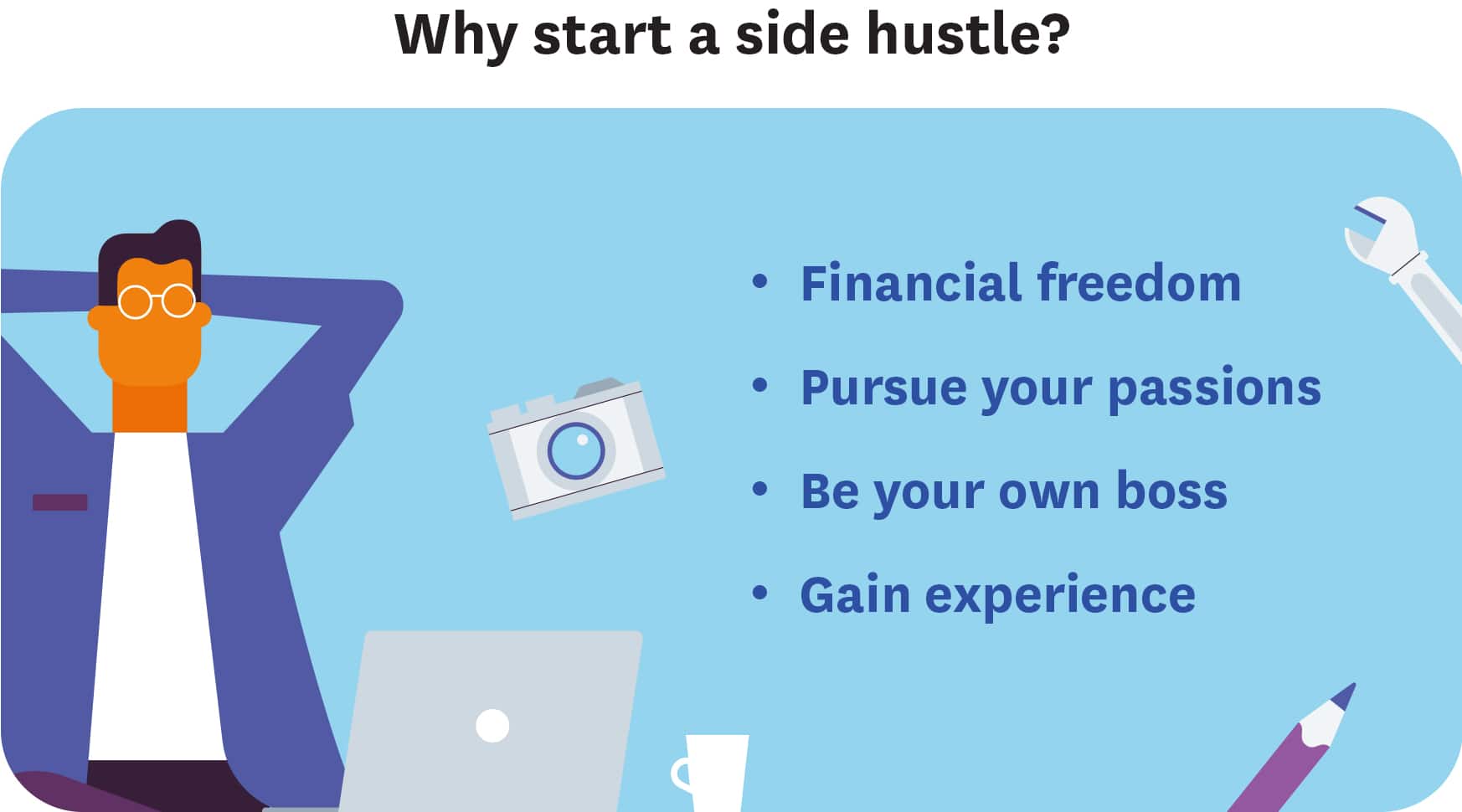
People start side hustles primarily for financial reasons. A 2023 Bankrate survey found the top motivations:
- 33% want to cover day-to-day living expenses
- 27% want to increase discretionary spending money
- 25% want to boost savings
- 12% want to repay student loans and debt
When you start a side hustle, the pros include:
- Develop skills: expand a hobby, gain experience, and build new abilities
- Financial stability: generate additional income for independence and security
- Autonomy: enjoy the freedom and control of being your own boss
- Low risk:start with minimal costs and limited financial exposure
The cons include:
- Time required: you must invest significant time and energy and commit to the work
- More stress: you must balance multiple responsibilities, which can increase pressure
- Job risks: you risk becoming distracted from your main job, which could affect how you perform
- Scam risks: you may encounter fraudulent opportunities that lead to financial loss, such as a recent crypto fraud operation promoted through misleading YouTube videos
Popular side hustle ideas
The best side hustle depends on your goals, available time, and personal interests. Choose something you're passionate about, as you'll find it easier to dedicate time and energy when you're excited about the work.
Check your employment contract first to ensure your side hustle won't conflict with your current job.
Online business side hustles
Online businesses let you work from anywhere and set your own schedule, making them ideal side hustles for professional services or work that doesn't require a physical office.
Options include:
- Freelancing: apply your existing skills to serve independent clients, taking advantage of a strong market where 33% of companies report using contractors
- Consulting: provide expertise in your field to businesses seeking specialized guidance
Start by reaching out to people you already know, and verify there's no conflict of interest with your current employer.
Popular online business options:
- Freelance writing: create blog posts, articles, ghostwriting projects, and editing work for clients
- Online teaching: teach English through platforms like VIPKid that connect you with students worldwide
- Create content: build a following on Substack or start a blog, then offer premium content to subscribers
- Graphic design: create social media images, brochures, and logos for businesses
- Virtual assistant: manage email, schedule appointments, and provide customer service support
- Bookkeeping: offer accounting support to companies that need help managing financial records
Driver side hustles
Driver side hustles let you earn flexibly if you enjoy driving and interacting with others.
Options include:
- Rideshare driving: transport passengers through Uber or Lyft with flexible scheduling
- Food delivery: deliver meals from restaurants through DoorDash or Uber Eats
- Grocery delivery: shop and deliver groceries through Instacart or Shipt, with extra pay during peak hours
Ecommerce side hustles
Ecommerce is a cost-effective side hustle that lets you sell products online without a physical storefront.
Popular approaches include:
- Dropshipping: open an online store without managing inventory or shipping products yourself, while a third party fulfills orders
- Handmade marketplaces: sell crafts, digital products, and creative items through Etsy, Shopify, Amazon, or eBay. Learn more in our online business ideas guide.
Other side hustle opportunities
You can explore countless other side hustles depending on your skills and local demand.
Additional options by category:
- Childcare: offer babysitting with flexible hours through local networks
- Handyperson services: complete home repairs and tasks through TaskRabbit
- Home services: provide cleaning and household assistance through Handy
- Pet care: find dog walking and pet-sitting gigs through Wag or Rover
- Outdoor work: offer landscaping services in your neighborhood
- Monetize content: earn affiliate commissions or sell online courses through your blog, YouTube channel, or podcast
- Retail work: get paid to mystery shop or set up store displays through retail merchandising
How much can you make with a side hustle?
How much you earn from a side hustle varies widely based on your skills, time you commit, and chosen field. Most side hustlers earn $200–$1,000 per month, though some generate significantly more with specialized skills or increased hours. You must file an income tax return if your net earnings from self-employment hit $400 or more.
Realistic income expectations by category:
- Freelance writing: earns $15–$50 per hour ($300–$2,000 monthly)
- Rideshare driving: earns $10–$25 per hour ($400–$1,600 monthly)
- Online tutoring: earns $20–$80 per hour ($500–$2,500 monthly)
- Graphic design: earns $25–$75 per hour ($800–$3,000 monthly)
Several factors affect how much you can earn:
- Time invested: dedicating more hours typically increases what you earn
- Skill level: developing specialized skills commands premium rates
- Market demand: offering popular services generates more work
- Location: working in urban areas often yields higher rates
To build to $2,000+ monthly, learn how to increase your profits.
FAQs on side hustles
Here are answers to common questions about starting a side hustle.
What's the difference between a side hustle and a second job?
A side hustle offers flexible timing and lets you work directly with clients, while a second job requires a set schedule and provides an employer paycheck.
Do I need to pay taxes on my side hustle income?
You must file an income tax return if your net earnings from self-employment reach $400 or more.
How do I choose the right side hustle?
Choose a side hustle based on your goals, available time, and personal interests. Pick something you're passionate about so you'll stay motivated.
Can my employer stop me from having a side hustle?
Check your employment contract to ensure your side hustle won't conflict with your current job. Some contracts include non-compete or conflict of interest clauses.
How much time do I need to commit to a side hustle?
The time commitment varies by side hustle type. Some require just a few hours per week, while others need more substantial time to generate meaningful income.
Get 90% off for 6 months
Get 90% off for 6 months on any Xero plan.