What is a general ledger? A small business guide
Learn what a general ledger is, how it works, and why it matters for your small business finances.
Published Thursday 23 July 2026
Table of contents
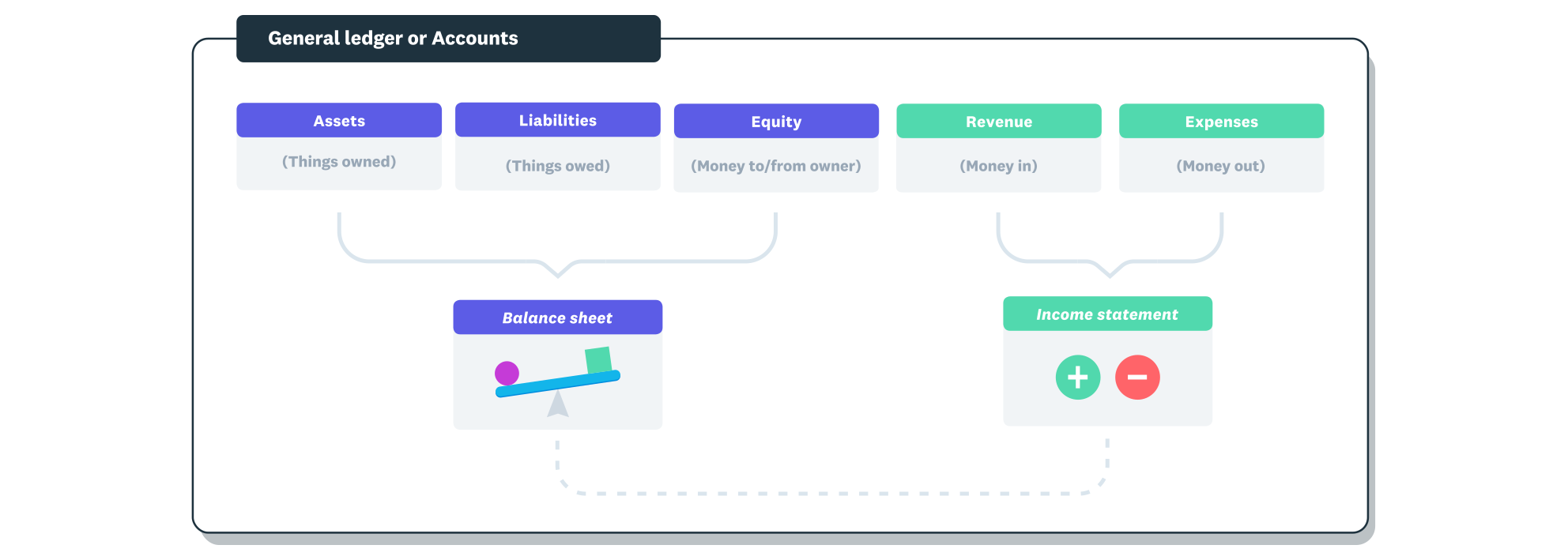
Transactions are entered into the correct account in order to produce the financial reports.
Key takeaways
- A general ledger (GL) is the central record of every financial transaction in your business, organized by account type. It serves as the foundation for all your financial reports.
- Every GL transaction uses double-entry bookkeeping, meaning each entry includes a debit in 1 account and a credit in another to keep the books balanced.
- The 5 main account categories in a general ledger are assets, liabilities, equity, revenue, and expenses. These feed directly into your trial balance, balance sheet, and income statement.
- Accounting software automates GL management by posting journal entries, updating account balances, and generating financial reports, which reduces the risk of manual errors.
What is a general ledger?
A general ledger (GL) is the master record of all your business's financial transactions, organized by account type. It tracks every debit and credit across assets, liabilities, equity, revenue, and expenses.
Think of it as the single source of truth for your finances. Every sale, purchase, payroll payment, and expense flows into the GL. From there, it produces the financial reports you need to understand how your business is performing.
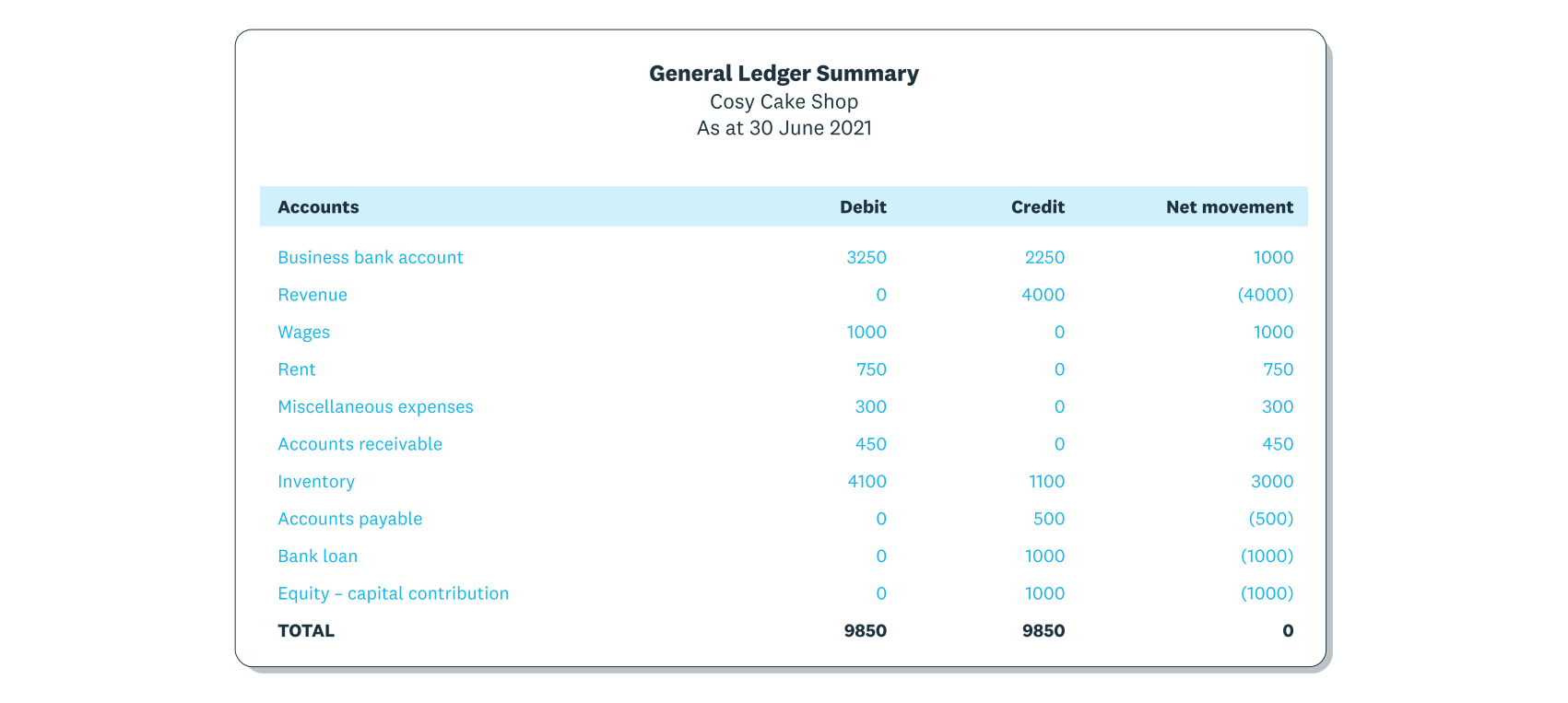
The general ledger summarizes the credit and debit transactions for each account.
The GL is structured around a chart of accounts, which is the list of all accounts your business uses to categorize transactions. Each account has a name, a number, and a type, so every transaction lands in the right place.
How does a general ledger work?
Your general ledger follows a clear process from the moment a transaction happens to the point where it appears on your financial statements. Here's how the flow works.
- A financial transaction occurs, such as a sale, a purchase, or a payroll payment.
- A journal entry is created to record the transaction, with a debit in 1 account and a credit in another.
- The journal entry is posted to the correct accounts in the general ledger.
- Account balances are updated to reflect the new totals.
- At the end of the accounting period, a trial balance is prepared from the GL totals to confirm that debits equal credits.
- Financial statements, including the balance sheet, income statement, and cash flow statement, are produced from the trial balance.
This process repeats for every transaction. Over time, your GL builds a complete financial history of your business.
What gets recorded in a general ledger
Every financial transaction in your business falls into 1 of 5 account categories. Together, these categories capture the full picture of what your business owns, owes, earns, and spends. Understanding debits and credits helps you see how each transaction flows through these categories.
- Assets: things your business owns that have value. This includes cash in the bank, accounts receivable (money customers owe you), equipment, inventory, and property.
- Liabilities: amounts your business owes to others. Common examples include loans, accounts payable (bills you haven't paid yet), credit card balances, and accrued expenses like wages owed.
- Equity: the owner's stake in the business after subtracting liabilities from assets. It includes owner contributions, retained earnings (profits kept in the business), and owner drawings.
- Revenue: money your business earns through its operations. This covers income from sales, services rendered, interest earned, and any other sources of business income.
- Expenses: the costs of running your business. Typical expenses include rent, payroll, utilities, office supplies, insurance, and marketing.
Types of general ledger accounts
Beyond the 5 main categories, GL accounts are grouped into types based on how they behave at the end of an accounting period. Understanding these types helps you manage your books more accurately.
Permanent vs. temporary accounts
Permanent accounts carry their balances forward from 1 accounting period to the next. These include assets, liabilities, and equity. Your cash balance at the end of December, for example, becomes your opening balance in January.
Temporary accounts reset to zero at the end of each period. Revenue and expense accounts are temporary. Their balances are closed out and transferred to retained earnings so you can start tracking income and spending fresh in the new period.
Subledgers
Subledgers are detailed records that feed into a main GL account. For example, your accounts receivable subledger tracks every individual customer invoice, while the GL shows just the total amount owed to you.
Common subledgers include accounts receivable, accounts payable, and payroll. They give you the detail you need for day-to-day management while keeping the main GL clean and summarized.
GL codes and chart of accounts
Businesses assign a numbering system to organize their GL accounts. For instance, asset accounts might use numbers in the 1000 range, liabilities in the 2000 range, and expenses in the 5000 range. These codes make it faster to find, sort, and report on specific accounts.
General ledger example
Seeing a GL entry in action makes the concept easier to grasp. Here are 2 common transactions and how they appear in the ledger.
Purchasing office supplies
Your business buys $500 worth of office supplies and pays with cash. The GL entry looks like this:
- Debit: Office supplies (expense) $500
- Credit: Cash (asset) $500
The expense account increases by $500 because you've spent money. The cash account decreases by $500 because the money has left your bank account. The 2 entries balance each other out.
Invoicing a customer
You send a customer an invoice for $1,000 worth of services. The GL entry is:
- Debit: Accounts receivable (asset) $1,000
- Credit: Sales revenue (revenue) $1,000
Accounts receivable increases because the customer now owes you $1,000. Revenue increases because you've earned that income. When the customer pays, you'll record a second entry that debits cash and credits accounts receivable.
General ledger vs. journal, trial balance, and balance sheet
Several accounting terms sound similar to "general ledger" but refer to different things. Here's how they compare.
GL vs. general journal
The general journal is where transactions are first recorded in chronological order, like a diary of financial events. The GL then organizes those same transactions by account type so you can see the running balance for each category.
GL vs. trial balance
A trial balance is a report pulled from the GL at the end of an accounting period. It lists all account balances and checks that total debits equal total credits. The GL contains the full transaction detail; the trial balance is a summary used to verify accuracy.
GL vs. balance sheet
The balance sheet is a financial statement produced from GL data. It shows a snapshot of your assets, liabilities, and equity at a specific point in time. The GL is the underlying record; the balance sheet is 1 of several reports built from it.
GL vs. subledger
A subledger tracks the detail for 1 category, such as individual customer invoices within accounts receivable. The GL holds the summary totals. Subledgers feed into the GL, not the other way around.
What is double-entry bookkeeping?
Double-entry bookkeeping is the system that makes the general ledger work. Every transaction is recorded in at least 2 accounts: a debit in 1 and a credit in another, always for equal amounts.
This keeps the fundamental accounting equation in balance: Assets = Liabilities + Equity. If you pay $1,200 in rent, cash (an asset) goes down by $1,200, and rent expense goes up by $1,200. Both sides of the equation stay aligned.
For small businesses, double-entry bookkeeping creates a built-in error check. If your debits don't equal your credits, you know something is off. That makes it easier to catch mistakes before they affect your financial reports.
Why does your business need a general ledger?
A well-maintained general ledger is more than a record-keeping requirement. It gives you the financial clarity to run your business with confidence. Here are the main reasons it matters.
- Accurate financial reporting: the GL produces the financial statements that lenders, investors, and your accountant need to assess your business's health.
- Tax filing: it keeps all your income and expenses organized, so preparing your tax returns is faster and more accurate.
- Error and fraud detection: the double-entry system and regular reconciliation help you catch mistakes and spot unusual activity early.
- Business planning: seeing all your financial data in 1 place helps you make better decisions about spending, pricing, and growth.
- Audit readiness: if you're ever audited, a clean GL provides the organized documentation you'll need.
- Compliance: businesses that follow generally accepted accounting principles (GAAP) are expected to maintain a general ledger as the basis for their financial statements.
According to Xero Small Business Insights, US small businesses in Q4 2025 waited an average of 27.9 days to receive payment, with invoices arriving 7.8 days late on average; a general ledger-driven cash flow statement makes these figures visible and actionable.
How to reconcile a general ledger
Reconciling your GL means comparing your internal records to external documents, like bank statements, to confirm everything matches. Most small businesses do this monthly. Follow these steps to reconcile your general ledger.
- Gather your bank statements, credit card statements, and loan statements for the period.
- Compare each GL account balance to the corresponding external record.
- Identify any discrepancies, such as missing transactions, duplicate entries, or incorrect amounts.
- Make adjusting entries to correct errors or record any transactions that were missed.
- Confirm that all account balances are accurate and that the trial balance balances.
Accounting software automates much of this process by matching bank transactions to GL entries automatically, which can save you time and reduce the chance of errors. You can also learn how to do bank reconciliation step by step.
General ledger and accounting software
Managing a general ledger manually, whether in spreadsheets or on paper, is time-consuming and leaves room for mistakes. Accounting software handles the heavy lifting so you can focus on your business instead of your books.
With cloud-based accounting software like Xero, journal entries are posted to the correct GL accounts automatically when you record a transaction. Account balances update in real time, and you can generate trial balances, income statements, and balance sheets directly from your GL data whenever you need them.
You also get real-time visibility into your finances from any device. Instead of waiting until month-end to see where your business stands, you can check your GL accounts, review cash flow, and share reports with your accountant or bookkeeper at any time.
Simplify your general ledger with Xero
Keeping your general ledger accurate is 1 of the most important things you can do for your business finances. It underpins every financial report, every tax return, and every business decision you make based on your numbers.
Xero helps manage the GL as you record transactions, reconcile your bank accounts, and manage invoices. Your financial reports can stay up to date with less manual work. Get one month free.
FAQs on general ledgers
Here are some frequently asked questions about general ledgers.
What is the difference between a general ledger and a general journal?
The journal records transactions in the order they happen, like a chronological log. The GL organizes those same entries by account type so you can see the balance of each account at any time.
Is a general ledger the same as a balance sheet?
No. The balance sheet is a financial report produced using data from the general ledger. The GL is the underlying record of transactions; the balance sheet summarizes assets, liabilities, and equity at a specific date.
Do small businesses need a general ledger?
Yes. Any business that produces financial statements, files taxes, or applies for a loan needs an organized record of its transactions. A GL is that record, and accounting software can maintain it for you automatically.
How often should you reconcile your general ledger?
Most small businesses reconcile monthly, at the end of each accounting period. This confirms that your records match your bank statements and other external documents before you produce financial reports.
Can you manage a general ledger without accounting software?
You can use spreadsheets or paper ledgers, but manual GL management increases the risk of errors and takes significantly more time. Accounting software automates journal entries, updates balances, and generates reports directly from your GL data.
Handy resources
Advisor directory
You can search for experts in our advisor directory
Xero Small Business Guides
Discover resources to help you do better business
Online accounting with Xero
Automate your accounting in the cloud
Disclaimer
This glossary is for small business owners. The definitions are written with their requirements in mind. More detailed definitions can be found in accounting textbooks or from an accounting professional. Xero does not provide accounting, tax, business or legal advice.