What is a sales funnel? Stages and how to build one
Learn how a sales funnel moves leads through each stage, with examples and tips to help you close more sales.

Written by Lena Hanna—Trusted CPA Guidance on Accounting and Tax. Read Lena's full bio
Published Wednesday 22 April 2026
Table of contents
Key takeaways
- Map your customer journey through five key stages (qualification, proposal, negotiation, closing, and retention) to guide prospects smoothly from first contact to purchase and beyond.
- Track conversion rates at each funnel stage to spot where prospects drop off, then use that data to make targeted improvements that boost overall performance.
- Align your marketing and sales teams to create smooth handoffs and consistent messaging, so more qualified leads move through to a closed deal.
- Prioritize post-sale retention through structured onboarding and ongoing support, since keeping existing customers costs far less than acquiring new ones and drives long-term growth.
Key takeaways
Here's what you need to know about building and optimizing your sales funnel:
- Map your customer journey through five key stages (qualification, proposal, negotiation, closing, and retention) to guide prospects smoothly from initial interest to purchase and beyond.
- Track conversion rates at each funnel stage to identify bottlenecks and drop-off points, then use this data to make targeted improvements that boost overall performance.
- Align your marketing and sales teams to create seamless handoffs and consistent messaging to improve deal closure rates.
- Focus on post-sale retention through structured onboarding and ongoing support, since selling to existing customers typically costs far less than acquiring new ones and drives long-term growth.
What is a sales funnel?
A sales funnel maps the journey a potential customer takes from discovering your business to making a purchase.
The funnel starts wide at the top of funnel (TOFU), where prospects first become aware of your brand. As leads move through each stage, the funnel narrows as some drop off due to lack of interest, budget constraints, or better alternatives.
By the bottom of funnel (BOFU), only the most qualified leads remain, ready to buy.
A quick example of a sales funnel in action for an online store selling specialty coffee beans:
- Awareness: A customer discovers the brand through Instagram
- Interest: They browse the website and explore products
- Decision: They join the email list for a 10% discount
- Action: They add a bag of beans to their cart and complete the purchase
You may also hear sales funnels called conversion funnels or purchase funnels. Each stage reflects increasing commitment, and understanding this process helps you nurture prospects more effectively and improve conversion rates.
Why is the sales funnel important?
A sales funnel matters because it transforms unpredictable sales into a repeatable, measurable process. Small businesses that use funnels can forecast revenue, identify bottlenecks, and focus resources where they'll have the biggest impact.
A sales funnel is important for your business because it:
- Predicts revenue accurately: Track conversion rates at each stage to estimate future sales volumes
- Reveals customer behavior: Spot patterns in which segments convert best and why
- Allocates resources efficiently: Focus time and budget on the most promising leads
- Identifies bottlenecks: Find where prospects drop off and fix weak points
- Enables scalable growth: Build a repeatable process that grows with your business
- Improves cash flow visibility: Connect sales activity to financial planning and forecasting, noting that formal financial forecasts generally need to cover a period of at least 12 months to align with standard reporting guidelines.
For example, by knowing how many qualified leads request a callback and how many of those convert, you can project sales based on your current lead pool. This insight also helps you determine how much to invest in lead acquisition while maintaining positive returns.
What are the sales funnel stages?
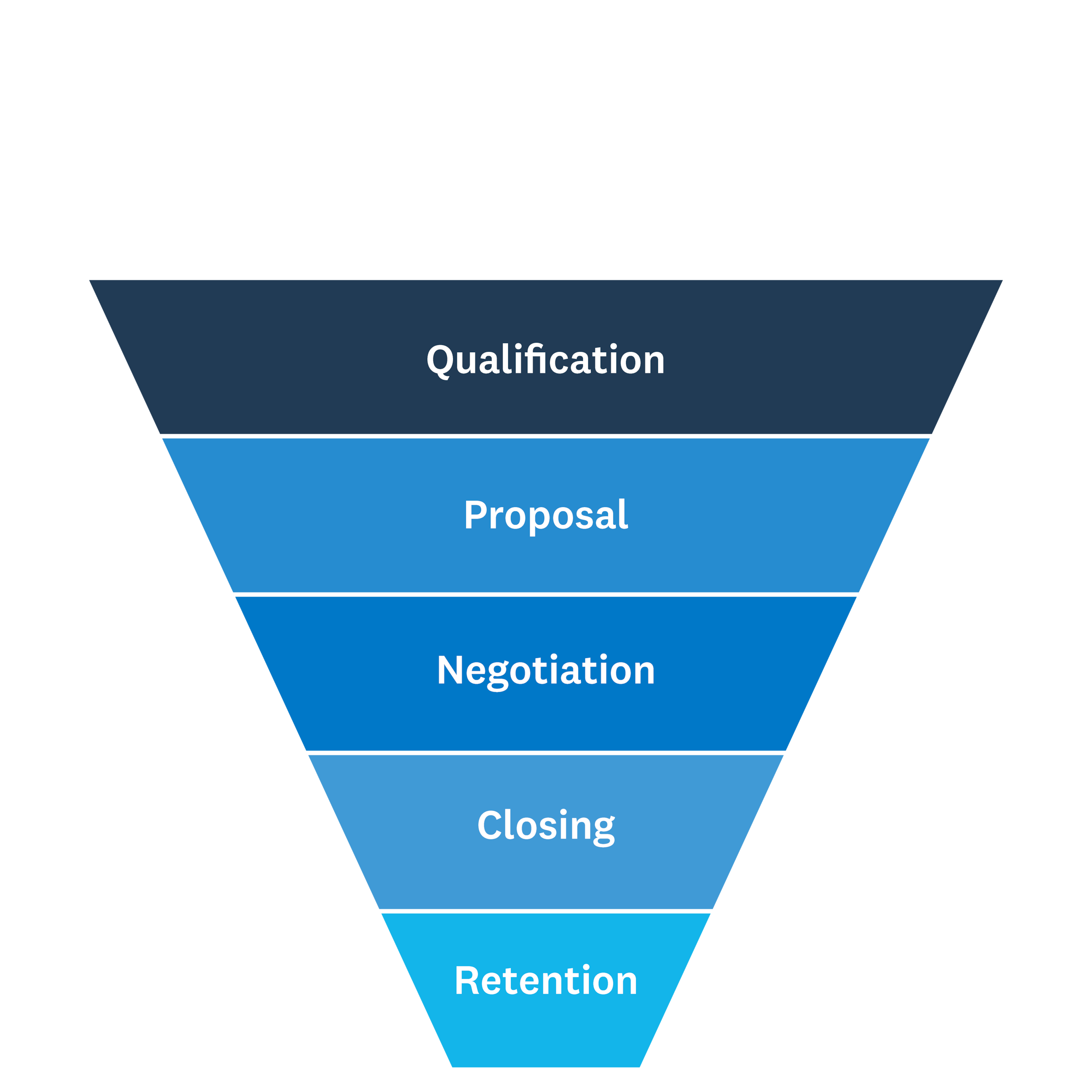
The five sales funnel stages are qualification, proposal, negotiation, closing, and retention. Each stage represents a step in converting prospects into paying customers and keeping them long-term.
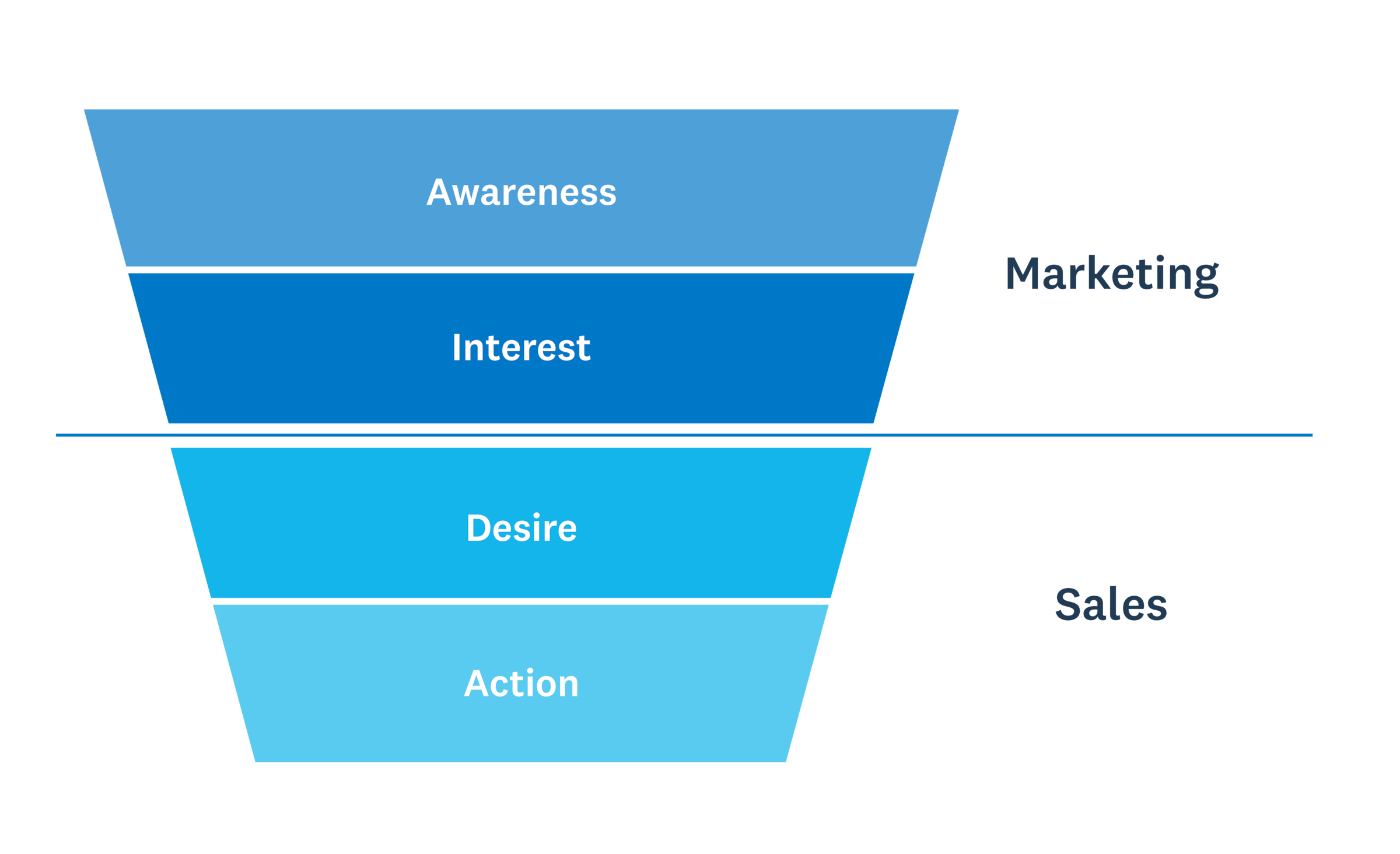
Before prospects enter your funnel, marketing grabs their attention. Once they engage with your business by visiting your website, signing up for a newsletter, or requesting more info, they've entered the funnel.
Stage 1: Qualification
Qualification is where you identify best-fit prospects based on their needs, budget, and timeline. Evaluate whether the lead has decision-making authority and genuine interest in your solution.
Focus your efforts on prospects most likely to convert. This saves time and ensures your sales team works with high-potential opportunities.
Stage 2: Proposal
The proposal stage is where you present your product or service to qualified leads, demonstrating its value. Tailor your pitch to address their specific pain points and show how your solution solves their problem.
Use demos, case studies, or detailed proposals to build confidence. A personalized approach that highlights your unique value proposition works best.
Stage 3: Negotiation
Negotiation involves addressing objections and discussing terms, pricing, or contract details. Listen to concerns and provide clear answers that move the conversation forward.
Flexibility matters here. Timing and urgency play a major role in decision-making, so stay adaptable to shifting priorities.
Stage 4: Closing
Closing finalizes the sale by securing agreement, processing payment, and completing the transaction. This step must be carefully documented to implement the revenue standard.pdf) properly.
Streamline the final steps so prospects can commit without hesitation. Consider offering flexible payment options or limited-time incentives to encourage commitment.
Stage 5: Retention
Retention keeps customers engaged after the sale to build loyalty and encourage repeat purchases. Strong post-sale support turns one-time buyers into advocates and repeat customers.
Offer maintenance contracts, loyalty programs, or regular check-ins. These initiatives encourage repeat business and create upsell opportunities.
How does a sales funnel work?
A sales funnel works by guiding potential customers through a series of stages, from initial awareness to final purchase. At each stage, some prospects move forward while others drop off, naturally filtering your audience down to the most qualified buyers.
The process typically unfolds like this:
- Starts wide, ends narrow: Many prospects enter at awareness, but only a fraction convert to paying customers
- Filters progressively: Each stage removes prospects who aren't ready, willing, or able to buy
- Builds commitment: Prospects invest more time and attention as they move deeper into the funnel
- Allows natural drop-off: Prospects leave at every stage due to timing, budget, or poor fit
- Focuses on conversion: Your goal is to move qualified prospects smoothly from one stage to the next
Track where prospects drop off to identify weak points and improve conversion rates over time.
How to create a sales funnel
Building a sales funnel requires planning at each stage to guide prospects to convert. Follow these five steps to create a funnel that works for your business.
1. Qualify your leads
Qualifying leads helps you determine which prospects are worth pursuing based on their needs, budget, and decision-making authority. Evaluate demographics, pain points, and purchasing behaviors to gauge how likely they are to convert.
Focus your efforts where opportunity is greatest. Leads in thriving industries or growing regions often hold more potential than those in struggling markets.
Learn more about market research and strategies tailored for SMBs.
2. Propose your product or service
The proposal stage presents your solution to qualified leads through sales calls, demonstrations, or formal proposals. Tailor your pitch to address specific pain points and demonstrate clear value.
3. Negotiate the details
Negotiation addresses objections and finalizes terms, pricing, or contract details. Work through objections and finalize agreement terms with a personalized approach to overcoming each prospect's specific concerns.
Timing, urgency, and economic factors all influence a prospect's willingness to commit, so adapt to shifting conditions.
4. Close the sale
Closing finalizes the sale and processes payment with minimal friction. Use a seamless checkout or contract process with flexible payment options.
Exclusive discounts or free upgrades can provide the final push needed to secure the deal.
5. Retain your customers
Retention turns one-time buyers into long-term customers through strong post-sale support. For some companies, post-sale services are a primary driver of revenue.
Regular check-ins and proactive support demonstrate that you value existing customers. This approach costs far less than acquiring new customers and creates opportunities for repeat business.
Sales funnel examples
Every business tailors its sales funnel to its audience, but the core structure stays the same. These three different business models apply the funnel stages in distinct ways.
eCommerce sales funnel
The eCommerce sales funnel moves customers from product discovery to purchase with minimal friction. Online retailers focus on reducing barriers and creating a seamless buying experience.
- Attract: Drive traffic through ads, SEO, and social media
- Engage: Build interest with product pages, images, and reviews
- Capture: Collect emails with discounts or freebies for sign-ups
- Nurture: Re-engage with retargeting ads and abandoned cart emails
- Convert: Simplify checkout to reduce drop-off
- Retain: Encourage repeat purchases with personalized recommendations
B2B sales funnel
The B2B sales funnel focuses on building trust and demonstrating expertise to drive high-value conversions. Longer sales cycles require more touchpoints and relationship-building.
- Attract: Generate leads through content marketing, networking, and referrals
- Engage: Build credibility with webinars, case studies, and whitepapers
- Capture: Collect contact info with gated content and consultation offers
- Qualify: Assess fit based on company size, budget, and decision-making authority
- Propose: Deliver personalized demos and tailored proposals
- Close: Negotiate contracts and finalize agreements
- Retain: Maintain relationships through ongoing support and account management
Service-based sales funnel
The service-based sales funnel emphasizes relationship-building and expertise to convert prospects into long-term clients. Service providers often rely on referrals and consultations to build trust.
- Attract: Share expertise through content, speaking engagements, and networking
- Engage: Offer free consultations or audits to demonstrate value
- Capture: Collect leads through contact forms and scheduling tools
- Qualify: Determine project scope, budget, and timeline fit
- Propose: Present customized service packages with clear deliverables
- Close: Finalize service agreements and project terms
- Retain: Build loyalty through exceptional delivery and ongoing communication
FAQs on sales funnels
Here are answers to common questions about building and optimizing sales funnels.
What's the difference between a sales funnel and a marketing funnel?
A marketing funnel focuses on attracting and nurturing leads before they're ready to buy, while a sales funnel tracks the journey from qualified lead to paying customer. Marketing funnels generate awareness and interest, then hand off qualified prospects to sales teams who guide them through the purchase decision.
How long should my sales funnel be?
Your sales funnel length depends on your business model and sales cycle. B2B sales funnels often take weeks or months due to longer decision-making processes, while eCommerce funnels may convert in minutes or days. Track your average time-to-conversion and design your funnel stages accordingly.
What's a good conversion rate for a sales funnel?
Conversion rates vary widely by industry, business model, and funnel stage. eCommerce sites typically see 2-3% overall conversion rates, while B2B companies may see 1-5% of leads convert to customers. Focus on improving your baseline conversion rate rather than comparing to industry benchmarks.
How do I track my sales funnel performance?
Track key metrics at each funnel stage, including the number of prospects entering, conversion rates between stages, and average time spent in each stage. Use CRM software or analytics tools to monitor these metrics and identify bottlenecks where prospects drop off.
Can I have multiple sales funnels?
Yes, many businesses run multiple sales funnels for different products, customer segments, or channels. Each funnel should address the specific needs and behaviors of its target audience. Just ensure you have the resources to manage and optimize each funnel effectively.
Sales grow and late payments improved*
Read the full report for Xero's small business insights focusing on several core performance metrics, including sales growth, time to be paid, and late payments.
US sales: +0.8%*
Small business sales increased an average of 0.8% y/y in the three months to September. Published: 6 February 2025.
Disclaimer
Xero does not provide accounting, tax, business or legal advice. This guide has been provided for information purposes only. You should consult your own professional advisors for advice directly relating to your business or before taking action in relation to any of the content provided.