Petty cash: what it is, how it works, and how to manage it
A guide to setting up, tracking, and reconciling a petty cash fund for your small business.

Written by Lena Hanna—Trusted CPA Guidance on Accounting and Tax. Read Lena's full bio
Published Tuesday 12 May 2026
Table of contents
- What is petty cash?
- Types of petty cash
- Why use petty cash?
- Advantages and disadvantages of petty cash
- How to set up a petty cash fund
- How does petty cash work?
- What expenses should you use petty cash for?
- Common businesses that use petty cash
- Best practices for managing petty cash
- How to record petty cash
- How to reconcile petty cash
- Petty cash vs. cash on hand
- Tools and software to manage petty cash
- FAQs on managing petty cash
Key takeaways
- Petty cash is a small amount of physical currency your business keeps on hand for minor, everyday expenses. Setting clear policies and assigning a custodian keeps the fund organized and reduces the risk of misuse.
- Tracking every transaction with receipts and vouchers is essential for accurate bookkeeping. Without proper documentation, small expenses can add up and create gaps in your financial records.
- Regular reconciliation, whether weekly or monthly, helps you catch errors early and maintain accountability. Comparing physical cash to your records ensures nothing slips through the cracks.
- Moving to digital tools like expense cards or accounting software can streamline petty cash management, cut down on paperwork, and give you a clearer picture of where your money goes.
What is petty cash?
Petty cash is a small amount of physical money that a business keeps on-site to cover minor, everyday expenses. It's classified as a current asset on the balance sheet because it represents funds available for immediate use.
Think of it as a designated cash reserve for purchases that are too small or too urgent to run through the usual accounts payable process. Common examples include buying office supplies, reimbursing an employee for parking, covering postage, or picking up coffee for a client meeting.
Most businesses store petty cash in a locked box or drawer and assign one person, known as the custodian, to manage it. The custodian tracks withdrawals, collects receipts, and makes sure the fund stays balanced.
Types of petty cash
Businesses typically organize petty cash into different categories depending on how the funds are used. Understanding these types can help you choose the right approach for your business.
- General petty cash: This is the most common type. It covers everyday minor business expenses like office supplies, postage, and small reimbursements. Most small businesses start with a general petty cash fund and find it meets the majority of their needs.
- Discretionary petty cash: This fund gives the custodian flexibility to approve non-routine purchases based on their judgment. For example, buying a last-minute gift for a departing team member or picking up supplies for an unplanned meeting would fall under discretionary spending.
- Emergency petty cash: This fund is set aside specifically for unexpected, urgent expenses. A burst pipe that needs an immediate plumber visit or a broken lock that requires a same-day locksmith are good examples. The key distinction is that these expenses can't wait for a standard purchase order.
- Imprest petty cash: This is a system rather than a spending category. With an imprest fund, you start with a fixed amount and replenish it to that same level after each reconciliation. For example, if your fund starts at $200 and you spend $75, you'd add exactly $75 back during replenishment. This approach makes tracking and reconciliation straightforward.
Why use petty cash?
A petty cash fund gives your business a fast, simple way to handle small expenses without slowing down daily operations. Here are the main benefits:
- Covers minor purchases quickly without needing to process a check or credit card transaction
- Reduces the administrative burden of running every small expense through accounts payable
- Keeps your team productive by removing delays when someone needs a quick reimbursement
- Helps you track small spending that might otherwise go unrecorded
- Supports better cash flow management by giving you visibility into everyday costs
Advantages and disadvantages of petty cash
Petty cash can be a practical tool for your business, but it comes with trade-offs. Here's a closer look at both sides.
Advantages of petty cash
- Provides immediate access to cash for small, time-sensitive purchases
- Simplifies the payment process for low-value transactions
- Reduces the need for formal purchase orders or reimbursement requests for minor items
- Gives you a clear record of small expenses when managed with receipts and vouchers
- Keeps operations running smoothly when digital payment methods aren't an option
Disadvantages of petty cash
- Creates a higher risk of theft or misuse if controls are weak
- Requires consistent manual tracking, which can be time-consuming
- Makes it harder to maintain a clear audit trail compared to digital payments
- Can lead to inaccurate records if receipts are lost or transactions go undocumented
- Limits spending visibility if you're not reconciling the fund regularly
How to set up a petty cash fund
Setting up a petty cash fund takes just a few steps. Follow this process to get yours running smoothly from the start.
- Determine your fund amount. Review your recent small expenses to estimate how much cash you'll need. Most small businesses start with $100 to $500, depending on how frequently minor purchases come up.
- Assign a custodian. Choose one trustworthy person to manage the fund. This person will be responsible for distributing cash, collecting receipts, and keeping records up to date.
- Set clear spending policies. Define what the fund can and can't be used for, set a maximum amount per transaction, and outline the receipt requirements. Put these rules in writing so everyone on your team understands them.
- Secure the cash. Store the petty cash in a locked box, drawer, or small safe. Only the custodian should have access to the key or combination.
- Create a tracking system. Set up a petty cash log or spreadsheet to record every withdrawal. Each entry should include the date, amount, purpose, and the name of the person receiving the cash.
- Establish a replenishment schedule. Decide how often you'll top up the fund, whether that's weekly, biweekly, or monthly. Reconcile the remaining cash against your records before adding new funds.
How does petty cash work?
The petty cash cycle follows a predictable pattern: you fund it, spend from it, track every transaction, and replenish it when the balance gets low. Here's how each phase works.
Setting up the fund
You start by withdrawing a set amount from your business bank account and placing it in a secure location. Record this initial withdrawal as a debit to your petty cash account and a credit to your cash account. The amount you choose should reflect your expected small-expense needs over a set period, usually two to four weeks.
Spending and tracking
When someone needs cash for a minor expense, they submit a request to the custodian. The custodian hands over the cash and fills out a petty cash voucher that records the date, amount, recipient, and reason for the expense. The person receiving the cash should return a receipt as soon as possible. At any point, the total of all vouchers plus the remaining cash should equal the original fund amount.
Replenishing the fund
When the fund runs low, the custodian tallies all vouchers and receipts, then requests a check or transfer for the exact amount spent. This brings the fund back to its starting balance. During replenishment, you'll record each expense category in your general ledger and credit your cash account for the total reimbursement.
For solo business owners
If you run a one-person business, you're likely handling petty cash yourself. The tracking process stays the same: keep receipts, log every transaction, and reconcile regularly. This is especially relevant for tax purposes, since the Internal Revenue Service (IRS) requires you to keep records of all business expenses. For detailed guidance on recordkeeping requirements, review IRS Publication 583, which covers starting a business and keeping records for self-employment tax.
What expenses should you use petty cash for?
Knowing which expenses belong in your petty cash fund helps you keep the system efficient and your records clean. Here's a breakdown.
Appropriate petty cash expenses
These are typically small, routine purchases that would be impractical to process through your standard payment systems:
- Office supplies like pens, notebooks, and printer paper
- Postage and shipping for small packages
- Minor repairs or maintenance items
- Employee meal reimbursements for business-related events
- Parking fees and local transit costs
- Coffee, tea, and kitchen supplies for the office
- Small miscellaneous expenses that don't fit neatly into other budget categories
Expenses to avoid paying with petty cash
Some purchases should go through your formal payment channels for better tracking and accountability:
- Large or recurring expenses that exceed your per-transaction limit
- Employee salaries, bonuses, or advances
- Personal expenses of any kind
- Travel costs beyond local transit
- Equipment or technology purchases
- Client-facing expenses like event sponsorships or marketing materials
Common businesses that use petty cash
Petty cash is common across many industries, especially in businesses where small, on-the-spot purchases come up regularly. Here are a few examples.
- Law firms: Attorneys and their staff frequently cover client-related costs like courier fees, notary charges, filing fees, and last-minute document printing. A petty cash fund keeps these small transactions from piling up in the reimbursement queue.
- Retail stores: Shop managers often need quick access to cash for making change at the register, buying cleaning supplies, or replacing small display items. Having petty cash on hand keeps the store running without interrupting daily sales.
- Restaurants: Kitchen staff may need to make a quick run for a missing ingredient, and managers might cover small equipment repairs or replacement utensils. Petty cash helps restaurants handle these incidental expenses without delay.
- Construction companies: Job sites often need supplies from the hardware store on short notice, and there are occasional costs for permit fees or delivery tips. A petty cash fund lets site managers handle these purchases without waiting for approval from the main office.
- Healthcare offices: Medical practices regularly buy office supplies, patient comfort items like tissues and magazines, and small cleaning products. Petty cash makes it easy to keep the waiting room stocked and the office running smoothly.
Best practices for managing petty cash
Good petty cash management protects your business from errors and fraud. These practices help you stay organized and accountable.
Set clear policies and limits
Write a petty cash policy that covers who can access the fund, what it can be used for, and the maximum amount for a single transaction. Share this policy with every team member who might request funds. Clear rules reduce confusion and set expectations from the start.
Assign a dedicated custodian
One person should manage the fund at all times. This creates a single point of accountability and makes it easier to trace any discrepancies. If the custodian is absent, designate a temporary replacement rather than giving multiple people open access.
Require receipts for every transaction
No receipt, no reimbursement. Make this a firm rule. Every withdrawal should be paired with a receipt and a completed petty cash voucher. If a receipt is lost, require a signed memo describing the expense with as much detail as possible.
Strengthen internal controls
Segregation of duties is one of the most effective ways to prevent fraud. Ideally, the person who authorizes petty cash spending should be different from the person who disburses the funds, and a third person should handle reconciliation. For very small teams, have someone other than the custodian perform surprise audits. Keep the cash in a locked location and conduct unannounced counts to verify the balance matches your records.
Reconcile on a regular schedule
Set a recurring date, whether weekly, biweekly, or monthly, to reconcile your petty cash fund. During reconciliation, compare the physical cash plus all vouchers against the starting balance. Address any discrepancies right away rather than carrying them forward.
Keep your fund at the right level
If you're replenishing too often, your fund may be too small. If a large portion of cash sits unused between reconciliations, it may be too large. Review your fund size quarterly and adjust as your business needs change.
How to record petty cash
Accurate recording keeps your petty cash fund transparent and audit-ready. There are three main tools for tracking transactions.
Petty cash vouchers
A petty cash voucher is a simple form that captures the details of each withdrawal. Every time cash leaves the fund, the custodian should fill out a voucher with the date, amount, purpose of the expense, and the name of the person receiving the cash. Attach the receipt to the voucher and file them together. Vouchers are your first line of defense against lost or undocumented expenses.
Petty cash book or spreadsheet
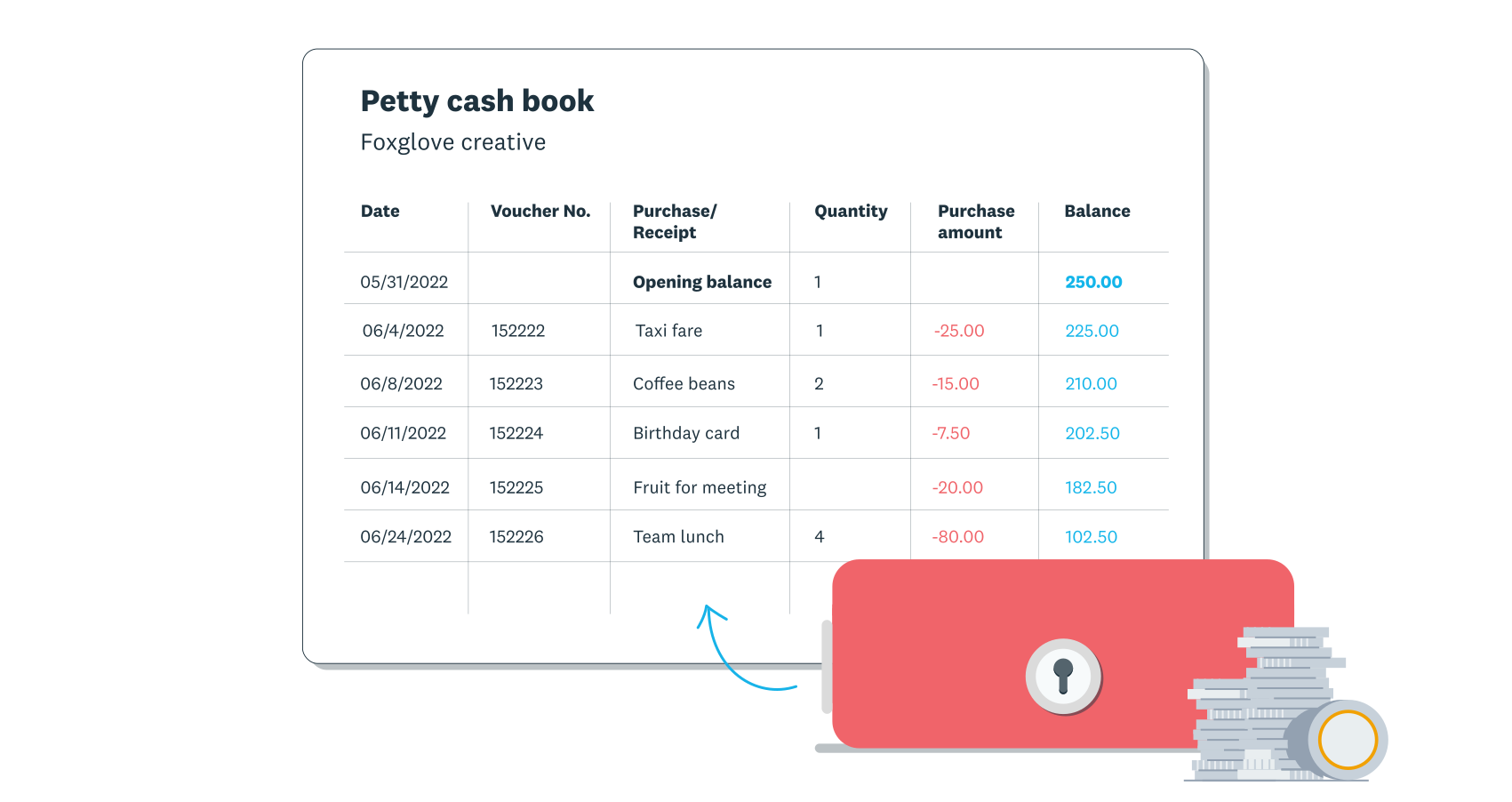
A petty cash book is a running log of all fund activity. Each entry should include the voucher number, date, description, amount spent, and the remaining balance. You can use a physical ledger or a spreadsheet. Here's an example of what a petty cash book might look like:
Review the log regularly to spot patterns in spending and catch any errors before they compound.
General ledger entries
At the end of each reconciliation period, transfer your petty cash expenses into your general ledger. Debit each relevant expense account, for example office supplies or postage, for the amounts spent. Credit your petty cash account for the total. Petty cash appears as a current asset on your balance sheet, so keeping these entries accurate ensures your financial statements reflect the true state of your business.
How to reconcile petty cash
Reconciling your petty cash fund on a regular basis helps you catch errors, prevent fraud, and keep your books accurate. Follow these six steps each time you reconcile.
- Count the physical cash. Remove all the money from the petty cash box and count it carefully. Write down the exact amount.
- Total all vouchers and receipts. Add up every petty cash voucher since the last reconciliation. Make sure each one has a matching receipt attached.
- Compare against the starting balance. Add the physical cash count to the voucher total. This combined figure should equal the fund's starting balance. If it doesn't, there's a discrepancy to investigate.
- Identify and resolve discrepancies. Check for missing receipts, math errors, or unauthorized withdrawals. Document any variances and determine the cause before moving forward.
- Record the expenses. Transfer each expense from your vouchers into the appropriate accounts in your general ledger. This keeps your books up to date and ensures every dollar is accounted for.
- Replenish the fund. Request a check or transfer for the total amount spent and return the fund to its original balance. File all vouchers and receipts from this period for your records.
Petty cash vs. cash on hand
Petty cash and cash on hand are related but not the same thing. Petty cash is a specific, designated fund set aside for small business expenses, managed by a custodian with documented policies, receipts, and spending limits.
Cash on hand is a broader term that refers to all physical currency your business has at any given time. This includes petty cash, cash in registers, cash from recent sales that hasn't been deposited, and any other physical money on the premises.
Here's a simple way to think about it:
- Petty cash: A portion of your total cash, set aside with clear rules for how it's spent and tracked
- Cash on hand: The full amount of physical currency your business holds, including petty cash and everything else
On your balance sheet, both fall under current assets. Petty cash typically has its own line item, while cash on hand may be grouped with your cash and cash equivalents. The key difference is that petty cash has a defined purpose and management structure, while cash on hand is simply a measure of all the physical money available to your business.
Tools and software to manage petty cash
Managing petty cash with pen and paper works, but digital tools can save you time and reduce errors. Here are three categories worth considering.
Accounting software
Most modern accounting platforms include features for tracking petty cash as a separate account. You can record transactions, categorize expenses, and generate reports without maintaining a manual ledger. Look for software that lets you set up a dedicated petty cash account and integrates with your bank for easy reconciliation.
Expense management apps
Apps designed for expense tracking let employees photograph receipts, log expenses on the go, and submit reimbursement requests digitally. This cuts down on lost receipts and makes the approval process faster. Many of these apps integrate directly with accounting software, so data flows into your books automatically.
Digital alternatives like expense cards
Prepaid expense cards or corporate cards with spending limits can replace physical petty cash entirely. Each transaction is recorded digitally, so there's no need to count cash or track paper vouchers. You can set per-transaction limits, restrict spending categories, and review activity in real time. For businesses looking to reduce the risks associated with handling physical cash, expense cards are a practical option.
Manage petty cash with confidence using Xero
Xero's accounting software makes it easy to track petty cash alongside the rest of your finances. Set up a dedicated petty cash account, record transactions as they happen, and reconcile your fund without juggling spreadsheets or paper logs.
With real-time visibility into your expenses and simple bank reconciliation tools, you can spend less time on admin and more time running your business. Get 90% off for 6 months.
FAQs on managing petty cash
Here are answers to some of the most common questions about handling petty cash in your business.
How much petty cash should I keep on hand?
Most small businesses keep between $100 and $500, depending on how often minor expenses come up. Start on the lower end and adjust after a month or two based on your actual spending patterns.
What should I do if an employee loses a receipt?
Ask the employee to write and sign a memo that includes the date, amount, vendor, and purpose of the expense. While this isn't a perfect substitute, a signed record helps maintain your audit trail.
How often should I reconcile petty cash?
At a minimum, reconcile monthly. If your business processes a high volume of petty cash transactions, consider reconciling weekly or biweekly to catch discrepancies sooner.
Can I use petty cash for any business expense?
Petty cash is intended for small, incidental purchases only. Large transactions, recurring expenses, and anything that requires formal documentation should go through your standard payment process.
What are signs that petty cash is being misused?
Frequent shortages, missing or incomplete vouchers, unusual spending patterns, and a reluctance from the custodian to allow audits are all warning signs. Conducting surprise cash counts is one of the most effective ways to detect issues early.
Is petty cash an asset?
Yes, petty cash is a current asset on the balance sheet. It's recorded under current assets because it represents cash that's available for immediate business use.
Disclaimer
Xero does not provide accounting, tax, business or legal advice. This guide has been provided for information purposes only. You should consult your own professional advisors for advice directly relating to your business or before taking action in relation to any of the content provided.
Get 90% off for 6 months
Get 90% off for 6 months on any Xero plan.