Journal entries in accounting: a guide and examples
Learn what journal entries are, the different types, and how to record them accurately.

Written by Lena Hanna—Trusted CPA Guidance on Accounting and Tax. Read Lena's full bio
Published Tuesday 26 May 2026
Table of contents
Key takeaways
- Record every transaction using debits and credits. Total debits must always equal total credits to keep your books balanced and financial statements accurate.
- Choose the right type of journal entry for each situation. Use simple entries for basic transactions and compound entries for multiple accounts. Use adjusting entries when income or expenses span more than one period.
- Fix mistakes with a correcting journal entry that reverses the error and records the transaction correctly. This keeps a clear audit trail without altering your original records.
- Automate recurring journal entries with accounting software to cut down on manual work and reduce errors. This frees up time for running your business.
What is a journal entry?
A journal entry records a business transaction using debits and credits. It tracks how money moves through your accounts. Each entry captures the date, amounts, and accounts affected to keep your bookkeeping accurate.
Journal entries are fundamental to your accounting system. They feed directly into your general ledger. That means your financial statements reflect your actual business performance.
How journal entries work
Journal entries work by recording equal debits and credits for every transaction. This double-entry system keeps your books balanced and your financial records accurate. It's built on the accounting equation: Assets = Liabilities + Equity.
Here's how debits and credits affect your accounts:
- Debits increase asset and expense accounts.
- Credits increase liability, revenue, and equity accounts.
- Total debits must equal total credits in every entry.
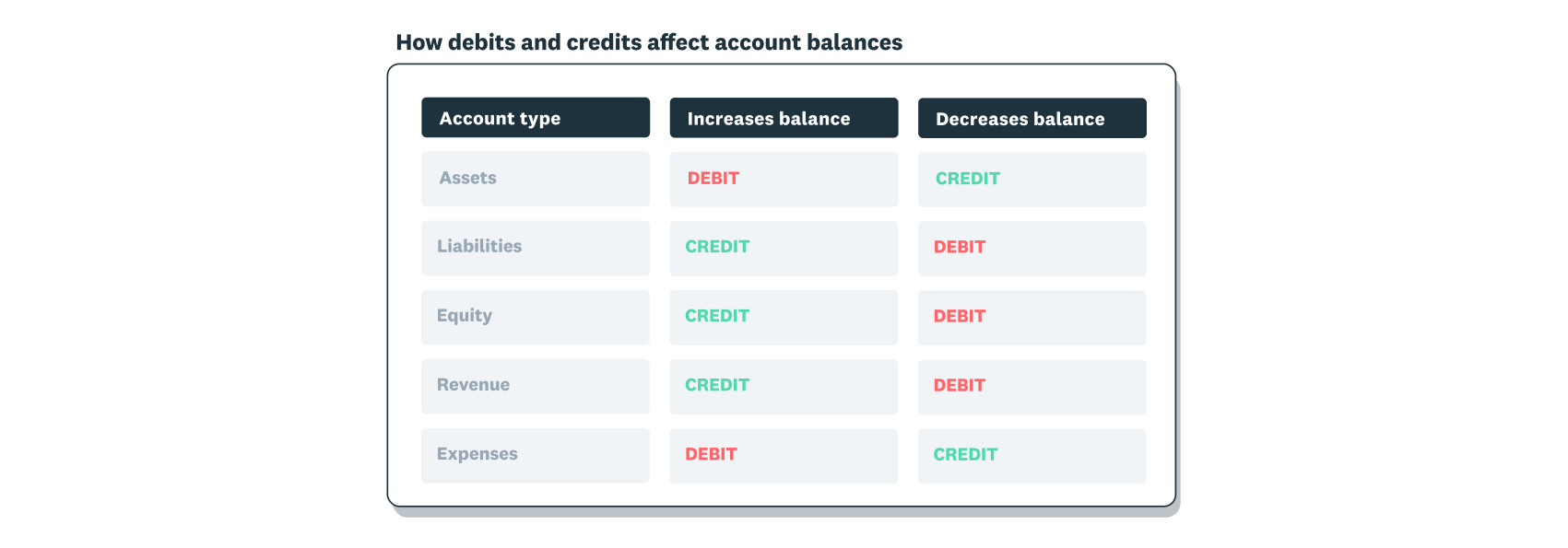
Debits increase asset accounts (cash, inventory, equipment) and expense accounts (rent, utilities, supplies). Credits increase liability accounts (loans, accounts payable), revenue accounts (sales, service income), and equity accounts (owner's capital, retained earnings).
If you need help setting up your books, you can find an accountant near you.
What are the different types of journal entries in accounting?
The seven main types of journal entries are simple, compound, adjusting, reversing, recurring, closing, and correcting. Each serves a specific purpose in your accounting workflow.
Simple journal entry
A simple journal entry involves exactly two accounts: one debit and one credit for the same amount. Use simple entries for straightforward transactions like cash purchases, bill payments, or single-item sales.
Compound journal entry
A compound journal entry involves more than two accounts with multiple debits and credits. All debits must still equal all credits, regardless of how many accounts are involved.
Common uses for compound entries:
- Payroll processing with wages, taxes, and deductions. Keep all records of employment for at least four years to stay compliant.
- Inventory purchases using multiple payment methods.
- Sales transactions that include discounts and taxes.
Adjusting journal entry
An adjusting journal entry updates your account balances at the end of an accounting period. Use adjusting entries to record income or expenses that span multiple periods or might have been missed.
Common uses include estimated expenses, accruals, and deferred revenue. Xero Small Business Insights data shows US small businesses waited 7.8 days past invoice due dates in Q4 2025. That makes adjusting entries essential for accurately reflecting revenue that's been earned but not yet received.
Say you complete a three-month project but invoice at the end. You'd record an adjusting entry each month for one-third of the revenue.
Reversing journal entry
A reversing journal entry undoes an entry from the previous period to simplify recording the actual transaction.
Say you accrued wages in December for work paid in January. You'd reverse that accrual in January when you record the actual payment.
Recurring journal entry
A recurring journal entry records transactions that repeat on a regular schedule, such as monthly rent, loan payments, or subscription fees. Many accounting software platforms let you automate these entries to save time and reduce errors.
Closing journal entry
A closing journal entry transfers balances from temporary accounts to permanent accounts at period-end. It moves revenue and expenses into retained earnings. This resets your temporary accounts to zero so you're ready for the next fiscal period.
Correcting journal entry
A correcting journal entry fixes errors in previous entries without deleting the original record. Use it when you've posted an amount to the wrong account or recorded an incorrect figure.
To correct an error, create a new entry that reverses the mistake and records the transaction correctly. This maintains a clear audit trail in your books. The SEC requires accounting firms to retain certain records for seven years after an audit.
Common journal entry mistakes and how to avoid them
Even experienced bookkeepers make mistakes with journal entries. Catching these common errors early keeps your books accurate and saves you time at period-end.
- Unbalanced entries: Always verify that total debits equal total credits before posting. An unbalanced entry throws off your entire general ledger.
- Wrong account classification: Double-check that you're posting to the correct account. Recording a utility payment to an office supplies account, for example, distorts your expense reporting.
- Missing descriptions: Include a brief note with every entry. You'll need it during a future review or audit.
- Inconsistent dating: Record entries on the date the transaction occurs, not the date you get around to entering it. Backdating creates gaps in your financial timeline.
- Skipping reviews: Review your entries regularly, ideally weekly. Catching errors early prevents small mistakes from compounding into bigger problems at year-end.
When to use journal entries
You need a journal entry whenever a transaction affects your business's finances. If you're using accrual accounting, you'll also need entries for transactions where cash hasn't changed hands yet.
Common situations that require a journal entry:
- Recording a cash sale to a customer.
- Purchasing inventory or supplies on credit.
- Paying employee wages.
- Receiving a loan from the bank.
- Adjusting accounts at the end of a period.
Under accrual accounting, you'll also create entries for:
- Accrued expenses, such as wages your team has earned but you haven't paid yet.
- Deferred revenue, such as a deposit you've received for work you haven't completed.
- Prepaid expenses, such as six months of insurance paid upfront but recognized monthly.
Journal entry examples
Seeing journal entries in action makes them easier to understand. Here are four examples covering different entry types.

Simple entry: purchasing supplies with cash
The Cozy Cake Shop bought baking supplies worth $300 on January 20, 2025. The bookkeeper debits the baking supplies account (increasing the asset) and credits the cash account (decreasing cash).
- Debit: Baking Supplies $300
- Credit: Cash $300
Compound entry: payroll with deductions
On January 31, 2025, the Cozy Cake Shop processes payroll of $5,000. Federal taxes of $750 and state taxes of $250 are withheld.
- Debit: Wages Expense $5,000
- Credit: Federal Tax Payable $750
- Credit: State Tax Payable $250
- Credit: Cash $4,000
Adjusting entry: accrued revenue
On January 31, 2025, the Cozy Cake Shop completed a $1,200 catering contract but hasn't invoiced the client yet. The bookkeeper records the earned revenue with an adjusting entry.
- Debit: Accounts Receivable $1,200
- Credit: Catering Revenue $1,200
Correcting entry: fixing a misclassified expense
On February 3, 2025, the bookkeeper discovers that a $200 delivery fee was accidentally recorded as an office supplies expense. A correcting entry fixes the classification.
- Debit: Delivery Expense $200
- Credit: Office Supplies Expense $200
How to record journal entries
Recording journal entries correctly keeps your books accurate and helps you avoid costly mistakes. Follow these five steps for every transaction.
1. Identify the transaction and accounts involved
Start by identifying which accounts the transaction affects. Ask yourself: what did you receive, and what did you give up?
Examples:
- Cash purchase: gain supplies (asset), lose cash (asset).
- Credit sale: gain receivables (asset), recognize revenue.
- Loan payment: lose cash (asset), reduce loan balance (liability).
2. Classify the transaction as a debit or credit
Determine whether each account needs a debit or credit. Debits increase assets and expenses, while credits increase liabilities, revenue, and equity.
3. Record the date and transaction details
Enter the transaction date and a brief description, such as "office supplies purchase." This makes it easy to reference the entry later.
4. Enter debit and credit amounts
Enter the amounts in your debit and credit columns, then verify that total debits equal total credits before moving on.
5. Post to your general ledger and review
Post the entry to your general ledger. Run a final review to confirm the amounts balance and your accounts are accurate.
Simplify your journal entries with Xero
Accurate journal entries are the foundation of reliable financial records. But recording them manually takes time you could spend running your business.
Xero's cloud accounting software automates routine journal entries, keeps your records organized, and gives you real-time financial reports. You can set up recurring entries, reconcile bank transactions, and generate instant financial statements from anywhere.
Ready to spend less time on bookkeeping? Try Xero and get one month free.
FAQs on journal entries
Here are frequently asked questions about journal entries.
What are the five types of journal entries?
The five most common types are simple, compound, adjusting, closing, and correcting entries. Simple entries affect two accounts, while compound entries involve three or more. Adjusting and closing entries update your books at period-end, and correcting entries fix mistakes.
What are the three rules of journal entry?
The three rules are based on account type. For personal accounts, debit the receiver and credit the giver. For real accounts, debit what comes in and credit what goes out. For nominal accounts, debit all expenses and losses, and credit all income and gains.
What's the difference between simple and compound journal entries?
A simple entry affects exactly two accounts with one debit and one credit. A compound entry involves three or more accounts, such as a payroll entry that includes wages, taxes, and deductions.
How often should I make journal entries?
Record a journal entry every time a business transaction occurs. Consistent, timely entries keep your books accurate and give you reliable data for making confident business decisions.
What happens if I make an error in a journal entry?
Create a correcting journal entry that reverses the mistake and records the transaction correctly. This maintains a clear audit trail without altering your original records. Review your entries regularly so you catch errors before they affect your financial statements.
Can Xero automatically create journal entries for me?
Yes. When you create invoices, record bills, or reconcile bank transactions in Xero, the software generates the corresponding journal entries automatically. This saves time and reduces the chance of manual errors in your books.
Disclaimer
Xero does not provide accounting, tax, business or legal advice. This guide has been provided for information purposes only. You should consult your own professional advisors for advice directly relating to your business or before taking action in relation to any of the content provided.