Free business plan template
Map out your startup or small business with a free, editable PDF. Choose a one-page or multi-page business plan.
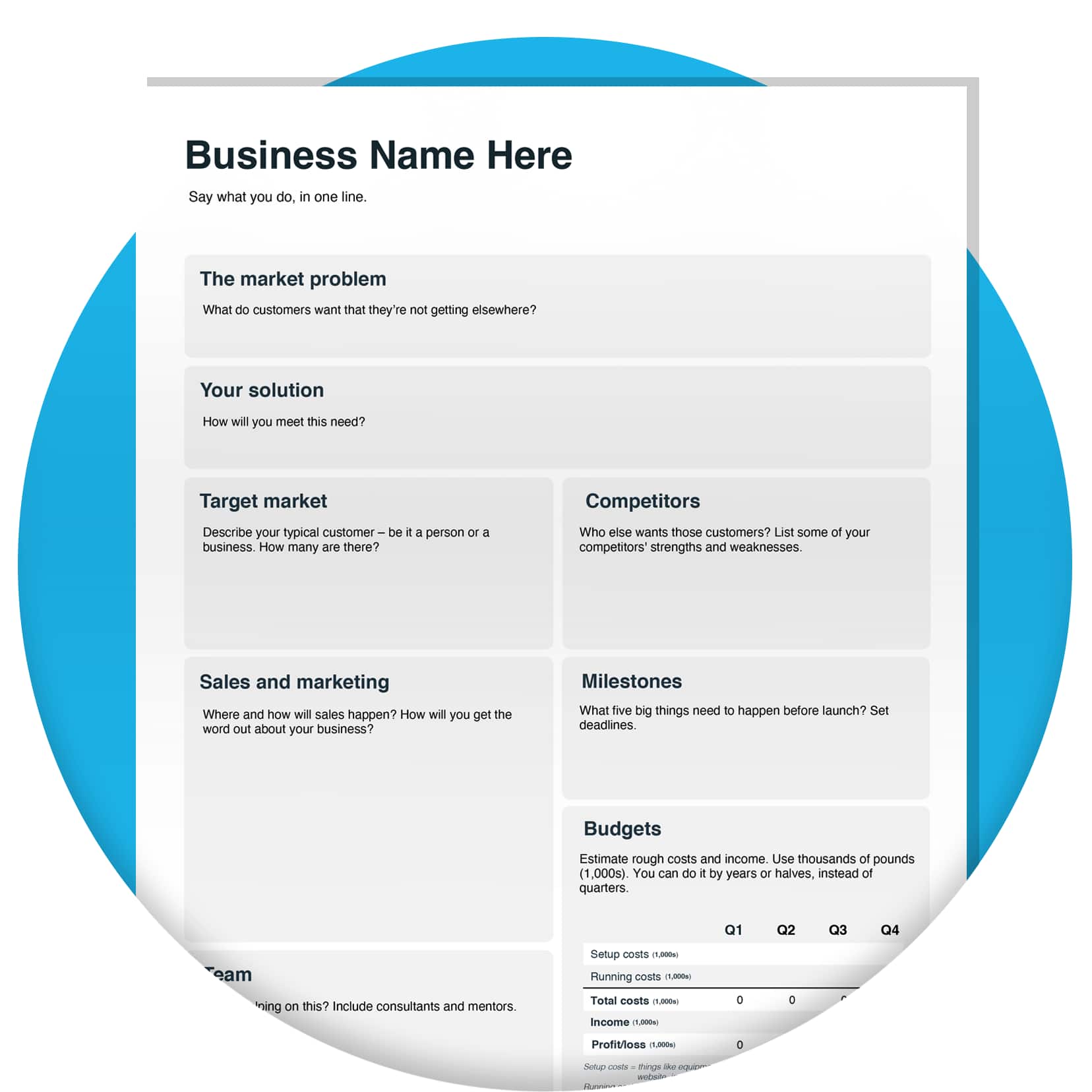
One-page and multi-page versions
Start with a quick one-page plan, then build the detailed version when you're ready to pitch.
Guidance for every section
Each part of the plan has an annotated explanation, so you know what to write and why.
Editable and easy to update
Fill in the PDF, tailor its structure to your business and revise your plan as things change.
Last updated: October, 2026
Download the business plan template
Fill in the form to get a free business plan template as an editable PDF. We’ll send a one-pager and a multi-pager to choose from.
Why a business plan matters
A business plan sets the direction for your small business or startup and explains your vision to others. Because the template is reusable, you can tailor one plan for investors, staff and prospects. A plan helps you:
- test whether a startup idea is viable
- size up competitors and find your competitive edge
- set goals and plan your marketing
- show lenders and investors why your business is worth backing
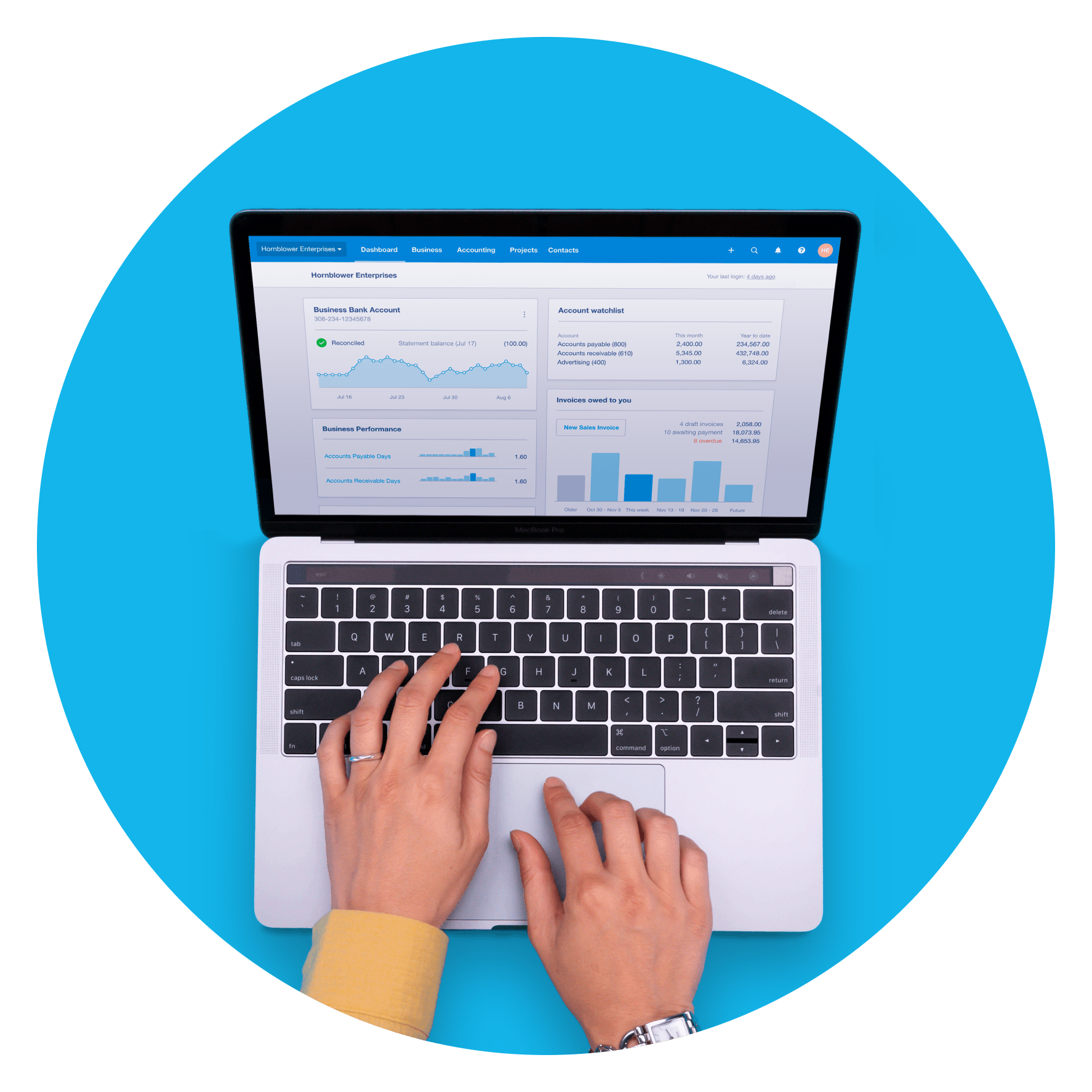
How to write a business plan
Work through the eight sections below in order. Each one builds on the last, so your research, plans and numbers tell one consistent story to a lender, an investor or your own team.
Read the full guide to creating a business plan
1. Executive summary
Write this section last and put it first. In a few short paragraphs, sum up what your business does, who it's for, what sets it apart and what you're asking for, such as funding. Keep it to a page so readers can grasp the whole plan quickly.

2. Company description
Explain why your business exists in a short mission statement, then set goals and objectives that fit it. Add your value proposition: the specific benefit customers get from you that sets you apart from similar businesses.
Get help sharpening your value proposition
3. Market analysis
Describe your ideal customers, starting with demographics, then add what you learn from online research, surveys and interviews. Identify your competitors, weigh up their strengths and weaknesses, and show where your business fits in the market.
Here’s a guide to effective competitor analysis
4. Organisation and management
State your business structure: sole trader, partnership or limited company. Then introduce the people running the business, your planned headcount and how daily operations work, including suppliers and getting products to customers.

5. Products or services
Describe what you sell and the problem it solves for your customers. Include how you'll price it, what it costs you to produce or deliver, and any new products or services you plan to add.

6. Marketing and sales plan
Use your market analysis to choose how you'll promote your brand, such as your website, social media, ads or sponsorships. Then set out your sales channels, for example online, a shop, affiliates or distributors, and estimate your annual sales.

7. Funding requirements
Say how much you need, what it's for and how you'll repay it. UK options include bank loans, grants, investors and government-backed Start Up Loans from the British Business Bank: up to £25,000 at a fixed 7.5% a year over 1–5 years, with 12 months of free mentoring.
Find out more about Start Up Loans
8. Financial projections
Forecast your sales, costs and cash flow. Lenders and investors use these numbers to decide whether to fund you, and you'll use them to plan for seasonal dips, work out how many staff you can afford and measure performance. An accountant or bookkeeper can help sharpen them.
Learn about budgeting and forecasting.
One-page or multi-page business plan
Both versions come in the free download. A one-page business plan template helps you shape ideas about customers, competitors, income and expenses quickly. The multi-page version adds detailed forecasts and budgets, with evidence behind your costs, market size and competition. The one-page plan is:
- easy for you and investors to read
- quick to start
- focused on your main idea
- simple to update
Go for the multi-page plan when you're pitching to investors or applying for a loan, as it gives a full picture of your business.
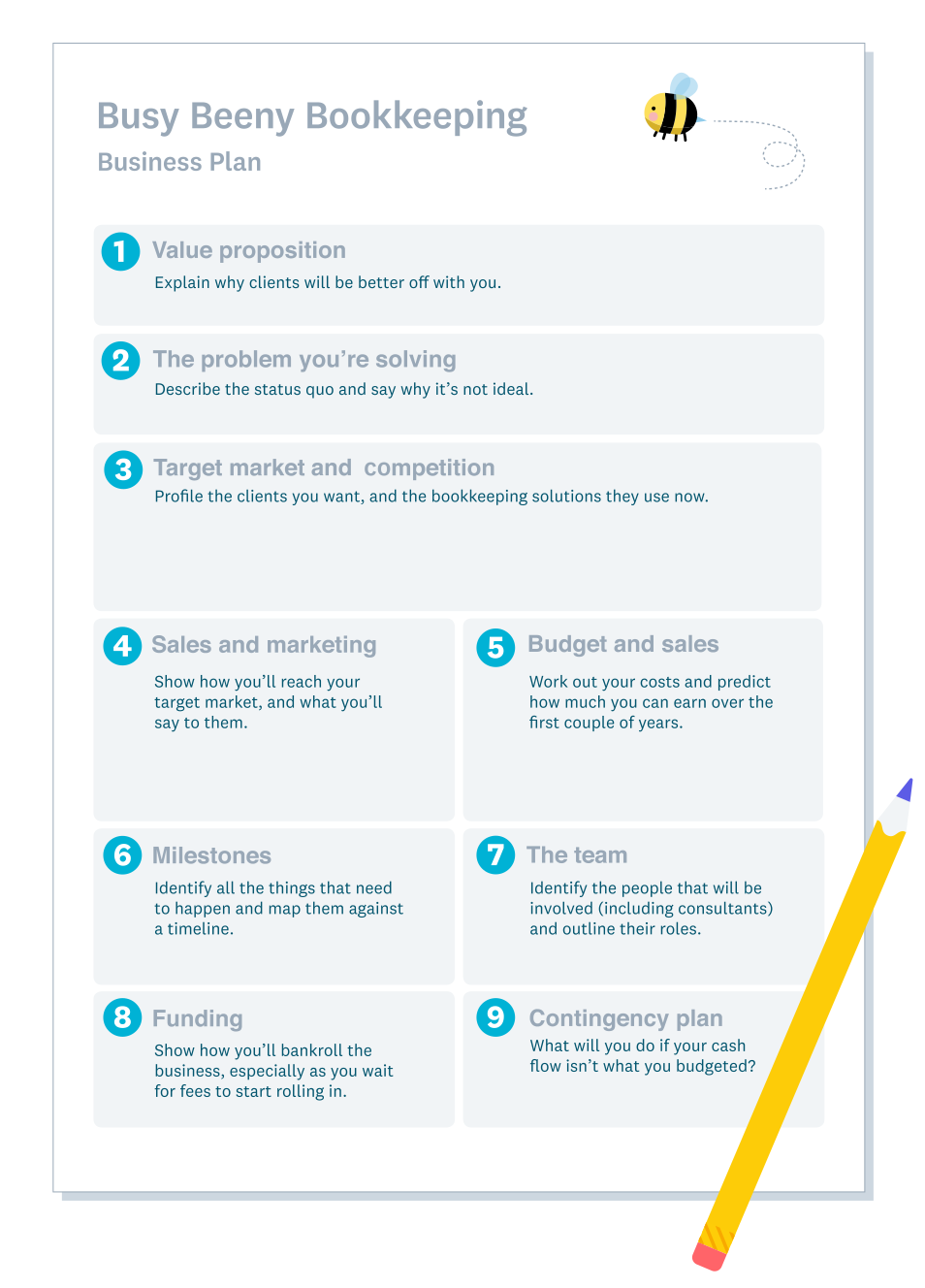
Business plans for non-profits and charities
Use the same template with a different focus. Lead with your mission and the social impact you'll make, show how grants, donations and fundraising will fund your work, and explain how you'll report progress to trustees and funders.
See how Xero supports non-profit organisations
Track your plan against real numbers in Xero
Your plan sets the targets. When you subscribe to Xero accounting software, your day-to-day numbers show how you're tracking against them, so you can update your forecasts with real figures and keep your plan on course.
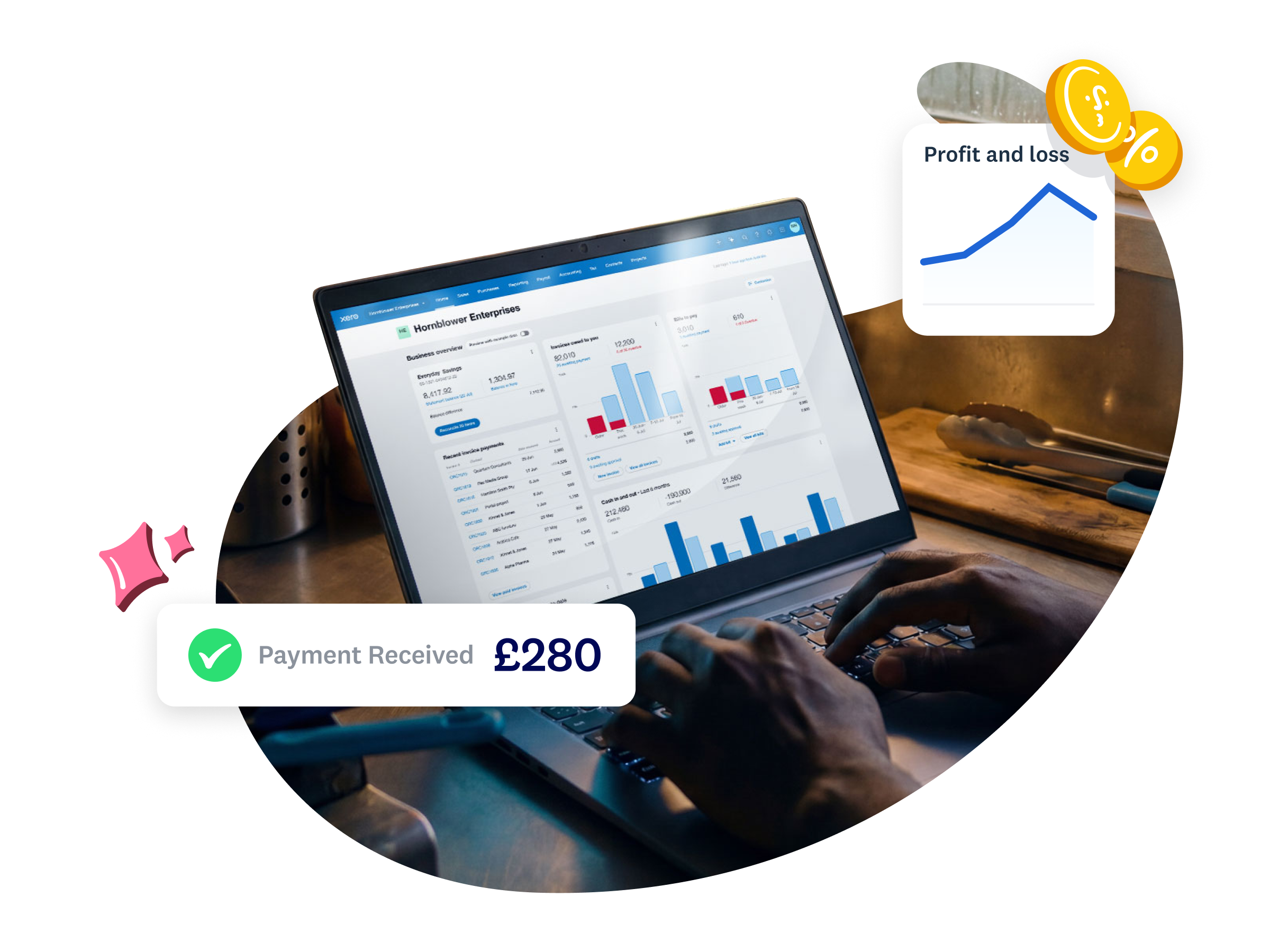
See income and spending as it happens
Bank feeds bring in transactions automatically, ready to reconcile, so you spend less time on data entry.
Compare forecasts with results
Real-time reports and cash flow forecasts show whether you're on track for the targets in your plan.
Work closely with your accountant
Share your numbers in real time and submit VAT returns that meet Making Tax Digital rules.
FAQs on business plan templates
A business plan usually covers an executive summary, company description, market analysis, organisation and management, products or services, marketing and sales, funding requirements and financial projections. Some guides group these into five or seven parts, but they cover the same ground.
A business plan usually covers an executive summary, company description, market analysis, organisation and management, products or services, marketing and sales, funding requirements and financial projections. Some guides group these into five or seven parts, but they cover the same ground.
It depends on who'll read it: a one-page plan suits your own planning, while a lender or investor will expect a multi-page plan with full forecasts. According to GOV.UK, you'll need a business plan to secure investment or a bank loan.
It depends on who'll read it: a one-page plan suits your own planning, while a lender or investor will expect a multi-page plan with full forecasts. According to GOV.UK, you'll need a business plan to secure investment or a bank loan.
Start with the one-page template and fill in what you already know about your idea, customers and costs, using each section's annotated explanation as a prompt. Move to the multi-page version once your research firms up, and ask an accountant or bookkeeper to check your forecasts.
Start with the one-page template and fill in what you already know about your idea, customers and costs, using each section's annotated explanation as a prompt. Move to the multi-page version once your research firms up, and ask an accountant or bookkeeper to check your forecasts.
A simple plan is easier for your team and investors to grasp at a glance, and easier for you to act on and track. A long, complex plan can feel daunting, which makes it harder to follow through.
A simple plan is easier for your team and investors to grasp at a glance, and easier for you to act on and track. A long, complex plan can feel daunting, which makes it harder to follow through.
Yes, the PDF is fully editable, so you can change the content to suit your business and update it as conditions change. The template guides you through each section and leaves the approach up to you.
Yes, the PDF is fully editable, so you can change the content to suit your business and update it as conditions change. The template guides you through each section and leaves the approach up to you.
Review it whenever something important changes, such as a new product, a funding round or a shift in your market, and compare your forecasts with actual results as you go.
Review it whenever something important changes, such as a new product, a funding round or a shift in your market, and compare your forecasts with actual results as you go.
More help with your business plan
Guides and tools to help you research, fund and grow your business.
Guide to writing a business plan
Get more detail on writing each section of your plan.
How to do market research
Find practical ways to research your customers and competitors before you write your market analysis.
What is business finance?
Compare ways to fund your business so you can complete the funding requirements section.
Turn your plan into progress with Xero
Keep invoices, bank transactions and cash flow in one place, and see how your business is doing against your plan.
Disclaimer
Xero does not provide accounting, tax, business or legal advice. This template has been provided for information purposes only. You should consult your own professional advisors for advice directly relating to your business.