B2B definition: meaning, examples, and key benefits
Learn the business to business (B2B) definition, common examples, and answers to key FAQs.
Written by Shaun Quarton—Accounting & Finance Content Writer and Growth Marketer. Read Shaun's full bio
Published Tuesday 21 April 2026
Table of contents
Key takeaways
- Recognize that B2B sales cycles typically run 3 to 12 months and involve multiple decision-makers, so build your outreach and follow-up strategy around a structured process covering initial contact, negotiation, implementation, payment, and ongoing support.
- Utilize B2B partnerships to cut operational costs by 20 to 40% through bulk purchasing, shared resources, and outsourcing specialized functions, freeing you to focus on your core business strengths.
- Adopt B2B e-commerce tools with automated ordering, real-time inventory tracking, and integrated payments to streamline purchasing and reduce manual errors as your business grows.
- Prioritize long-term B2B relationships to access new technologies, industry insights, and scalable solutions that help you grow without major infrastructure investment.
Key takeaways
- Reduce operational costs by 20 to 40% through B2B partnerships that offer shared resources, bulk purchasing, and specialized expertise
- Build long-term relationships with multiple decision-makers, as B2B sales cycles typically run 3 to 12 months
- Follow a structured transaction process covering initial contact, negotiation, implementation, payment, and ongoing support
- Scale your business and access innovation through B2B relationships that provide new technologies and industry insights
Business-to-business definition
B2B (business-to-business) means one company sells products or services to another company, not to individual consumers.
B2B partnerships let you focus on your core strengths while outsourcing other functions to experts. This creates efficiency and cost savings across your operations.
For example, Xero accounting software helps you manage your finances more efficiently and gives you more time to focus on running your business.
How the B2B model works
The B2B model works through structured transactions where businesses buy and sell goods, services, or expertise from each other. These exchanges support your operations, reduce costs, and drive growth.
Transactions in a B2B model
B2B transactions move through a clear process from initial contact to ongoing support.
B2B transactions typically follow a five-step process. Sales cycles often run 3 to 12 months and involve multiple decision-makers at each stage.
- Initial contact: Identify your business needs and reach out to potential suppliers. For example, a restaurant chain contacts catering equipment vendors.
- Negotiate: Agree on pricing, terms, and service levels. This often includes delivery schedules and volume discounts, where the price per unit is retrospectively reduced if purchase thresholds are met.
- Implement: Receive products or services as specified. This may include equipment installation and staff training.
- Payment:Process invoices according to agreed terms. Common arrangements include Net 30 payment with early payment discounts.
- Ongoing support: Maintain the relationship through regular service, updates, and account reviews.
B2B vs B2C: what's the difference?
B2B (business-to-business) companies sell to other businesses, while B2C (business-to-consumer) companies sell directly to individual customers. Understanding these differences helps you choose the right business model.
B2B vs B2C: key differences
The sales process, customer relationships, and purchase motivations differ significantly between these two models.
B2B sells to businesses, while B2C sells to individual consumers. Apple, Ikea, and Netflix are B2C companies because they sell directly to people for personal use.
Here are the key differences:
Sales process:
- B2B: involves longer sales cycles (3 to 12 months) with multiple decision-makers
- B2C: involves quick purchases (minutes to days) with individual buyers
Customer relationships:
- B2B: requires long-term partnerships with dedicated account management
- B2C: relies on brand loyalty through marketing and emotional connection
Purchase motivation:
- B2B: focuses on ROI, efficiency, and business outcomes
- B2C: focuses on personal preferences, emotions, and price
B2B vs B2C in practice
The transaction process varies greatly between these two models. Here are two examples:
- B2B example: Xero sells accounting software to businesses with features like payroll management and financial reporting. The sales process includes demos, free trials, and ongoing support.
- B2C example: Consumer budgeting apps sell personal finance tools to individuals with a focus on simplicity and lifestyle benefits.
Types of B2B businesses
B2B covers several distinct business types. Understanding these categories helps you see where your business fits.
- Producers: manufacture products that other businesses use as components. For example, a company makes microchips for computer manufacturers.
- Distributors and wholesalers: resell finished goods to other businesses. For example, wholesalers buy in bulk and sell to retailers.
- Service providers: deliver professional services to other businesses. For example, accounting software companies, marketing agencies, and consultants.
- Government suppliers: provide goods and services to government agencies and institutions, which spent about $755 billion on contracts in FY 2024 alone. For example, vendors serving schools, hospitals, or providing cybersecurity software.
Examples of B2B companies and industries
These business types operate across every industry sector.
B2B companies operate across every industry. Here are examples by sector:
- Manufacturing and distribution: source raw materials, components, and equipment to create finished products
- Software and technology: provide cloud computing, development tools, cybersecurity, and SaaS platforms like Xero and HubSpot
- Financial services: offer business consulting, payment processing, and financial analysis through firms like Stripe and Accenture
- Healthcare: collaborate on patient referrals, share health data, and purchase specialized equipment
- Education: partner with technology providers and publishers to create learning resources and online platforms
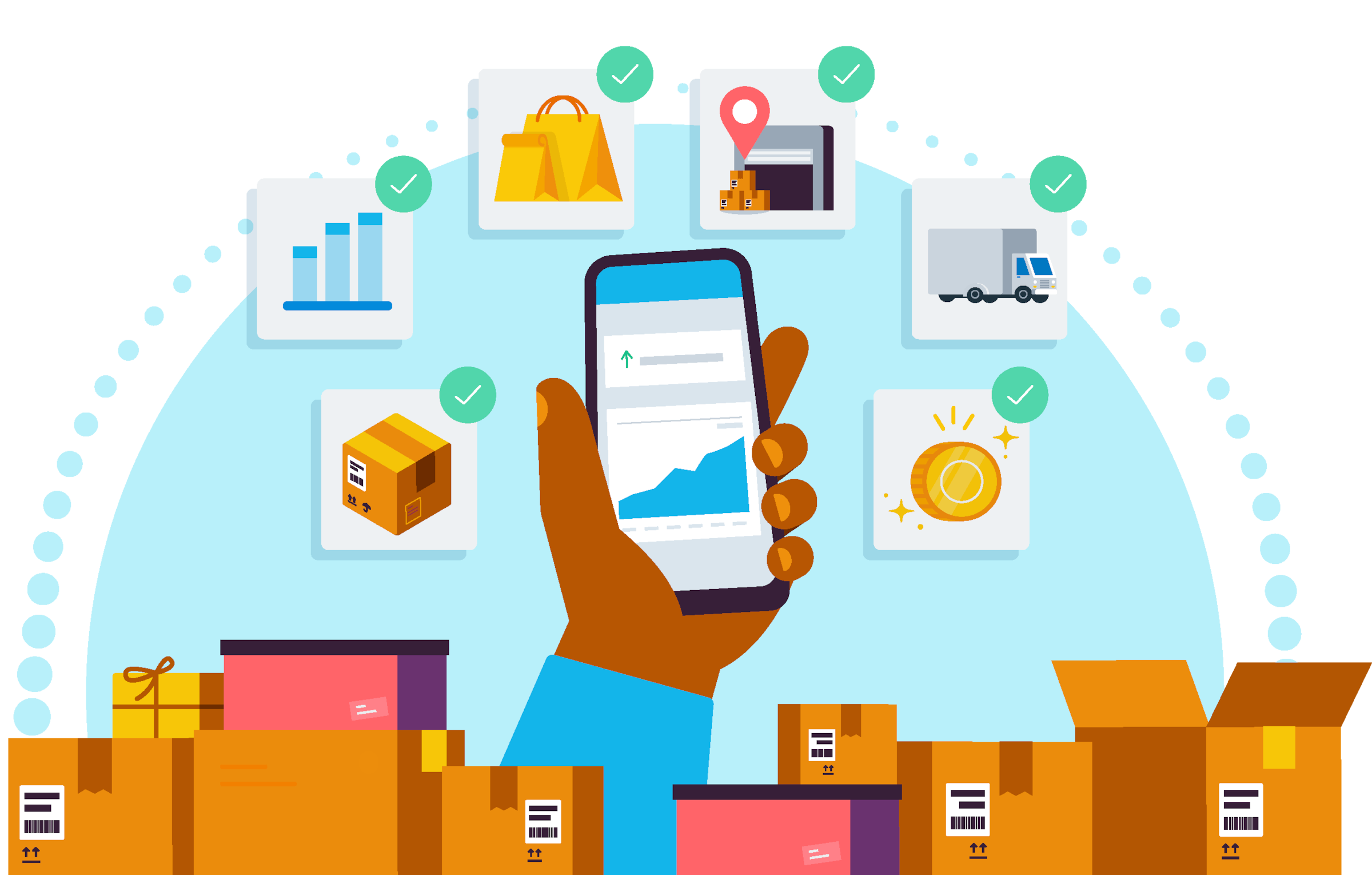
B2B e-commerce and digital platforms
B2B e-commerce refers to online transactions between businesses, including digital ordering, automated procurement, and online marketplaces. This sector is growing rapidly as companies move away from manual purchasing processes, with B2B e-commerce now exceeding $1 trillion in the United States alone.
Digital B2B platforms offer several advantages:
- Automated ordering: reduce manual data entry and processing errors
- Real-time inventory: track stock levels and availability instantly
- Integrated payments: connect orders directly to accounting software
- 24/7 availability: allow customers to place orders outside business hours
Common B2B e-commerce models include:
- Online wholesale marketplaces: platforms connecting manufacturers with retailers, which are vital sales channels considering 57% of global e-commerce occurs on marketplaces
- Supplier portals: direct ordering systems for existing business relationships
- B2B SaaS subscriptions: software sold on recurring payment terms to businesses
Accounting software like Xero integrates with many B2B e-commerce platforms, automatically syncing orders, invoices, and payments to simplify your bookkeeping.
Why B2B matters: key benefits
B2B partnerships can reduce your operational costs by 20 to 40% through shared resources, bulk purchasing, and specialized expertise. Here's how these relationships benefit your business:
Increase efficiency and productivity
B2B partnerships help you automate tasks and centralize processes to boost your productivity.
You gain efficiency by automating manual tasks and centralizing business processes.
Key benefits include:
- Reduce manual workload through automated routine tasks
- Improve collaboration through centralized systems connecting your teams
- Make faster decisions through real-time data access
Example: Project management software centralizes task tracking, file sharing, and team communication in one platform, reducing email chains and missed deadlines.
Lower costs and boost profits
Strategic partnerships deliver significant cost reductions while maintaining quality.
You can save 20 to 40% on costs through B2B partnerships that offer shared resources and bulk purchasing power.
Cost-saving strategies include:
- Rent equipment to access expensive machinery without large capital investment
- Share services to split costs for specialized expertise
- Buy in volume to secure better pricing through combined purchasing power
Example: A construction firm rents excavators for $600 per week instead of purchasing for $60,000, saving capital and maintenance costs.
Enhance scalability and growth
B2B relationships help you expand without major infrastructure investments.
Your ability to scale improves when you outsource specialized functions to businesses with more expertise. This lets you handle growth without building new infrastructure or hiring additional staff.
Example:An e-commerce store uses a fulfillment center to handle order surges without expanding its warehouse.
Drive innovation and competitive advantage
Partnering with other businesses keeps you at the forefront of industry developments.
You can access innovation through B2B collaborations that provide new technologies, industry insights, and emerging trends.
Example: SaaS companies regularly update their platforms with new features, giving subscribers access to the latest tools without additional investment.
Challenges of B2B transactions
B2B transactions present unique challenges that can slow growth and increase costs. Understanding these obstacles helps you prepare better strategies:
B2B sales typically involve multiple decision-makers – so there are plenty of approvals, negotiations, and technical evaluations needed, leading to extended timelines.
For example, selling software to large enterprises means talking to – and managing relationships with – IT directors, department heads, and finance officers, who each have different priorities.
When you buy in bulk or choose different service levels, you often get volume discounts and performance-based clauses.
For example, negotiating prices can be complex, so you may need specialized expertise to get the best deal.
Managing your B2B relationships
Managing B2B relationships effectively drives long-term business success through improved efficiency, trust, and mutual growth.
Key relationship management strategies:
- Clear communication: Regular check-ins and transparent reporting
- Reliable processes: Consistent delivery and payment schedules
- Technology integration: Automated invoicing and seamless data sharing
- Performance tracking: Monitor metrics and address issues quickly
Xero accounting software helps you strengthen your business relationships by automating invoicing, streamlining payments, and providing real-time financial visibility to build trust with your B2B partners. Get one month free.
FAQs on B2B
Here are answers to common questions about business-to-business relationships.
What does B2B mean?
B2B (business-to-business) means one company sells products or services to another company rather than to individual consumers. These transactions support business operations, reduce costs, and drive growth.
How is B2B different from B2C?
B2B involves longer sales cycles (3 to 12 months), multiple decision-makers, and focuses on ROI and business outcomes. B2C features quick purchases, individual buyers, and focuses on personal preferences and emotions.
What are common types of B2B businesses?
Common B2B business types include producers who manufacture components, distributors and wholesalers who resell goods, service providers who deliver professional expertise, and government suppliers who serve public agencies.
How does B2B e-commerce work?
B2B e-commerce uses digital platforms for online transactions between businesses. This includes automated ordering, real-time inventory tracking, integrated payments, and 24/7 ordering capabilities that streamline purchasing processes.
What are the main benefits of B2B partnerships?
B2B partnerships reduce operational costs by 20 to 40%, increase efficiency through automation, enhance your ability to scale without major infrastructure investments, and provide access to new technologies and industry innovations.