What is the basis of accounting?
Learn the 3 types of accounting basis and how to choose the right one for your business.
Published Thursday 23 July 2026
Table of contents
Key takeaways
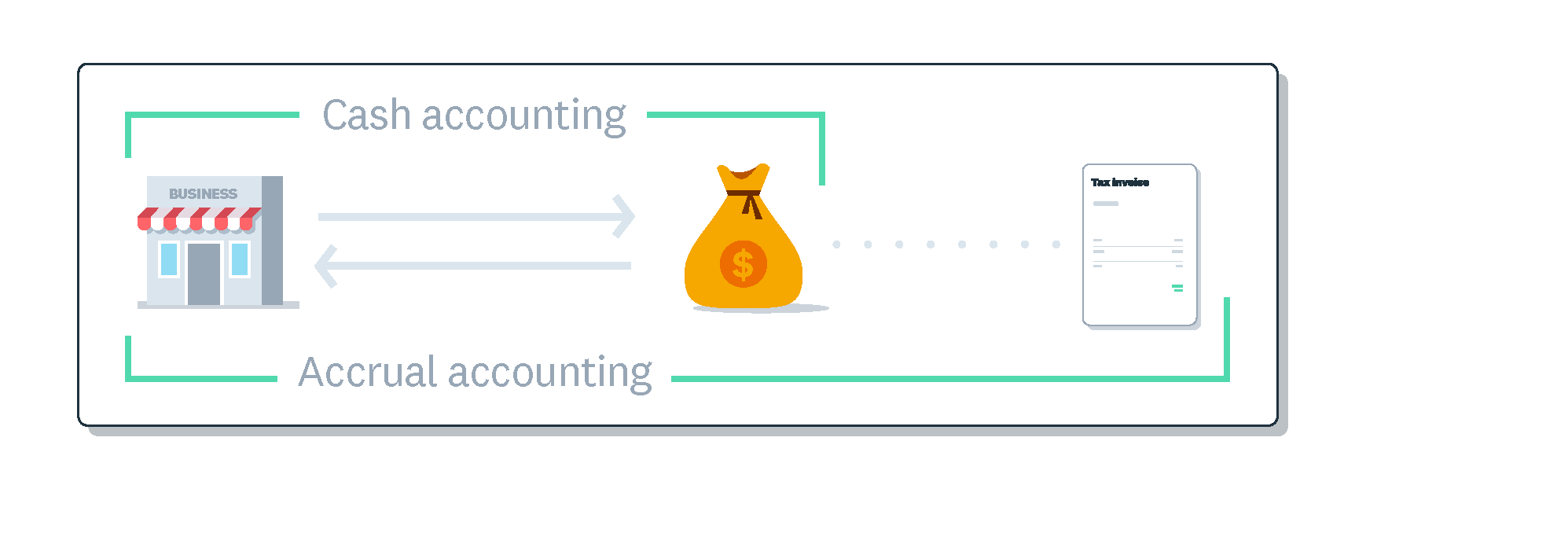
Basis of accounting determines the point at which you recognize transactions.
- The basis of accounting you choose determines when your business recognizes revenue and expenses, which directly affects your financial statements, tax obligations, and cash flow visibility.
- Cash basis accounting records transactions when money changes hands, while accrual basis accounting records them when they're earned or incurred, regardless of when payment happens.
- The Internal Revenue Service (IRS) lets most small businesses choose their basis of accounting, but businesses above a certain gross receipts threshold must use the accrual method (check IRS Publication 538 for the current figure, as it adjusts periodically).
- If you need to switch methods, you'll file IRS Form 3115 and should work with an accountant to make sure the transition is accurate and compliant.
What is the basis of accounting?
A basis of accounting is the method that determines when your business formally recognizes revenue and expenses in its financial records. It sets the rules for the timing of when transactions show up in your books, which directly shapes your financial statements, tax filings, and overall picture of business performance.
There are 3 main types of accounting basis: cash basis, accrual basis, and modified cash basis. Each one handles the timing of revenue and expenses differently, and the right choice depends on your business size, structure, and reporting needs.
Your basis of accounting isn't just a bookkeeping detail. It affects how much tax you owe in a given period, how accurately your financial statements reflect reality, and how easily you can plan for the future. Understanding each method helps you make a confident decision about which one fits your business.
What is cash basis accounting?
Cash basis accounting records revenue when you receive payment and expenses when you pay them. It's the simpler of the 2 main methods because transactions only hit your books when cash actually changes hands.
For example, if you send an invoice in March but your customer pays in April, you'd record that revenue in April under cash basis accounting. The same logic applies to expenses: a bill you receive in June but pay in July gets recorded in July.
This method is popular with small businesses, sole proprietors, and freelancers because it's straightforward and gives you a clear view of how much cash you actually have on hand. The IRS allows most small businesses to use cash basis accounting as long as they meet certain revenue thresholds.
Cash basis works well when your business has simple transactions and doesn't carry inventory. However, it can paint an incomplete picture of your financial health because it doesn't account for money you're owed or bills you haven't paid yet.
What is accrual basis accounting?
Accrual basis accounting records revenue when it's earned and expenses when they're incurred, regardless of when cash changes hands. This method gives you a more complete picture of your financial position at any point in time.
Using the same example: if you send an invoice in March, you'd record that revenue in March under the accrual method, even if payment doesn't arrive until April. Expenses work the same way; they're recorded when you receive a product or service, not when you pay the bill.
Accrual accounting is the standard required by generally accepted accounting principles (GAAP). Publicly traded companies in the US must use it, and the IRS requires it for businesses above a certain average annual gross receipts threshold. This threshold is adjusted periodically; see IRS Publication 538 for the most current figure.
While accrual accounting is more complex to manage, it provides a more accurate view of profitability and financial health. It's particularly useful for businesses that extend credit to customers, carry inventory, or need to present financial statements to investors or lenders.
Cash basis vs. accrual basis accounting
Choosing between cash and accrual accounting comes down to your business needs, size, and reporting requirements. Here's how the 2 methods compare across the areas that matter most to small business owners. For a deeper look, see this guide to cash vs. accrual accounting.
When revenue is recorded:
- Cash basis: when payment is received
- Accrual basis: when revenue is earned, regardless of payment
When expenses are recorded:
- Cash basis: when payment is made
- Accrual basis: when the expense is incurred, regardless of payment
Complexity:
- Cash basis: simpler to set up and maintain
- Accrual basis: requires more tracking and adjustments
Accuracy of financial picture:
- Cash basis: shows current cash position but may not reflect overall financial health
- Accrual basis: provides a more complete view of profitability and obligations
IRS requirements:
- Cash basis: allowed for businesses below the IRS gross receipts threshold (see IRS Publication 538 for the current figure)
- Accrual basis: required for businesses above that threshold and all publicly traded companies
Best suited for:
- Cash basis: sole proprietors, freelancers, and small businesses with straightforward transactions
- Accrual basis: growing businesses, companies with inventory, and those seeking outside investment
What is modified cash basis accounting?
Modified cash basis accounting is a hybrid method that blends elements of both cash and accrual accounting. It uses cash basis rules for day-to-day, short-term transactions and accrual basis rules for long-term items like fixed assets and long-term debt.
Under this approach, you'd record everyday revenue and expenses when cash changes hands, just like standard cash basis. But for items that span multiple accounting periods, such as equipment purchases, loans, or depreciation, you'd use accrual treatment instead.
Modified cash basis can be a practical middle ground for businesses that want more accuracy than pure cash basis without the full complexity of accrual accounting. It's commonly used for internal financial reporting and management decision-making.
One important limitation: modified cash basis accounting is not GAAP-compliant. That means you can't use it for audited financial statements, SEC filings, or formal reporting to investors. If you use this method internally, you may still need to prepare GAAP-compliant reports separately for external purposes.
How to choose the right basis of accounting for your business
The right basis of accounting depends on several factors specific to your business. Here are the key considerations to help you decide.
Start with your revenue. If your business falls below the IRS gross receipts threshold, you have the flexibility to choose either cash or accrual basis. Above that threshold, you're required to use accrual. Check IRS Publication 538 for the current figure, as it adjusts periodically.
Consider your business complexity. If you run a service-based business with simple transactions and no inventory, cash basis is often the easiest and most practical choice. If you sell products, carry inventory, extend credit to customers, or plan to seek financing, accrual basis gives you the more accurate financial picture lenders and investors expect.
Think about your reporting needs. If you only need financial reports for internal use and tax filing, cash basis or modified cash basis may be enough. If you need GAAP-compliant statements for investors, banks, or regulatory requirements, accrual is the way to go.
Factor in your comfort with complexity. Cash basis bookkeeping is simpler to manage on your own. Accrual basis typically requires more accounting knowledge or a professional to keep everything accurate. Cloud-based accounting software can reduce the complexity of either method by automating transaction tracking and reconciliation.
How to switch your accounting basis
If your business has outgrown cash basis accounting or your circumstances have changed, you can switch to a different method. The process involves a few steps and requires IRS approval.
- Determine if a switch is necessary. Common reasons to switch include crossing the IRS gross receipts threshold, taking on investors who require GAAP-compliant financials, or needing a more accurate picture of long-term profitability. Review your current and projected needs before starting the process.
- File IRS Form 3115. To change your accounting method, you'll need to submit Form 3115 (Application for Change in Accounting Method) to the IRS. This form documents your current method, your proposed new method, and a Section 481(a) adjustment that accounts for differences between the 2 methods during the transition year.
- Calculate your adjustment. The Section 481(a) adjustment prevents income from being duplicated or omitted during the switch. Depending on the direction of your change, this adjustment may increase or decrease your taxable income in the year of the switch.
- Work with an accountant. Switching accounting methods affects your tax returns, financial statements, and ongoing bookkeeping processes. An accountant or tax professional can help you file Form 3115 correctly, calculate the adjustment, and set up your books under the new method.
- Update your systems. Once the switch is approved, update your accounting system to reflect the new method going forward. This includes adjusting how you record revenue, expenses, and any outstanding receivables or payables.
Simplify your accounting with Xero
No matter which basis of accounting you choose, keeping your financial records organized and up to date is what matters most. The right tools make that easier by automating the routine work and giving you a clear view of where your business stands.
Xero brings your finances together in one place with automated bank reconciliation, invoicing, expense tracking, and real-time reporting. You can collaborate with your accountant or bookkeeper directly in the platform and access your books from anywhere. Get one month free.
FAQs on basis of accounting
Here are answers to frequently asked questions about basis of accounting.
What is the most common basis of accounting for small businesses?
Cash basis accounting is the most common method for small businesses in the US because of its simplicity. It records transactions only when cash changes hands, making it easier to manage without extensive accounting experience.
Can you switch from cash basis to accrual basis accounting?
Yes, you can switch by filing IRS Form 3115 (Application for Change in Accounting Method). The form requires a Section 481(a) adjustment to account for the transition, so it's best to work with a tax professional to make sure everything is filed correctly.
Does the IRS require a specific basis of accounting?
The IRS allows most small businesses to choose their preferred method. However, businesses above a certain average annual gross receipts threshold must use accrual basis accounting. See IRS Publication 538 for the current threshold, as it adjusts periodically.
What is the difference between cash and accrual accounting in simple terms?
Cash accounting records transactions when money is received or paid. Accrual accounting records them when they're earned or incurred, even if no money has changed hands yet. Accrual gives a fuller financial picture; cash is simpler to manage.
Is modified cash basis accounting accepted by the IRS?
The IRS permits certain hybrid accounting methods in limited circumstances, though "modified cash basis" is not a formally defined IRS method. It's not compliant with GAAP, so you can use it for internal reporting but not for audited financial statements or formal investor reporting.
Handy resources
Advisor directory
You can search for experts in our advisor directory
How to do bookkeeping
Learn about data entry, bank rec, reporting and tax prep in our guide to doing bookkeeping.
Online accounting with Xero
Automate your accounting in the cloud
Disclaimer
This glossary is for small business owners. The definitions are written with their requirements in mind. More detailed definitions can be found in accounting textbooks or from an accounting professional. Xero does not provide accounting, tax, business or legal advice.