Gearing ratio: definition, formula, and calculation
Learn what gearing ratio shows, how to calculate it, and why it matters for your business.

Written by Shaun Quarton—Accounting & Finance Content Writer and Growth Marketer. Read Shaun's full bio
Published Wednesday 22 April 2026
Table of contents
Key takeaways
- Calculate your gearing ratio using the debt-to-equity formula (total debt ÷ total equity × 100) to understand how much your business relies on borrowed funds versus your own investment.
- Aim for a gearing ratio between 30–50% as a small business, since this range balances using debt to grow while keeping enough equity to stay financially stable.
- Recognize that high gearing (above 70%) can speed up growth but increases your financial risk, while low gearing (below 30%) offers stability but may slow down expansion opportunities.
- Monitor your gearing ratio monthly or quarterly so you can make informed borrowing decisions and catch financial vulnerabilities before they become serious problems.
Key takeaways
- Calculate your gearing ratio using the debt-to-equity formula (Total Debt ÷ Total Equity × 100) to understand how much your business relies on borrowed funds versus your own investment.
- Maintain a gearing ratio between 30–50% for most small businesses, as this range provides a healthy balance of growth capital through debt while preserving financial stability through equity.
- Monitor your gearing ratio monthly or quarterly to make informed borrowing decisions and spot financial vulnerabilities before they become serious problems.
- Recognize that high gearing (above 70%) accelerates growth but increases financial risk, while low gearing (below 30%) provides stability but may limit expansion opportunities.
Gearing ratio definition
A gearing ratio measures how much of your business is funded by debt compared to equity. This financial metric helps you understand your reliance on borrowed money versus your own investment.
Understanding the key components helps you calculate and interpret your gearing ratio. Here are the main elements:
- Debt: borrowed money like loans and credit lines that must be repaid with interest.
- Equity: your investment in the business, including retained earnings and share capital.
Gearing ratios matter because they inform critical business decisions. Here's why different stakeholders pay attention to them:
- Lenders use them to assess your creditworthiness before approving loans.
- Investors analyze them to evaluate financial risk and growth potential.
- Higher ratios indicate more debt reliance, increasing risk but potentially boosting returns.
- Lower ratios demonstrate stronger equity positions, reducing risk but possibly limiting growth.
Why does your gearing ratio matter?
Your gearing ratio reveals your business's financial health and guides critical funding decisions. Monitoring this metric helps you make smarter choices about borrowing, investing, and managing risk.
Tracking your gearing ratio provides several important benefits for your business. Here are the key advantages:
- Borrowing decisions: assess whether you can take on more debt without straining cash flow.
- Investor appeal: demonstrate financial stability to potential funders through balanced ratios.
- Strategic planning: align your debt structure with growth goals for expansion or stability.
- Cash flow management: free up cash for reinvestment with lower ratios or plan for higher debt payments.
- Risk prevention: spot financial vulnerabilities before they become serious problems that require massive deleveraging, such as when U.S. banks were forced to raise more than $200 billion in new capital.
Types of gearing ratios
Four main gearing ratios help measure how much debt your business uses and how much risk you take on. Each ratio provides a different perspective on your financial structure.
Debt-to-equity ratio
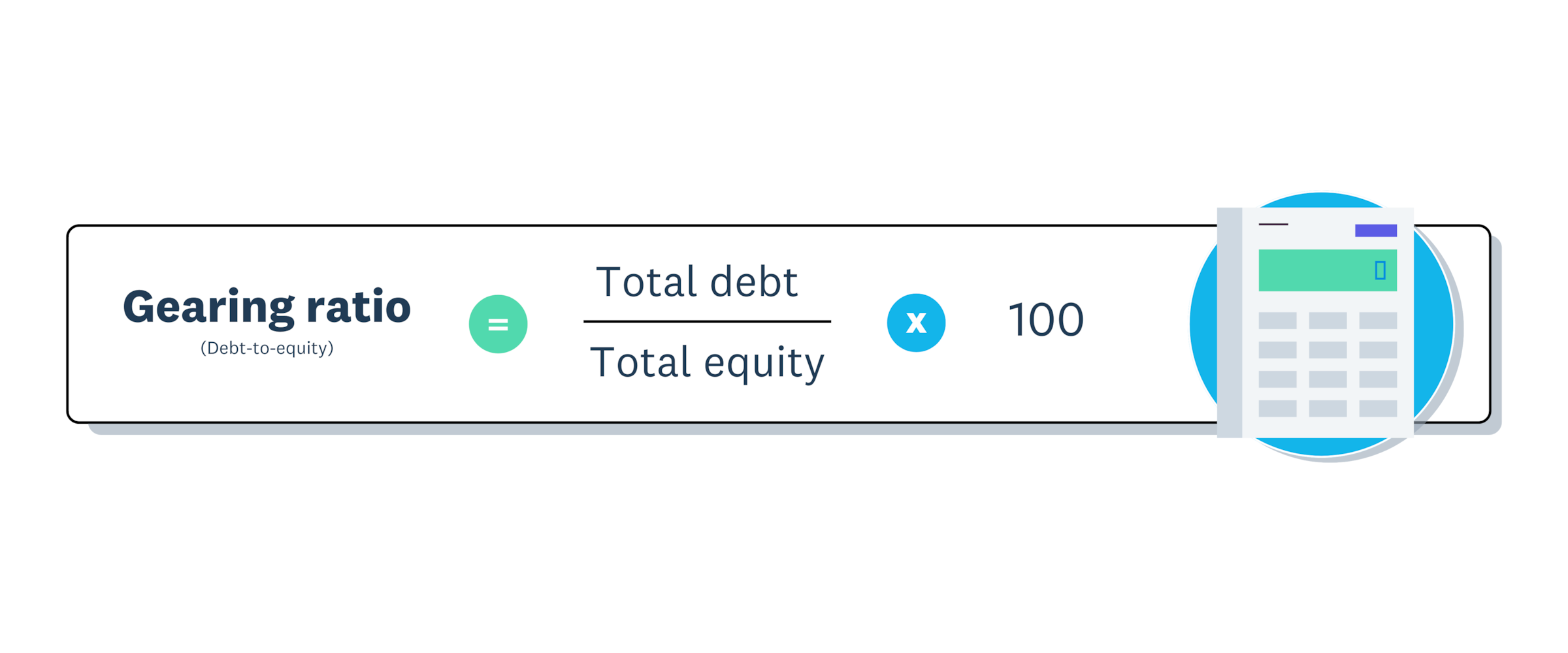
The debt-to-equity ratio compares your total debt to total equity. This ratio shows how much creditors fund your business versus how much owners contribute.
Formula: Total Debt ÷ Total Equity × 100.
Use this ratio when lenders or investors want to assess your overall debt position.
Debt-to-capital ratio
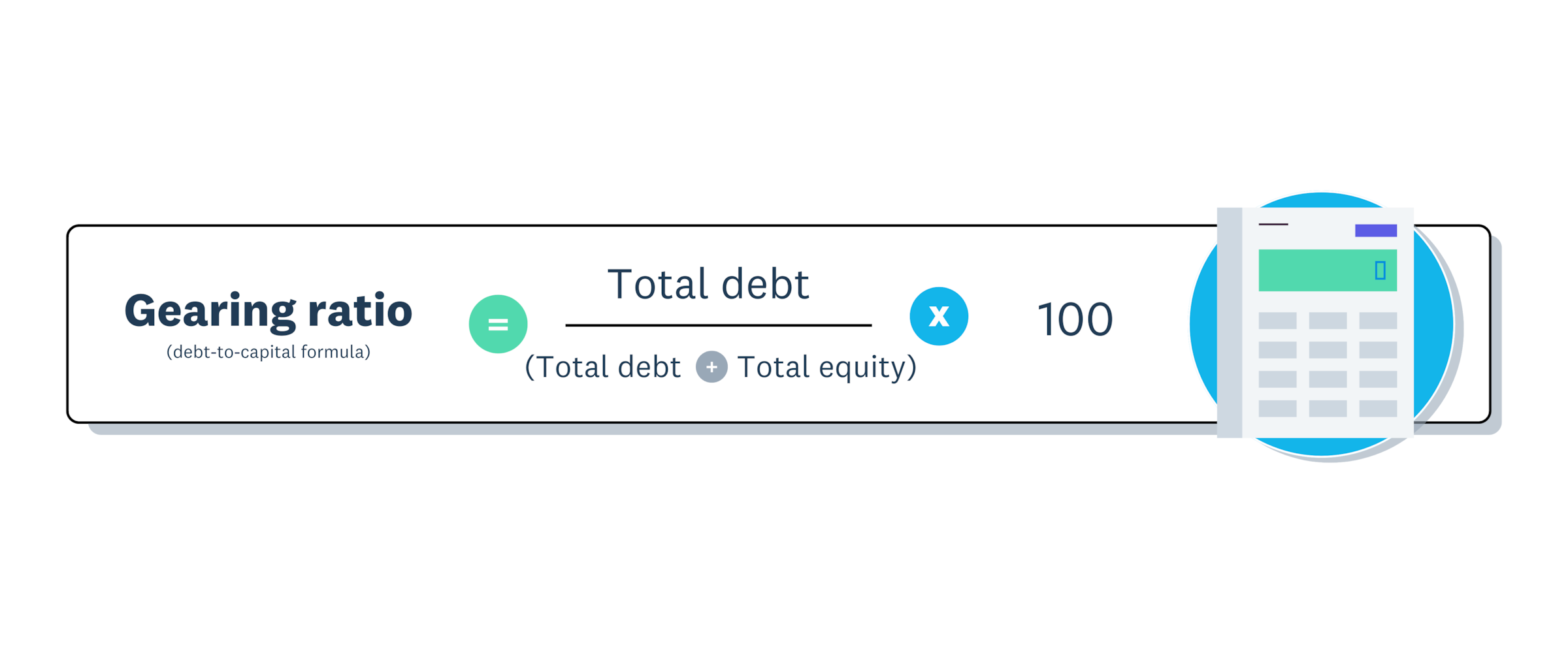
The debt-to-capital ratio measures what percentage of your total capital comes from debt rather than equity. This gives you a view of debt as a proportion of all funding sources.
Formula: Total Debt ÷ (Total Debt + Total Equity) × 100.
Use this ratio to understand how debt-heavy your overall capital structure is.
Equity ratio
The equity ratio shows what portion of total assets you finance through equity rather than borrowing. A higher equity ratio indicates less reliance on debt.
Formula: Total Equity ÷ Total Assets × 100.
Use this ratio to demonstrate financial stability to stakeholders.
Times interest earned ratio
The times interest earned ratio assesses whether your pre-tax earnings can comfortably cover interest payments. This measures your ability to service existing debt.
Formula: Earnings Before Interest and Taxes (EBIT) ÷ Interest Expense.
Use this ratio to evaluate whether you can afford additional borrowing.
How to calculate the gearing ratio
Follow these steps to calculate your gearing ratio:
- Calculate total debt: Add all loans, bonds, credit lines, and financial liabilities from your balance sheet.
- Determine total equity: Combine retained earnings and share capital to find your total owner investment.
- Choose your formula: Select the calculation that fits your needs. For debt-to-equity, use: (Total Debt ÷ Total Equity) × 100. For debt-to-capital, use: (Total Debt ÷ (Total Debt + Total Equity)) × 100.
- Interpret your results: Compare your percentage to industry benchmarks. Higher percentages indicate greater debt reliance and increased financial risk. Lower percentages show stronger equity positions and reduced borrowing dependence.
Example gearing ratio calculations
Here are practical examples showing how to calculate a gearing ratio using real numbers.
Example scenario:
- Total debt: $50,000
- Total equity: $100,000
Using the debt-to-equity formula:
- Gearing ratio = (Total debt ÷ Total equity) × 100
- Gearing ratio = ($50,000 ÷ $100,000) × 100
- Gearing ratio = 50%
Result: A 50% gearing ratio means your business uses $1 of debt for every $2 of equity.
You can also calculate using the debt-to-capital formula:
- Gearing ratio = (Total debt ÷ (Total debt + Total equity)) × 100
- Gearing ratio = ($50,000 ÷ ($50,000 + $100,000)) × 100
- Gearing ratio = ($50,000 ÷ $150,000) × 100
- Gearing ratio = 33.3%
Gearing ratio analysis
Gearing ratio analysis helps you interpret your calculated ratio and understand what it means for your business's financial health and risk level.
Understanding standard gearing ratio ranges helps you interpret your results. Here are the typical categories:
- Low gearing (below 30%): indicates a strong equity position with lower risk but potentially limited growth.
- Moderate gearing (30–50%): represents a balanced approach suitable for most small businesses.
- High gearing (above 70%): signals heavy debt reliance with increased risk but higher growth potential.
Industry context matters when interpreting your ratio. Most small businesses maintain 30–50% gearing ratios, using debt to fuel growth while preserving equity for stability.
Your ideal ratio depends on three factors: your industry norms, your growth stage, and your risk tolerance.
High vs low gearing: what's the difference?
High versus low gearing represents different funding strategies with distinct benefits and risks.
A high gearing strategy relies more heavily on debt financing. Here are the key characteristics:
- Definition: reliance on more debt than equity to fund operations.
- Example: a retail store taking large loans for inventory and renovations, or industrial firm Gallatin Materials LLC, which reported a gearing ratio of 1.36 (136% of equity).
- Benefits: accelerated growth when sales increase and maximized expansion potential.
- Risks: vulnerability to revenue drops and interest rate increases.
FAQs on gearing ratios
Here are answers to common questions about gearing ratios.
What is a good gearing ratio for a small business?
Most small businesses should aim for a gearing ratio between 30–50%. This range provides enough debt to fuel growth while maintaining financial stability through equity.
How often should I check my gearing ratio?
Check your gearing ratio monthly or quarterly. Regular monitoring helps you make informed borrowing decisions and identify financial vulnerabilities early.
Can a gearing ratio be too low?
Yes, a very low gearing ratio (below 30%) might indicate you're not using debt strategically to accelerate growth. However, low gearing provides greater financial stability and reduces risk.
What's the difference between gearing ratio and debt-to-equity ratio?
The debt-to-equity ratio is one type of gearing ratio. Gearing ratio is a broader term that includes debt-to-equity, debt-to-capital, equity ratio, and times interest earned ratio.