See what’s coming with a cash flow forecast template
Wondering when money might get tight? Catch shortfalls months in advance and plan your spending calmly. Download the template and map out your cash.
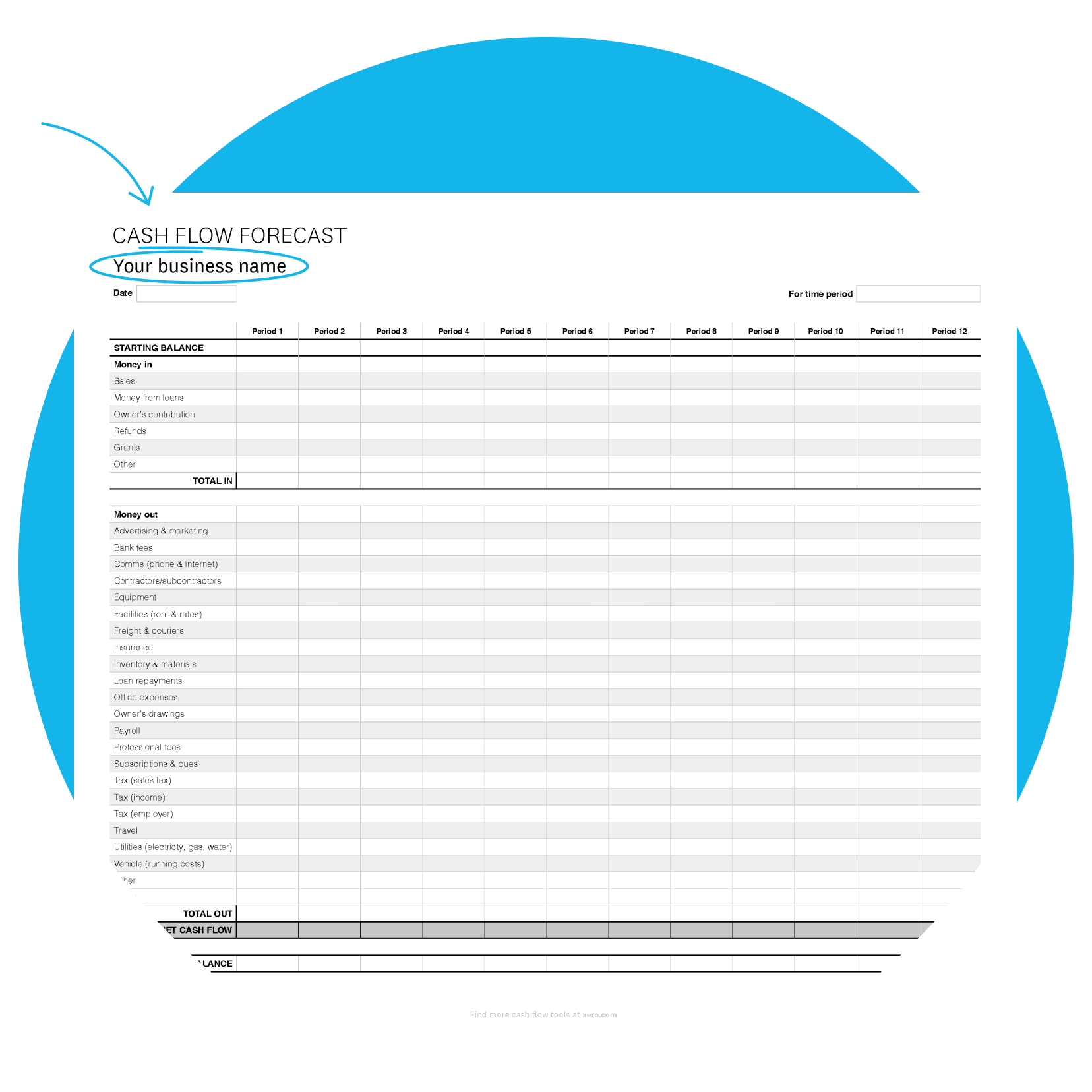
Download the cash flow forecast template
Fill in the form to get a free cash flow forecast template as an editable PDF. We’ll also link you to a guide on how to use it.
Got your template? Try Xero for free.
Ready to take control of your business? Xero's got everything you need to succeed, from accounting and invoicing to reporting and payroll.
3 ways Xero makes cash flow forecasting easier
Bring your finances together in Xero and plan what's next with a clear view of your cash.
See your numbers come to life
Get up-to-date visual insights and cash flow forecasts that show where your business is heading.
Get clear cash flow insights
See all the money moving in and out. Your latest transactions in Xero help you budget for upcoming expenses.
Know where your business stands
Keep an eye on your latest figures to spot anything unusual and plan your next move.
Map your cash flow forecast month by month
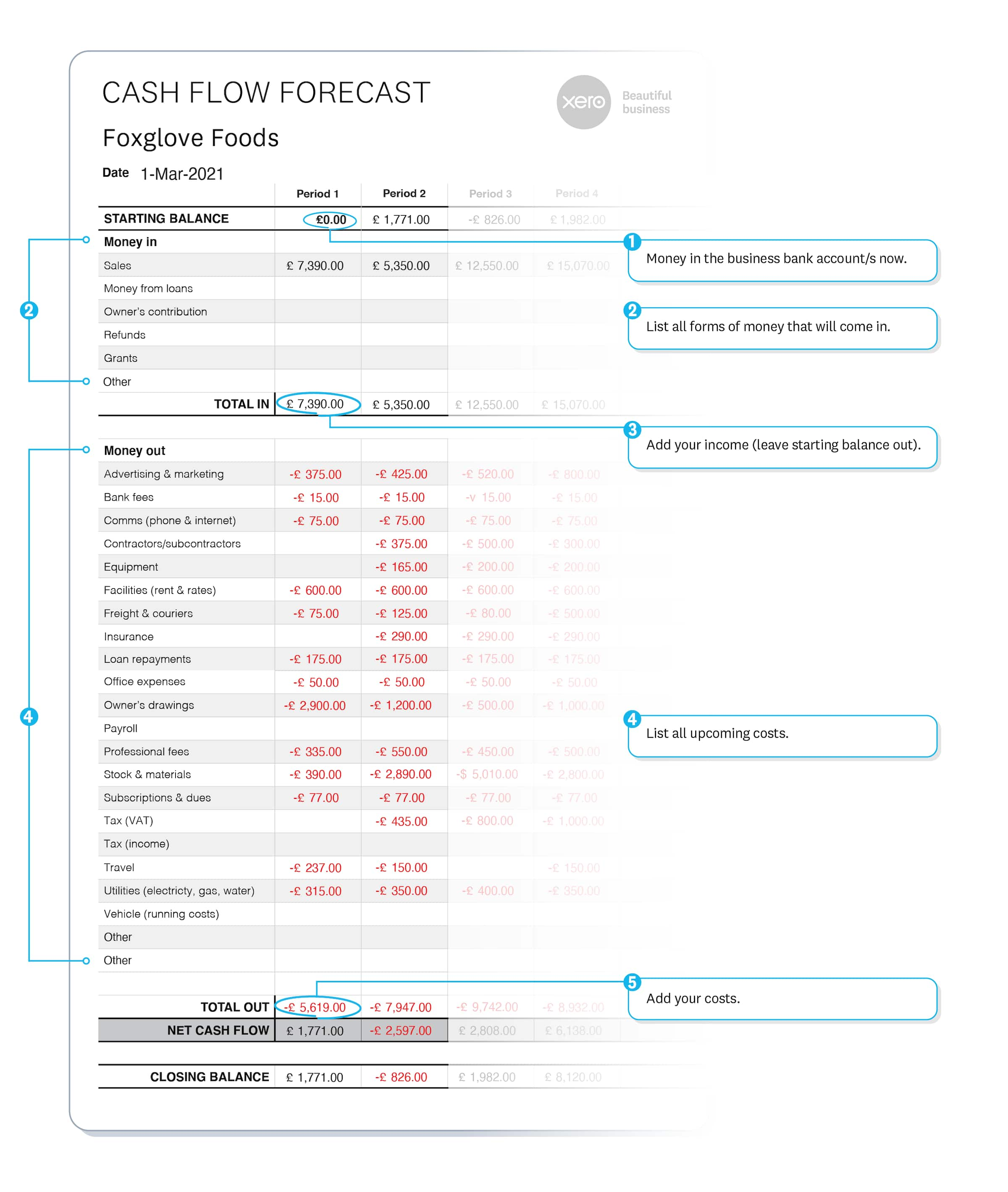
Where do you start? Pop your opening bank balance in the first month. Then add the money you expect in and out, including supplier bills, wages, VAT, and Corporation Tax. Your closing balance shows what's left, and it becomes next month's opening figure.
- Record payments in the month cash moves
- Enter a sale in the month your customer pays the invoice. That way, each month’s balance matches what lands in your bank.
FAQs on Xero's cash flow forecast template
A cash flow forecast predicts the money coming in and going out of your business over the next few weeks or months. It shows when your bank balance will rise or dip, and helps you plan your spending.
A cash flow forecast predicts the money coming in and going out of your business over the next few weeks or months. It shows when your bank balance will rise or dip, and helps you plan your spending.
Work through each month in order:
1. Enter your opening bank balance
2. Add the money you expect to receive
3. List expected payments, including wages, rent, supplier bills and VAT
4. Check the closing balance and carry it into the next month
Work through each month in order:
1. Enter your opening bank balance
2. Add the money you expect to receive
3. List expected payments, including wages, rent, supplier bills and VAT
4. Check the closing balance and carry it into the next month
Your closing balance is your opening balance plus cash in, minus cash out, and net cash flow is cash in minus cash out for the period. To test your own figures, try Xero's cash flow calculator.
Your closing balance is your opening balance plus cash in, minus cash out, and net cash flow is cash in minus cash out for the period. To test your own figures, try Xero's cash flow calculator.
Update it monthly, or weekly when cash is tight. Each time, compare the figures with what really came in and went out.
Update it monthly, or weekly when cash is tight. Each time, compare the figures with what really came in and went out.
A forecast estimates the cash you expect in future, while a cash flow statement reports the cash that moved during a past period. Use the forecast to plan, and the statement to check how those plans played out.
A forecast estimates the cash you expect in future, while a cash flow statement reports the cash that moved during a past period. Use the forecast to plan, and the statement to check how those plans played out.
Both work well, so pick the view that matches what you're planning:
- weekly, if cash is tight or you're heading into a busy season
- monthly, for day-to-day budgeting
- 12 months, for a business plan or loan application.
Both work well, so pick the view that matches what you're planning:
- weekly, if cash is tight or you're heading into a busy season
- monthly, for day-to-day budgeting
- 12 months, for a business plan or loan application.
Banks use a forecast to see when cash comes in and how you'll fit loan repayments around your other costs, so it often sits inside your business plan. GOV.UK guidance on writing a business plan explains what to include.
Banks use a forecast to see when cash comes in and how you'll fit loan repayments around your other costs, so it often sits inside your business plan. GOV.UK guidance on writing a business plan explains what to include.
Yes, Xero's short-term cash flow projection shows expected cash in and out over the next 7 or 30 days, based on the due dates of your approved invoices and bills. Xero Central's step-by-step help article shows you how to set it up.
Yes, Xero's short-term cash flow projection shows expected cash in and out over the next 7 or 30 days, based on the due dates of your approved invoices and bills. Xero Central's step-by-step help article shows you how to set it up.
A forecast is an estimate based on your best assumptions, so it becomes more accurate each time you update it with what really happened. Pair it with these ways to manage cash flow to stay in control of your cash.
A forecast is an estimate based on your best assumptions, so it becomes more accurate each time you update it with what really happened. Pair it with these ways to manage cash flow to stay in control of your cash.
Disclaimer
Xero does not provide accounting, tax, business or legal advice. This template has been provided for information purposes only. You should consult your own professional advisors for advice directly relating to your business.