What is revenue? Definition, calculation and why it matters
Learn what revenue is, how to track it, and use it to price, plan, and grow your business.

Written by Shaun Quarton—Accounting & Finance Content Writer and Growth Marketer. Read Shaun's full bio
Published Friday 15 May 2026
Table of contents
Key takeaways
- Revenue is the total money your business earns from selling goods or services before any expenses are deducted. In the UK, it's commonly called turnover, and it's the starting point for calculating your profit.
- Calculating revenue is straightforward: multiply the number of units sold by the price per unit. Different business models, from subscriptions to services, each have their own way of working out this figure.
- Revenue and profit are not the same thing. Revenue is the total amount coming in, while profit is what remains after you subtract all your costs. Tracking both helps you set realistic goals and price your products effectively.
- Consistent revenue tracking helps you spot trends, plan for growth, and make confident financial decisions. Using the right tools to automate this process saves time and reduces errors.
What is revenue?
Revenue is the total amount of money your business earns from selling goods or services during a specific period. In the UK, it's often called turnover, and the two terms mean exactly the same thing.
For example, if your consultancy bills clients a total of £45,000 in a quarter, that £45,000 is your revenue. It covers everything you've earned before deducting any expenses like rent, salaries, or materials.
Revenue sits at the top of your profit and loss statement. It's the starting point for calculating profit, because you subtract your costs from revenue to see what's left. Understanding your revenue gives you a clear picture of how much money your business is generating.
How to calculate revenue
The basic revenue formula is simple: multiply the number of units you sell by the price per unit. This gives you a clear starting figure for your financial records.
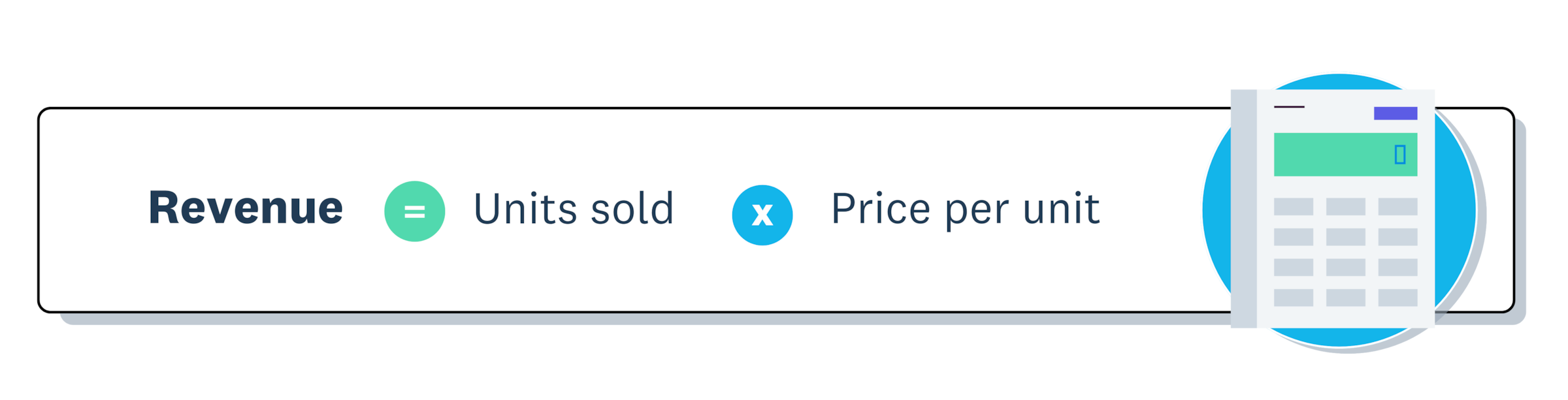
Revenue = units sold x price per unit
For instance, if you sell 500 handmade candles at £12 each, your revenue is £6,000. The formula works the same way regardless of what you sell.
Service-based businesses
Service businesses calculate revenue by multiplying billable hours or completed projects by the rate charged. If you're a freelance graphic designer who completes 40 hours of work at £75 per hour, your revenue for that period is £3,000.
Some service businesses charge per project rather than per hour. A web developer who delivers 3 websites at £2,500 each earns £7,500 in revenue.
Subscription-based businesses
For subscription models, revenue comes from recurring payments over a given period. If you run a fitness app with 200 subscribers paying £9.99 per month, your monthly revenue is £1,998.
Annual subscriptions work the same way. A software tool with 50 annual subscribers at £120 each generates £6,000 in yearly revenue.
Ecommerce businesses
Online shops calculate revenue by totalling all sales within a period. If your ecommerce store sells 1,200 products in a month with an average price of £25, your monthly revenue is £30,000.
Ecommerce businesses often sell at different price points, so adding up all individual transactions gives you the most accurate figure.
Net revenue
Net revenue is what remains after you subtract returns, discounts, and allowances from your total (gross) revenue. This gives you a more realistic picture of actual earnings.
Net revenue = gross revenue - returns - discounts - allowances
If your gross revenue is £30,000 but customers returned £1,500 worth of products and you offered £500 in discounts, your net revenue is £28,000.
Types of business revenue
Revenue falls into 2 main categories: operating revenue and non-operating revenue. Understanding the difference helps you see where your money is really coming from.
Operating revenue
Operating revenue comes from your core business activities. It's the money you earn by doing what your business was set up to do.
The most common sources of operating revenue include the following:
- Sales revenue: money earned from selling physical products, such as a clothing retailer selling garments.
- Service revenue: fees charged for professional services, such as an accountant completing tax returns.
- Subscription revenue: recurring payments from customers for ongoing access to a product or service, such as a meal-kit delivery company charging weekly fees.
Non-operating revenue
Non-operating revenue comes from activities outside your main business operations. It's not your primary source of income, but it still contributes to your overall financial picture.
Common types of non-operating revenue include the following:
- Interest income: earnings from savings accounts, loans to other parties, or investment holdings.
- Dividend income: payments received from shares you hold in other companies.
- Rental income: money earned from leasing out property or equipment your business owns.
- Asset sales: one-off income from selling business assets like vehicles, machinery, or intellectual property.
- Licensing fees: payments from other businesses for the right to use your patents, trademarks, or proprietary technology.
- Franchise fees: income earned from franchisees who pay for the right to operate under your brand and business model.
Revenue vs profit: key differences
Revenue is the total amount of money your business brings in from sales or services. Profit is what's left after you subtract all your expenses. They're related, but they tell you very different things about your business.
Revenue has these characteristics:
- It appears at the top of your profit and loss statement.
- It reflects total sales before any deductions.
- It can grow even if your business is losing money.
- It's sometimes called the "top line."
Profit has these characteristics:
- It appears at the bottom of your profit and loss statement.
- It reflects what remains after all costs are paid.
- It shows whether your business is financially sustainable.
- It's sometimes called the "bottom line."
Why revenue vs profit matters
Understanding the gap between revenue and profit helps you run your business more effectively. You can use the relationship between these two figures in several practical ways.
First, it helps you set realistic goals. A revenue target of £100,000 means very little if your costs eat up £95,000. Tracking both figures lets you set meaningful targets for growth.
Second, it supports better pricing decisions. If your revenue is high but profit is thin, you may need to raise prices or reduce costs. Reviewing both numbers together shows you where to adjust.
Third, it's essential for sustainable growth. Growing revenue while keeping expenses in check is what builds a healthy business over time.
You can learn more about how profit works and use a net profit margin calculator to see where your business stands.
Revenue vs income: key differences
Revenue is the money your business earns from its primary activities, such as selling products or delivering services. Income is a broader term that includes revenue plus any other earnings from secondary sources.
For example, if you run a landscaping business, your revenue comes from the gardening services you provide. But if you also earn interest on a business savings account, that interest is part of your total income, not your revenue.
Why this distinction matters
Separating revenue from total income helps you understand which parts of your business are driving earnings. If your non-revenue income is growing faster than your core sales, it may signal that your main offering needs attention.
It also affects how you report your finances. On your profit and loss statement, revenue and other income are listed separately. Keeping them distinct gives you a clearer view of your business performance and helps you make better decisions about where to focus your efforts.
Revenue vs turnover: what UK businesses should know
Revenue and turnover mean the same thing. Both refer to the total amount your business earns from selling goods or services before expenses are deducted.
The key difference is regional. "Turnover" is the standard term used in the UK. You'll see it on your tax returns, in HMRC correspondence, and across most UK accounting documents. "Revenue" is more commonly used in North America and in international financial reporting.
As a UK business owner, you'll encounter turnover far more often in day-to-day accounting. When you file your Self Assessment or Corporation Tax return, HMRC asks for your turnover, not your revenue. Both terms are correct, but using turnover keeps your language consistent with UK tax and accounting conventions.
You can find a more detailed explanation of turnover and how it applies to your business.
Accrued and deferred revenue explained
Accrued and deferred revenue are two timing-related concepts that affect how you record income. Both matter if you use accrual accounting, which records transactions when they're earned rather than when cash changes hands.
Accrued revenue
Accrued revenue is money you've earned but haven't yet invoiced or received. The work is done, but the payment hasn't arrived.
For example, if you complete a consulting project in March but don't send the invoice until April, the revenue is accrued in March. You recognise it in the period you earned it, not the period you received payment.
Deferred revenue
Deferred revenue is money you've received but haven't yet earned. The customer has paid, but you haven't delivered the goods or services.
For instance, if a client pays £1,200 upfront for a 12-month support contract, you can only recognise £100 of revenue each month as you deliver the service. The remaining balance sits as deferred revenue on your balance sheet until it's earned.
Why this matters for your accounts
Getting accrued and deferred revenue right gives you an accurate picture of your financial position. Without proper tracking, your profit and loss statement could overstate or understate your actual performance in any given period. Accrual accounting ensures your records match reality, which is especially important when making business decisions or reporting to HMRC.
Revenue recognition basics
Revenue recognition determines when you officially record revenue in your accounts. Under accrual accounting, you recognise revenue when it's earned, not when cash is received.
The IFRS 15 five-step model
The International Financial Reporting Standard (IFRS) 15 outlines a five-step process for recognising revenue:
- Identify the contract with your customer.
- Identify the performance obligations in the contract.
- Determine the transaction price.
- Allocate the transaction price to each performance obligation.
- Recognise revenue as you satisfy each performance obligation.
You can read the full standard on the ICAEW IFRS 15 tracker page.
UK accounting standards
Most UK small businesses follow Financial Reporting Standard (FRS) 102 rather than IFRS. The Financial Reporting Council (FRC) has revised FRS 102, with changes effective for accounting periods beginning on or after 1 January 2026. These revisions bring FRS 102's revenue recognition closer to the IFRS 15 model.
Cash vs accrual accounting
Under cash accounting, you record revenue when you receive payment. Under accrual accounting, you record it when you earn it, regardless of when the money arrives.
Cash accounting is simpler, but accrual accounting gives a more accurate view of your financial position. The method you choose affects when revenue appears in your accounts and can influence your tax obligations.
Why tracking revenue is important for your small business
Tracking revenue consistently helps you understand how your business is performing and where it's headed. Without accurate revenue data, you're making decisions based on guesswork rather than facts.
Driving growth
Revenue trends reveal whether your business is expanding, plateauing, or declining. By reviewing your revenue month by month, you can spot patterns and act on them early. Rising revenue might mean it's time to invest in new stock or hire additional staff.
Measuring performance
Revenue figures let you compare performance across different time periods, products, or services. You can identify which offerings generate the most income and which ones underperform. This helps you focus your energy and resources where they'll have the greatest impact.
Gaining insights
Breaking down your revenue by category, customer segment, or sales channel gives you deeper insights. You might discover that 1 product line delivers 60% of your total revenue, or that a particular month consistently outperforms others. These insights help you plan more effectively.
Making informed decisions
Solid revenue data supports better decision-making across your business. Whether you're setting budgets, negotiating with suppliers, or planning a marketing campaign, knowing your revenue position gives you confidence. You can find more strategies for increasing your profits based on the data you collect.
Best practices for effective revenue tracking
Following a few key practices keeps your revenue records accurate and useful. Good habits with your financial data save you time and reduce the risk of errors.
Here are the most effective approaches to revenue tracking:
- Record transactions promptly: log every sale as it happens, whether daily or as transactions occur. Delays lead to missed entries and inaccurate records.
- Categorise your revenue: separate operating revenue from non-operating revenue, and break it down further by product, service, or channel. Clear categories make your reports more useful.
- Use automation tools: accounting software can pull in bank transactions, match payments to invoices, and generate reports automatically. Automation reduces manual work and human error.
- Review your data regularly: set a schedule to review your revenue figures, whether weekly, monthly, or quarterly. Regular reviews help you catch discrepancies early and stay on top of trends.
You can explore more guidance on small business accounting to build a solid foundation for your financial records.
Simplify revenue management with Xero
Keeping track of your revenue doesn't have to be time-consuming or complicated. Xero's cloud accounting software automates bank reconciliation, invoicing, and financial reporting, so you can see your revenue position in real time without hours of manual data entry.
With automated bank feeds and smart categorisation, your transactions are organised as they come in. Customisable reports give you a clear breakdown of revenue by period, product, or customer, helping you make confident decisions about your business.
Ready to take control of your finances? You can Get one month free and see how simple revenue tracking can be.
FAQs on revenue
Here are answers to frequently asked questions about revenue and how it applies to your business.
What is revenue in economics?
In economics, revenue refers to the total income a business generates from selling goods or services. Economists use it to analyse market demand, pricing behaviour, and the financial health of firms within an industry.
Can a business have revenue but no profit?
Yes. A business can bring in significant revenue and still make no profit if its expenses equal or exceed its earnings. This is common for startups investing heavily in growth.
How often should I track my business revenue?
Aim to track revenue at least monthly, though weekly tracking gives you more timely insights. The right frequency depends on your transaction volume and how quickly your business conditions change.
Are revenue and turnover the same?
Yes. Revenue and turnover refer to the same thing: the total money earned from business activities before expenses. "Turnover" is the preferred term in the UK, while "revenue" is more common internationally.
Can revenue be negative?
Revenue itself cannot be negative, but net revenue can be if returns and refunds exceed new sales in a given period. This is uncommon and usually signals a temporary issue.
Are revenue and cash flow the same thing?
No. Revenue measures what you've earned, while cash flow tracks the actual movement of money in and out of your business. You can have strong revenue but poor cash flow if customers are slow to pay.
Disclaimer
Xero does not provide accounting, tax, business or legal advice. This guide has been provided for information purposes only. You should consult your own professional advisors for advice directly relating to your business or before taking action in relation to any of the content provided.
Get one month free
Purchase any Xero plan, and we will give you the first month free.