Cash accounting: what it is and how it works
Learn what cash accounting is, how it works, and who can use it in the UK.
Published Thursday 23 July 2026
Table of contents
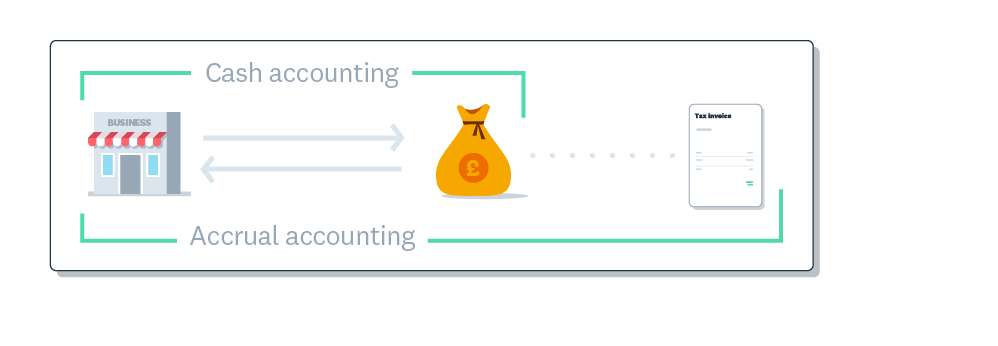
Cash accounting focuses only on money, not bills or invoices.
Key takeaways
- Cash accounting records income and expenses only when money actually moves in or out of your business, not when you send or receive an invoice.
- From 6 April 2024, the cash basis is the default way eligible sole traders and partnerships work out their trading profits for Self Assessment.
- The old turnover thresholds have been removed, so eligible businesses of any size can now use it, though limited companies and some other trades cannot.
- The VAT Cash Accounting Scheme is a separate scheme with its own turnover limits, and it applies to VAT rather than Income Tax.
What is cash accounting?
Cash accounting records income when you receive payment and expenses when you pay them. It ignores the date on the invoice and focuses only on when money changes hands.
This method gives you a clear, real-time picture of the cash in your business at any moment. That timing matters, because getting paid can take longer than you expect. According to Xero Small Business Insights, UK small businesses waited an average of 29.0 days to be paid in the March 2026 quarter, with payments arriving 8.2 days late on average.
Under cash accounting, that gap between issuing an invoice and receiving the money doesn't affect your books until the payment lands. If you'd like a plain-English refresher on the wider basics, the guide to small business bookkeeping is a helpful starting point.
How cash accounting works
With cash accounting, you log a transaction on the day the money moves, so your records follow your bank balance. A short worked example shows the difference between the payment date and the invoice date.
Say you invoice a client £2,000 on 20 March, and they pay you on 12 April. Under cash accounting, you record that £2,000 as income on 12 April, the day the payment reaches your account.
Now say you buy £300 of stock on 28 March but settle the supplier's bill on 5 April. You record that £300 expense on 5 April, when the cash actually leaves your account. Your profit for a period reflects only the money you've genuinely received and paid, which keeps things simple if you handle your own self-employed accounting.
Cash accounting vs traditional accounting
The main difference between the two methods is timing: when each one records income and expenses. Traditional accounting is HMRC's term for accruals accounting.
Cash accounting counts income and expenses only when money moves. Traditional accounting counts them when they're earned or incurred, so you record income on the invoice date even if the payment arrives weeks later.
Using the earlier example, traditional accounting would record the £2,000 as income on 20 March, the invoice date, rather than 12 April. For a fuller side-by-side breakdown, see the guide to cash versus accrual accounting, or check the definition of accrual accounting.
Who can use cash accounting in the UK?
Cash accounting is now the standard method for most unincorporated businesses. Eligibility changed significantly in April 2024.
From 6 April 2024, the cash basis became the default method of calculating trading profits for eligible sole traders and partnerships without corporate partners. The old £150,000 entry and £300,000 exit turnover thresholds were removed, so eligible businesses of any size can use it.
Some businesses can't use the cash basis, and it helps to know where you stand before you file. The following types are excluded:
- Limited companies
- Limited liability partnerships (LLPs)
- Partnerships that include a corporate partner
- Certain excluded trades, such as Lloyd's underwriters and some farming or creative businesses making averaging claims
If you're weighing up how to keep your records straight, the guide to small business accounting covers the essentials.
Cash accounting and VAT
Cash accounting for Income Tax is separate from the VAT Cash Accounting Scheme, and it's easy to mix them up. This section explains how the VAT scheme works on its own terms.
The VAT Cash Accounting Scheme lets you account for VAT based on when you're paid and when you pay, rather than on invoice dates. You can join if your estimated VAT taxable turnover is £1.35 million or less, and you must leave once it exceeds £1.6 million.
This scheme applies to VAT, not Income Tax, so you can use it whether or not you use the cash basis for your trading profits. To compare it with the alternatives, read the guide to choosing a VAT accounting scheme.
Pros and cons of cash accounting
Cash accounting suits many small businesses, though it isn't right for everyone. Here's a quick look at the benefits and the drawbacks.
The main advantages include:
- Gives you a clear view of the cash you actually have
- Keeps your records simple and quick to maintain
- Means you pay tax only on income you've received
- Reduces the admin of tracking unpaid invoices at year end
The main drawbacks include:
- Hides money you're owed but haven't yet collected
- Makes it harder to see your true profit over time
- Offers a less complete picture for planning and forecasting
- Doesn't suit limited companies or larger, more complex businesses
How to choose between cash and traditional accounting
The right method depends on how your business runs and what you need to see. A few practical questions can guide your decision.
Cash accounting tends to work well if you're a sole trader or small partnership, you want simple records, and you'd rather pay tax only on money you've received. It's a natural fit when your finances are straightforward.
Traditional accounting often makes more sense if you carry stock, invoice large amounts in advance, or need a detailed view of profit for lenders and investors. If you're unsure, an accountant or bookkeeper can help you match the method to your goals.
How to switch between cash and traditional accounting
Since the cash basis is now the default, switching is mainly about opting out when traditional accounting suits you better. Here's how to make the change.
- Review your current method and confirm which basis you're using for your trading profits.
- Decide whether the cash basis default or traditional accounting fits your business.
- To use traditional accounting, opt out of the cash basis by ticking the relevant box on your Self Assessment tax return.
- Adjust your opening figures so no income or expense is counted twice or missed in the year you switch.
- Keep supporting records for the transition in case HMRC asks to see them.
Simplify your cash accounting with Xero
Cash accounting keeps your day-to-day money work clear, and the right tools make it easier to stay on top of what you've been paid and what you owe.
Xero brings your bank transactions, invoices and reports together in one place, so you can see your cash position at a glance and spend less time on manual admin. Get set up and try it for yourself, and you can get one month free.
FAQs on cash accounting
Here are answers to some frequently asked questions about cash accounting to help you decide if it's right for your business.
Is cash accounting better for tax?
It can be, because you only pay tax on income you've actually received, not on invoices still waiting to be paid. Whether it saves you money depends on your own trading patterns.
What is cash basis accounting?
Cash basis accounting is HMRC's name for cash accounting when working out trading profits for Self Assessment. It records income and expenses on the date money changes hands.
Do I have to opt in to use the cash basis?
No, the cash basis is the default for eligible sole traders and partnerships from 6 April 2024. You opt out on your Self Assessment return if you'd rather use traditional accounting.
Can limited companies use cash accounting?
No, limited companies can't use the cash basis and must use traditional accounting for their accounts. The same applies to limited liability partnerships and partnerships with a corporate partner.
Is the VAT Cash Accounting Scheme the same as the cash basis?
No, they're separate schemes: the cash basis applies to Income Tax, while the VAT Cash Accounting Scheme applies to VAT. You can use one, both or neither, depending on your eligibility.
Handy resources
Advisor directory
You can search for experts in our advisor directory
How to do bookkeeping
Learn about data entry, bank rec, reporting and tax prep in our guide to doing bookkeeping.
Online accounting with Xero
Automate your accounting in the cloud
Disclaimer
This glossary is for small business owners. The definitions are written with their requirements in mind. More detailed definitions can be found in accounting textbooks or from an accounting professional. Xero does not provide accounting, tax, business or legal advice.