What is accrual accounting?
Learn what accrual accounting means and how it differs from cash accounting.
Published Thursday 23 July 2026
Table of contents
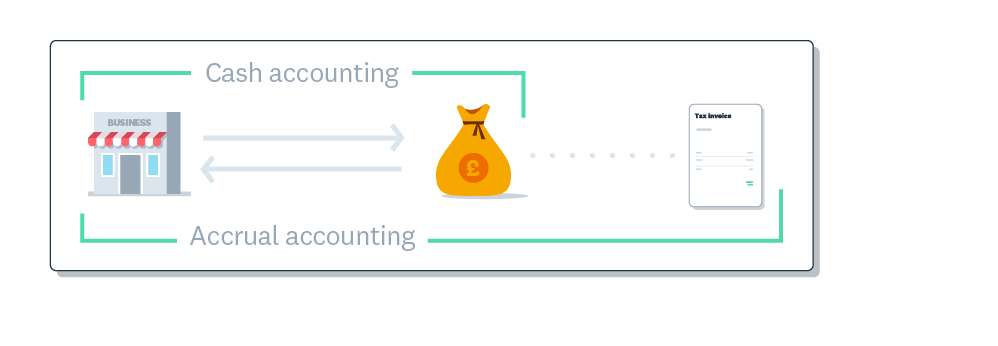
Accrual accounting keeps tabs on bills and sales invoices that are yet to be paid.
Key takeaways
- Accrual accounting records income and expenses when they're earned or incurred, not when cash changes hands. This gives you a more accurate picture of your business's financial health at any point in time.
- UK businesses that exceed the VAT threshold or prepare accounts under UK Generally Accepted Accounting Practice (UK GAAP) are typically required to use accrual accounting. Even smaller businesses can benefit from the clearer financial picture it provides.
- The main trade-off is complexity: accrual accounting takes more effort to maintain than cash accounting, but it rewards you with better data for decision-making and stronger compliance with tax obligations like Making Tax Digital (MTD).
- Cloud accounting software can handle much of the heavy lifting, from automated bank reconciliation to real-time reporting, making accrual accounting far more manageable for small businesses.
What is accrual accounting?
Accrual accounting is a method of recording financial transactions when they happen, regardless of when money actually moves in or out of your bank account. If you send an invoice in March but don't receive payment until April, accrual accounting records that income in March.
This approach is built on 2 core principles. The revenue recognition principle says you record income when it's earned, not when you're paid. The matching principle says you record expenses in the same period as the income they helped generate. Together, these principles ensure your financial statements reflect the real economic activity of your business.
In the UK, accrual accounting aligns with UK Generally Accepted Accounting Practice (UK GAAP) and International Financial Reporting Standards (IFRS). Most limited companies and larger businesses are required to prepare their accounts on an accrual basis. It's the standard approach for businesses that need to show a true and fair view of their financial position to stakeholders, lenders, and HMRC.
How does accrual accounting work?
Accrual accounting tracks your financial activity based on economic events rather than cash flow. Here's how the key principles work in practice.
Revenue recognition: You record income as soon as you've delivered goods or completed a service. The timing of the payment doesn't matter. If you complete a project on 15 June but your client pays on 10 July, you record the revenue in June.
Expense recognition: Expenses are recorded when they're incurred, not when you pay for them. If you receive a supplier invoice in January for materials you used that month, the expense goes on your books in January, even if you don't pay until February.
The matching principle in action: These 2 principles work together. By matching revenue with the expenses that generated it, you can see the true profit from each period. Without matching, your monthly figures could swing wildly depending on when payments happen to land.
Here's a practical example. Say you run a consultancy in Manchester and complete a 3-month project worth £12,000. Under accrual accounting, you'd record £4,000 of revenue each month, along with any related expenses like subcontractor fees or travel costs for that month. This gives you a realistic view of profitability across all 3 months, rather than lumping everything into the month you finally get paid.
Accrual accounting vs. cash accounting
Choosing between accrual and cash accounting affects how you track income, report to HMRC, and make financial decisions. For a detailed comparison, see our guide on cash vs accrual accounting. Here are the key differences.
When transactions are recorded: Accrual accounting records transactions when they occur. Cash accounting records them only when money enters or leaves your account.
Financial accuracy: Accrual accounting gives a fuller picture of your financial position because it includes money you're owed and money you owe. Cash accounting only shows what's actually been received or spent.
Complexity: Cash accounting is simpler to maintain. Accrual accounting requires more detailed record-keeping and a stronger understanding of accounting principles.
Accrual accounting is typically better when your business:
- Carries stock or inventory
- Offers credit terms to customers
- Needs to comply with UK GAAP or IFRS
- Wants a more accurate view of profitability across periods
- Is growing and needs reliable data for planning
Cash accounting may work better when your business:
- Is below the VAT threshold and operates as a sole trader
- Has simple transactions with immediate payment
- Wants the easiest possible bookkeeping setup
- Needs a clear, real-time view of cash in the bank
Types of accruals
There are 4 main types of accruals you'll encounter in day-to-day accounting. Each one handles a different timing gap between when a transaction happens and when cash moves.
Accrued revenue is income you've earned but haven't yet invoiced or received payment for. For example, if you provide consulting services in June but don't invoice until July, that June work is accrued revenue.
Accrued expenses are costs you've incurred but haven't yet paid. A common example is employee wages: your team works throughout June, but you don't pay them until the first week of July. The wages still belong on June's books.
Deferred revenue (also called unearned revenue) is money you've received before you've delivered the goods or services. If a client pays you £3,000 upfront for a 3-month project, you'd recognise £1,000 of revenue each month as you deliver the work. The remaining balance sits as a liability on your balance sheet until it's earned.
Prepaid expenses are the opposite of deferred revenue: you've paid for something before you've used it. Annual insurance premiums are a typical example. If you pay £2,400 for 12 months of cover, you'd spread the cost at £200 per month rather than recording the full amount in the month you paid.
Advantages of accrual accounting
Accrual accounting takes more effort than cash accounting, but it delivers significant benefits for growing businesses.
- More accurate financial picture: By recording transactions when they happen, your accounts reflect your true financial position, including outstanding invoices and unpaid bills. Your financial statements show a complete picture of performance.
- Better decision-making: Reliable, period-matched data helps you spot trends, plan ahead, and make informed choices about hiring, investment, or pricing.
- Stronger credibility: Lenders, investors, and potential buyers expect accrual-based accounts. Presenting your finances this way builds trust and opens doors.
- Tax and regulatory compliance: Accrual accounting meets the requirements of UK GAAP, IFRS, and Companies House reporting. It also supports MTD compliance by keeping your records digital and up to date.
- Easier performance tracking: Matching revenue to expenses in the same period lets you see the true profitability of individual projects, months, or quarters.
Disadvantages of accrual accounting
Accrual accounting isn't without its drawbacks, especially for very small or early-stage businesses.
- Greater complexity: You'll need to track accounts receivable, accounts payable, and various accrual adjustments. This means more bookkeeping and a higher risk of errors if you're doing it manually.
- May need skilled support: Managing accrual accounts properly often requires an accountant or bookkeeper, which adds to your costs.
- Cash flow can be harder to track: Because accrual accounting records income before you've been paid, your profit and loss statement might look healthy while your bank account tells a different story. You'll need to manage your cash flow separately.
- More time-consuming: Month-end and year-end processes involve more adjustments, reconciliations, and reviews compared to cash accounting.
When should your business use accrual accounting?
The right time to switch depends on your business structure, size, and legal obligations. As you review your small business accounting setup, here's what to consider.
In the UK, limited companies must prepare their accounts on an accrual basis under the Companies Act. If your business is registered as a limited company, accrual accounting isn't optional.
Sole traders and partnerships have more flexibility. HMRC allows unincorporated businesses to use cash basis accounting for tax purposes. Since April 2024, cash basis is the default method for sole traders and partnerships, with no turnover cap. However, growing businesses may choose to switch to accrual accounting for a more detailed view of their finances, or if they need to comply with UK GAAP.
Even if you're not legally required to use accrual accounting, it's worth considering the switch when your business starts offering credit terms to customers, carrying stock, taking on larger or longer-term projects, or preparing for outside investment. These are all situations where cash accounting can obscure what's really happening in your finances.
Making Tax Digital is another reason to consider the switch. MTD requires digital record-keeping, and accrual-based cloud accounting software already meets those requirements. If you're already using MTD-compatible software, the transition is easier than you might expect, as the tools handle much of the accrual process automatically.
How to set up accrual accounting
Moving to accrual accounting doesn't have to be overwhelming. Good bookkeeping practices make the transition smoother. Follow these steps to get started.
- Talk to your accountant or bookkeeper. Before making any changes, discuss the transition with a professional. They can advise on the best timing, help you understand the tax implications, and ensure your opening balances are correct.
- Choose a transition date. Most businesses switch at the start of a new financial year. This keeps things clean and avoids complications with mid-year adjustments.
- Set up your chart of accounts. You'll need accounts for receivables, payables, prepayments, and accrued expenses. Your accountant can help you build a chart that fits your business.
- Record opening balances. Capture all outstanding invoices (both issued and received), prepayments, and any deferred revenue as of your transition date. This ensures your new accrual-based books start with accurate data.
- Use cloud accounting software. A platform like Xero automates bank feeds, tracks receivables and payables in real time, and generates accrual-based reports without manual spreadsheet work.
- Establish a regular review process. Set aside time each month to reconcile your accounts, review outstanding invoices, and make any necessary accrual adjustments. Consistent habits prevent small errors from becoming big problems.
- Monitor cash flow separately. Since accrual accounting doesn't track the actual movement of cash, use a dedicated cash flow report or forecast alongside your profit and loss statement. This keeps you aware of your real-time liquidity.
Simplify your accrual accounting with Xero
Managing accrual accounting manually can eat into the time you'd rather spend running your business. Xero's cloud accounting software automates the routine tasks that make accrual accounting complex, from daily bank reconciliation and invoice tracking to real-time financial reporting.
With automated bank feeds, your transactions are matched and categorised as they come in. Outstanding invoices and bills are tracked automatically, so your accrual-based accounts stay up to date without manual data entry. Customisable reports give you a clear view of your financial position at any time.
Because everything's in the cloud, you and your accountant can access the same live data from anywhere. Whether you're reviewing month-end figures or preparing for MTD submissions, your numbers are always current.
Ready to spend less time on bookkeeping and more time on your business? Get one month free.
FAQs on accrual accounting
Here are answers to frequently asked questions about accrual accounting.
What is the difference between cash and accrual accounting?
Cash accounting records transactions when money is received or paid. Accrual accounting records them when they're earned or incurred, regardless of when payment happens.
What is an example of accrual accounting?
If you deliver a service worth £5,000 in March but your client doesn't pay until April, accrual accounting records that £5,000 as March revenue. The income is recognised when the work is done, not when the payment arrives.
Does my small business need to use accrual accounting?
If your business is a UK limited company, yes. Sole traders and partnerships can use cash basis accounting; it's now the default method for unincorporated businesses, with no turnover limit. However, many growing businesses benefit from switching to accrual accounting for better financial visibility.
What is the matching principle in accrual accounting?
The matching principle requires you to record expenses in the same accounting period as the revenue they helped generate. This ensures your financial statements accurately reflect the cost of earning income in any given period.
Are accruals a debit or a credit?
It depends on the type of accrual. Accrued expenses are recorded as a credit to a liability account and a debit to the relevant expense account. Accrued revenue is recorded as a debit to a receivable account and a credit to the revenue account.
Handy resources
Advisor directory
You can search for experts in our advisor directory
How to do bookkeeping
Learn about data entry, bank rec, reporting and tax prep in our guide to doing bookkeeping.
Online accounting with Xero
Automate your accounting in the cloud
Disclaimer
This glossary is for small business owners. The definitions are written with their requirements in mind. More detailed definitions can be found in accounting textbooks or from an accounting professional. Xero does not provide accounting, tax, business or legal advice.