How to calculate profitability: margin formulas & tips
Learn how to calculate profitability with simple formulas, so you can price right, cut waste, and plan growth.

Written by Jotika Teli—Certified Public Accountant with 24 years of experience. Read Jotika's full bio
Published Friday 27 February 2026
Table of contents
Key takeaways
- Calculate your gross profit margin by subtracting cost of goods sold from revenue, then dividing by revenue and multiplying by 100 to identify how much money remains after direct costs to fund your operating expenses.
- Track your net profit margin monthly by dividing net profit by total revenue and multiplying by 100, as this shows your overall business health and helps you spot problems before they become serious.
- Use accounting software to automate profitability calculations and generate real-time reports, which saves time and reduces errors compared to manual tracking methods.
- Improve low profit margins by increasing prices, negotiating better supplier costs, or cutting unnecessary operating expenses like unused subscriptions and overhead costs.
What profitability means in small business
Profitability measures how effectively your business turns revenue into profit. It's expressed as a percentage using this formula: (Profit ÷ Revenue) × 100.
The main profitability metrics are gross profit margin and net profit margin. These ratios show what percentage of sales revenue you keep after paying business costs.
Your profitability percentage tells you:
- High profitability (fat margins): You keep a large portion of revenue as profit. This is generally positive, though it may signal room to lower prices and boost sales volume.
- Low profitability (thin margins): Most revenue goes toward expenses. This could mean costs are too high, prices are too low, or you're competing in a price-sensitive market.
Profit is the dollar amount your business keeps after paying expenses. Profitability is the percentage of revenue you retain versus what you spend to operate.
Why does this matter? High profitability only improves your bottom line when paired with strong revenue. You need both good margins and good sales.
Profitability metrics
Profitability metrics (also called profitability ratios) measure how much of your revenue converts to profit at different stages of your business operations.
The three most common metrics for small businesses are:
- Gross profit margin: profit after direct costs
- Operating profit margin: profit after operating expenses
- Net profit margin: profit after all expenses
Gross profit margin

Gross profit margin shows the percentage of revenue remaining after you pay direct costs (cost of goods sold or COGS). These are costs directly tied to producing your product or delivering your service.
Formula: (Revenue − COGS) ÷ Revenue × 100
Why it matters: Gross profit funds your operating expenses like rent, utilities, marketing, and administration. What remains after those costs becomes your net profit.
Net profit margin

*Net profit can be quoted before or after taxes. If quoting after-tax net profit then you need to also subtract taxes.
Net profit margin shows the percentage of revenue remaining after paying all business costs, including operating expenses, interest, and taxes.
Formula: Net Profit ÷ Revenue × 100
Why it matters: Net profit is what your business keeps. You can reinvest it in growth or distribute it to owners.
Net profit can be calculated before or after taxes. This guide uses pre-tax net profit.
Operating profit margin
Operating profit margin shows the percentage of revenue remaining after paying both direct costs and operating expenses, but before interest and taxes.
Formula: (Revenue − COGS − Operating Expenses) ÷ Revenue × 100
Why it matters: Operating margin reveals how efficiently you run day-to-day operations, separate from financing decisions and tax obligations. It's useful for comparing performance across periods or against competitors in your industry.
How to use profitability metrics
Each profitability metric serves a different purpose in managing your business. When to use each one:
- Gross profit margin: Use this to evaluate pricing and direct costs. If gross margin is shrinking, review supplier costs or adjust your prices.
- Operating profit margin: Use this to assess operational efficiency. A declining operating margin may signal rising overhead or inefficient processes.
- Net profit margin: Use this to measure overall business health. Track it monthly to spot trends before they become problems.
Comparing your margins over time helps you identify patterns. Comparing against industry benchmarks shows where you stand relative to competitors.
How to calculate profitability
The profitability formula is: (Profit ÷ Revenue) × 100 = Profitability percentage
The specific profit figure you use depends on which metric you're calculating:
- gross profit margin: use gross profit (revenue minus cost of goods sold)
- net profit margin: use net profit (revenue minus all expenses)
How to calculate gross profit margin
To calculate gross profit margin:
- Subtract your cost of goods sold from your revenue to get gross profit
- Divide gross profit by revenue
- Multiply by 100 to get the percentage
Try our gross margin calculator to run the numbers instantly.
How to calculate net profit margin
To calculate net profit margin:
- Subtract all expenses (including COGS, operating costs, interest, and taxes) from revenue to get net profit
- Divide net profit by revenue
- Multiply by 100 to get the percentage
Try our net profit margin calculator to run the numbers instantly.
Example of profitability calculation
To calculate profitability for a business with $100,000 in sales, $60,000 in inventory costs (COGS), and $20,000 in general expenses:
Step 1: Calculate gross profit $100,000 revenue − $60,000 COGS = $40,000 gross profit
Step 2: Calculate gross profit margin $40,000 ÷ $100,000 × 100 = 40% gross profit margin
Step 3: Calculate net profit $100,000 revenue − $80,000 total costs = $20,000 net profit
Step 4: Calculate net profit margin $20,000 ÷ $100,000 × 100 = 20% net profit margin
Where to find the numbers to calculate profitability
You need three figures to calculate profitability: revenue, cost of goods sold, and total expenses. Find them in these locations:
- Revenue: Check your income statement (also called a profit and loss statement) under "Sales" or "Total Revenue"
- Cost of goods sold (COGS): Listed on your income statement, typically below revenue. Includes direct costs like materials, inventory, and labor directly tied to production
- Total expenses: Sum of COGS plus operating expenses (rent, utilities, salaries, marketing, insurance)
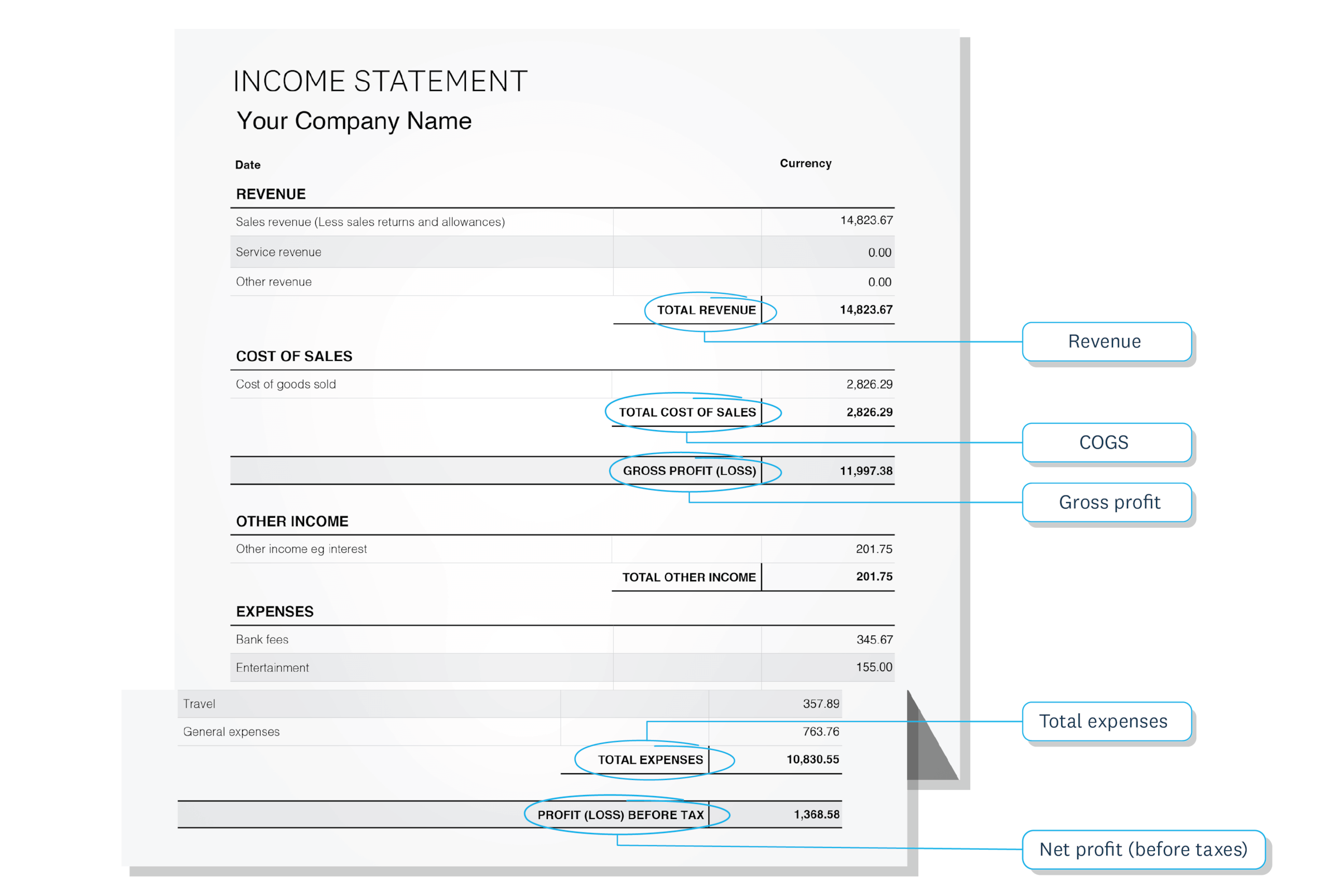
If you use accounting software like Xero, these figures appear in your standard reports. You can also pull them from your bank statements and receipts if you're tracking manually.
How to calculate profitability with software
Accounting software automates profitability calculations, saving you time and reducing errors.
With Xero, you can:
- view real-time margins: open Xero Analytics and select your reporting period to see gross and net profit margins instantly
- generate income statements: pull a profit and loss report anytime to review revenue, costs, and profit figures
- track trends over time: compare margins across months or quarters to spot patterns
You can also calculate manually using your income statement if you prefer to double-check the numbers.
What's a good profit margin for your business?
A "good" profit margin depends on your industry, business model, and growth stage. General benchmarks include:
- Gross profit margin: 50–70% for service businesses; 20–50% for retail and product businesses
- Net profit margin: 10–20% is considered healthy for most small businesses; 5–10% is common in competitive or low-margin industries
These are starting points, not targets. Your ideal margin depends on factors like:
- industry norms: grocery stores operate on 2–3% net margins; software companies may reach 20%+
- business stage: new businesses often have lower margins as they invest in growth
- pricing strategy: premium positioning supports higher margins; volume strategies accept lower margins
Compare your margins against your own history first. Then benchmark against industry averages. Your accountant or bookkeeper can help identify realistic targets for your specific situation.
Why you should track profitability regularly
Track profitability regularly to catch margin changes before they become cash flow problems. Catching margin changes early keeps stress low and business decisions manageable.
Your margins can shift due to:
- rising costs: raw materials, energy, transport, and rent
- interest rate changes: affecting loan payments and financing costs
- exchange rate fluctuations: impacting import costs or international sales
- competitive pressure: forcing price adjustments
How often to calculate: Monthly tracking works for most small businesses. If you operate on thin margins or in a volatile market, review weekly.
How to improve your profitability
If your margins are lower than you'd like, focus on these three areas:
- Increase prices: Review your pricing strategy. Even small increases can significantly improve margins without losing customers.
- Reduce direct costs (COGS): Negotiate with suppliers, find alternative materials, or improve production efficiency.
- Cut operating expenses: Review recurring costs like subscriptions, utilities, and overhead. Eliminate what you don't need.
Set a target margin based on your industry norms and track progress monthly. Your accountant or bookkeeper can help identify realistic benchmarks.
For more detailed strategies, check out our guide on how to increase profits.
Track profitability automatically with Xero
Calculating profitability manually takes time you could spend running your business. Xero automates the process by tracking your revenue and expenses in real time and generating margin reports on demand.
With Xero, you can:
- view gross and net profit margins in your dashboard
- generate income statements for any period
- compare profitability trends across months or quarters
- share reports with your accountant instantly
Get one month free and see how easy profitability tracking can be.
FAQs on calculating profitability
Common questions about measuring and improving your business profitability:
What's the difference between profit and profitability?
Profit is the dollar amount remaining after expenses. Profitability is the percentage of revenue that becomes profit. A business can have high profit but low profitability if revenue is also very high.
Is a 10% profit margin good for a small business?
A 10% net profit margin is generally healthy for most small businesses. However, "good" varies by industry. Grocery stores may operate on 2–3%, while software companies often exceed 20%.
How often should I calculate profitability?
Calculate profitability monthly for most businesses. If you operate on thin margins or face volatile costs, review weekly to catch changes early.
Can I be profitable but still run out of cash?
Yes. Profitability measures earnings over time, while cash flow tracks money moving in and out daily. You can show a profit on paper but lack cash if customers pay slowly or you've invested heavily in inventory.
What's the difference between gross, net, and operating profit margins?
Gross margin measures profit after direct costs (COGS). Operating margin measures profit after direct costs plus operating expenses. Net margin measures profit after all costs, including interest and taxes.
Disclaimer
Xero does not provide accounting, tax, business or legal advice. This guide has been provided for information purposes only. You should consult your own professional advisors for advice directly relating to your business or before taking action in relation to any of the content provided.
Get one month free
Sign up to any Xero plan, and we will give you the first month free.