Australia Small Business Insights
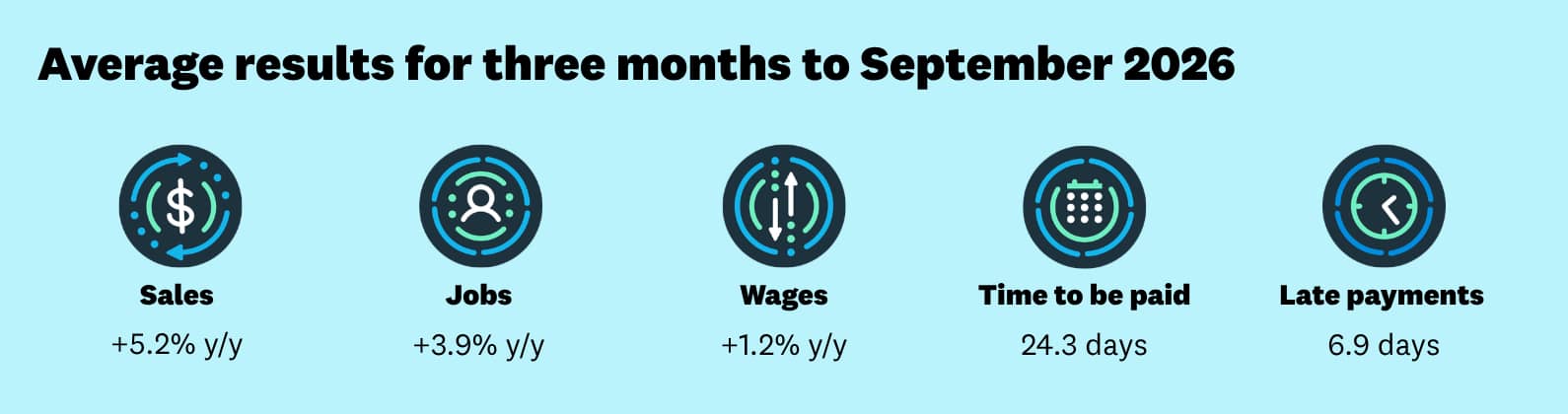
This analysis focuses on core performance metrics of sales growth, jobs growth, wages growth, late payments and time to be paid.

Performance stabilises despite macroeconomic headwinds
Published: 29 October 2026
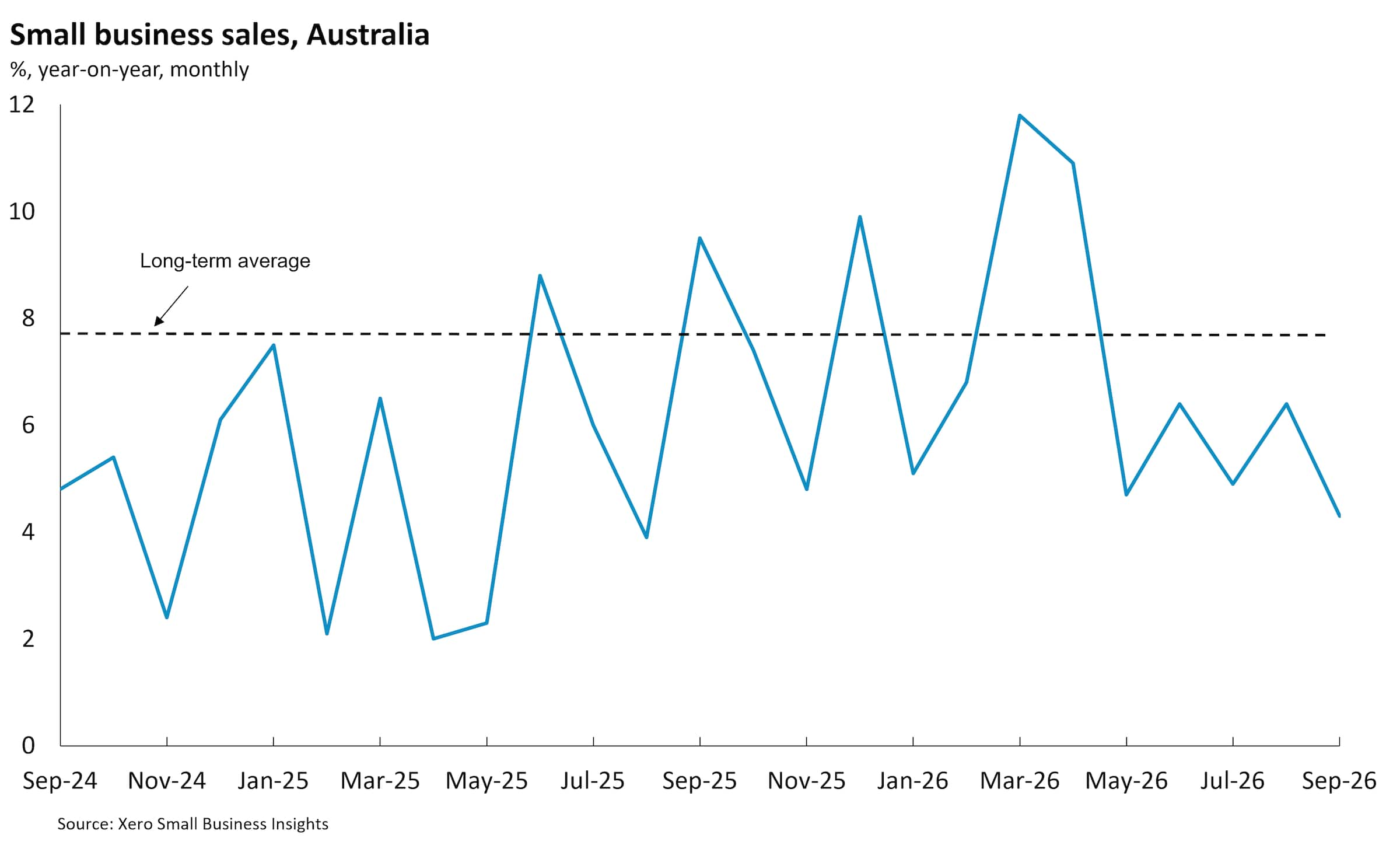
The latest Xero Small Business Insights (XSBI) data for Australia shows small business performance stabilised over the past quarter. Sales growth has been largely steady since May, a little below its long-term average. Jobs growth has picked up but cost of living pressures can be clearly seen in historically small wage rises. Payment times were similar to the March quarter, after the usual dip around the end of the financial year.
Sales in small businesses grew 5.2% year-on-year (y/y) in the September quarter. This was down from 7.3% y/y in the June quarter, largely due to a 10.9% y/y rise in April. Breaking down the monthly movements over the most recent quarter, sales rose 4.9% y/y in July, 6.4% y/y in August and 4.3% y/y in September. This loss of sales momentum since April likely reflects the impact of ongoing higher-than-normal fuel prices, the flow-on of this to other prices, low wage growth and four cash rate rises so far this year. In general, sales performance has held up reasonably well considering the extent of these macroeconomic headwinds.
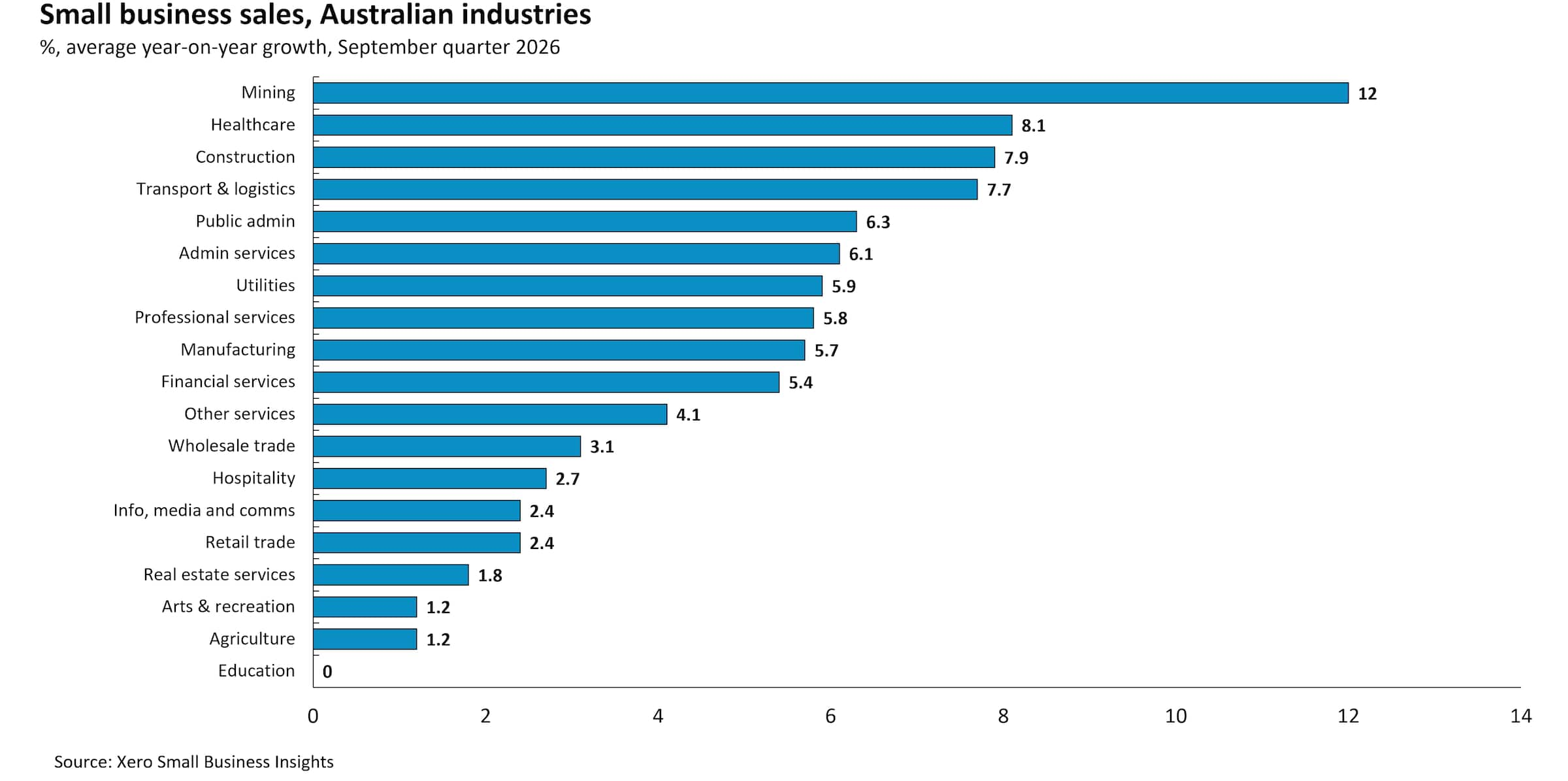
This national result continues to mask considerable variation between industries. Mining (+12.0% y/y) remains by far the best performing sector followed by healthcare (+8.1% y/y) and construction (+7.9% y/y). Construction's result is likely a combination of ongoing buoyant demand - from housing, state government projects and data centers - and price effects amid a surge in construction material costs. Meanwhile real estate services (+1.8% y/y) was one of the softest industries amid changes to tax settings and multiple interest rate rises. Other interest rate sensitive industries also underperformed the national average, including retail trade (+2.4% y/y), hospitality (+2.7% y/y) and arts & recreation (+1.2% y/y). Data center investment, which has been dominating business investment statistics at the national level, is not flowing through to small businesses in the information, media and telecommunications, where sales grew only 2.4% y/y. This suggests much of this investment benefit is flowing to large, not small, businesses.
Western Australia (+7.7% y/y) was by far the best performing state, likely helped by its mining industry. Queensland (+5.7% y/y), South Australia (+5.3% y/y) and New South Wales (+5.2% y/y) had the next largest sales rises. Victoria (+3.8% y/y) and the Northern Territory (+3.7% y/y) had the smallest sales increases in the quarter.
In general, sales performance has held up reasonably well considering the extent of the macroeconomic headwinds
XSBI Australia July 2026 - Sept 2026 data
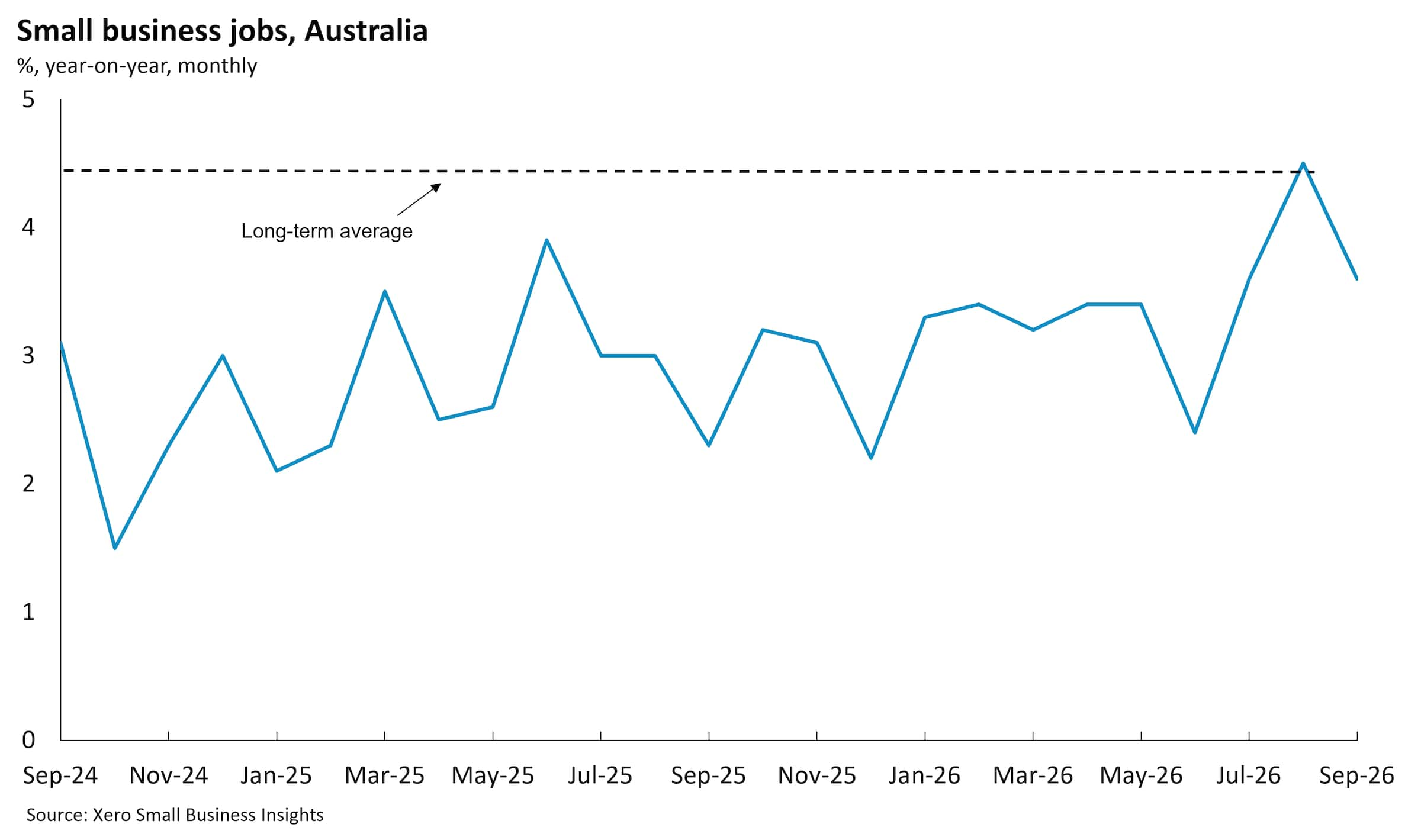
Jobs growth has picked up in recent months, growing 3.9% y/y in the September quarter after a 3.1% y/y rise in the June quarter. As with sales, there are substantial differences across industries. Mining (+8.9% y/y), public administration (+8.1% y/y), utilities (+8.3% y/y) and construction (+6.7% y/y) all recorded growth well above the national average. Meanwhile, hospitality (+0.5% y/y) and information, media and telecommunications (+1.6% y/y) have hardly grown their workforces in the past year. Western Australia (+4.9% y/y) had by far the strongest jobs growth over the September quarter, followed by Queensland (+4.3% y/y) and the Northern Territory (+4.2% y/y). ACT (+1.9% y/y) lagged other regions.
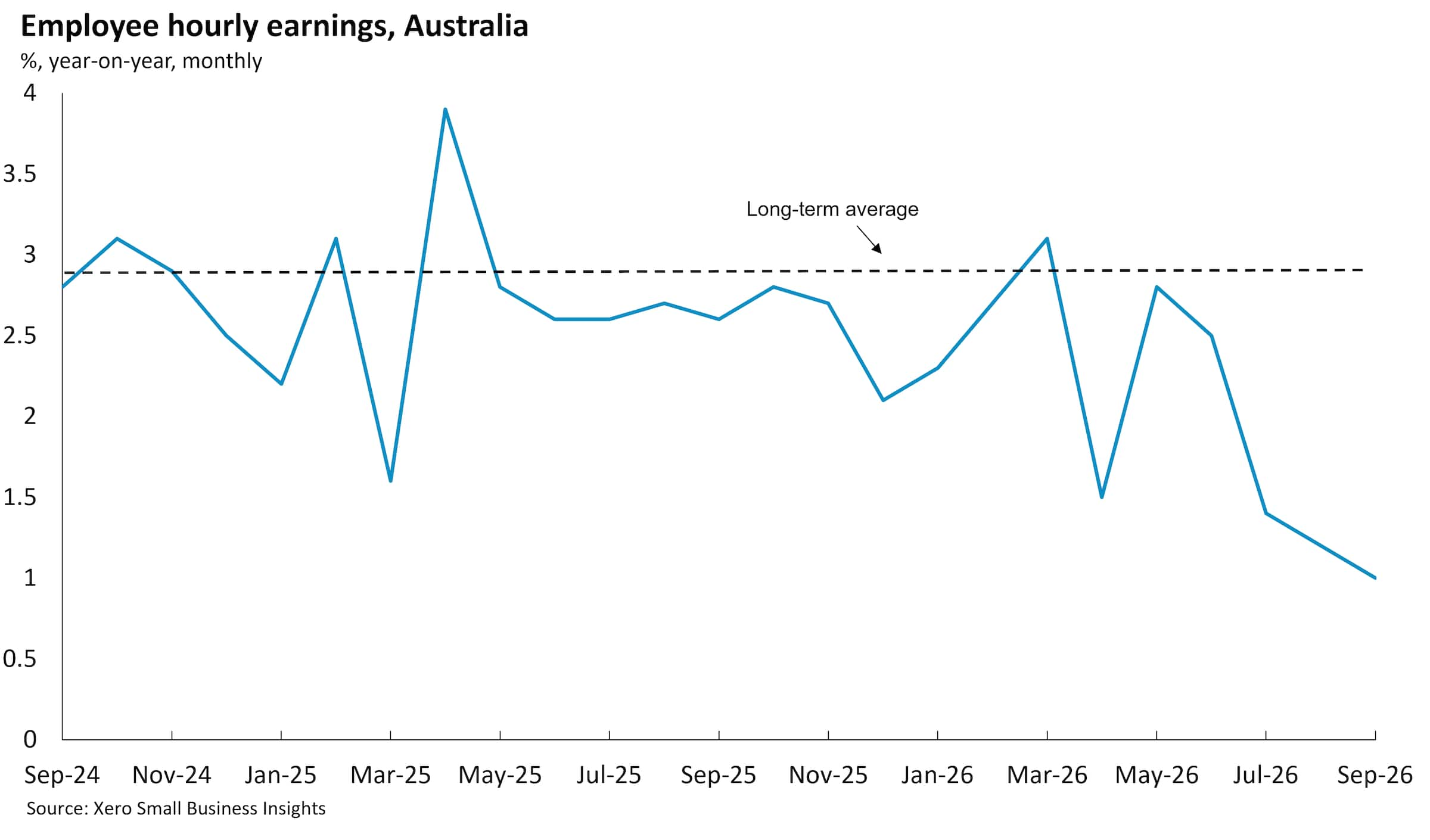
Wages grew only 1.2% y/y in the September quarter, after a 2.3% y/y rise in the June quarter. The latest quarterly result is about half the long-term average for this series (+2.9% y/y). This result highlights cost of living pressure on households is due to a combination of both renewed inflation and low wages growth. Healthcare (+0.4% y/y), education (+0.5% y/y), public administration (+0.8% y/y), real estate services (+0.8% y/y) and information media and telecommunications (+0.8% y/y) had the smallest wage rises. The only industry with wage rises above 2% was hospitality (+2.8% y/y).
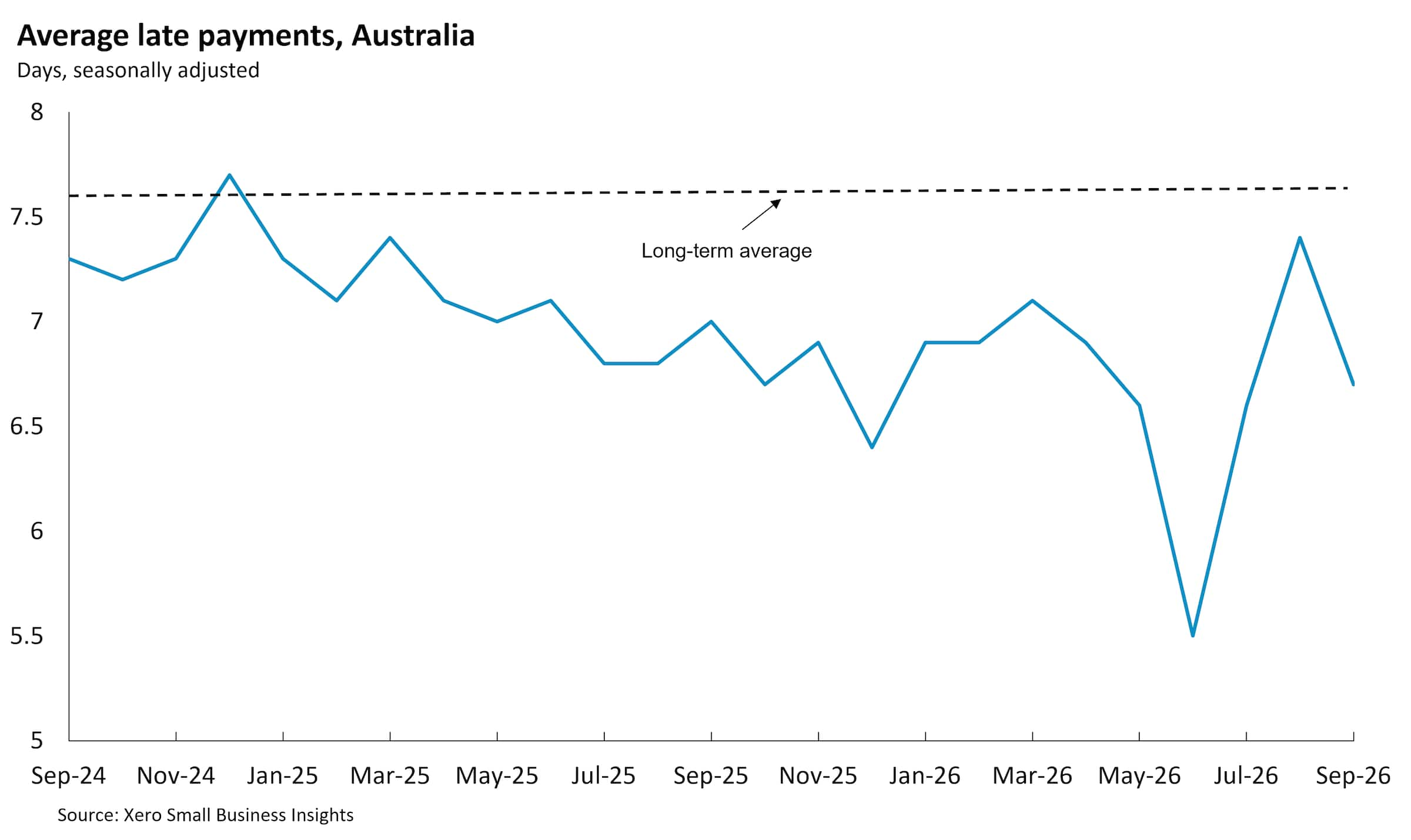
Both payment time metrics reverted back to 'normal', following the end-of-financial year impacts in June. The average length of time small businesses waited to be paid, after issuing an invoice, was 24.3 days - after 23.5 days in the June quarter. Small businesses were paid, on average, 6.9 days late - after 6.3 days in the June quarter.
Overall, the September quarter results suggest that small business sales performance was broadly similar to that seen in May and June. In the labor market, improvements in jobs growth were offset by softer wages growth.
Looking ahead, small businesses are likely to continue to face macroeconomic headwinds over the coming months. After its most recent Board meeting in October, the Reserve Bank of Australia noted that "firms are experiencing cost pressures and are either increasing the prices of their goods and services or looking to do so". They also observed "growth in aggregate demand needs to remain subdued for a period to reduce capacity pressures and bring inflation back to target." This suggests the RBA may raise rates further in late 2026 or early 2027 if it is not confident that inflation is moving back inside its 2-3% target range.
The Australian economy, like many economies, is currently being dominated by two opposing forces. On the one hand, business investment is being boosted by AI-related building of data centers and their associated fit outs. On the other hand, elevated fuel prices, above-target inflation, low wage growth and four cash rate increases are all squeezing household budgets. Aside from some benefits flowing through to small businesses in the construction sector, for most small businesses the negative fuel price and inflation impacts far outweigh the benefits of data center building activity.
For more information on the XSBI metrics, see our methodology page.

Disclaimer
This report was prepared using Xero Small Business Insights data and publicly available data for the purpose of informing and developing policies to support small businesses.
This report includes and is in parts based on assumptions or estimates. It contains general information only and should not be taken as taxation, financial, investment or legal advice. Xero recommends that readers always obtain specific and detailed professional advice about any business decision.
The insights in this report were created from the data that was available as at the date it was extracted. Data used was anonymised and aggregated to ensure individual businesses can not be identified.
Find out more about XSBI
If you have any questions about Xero Small Business Insights, reach out to us.