Trial balance: definition, types and how to prepare
Learn how a trial balance helps you check your books and spot errors. See the main types and how to prepare one.

Written by Lena Hanna—Trusted CPA Guidance on Accounting and Tax. Read Lena's full bio
Published Friday 17 April 2026
Table of contents
Key takeaways
- Prepare a trial balance regularly to catch errors early before they flow through to your financial statements and affect business decisions.
- Recognize that matching debit and credit totals does not guarantee accuracy; always review entries for missing transactions or accounts recorded in the wrong category.
- Use all three types of trial balance in order (unadjusted, adjusted, and post-closing) to move through your accounting cycle accurately and keep each financial period clearly separate.
- Avoid manual data entry errors by using accounting software to automate trial balance preparation, pulling figures directly from your general ledger and flagging mismatches instantly.
What is a trial balance?
A trial balance is a financial report that lists all your account balances from the general ledger at a specific point in time. It helps you verify your books are accurate before creating financial statements.
The name comes from its purpose: you're 'trialling' whether your debits and credits balance correctly.
Components of a trial balance
Every trial balance follows the same three-column structure:
- Account names: All ledger accounts from your chart of accounts
- Debit column: Balances for assets and expenses
- Credit column: Balances for liabilities, equity, and income
The totals in each column must match exactly. If they don't, you have an error to find.
Trial balance example
Here's an example of the trial balance format that shows the closing balances of all accounts in the general ledger at the end of a financial period.
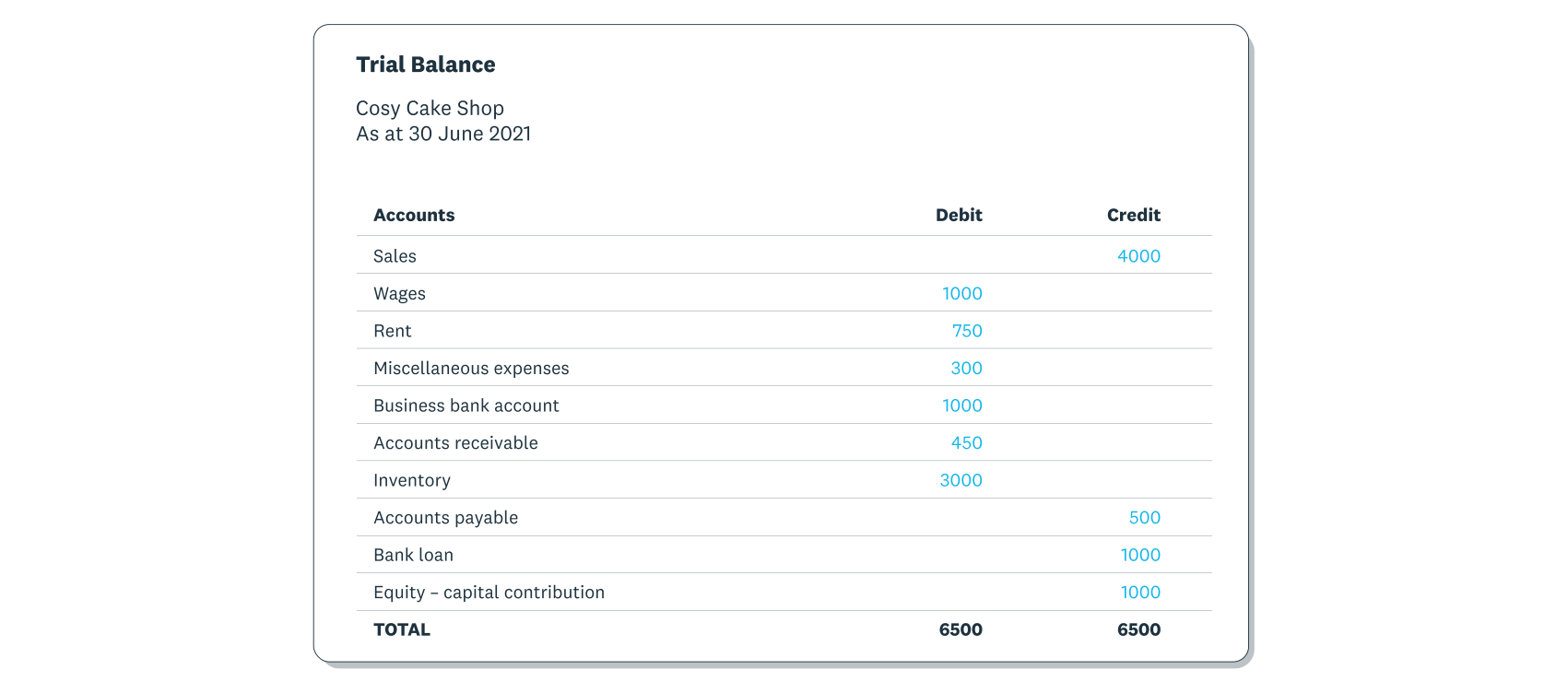
The account names go in the far left column. All debit and credit balances from the general ledger are recorded in the 'Debit' and 'Credit' columns accordingly. The debit and credit columns total the same amount.
Understanding debits and credits in a trial balance
In a trial balance, debits (DR) and credits (CR) represent the two sides of every transaction in double-entry accounting.
Here's how accounts typically appear:
- Debit balances: Assets (cash, equipment, inventory) and expenses (rent, wages, utilities)
- Credit balances: Liabilities (loans, accounts payable), equity (owner's capital), and income (sales, fees)
The fundamental rule: total debits must always equal total credits. When they don't match, you have an error to investigate.
Why trial balances are important
A trial balance verifies your books are accurate before you create financial statements. It's your safety net for catching errors that could affect your accounts, tax filings, and business decisions.
Trial balances help you:
- spot mathematical mistakes and missing entries early
- provide auditors with organised, verified data
- ensure your balance sheets and reports are accurate
Even when totals match, review for missing transactions or accounts recorded in the wrong category.
When to prepare a trial balance
Prepare a trial balance at key points in your accounting cycle:
- Monthly or quarterly: To catch errors before they compound
- Before financial statements: To verify accuracy before creating your profit and loss or balance sheet
- At year-end: To ensure your books are ready for tax filing and audits, especially as new reporting rules will soon require a UK small entity to disclose related party transactions
- When something seems wrong: To investigate discrepancies in your accounts
The more frequently you check, the easier errors are to find and fix.
Types of trial balances
There are three types of trial balances, each prepared at a different stage of your accounting cycle:
- Unadjusted trial balance: Captures raw transaction data before corrections
- Adjusted trial balance: Reflects corrections needed for accurate financial statements
- Post-closing trial balance: Confirms your ledger is ready for the next period
All three use the same three-column format. The difference is when you prepare them during closing your books.
Unadjusted trial balance
An unadjusted trial balance shows your raw transaction data before any corrections. It's your starting point for identifying what needs adjusting before you finalise your accounts.
Common adjustments include:
- Accruals: Recording unpaid bills or income you've earned but not yet received, which will be vital for complying with new disclosure rules regarding supplier finance arrangements starting in 2025
- Deferrals: Recognising prepaid income only when you've delivered the service
- Depreciation: Spreading the cost of assets over their useful life
Making these adjustments gives you a more accurate view of your financial position.
Adjusted trial balance
An adjusted trial balance shows the final balances in all accounts after you've made corrections. You prepare it after the unadjusted trial balance but before creating your financial statements.
This report becomes the foundation for your profit and loss statement, balance sheet, and other financial reports.
Post-closing trial balance
A post-closing trial balance verifies your books are ready for the next accounting period. You prepare it after finalising your financial statements and closing temporary accounts.
During the closing process, you transfer balances from temporary accounts (revenue, expenses, and dividends) into your retained earnings. The post-closing trial balance confirms all debits and credits still match after these transfers.
This step keeps your old and new accounting periods separate.
How to prepare a trial balance
Preparing a trial balance takes four steps. The goal is to confirm your debits and credits are equal before you create financial statements.
- List all account balances from your general ledger
- Record debit balances (assets, expenses) in the left column and credit balances (liabilities, income, equity) in the right column
- Add up each column; the totals should match exactly
- Review your ledger entries for errors if the totals differ
Common trial balance errors
Common trial balance errors can distort your financial statements and lead to poor business decisions. Watch for these mistakes:
- Mistyped amounts: Entering £500 as £5,000, for example
- Omitted transactions: Leaving out purchases, sales, or payments
- Misclassified accounts: Recording transactions in the wrong category
Even small errors compound quickly when they flow through to your reports.
How to correct trial balance errors
When your trial balance doesn't balance, work through these steps to find and fix errors:
- Review each entry carefully and ask a colleague to check for typos
- Confirm your ledger figures match before transferring them
- Use accounting software like Xero to prevent data entry errors and automate calculations
Simplify trial balance preparation with Xero
Trial balances help you verify your books are accurate before creating financial statements. Preparing them regularly catches errors early and keeps your business decisions based on reliable data.
Manual trial balance preparation can be time-consuming and prone to mistakes. Xero's accounting software automates the process, pulling data directly from your general ledger and instantly showing when debits and credits don't match.
With automated reconciliation and real-time reporting, you can prepare trial balances in seconds instead of hours. Get one month free and see how Xero simplifies your bookkeeping.
FAQs on trial balances
Find answers to common questions about trial balances below.
What are the fundamental rules of trial balances?
Four fundamental rules ensure your trial balance is correct:
- Total debits must always equal total credits
- Every account must be classified correctly in your chart of accounts
- All transactions must be recorded completely with no omissions
- All amounts must be calculated and entered accurately
Following these rules helps you catch mathematical errors and maintain accurate books before preparing your financial statements.
What is the trial balance formula?
There isn't a single formula for a trial balance. Instead, it follows a fundamental accounting principle: total debits = total credits.
When should small businesses prepare trial balances?
You can prepare a trial balance at any time, but it's most commonly done at the end of an accounting period, such as a month, quarter, or year.
Disclaimer
Xero does not provide accounting, tax, business or legal advice. This guide has been provided for information purposes only. You should consult your own professional advisors for advice directly relating to your business or before taking action in relation to any of the content provided.
Get one month free
Purchase any Xero plan, and we will give you the first month free.