What is a balance sheet?
Learn what a balance sheet is, the formula behind it, and how to read one for your business.
Published Thursday 23 July 2026
Table of contents
Key takeaways
- A balance sheet is a snapshot of what your business owns and owes on a single date, and it's also called a statement of financial position.
- It follows one rule: assets always equal liabilities plus owner's equity, so the two sides balance.
- Reading it tells you whether your business can pay its bills, how much debt it carries, and how much of the business you actually own.
- Limited companies in the UK file a balance sheet as part of their statutory annual accounts with Companies House.
If you've ever wondered what your business is really worth on paper, the balance sheet has the answer. It's one of the three core financial statements, and it's easier to understand than it first looks.
What is a balance sheet?
A balance sheet is a financial statement that shows what your business owns, what it owes, and what's left over for the owners at a specific point in time. It's sometimes called a statement of financial position, because it captures your financial position on one date rather than over a period.
Think of it as a photograph of your finances taken at the close of business on a chosen day, often the end of your financial year. Unlike a profit and loss statement, which covers a stretch of time, the balance sheet is fixed to that single moment.
The accounting equation
Every balance sheet is built on one simple equation, and once you know it, the whole statement makes more sense. Here's the formula that holds it all together.
The balance sheet formula
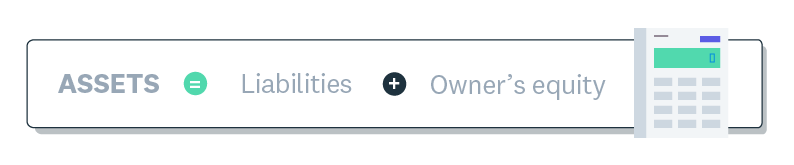
The balance sheet formula, also known as the accounting equation, is: assets = liabilities + owner's equity. This means everything your business owns is funded either by money it owes to others or by money the owners have put in and kept in the business.
The two sides must always match, and that's why it's called a balance sheet. If you buy a £10,000 van with a bank loan, your assets go up by £10,000 and your liabilities go up by £10,000, so the equation stays level.
When the sides don't balance, something has been recorded incorrectly. Accounting software checks this for you automatically, so you're not left hunting for a missing entry by hand.
Each side of the equation breaks down into smaller categories that tell you more about your business. These are the three main parts you'll see on any balance sheet.
The main parts of a balance sheet
A balance sheet has three sections: assets, liabilities, and owner's equity. Assets and liabilities are each split further into current and non-current, based on how quickly they turn into cash or fall due.
Assets are the resources your business owns. Current assets are expected to convert to cash within 12 months, while non-current assets stay in the business longer. Common examples include:
- Cash in your business bank account
- Money owed to you by customers, known as trade debtors
- Stock waiting to be sold
- Equipment, vehicles, and machinery
- Property and long-term investments
Liabilities are what your business owes to others. Current liabilities are due within 12 months, and non-current liabilities fall due later. Typical examples include:
- Trade creditors, meaning suppliers you haven't paid yet
- Short-term overdrafts and credit card balances
- VAT and other tax owed to HMRC
- Bank loans repayable over several years
Owner's equity is what's left for the owners once you subtract liabilities from assets. It includes the money you invested plus any profits you've reinvested rather than taken out, and it's also referred to as shareholders' equity in a limited company.
Knowing the parts is one thing, but the real value comes from what they tell you together. Here's how to interpret the numbers.
How to read a balance sheet
Reading a balance sheet tells you whether your business is financially healthy, how much it relies on borrowing, and whether it can cover its short-term bills. You do this by comparing the figures against each other rather than reading them in isolation.
Two plain-English checks help you get started. The current ratio divides your current assets by your current liabilities, and a result above 1 suggests you can meet your short-term obligations. The debt-to-equity ratio compares what you owe to what the owners have put in, which shows how much of the business is funded by debt.
Together these point to three things: liquidity, meaning how easily you can pay bills as they arise; solvency, meaning whether your assets cover your total debts; and your overall debt levels. Tracking these over time shows whether your position is improving or slipping.
Numbers make more sense with a concrete example, so here's how a small balance sheet might look for a typical business. The figures are illustrative.
Balance sheet example
Imagine a small design studio preparing its balance sheet at the end of the financial year. Its assets are listed first:
- Cash at bank: £8,000
- Trade debtors: £4,000
- Equipment: £6,000
- Total assets: £18,000
Next come its liabilities, covering what the studio still owes:
- Trade creditors: £3,000
- VAT owed to HMRC: £2,000
- Bank loan: £5,000
- Total liabilities: £10,000
Owner's equity is the balancing figure: £18,000 in assets minus £10,000 in liabilities leaves £8,000. That matches the formula, since £18,000 = £10,000 + £8,000, so the balance sheet balances. You can build one like this quickly with a free balance sheet template.
A balance sheet works best when you read it alongside your other reports, because each one shows a different angle. Here's how the three fit together.
How a balance sheet fits with other financial statements
The balance sheet is one of three core financial statements, working with the profit and loss statement and the cash flow statement. Each answers a different question about your business.
The profit and loss statement shows whether you made money over a period, listing income and expenses to arrive at profit or loss. The cash flow statement shows how cash moved in and out over that same period, which can differ from profit.
The balance sheet ties them together by showing the resulting position on a single date. Profit you keep in the business feeds into owner's equity, and cash from the cash flow statement appears as an asset. To see how they connect in practice, read this guide to financial statements.
If you run a limited company, your balance sheet also plays a formal role beyond day-to-day management. Here's what that means at a high level.
Balance sheets and UK filing requirements
In the UK, limited companies must file a balance sheet as part of their statutory annual accounts with Companies House. It sits alongside other required statements and gives an official record of the company's financial position at the year end.
Smaller companies can often file simpler or abridged accounts, and the exact requirements depend on your company's size and circumstances. Filing timeframes are set by Companies House and run from your accounting reference date.
This is general information rather than tax, legal, or accounting advice, so check the current rules that apply to your business or speak to your accountant. Keeping accurate records throughout the year makes preparing and filing these accounts far simpler.
An accurate balance sheet starts with tidy, up-to-date records, and that's much easier when your numbers update themselves. Good software takes the manual effort out of keeping it right.
Keep your balance sheet accurate with Xero
A balance sheet is only as reliable as the data behind it, so the less manual entry you do, the fewer errors creep in. When your bank transactions, invoices, and bills flow into one place, your figures stay current and your statement reflects reality.
Xero accounting software brings your finances together and builds your balance sheet from real-time data, so you can check your position whenever you need to. You can try it and get one month free.
FAQs on balance sheets
Here are answers to some frequently asked questions about balance sheets to round off the essentials.
What is a balance sheet in simple terms?
It's a snapshot of what your business owns and owes on a single date. It shows your assets, your liabilities, and the owner's equity left over.
What are the 3 main parts of a balance sheet?
The three parts are assets, liabilities, and owner's equity. Assets and liabilities are usually split into current and non-current items.
Why must a balance sheet balance?
Because everything your business owns is funded either by debt or by the owners, so assets always equal liabilities plus equity. If the two sides don't match, an entry has been recorded incorrectly.
What's the difference between a balance sheet and a profit and loss statement?
A balance sheet shows your financial position on one date, while a profit and loss statement shows income and expenses over a period. You need both to understand how your business is performing.
How often should you prepare a balance sheet?
Many small businesses review one monthly or quarterly to track their position, and limited companies prepare one at least annually for their statutory accounts. Accounting software lets you generate one on demand.
Handy resources
Advisor directory
You can search for experts in our advisor directory
Xero Small Business Guides
Discover resources to help you do better business
Financial reporting
Keep track of your performance with accounting reports
Disclaimer
This glossary is for small business owners. The definitions are written with their requirements in mind. More detailed definitions can be found in accounting textbooks or from an accounting professional. Xero does not provide accounting, tax, business or legal advice.