What are assets? Definition, types and examples
Learn what business assets are, the main types, and how they show up on your balance sheet.
Published Thursday 23 July 2026
Table of contents
Key takeaways
- Assets are the resources your business owns or controls that have economic value, and they're the opposite of liabilities.
- You can group assets in several ways: current or fixed, tangible or intangible, and operating or non-operating.
- Assets sit on your balance sheet in order of liquidity, alongside your liabilities and equity, and follow the equation assets = liabilities + equity.
- Knowing what you own helps you secure financing, make confident decisions, and understand what your business is worth.
What are assets?
An asset is any resource your business owns or controls that has economic value. Assets are the things that help you operate and earn money, and they're the opposite of liabilities, which are what you owe.
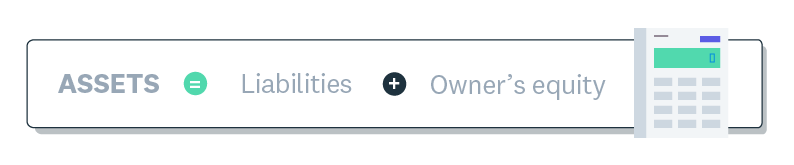
The accounting equation
Take a plumber running a small business. Their assets might include:
- the van they drive to jobs
- the tools and equipment they use
- the cash in their business bank account
- the money customers still owe them for completed work
What are assets in accounting?
In accounting, assets are one of the three building blocks of your balance sheet, sitting alongside liabilities and equity. They connect through a simple formula known as the accounting equation.
The accounting equation is assets = liabilities + equity. It shows that everything your business owns is funded either by money you owe to others, your liabilities, or by the money you and any investors have put in, your equity.
The difference between the two is straightforward. Assets are the resources you own, while liabilities are the debts and obligations you need to settle, such as loans, unpaid bills, and tax you owe.
What makes something an asset?
Not everything your business uses counts as an asset in accounting terms. For something to qualify, it usually needs to meet three properties.
- Ownership: you own or control the resource, so you can decide how it's used
- Economic value: it can be sold, used to produce goods or services, or turned into cash
- Resource: it comes from a past transaction and is expected to bring a future benefit
Types of assets
Assets come in several forms, and you can group them in more than one way. The three most useful groupings for small business owners are current versus fixed, tangible versus intangible, and operating versus non-operating.
The split between current and fixed assets comes down to time. Current assets are ones you expect to use or convert to cash within a year, such as stock, cash, and money owed to you. Fixed assets are longer-term resources you keep and use over several years, like vehicles, machinery, and premises.
How quickly current assets become cash depends on how fast customers pay. Accounts receivable, the money customers owe you, is a current asset, and according to Xero Small Business Insights, UK small businesses waited an average of 29.0 days to be paid after issuing an invoice in early 2026, with invoices settled 8.2 days late on average.
Tangible assets are physical things you can touch, such as equipment and stock. Intangible assets have no physical form but still hold value, including trademarks, patents, and goodwill.
Operating assets are the ones you use in day-to-day trading, like your tools and premises. Non-operating assets aren't part of daily operations but still add value, such as spare cash held in investments or a property you rent out.
Examples of business assets
The assets a business holds depend on what it does. Looking at a few different trades shows how varied they can be.
- A café might count its espresso machine, ovens, tables and chairs, food stock, and the cash in its till
- A retailer might list its shop fittings, point-of-sale system, inventory on the shelves, and the balance owed by trade customers
- A consultant might have a laptop, office furniture, cash in the bank, and fees invoiced to clients but not yet paid
How assets appear on your balance sheet
Your balance sheet gives a snapshot of what your business owns and owes on a given date. Assets appear on one side, with liabilities and equity balancing them out.
Assets are usually listed in order of liquidity, meaning how quickly they can be turned into cash. Current assets like cash and money owed to you come first, followed by fixed assets like vehicles and equipment.
Fixed assets often show their net book value, which is the original cost minus the value that's been written off over time. This keeps the figure on your balance sheet in line with what the asset is actually worth today.
Depreciation and amortisation of assets
Most assets lose value as they age or get used, and accounting spreads that cost over the years you use them. The method depends on whether the asset is tangible or intangible.
You use depreciation for tangible assets, such as a van or a piece of machinery, to reflect wear and tear over time. You use amortisation for intangible assets, like a patent or a licence, which lose value as they approach the end of their useful life.
In the UK, you may be able to claim capital allowances when you buy certain assets, which can reduce the profit you pay tax on. The rules vary by asset, so it's worth checking what applies to your purchases.
Why assets matter for your business
Assets are more than a line on your accounts, they shape what your business can do. Understanding them helps you plan, borrow, and grow with confidence.
- Financing: lenders often look at your assets as collateral when you apply for a loan or credit
- Decision-making: knowing what you own helps you judge when to invest, replace equipment, or cut costs
- Business value: your assets are a big part of what your business is worth if you sell it or bring in investors
Manage your assets with Xero
Keeping track of what you own gets easier when your finances live in one place. With clear records and up-to-date reporting, you can watch your assets, spot what's owed to you, and see where every asset stands, so you can plan with confidence. Get one month free.
FAQs on assets
Here are answers to some frequently asked questions about assets.
What counts as an asset?
Anything your business owns or controls that has economic value and is expected to bring a future benefit counts as an asset. That includes cash, stock, equipment, property, and money customers owe you.
What's the difference between current and fixed assets?
Current assets are ones you expect to use or turn into cash within a year, such as stock and cash. Fixed assets are longer-term resources you keep and use over several years, like vehicles and machinery.
What's the difference between assets and liabilities?
Assets are the resources your business owns, while liabilities are the debts and obligations you owe. Your equity is the difference between the two.
Are employees an asset?
Employees aren't recorded as assets on your balance sheet, because your business doesn't own them. They're a valuable resource, but accounting only counts things you own or control that can be measured in money.
What are some examples of business assets?
Common examples include cash, stock, vehicles, tools and equipment, premises, and money invoiced to customers but not yet paid. Intangible examples include trademarks, patents, and goodwill.
Handy resources
Advisor directory
You can search for experts in our advisor directory
Xero Small Business Guides
Discover resources to help you do better business
Fixed assets in Xero
Manage your fixed assets with easy-to-use accounting software
Disclaimer
This glossary is for small business owners. The definitions are written with their requirements in mind. More detailed definitions can be found in accounting textbooks or from an accounting professional. Xero does not provide accounting, tax, business or legal advice.