What are liabilities?
Learn what liabilities are, the main types, and how they affect your balance sheet and cash flow.
Published Thursday 23 July 2026
Table of contents
Key takeaways
- Liabilities are what your business owes to others, whether that's money, goods or services, and they sit opposite your assets.
- Liabilities split into current ones due within 12 months, non-current ones due later, and contingent ones that depend on a future event.
- On the balance sheet, your liabilities and equity together balance your assets, following the accounting equation.
- Tracking what you owe helps you protect cash flow and stay solvent as your business grows.
What are liabilities?
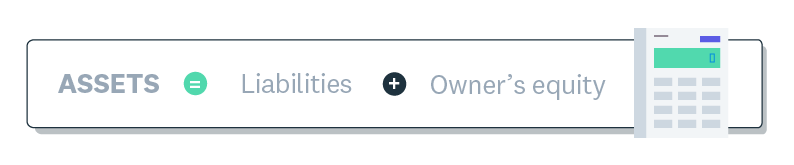
The accounting equation
Liabilities are what a business owes, whether that's money, goods or services, and they're the opposite of assets, which are what a business owns.
Businesses regularly owe money, goods or services to another party, and each of those debts is recorded as a liability. Common examples include bank loans, overdrafts, money owed to suppliers, and taxes owed.
To picture how this works, the liabilities of a plumber might include:
- a loan for a vehicle
- unpaid invoices for business supplies
- wages owed
- VAT owed
Liabilities vs assets
Liabilities and assets are two sides of the same coin, so it helps to see how they relate. Assets are what your business owns and can use to generate value, while liabilities are what your business owes to others.
Your assets might include cash, stock, equipment and money owed to you by customers. Your liabilities are the loans, supplier bills and taxes you still need to pay. The gap between the two is your equity, which reflects the book value of the business. You can read more in the Xero glossary entry on what counts as a business asset.
Types of liabilities
Liabilities are usually grouped by when they fall due and how certain they are. The three main types are current, non-current and contingent.
Current liabilities
Current liabilities are debts you expect to settle within 12 months, so they have the most direct effect on your day-to-day cash flow. You can see more detail in the Xero glossary entry on short-term current liabilities. Typical examples include:
- supplier invoices due within the year
- VAT and PAYE owed to HMRC
- overdrafts and short-term loans
- wages owed to staff
Non-current liabilities
Non-current liabilities are debts that fall due after more than 12 months, so they tend to fund longer-term investment. For a fuller definition, see the Xero glossary entry on long-term non-current liabilities. Common examples include:
- bank loans repaid over several years
- commercial mortgages
- lease obligations lasting beyond a year
- deferred tax due in future periods
Contingent liabilities
Contingent liabilities are potential debts that only become real if a specific future event happens. You record them so the business has a clear picture of what it might owe. Examples include:
- the outcome of a pending legal claim
- a guarantee given on another party's borrowing
- a warranty or refund you may need to honour
Examples of liabilities
Liabilities cover a wide range of everyday debts a UK small business builds up. This fuller list shows the ones you're most likely to record:
- bank loans
- overdrafts
- accounts payable, such as unpaid supplier invoices
- VAT owed to HMRC
- PAYE owed to HMRC
- corporation tax owed
- wages owed to employees
- accrued expenses for costs you've incurred but not yet paid
- deferred income for money received before you've delivered the work
Money owed to suppliers is often the biggest of these, and you can see how it's tracked in the Xero glossary entry on managing accounts payable.
How liabilities appear on the balance sheet
Your liabilities sit on your balance sheet alongside your assets and equity, and they always stay in balance through the accounting equation. That equation is:
Assets = Liabilities + Equity
Rearranged, it also tells you the book value of the business: Equity = Assets - Liabilities. So as your liabilities rise, your equity falls unless your assets grow to match. To see how these figures fit together in practice, read the Xero guide on how to read a balance sheet, and the glossary entry on how the accounting equation works.
Liabilities vs expenses
Liabilities and expenses are easy to mix up, but they sit in different places in your accounts. A liability is an amount you owe that stays on the balance sheet until you settle it.
An expense is a cost your business uses up in running day to day, and it shows on your profit and loss statement. Rent for the month is an expense, while rent you've been billed for but not yet paid is a liability until the payment clears.
Why managing your liabilities matters
Keeping a close eye on what you owe protects two things every small business depends on: cash flow and solvency. When you know which debts fall due and when, you can plan payments without straining your bank balance.
Letting current liabilities pile up can leave you short of cash even when the business is profitable on paper. Staying on top of them helps you keep enough headroom to pay staff, suppliers and HMRC on time, and to invest with confidence as you grow.
Keep on top of your liabilities with Xero
Seeing what your business owes in one place makes it easier to plan ahead and avoid surprises. Xero can help you keep track of what your business owes and see it against your assets on the balance sheet, so you can get one month free and start managing your liabilities today.
FAQs on liabilities
Here are answers to some frequently asked questions about liabilities to clear up the points that come up most often.
What's the difference between current and non-current liabilities?
Current liabilities are due within 12 months, while non-current liabilities fall due after more than a year. The split shows how soon each debt affects your cash.
What's the difference between liabilities and assets?
Assets are what your business owns, and liabilities are what it owes. The difference between the two is your equity.
Are liabilities a debit or a credit?
Liabilities usually carry a credit balance in double-entry bookkeeping. Paying one down is recorded as a debit that reduces the balance.
What is a contingent liability?
A contingent liability is a potential debt that only becomes real if a specific future event happens. A pending legal claim is a common example.
How do liabilities affect the balance sheet?
Liabilities sit opposite your assets and, with equity, keep the balance sheet in balance. Higher liabilities lower your equity unless assets grow to match.
Handy resources
Advisor directory
You can search for experts in our advisor directory
Xero Small Business Guides
Discover resources to help you do better business
Financial reporting
Keep track of your performance with accounting reports
Disclaimer
This glossary is for small business owners. The definitions are written with their requirements in mind. More detailed definitions can be found in accounting textbooks or from an accounting professional. Xero does not provide accounting, tax, business or legal advice.