Cash vs accrual accounting
Compare cash vs accrual accounting, see a simple example, and choose the right method for your business.
Published Thursday 23 July 2026
Table of contents
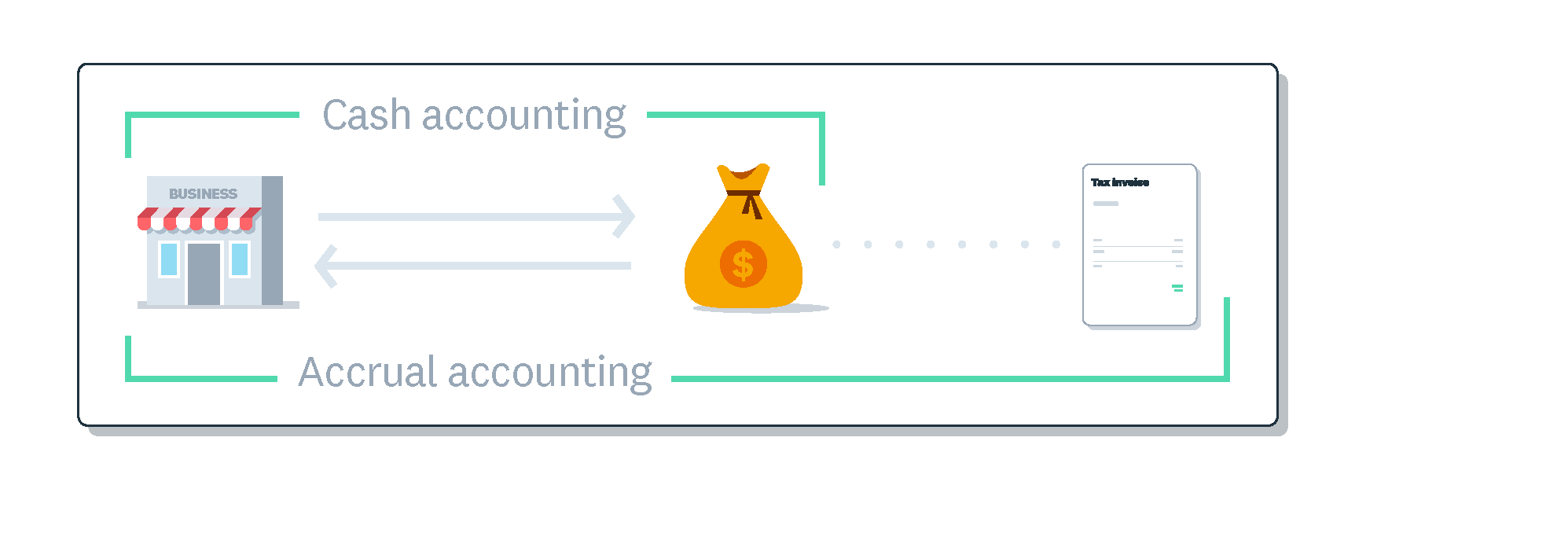
Cash accounting focuses only on cash changing hands, not outstanding bills or invoices.
Key takeaways
- Cash accounting records income and expenses only when money actually changes hands, so it follows the cash moving in and out of your business.
- Accrual accounting records income and expenses when they’re earned or incurred, even if you haven’t been paid or paid the bill yet.
- Cash accounting is simpler and shows your bank position, while accrual accounting gives a fuller picture of profitability and what you’re owed.
- In New Zealand, Inland Revenue lets many small businesses choose how they account for GST, so your method can shape your day-to-day record keeping.
What is cash accounting?
Cash accounting records income and expenses only when money actually moves. You count a sale when the payment lands in your account, and you count a cost when you pay the bill.
This method keeps things simple, because your books follow your bank balance closely. Many sole traders and smaller businesses start here, since recording accounting transactions takes less effort when you only log money that has already changed hands.
What is accrual accounting?
Accrual accounting records income and expenses when they’re earned or incurred, not when the money moves. You count a sale the day you invoice it, and you count a cost the day you receive the bill.
This gives a more complete view of your finances, because it captures money you’re owed and money you owe. It usually relies on double-entry bookkeeping, where each transaction affects two accounts to keep your records balanced.
Cash vs accrual accounting: the key differences
The core difference comes down to timing: when you record income and when you record expenses. Cash accounting waits for the payment, while accrual accounting acts on the obligation.
These timing choices change how your reports read at any given moment. The main differences are:
- Recording income: cash accounting counts it when you’re paid, accrual accounting counts it when you invoice
- Recording expenses: cash accounting counts them when you pay, accrual accounting counts them when you’re billed
- Money owed to you: cash accounting ignores unpaid invoices, accrual accounting shows them as income earned
- Money you owe: cash accounting ignores unpaid bills, accrual accounting shows them as expenses incurred
- Financial picture: cash accounting reflects your bank position, accrual accounting reflects your overall profitability
Cash vs accrual accounting: an example
A simple invoice shows how each method treats the same transaction differently. Say you send a customer a $2,000 invoice in March, and they pay you in April.
With cash accounting, you record the $2,000 as income in April, when the payment reaches your account. With accrual accounting, you record it in March, when you raise the invoice, even though the cash arrives a month later.
The same logic applies to your costs. If you receive a supplier bill in March and pay it in April, cash accounting records the expense in April, while accrual accounting records it in March. Keeping a close eye on cash flow matters under both methods, because the timing gap between invoicing and payment still affects the money in your account.
Pros and cons of each method
Each method suits different businesses, and both come with trade-offs. Cash accounting keeps things straightforward, and its main benefits are:
- Simple to run, since you only record money that has changed hands
- Clear view of the cash sitting in your bank account right now
- Lower admin, which suits sole traders and smaller businesses
Cash accounting also has limits worth weighing up, and its main drawbacks are:
- Hides money you’re owed, because unpaid invoices don’t appear
- Hides money you owe, because unpaid bills don’t appear
- Gives a less complete picture of your true profitability
Accrual accounting takes more effort but shows a fuller picture, and its main benefits are:
- Matches income and expenses to the period they belong to
- Shows what you’re owed and what you owe at any time
- Supports better decisions as your business grows more complex
Accrual accounting asks more of you in return, and its main drawbacks are:
- More complex to maintain, especially without accounting software
- Needs closer tracking of invoices, bills, and timing
- Can mask short-term cash pressure, since profit isn’t the same as cash
How to choose the right method for your business
The right method depends on how your business runs and how much detail you need. A few practical factors can point you in the right direction.
Weigh up these considerations when you decide:
- Business size: smaller, simpler operations often manage well with cash accounting
- Complexity: more moving parts and larger volumes tend to suit accrual accounting
- Invoicing and credit: if you invoice customers or offer credit terms, accrual accounting reflects that reality more accurately
- Financing needs: lenders and investors usually expect the fuller picture that accrual accounting provides
Getting your day-to-day bookkeeping set up around the method you choose keeps your records consistent and easier to review.
Cash and accrual accounting and tax in New Zealand
In New Zealand, your accounting method links closely to how you handle GST. Inland Revenue (IRD) lets many small businesses choose how they account for GST, which shapes when you record it.
There are three common approaches: the payments basis, which works like cash accounting; the invoice basis, which works like accrual accounting; and a hybrid that blends the two. Your choice affects the figures you report on each GST return.
Your method can also influence how and when you record income for tax generally. This is educational rather than tax advice, so check your situation with IRD or your accountant before you settle on an approach.
Manage cash and accrual accounting with Xero
Choosing a method is one step, and keeping your records accurate is where the day-to-day work happens. Xero brings your invoices, bills, and bank transactions together so you can track income and expenses under either method, and new customers can get one month free to see how it fits your business.
FAQs on cash vs accrual accounting
Here are answers to some frequently asked questions about cash vs accrual accounting to help you decide what works for your business.
What is the difference between cash and accrual accounting?
Cash accounting records income and expenses when money changes hands. Accrual accounting records them when they’re earned or incurred, even before any payment is made.
What are the main benefits of using accrual accounting?
Accrual accounting shows what you’re owed and what you owe, so you get a fuller view of profitability. It also matches income and expenses to the right period, which supports clearer decisions as you grow.
What are accrued expenses?
Accrued expenses are costs you’ve incurred but haven’t paid yet. For example, if you receive a supplier bill in March but pay it in April, accrual accounting records that expense in March.
Which method suits a small New Zealand business?
Many smaller NZ businesses find cash accounting simpler to run day to day. If you invoice customers, offer credit, or plan to seek financing, accrual accounting often gives a more accurate picture.
Related terms
Learn more about cash vs accrual accounting
Handy resources
Advisor directory
You can search for experts in our advisor directory
Xero Small Business Guides
Discover resources to help you do better business
Financial reporting
Keep track of your performance with accounting reports
Disclaimer
This glossary is for small business owners. The definitions are written with their requirements in mind. More detailed definitions can be found in accounting textbooks or from an accounting professional. Xero does not provide accounting, tax, business or legal advice.