Cash accounting
Learn what cash accounting is, how it differs from accrual, and how it works for GST in New Zealand.
Published Thursday 23 July 2026
Table of contents
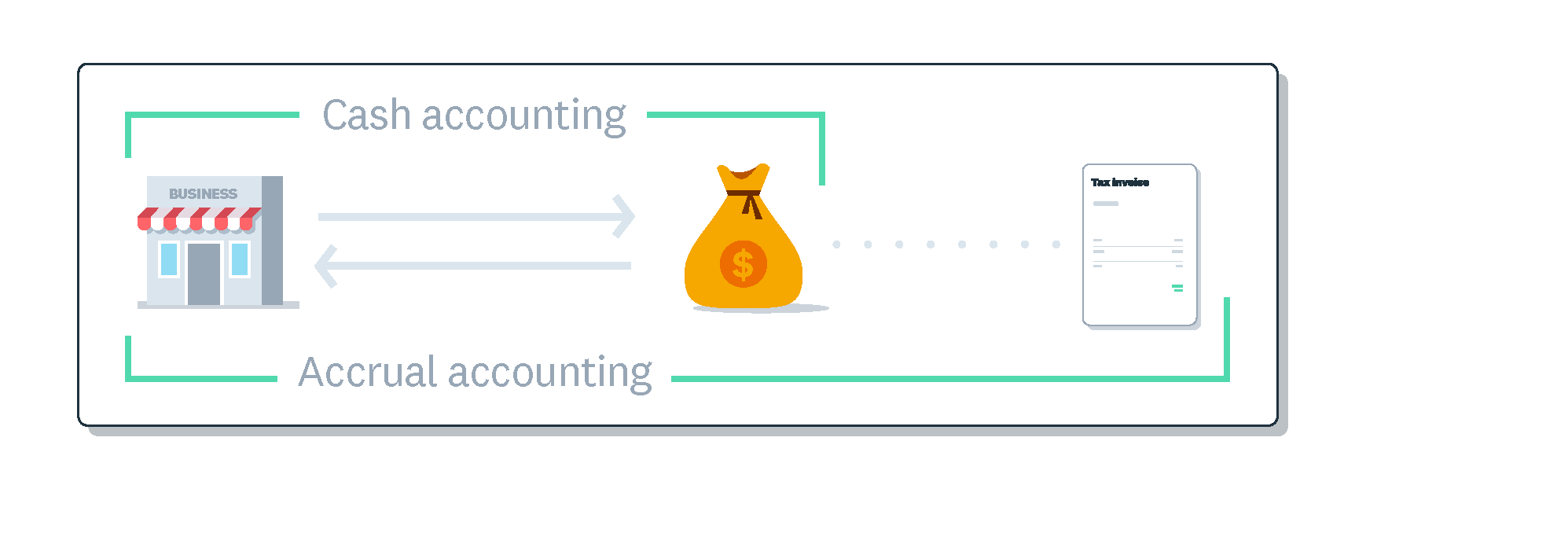
Cash accounting focuses only on money, not bills or invoices.
Key takeaways
- Cash accounting records income and expenses only when money actually moves, so the books follow your bank account rather than your invoices.
- It gives you a clear, real-time view of the cash you have on hand, which makes it simple to run for smaller businesses.
- Accrual accounting takes a fuller view by recording money as it's earned or incurred, including amounts still owed to and by you.
- In New Zealand, businesses registered for goods and services tax (GST) can use the payments basis for GST if total sales are $2 million or less.
What is cash accounting?
Cash accounting is a method of recording income and expenses only when money actually changes hands, when you receive a payment or make one. You record a transaction on the day cash moves, not on the day an invoice is issued.
It's also called cash basis accounting, and it's one of the main choices you make when you set your basis of accounting.
How cash accounting works
Under cash accounting, the date of payment is the date that matters, so your records mirror what's happening in your bank account. A simple example shows how the timing works.
Say you invoice a customer on 3 March, but they pay you on 20 March. You record the income on 20 March, the day the money arrives. Now say you receive a supplier bill in April but pay it in May. You record that expense in May, when the payment leaves your account.
Recording a transaction on a cash basis follows three simple steps:
- Wait until the payment is received or made
- Record the amount on the date the cash actually moves
- Match the transaction to the right income or expense category
Keeping this consistent is a core part of good record keeping, and you can learn more in this guide on how to do bookkeeping.
Cash accounting vs accrual accounting
The main point of comparison is timing, and the difference between cash and accrual accounting comes down to when you record each transaction. Cash accounting records money only when it moves, while accrual accounting records income and expenses when they're earned or incurred, regardless of when cash actually changes hands.
That timing shapes what each method shows you. Both are recognised choices under your basis of accounting, and the practical differences look like this:
- Cash accounting shows your current cash position, so you can see the money you actually have right now
- Accrual accounting shows amounts owed to and by you, so you can see the fuller financial picture
- Cash accounting is simpler to run, while accrual accounting gives a more complete view of profitability
If you want to weigh the two side by side, this guide on cash vs accrual accounting walks through both in more detail.
Advantages and disadvantages of cash accounting
Cash accounting has clear strengths and some real limits, and the right fit depends on how your business runs. Here's what works in its favour.
- Simple to understand and quick to set up
- Easy to run without specialist accounting knowledge
- Gives a clear view of the cash you have on hand
- Can help with GST timing, since you account for tax as money moves
There are also downsides to keep in mind before you commit to it.
- Ignores unpaid bills and outstanding invoices
- Offers only a short-term view of your finances
- Can overstate or understate how the business is really doing
- Isn't suitable for larger or more complex businesses
Who should use cash accounting?
Cash accounting suits businesses that want a straightforward, real-time view of their money without a lot of admin. It tends to work best for a few types of business.
- Smaller businesses with simple finances
- Sole traders who manage their own books
- Businesses that deal mostly in cash transactions
Keep in mind that some lenders and investors prefer accrual accounting, because it shows a fuller picture of what you're owed and what you owe. Tax rules may also restrict which businesses can use cash accounting, so it's worth checking your eligibility before you choose.
Cash accounting and GST in New Zealand
In New Zealand, cash accounting connects directly to how you handle goods and services tax (GST). Businesses registered for GST choose an accounting basis for it: the payments basis (also called the cash basis), the invoice basis, or the hybrid basis.
On the payments basis you account for GST when payments are made or received, which lines up with cash accounting. According to Inland Revenue (IRD), the payments basis is available if your total sales are $2 million or less in the last 12 months, or likely to be $2 million or less in any 12-month period.
You must register for GST once your turnover reaches $60,000 in a 12-month period. For a step-by-step walkthrough, see this guide on registering for GST.
Simplify your cash accounting with Xero
Keeping cash-based records tidy is easier when your income, expenses and GST all sit in one place. Xero brings your day-to-day money work together, so your books stay current as payments come and go.
You get a clear view of where your cash stands and stay ready at GST time, and you can try it all with Get one month free.
FAQs on cash accounting
Here are answers to some frequently asked questions about cash accounting to help you decide if it's right for your business.
What is the difference between cash and accrual accounting?
Cash accounting records income and expenses only when money moves, while accrual accounting records them when they're earned or incurred. Cash gives a real-time view of your bank balance, and accrual gives a fuller view of what you owe and are owed.
Who can use cash accounting in New Zealand?
Smaller businesses, sole traders and businesses with mostly cash transactions can use cash accounting. For GST specifically, the payments basis is available if your total sales are $2 million or less in a 12-month period.
Is cash accounting good for small businesses?
It often suits small businesses because it's simple to run and shows the cash you have on hand. It's less useful once your finances grow more complex or when lenders want a fuller view of profitability.
Can you use the cash (payments) basis for GST in New Zealand?
Yes, if your total sales are $2 million or less, you can use the payments basis and account for GST when money is received or paid. Inland Revenue also offers the invoice basis and the hybrid basis as alternatives.
Related terms
Learn more about cash accounting
Handy resources
Advisor directory
You can search for experts in our advisor directory
How to do bookkeeping
Learn about data entry, bank rec, reporting and tax prep in our guide to doing bookkeeping.
Online accounting with Xero
Automate your accounting in the cloud
Disclaimer
This glossary is for small business owners. The definitions are written with their requirements in mind. More detailed definitions can be found in accounting textbooks or from an accounting professional. Xero does not provide accounting, tax, business or legal advice.