Accrual accounting
Learn how accrual accounting records income and expenses when earned, and how it differs from cash accounting.
Published Thursday 23 July 2026
Table of contents
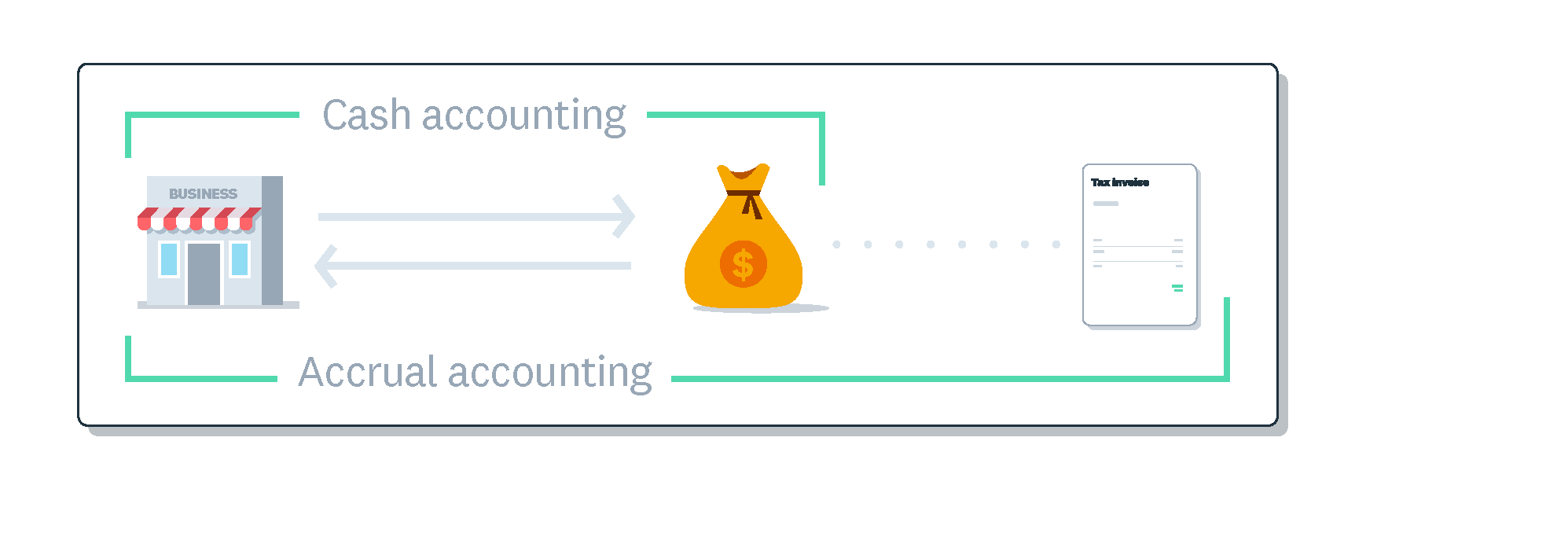
Accrual accounting keeps tabs on bills and sales invoices that are yet to be paid.
Key takeaways
- Accrual accounting records income and expenses when they're earned or incurred, not when the cash moves.
- It gives you a fuller picture of what your business owes and what it's owed at any point.
- Cash accounting is simpler, but accrual accounting suits growing businesses that invoice, carry stock, or work with lenders.
- Your GST can be filed on a payments or invoice basis, so check the right fit with Inland Revenue or your accountant.
What is accrual accounting?
Accrual accounting is a method that records income and expenses when they're earned or incurred, not when cash actually changes hands. It tracks the invoices you owe and the invoices owed to you, so your books reflect activity as it happens.
The main alternative is cash accounting, which only records money when it lands in or leaves your bank account. Accrual accounting takes a bit more work, but it shows a truer view of how your business is performing.
Accrual accounting vs cash accounting
The difference between cash and accrual accounting comes down to timing. Cash accounting records a transaction when the money moves, while accrual accounting records it when the sale is made or the cost is incurred.
Say you send an invoice in June and the client pays in July. Under cash accounting you'd record the income in July. Under accrual accounting you'd record it in June, when you earned it.
Here's how the two methods compare:
- Timing: cash accounting records on payment, accrual accounting records on earning or incurring
- Complexity: cash accounting is simpler to run, accrual accounting takes more tracking
- Visibility: cash accounting shows money in the bank, accrual accounting shows money owed and owing
- Best fit: cash accounting suits very small or simple businesses, accrual accounting suits growing ones
How accrual accounting works: the matching principle
Accrual accounting works on two simple habits: you record income when it's earned and expenses when they're incurred. The date the cash settles doesn't change when the entry goes in your books.
This is guided by the matching principle, which lines up expenses with the income they helped generate in the same period. Matching them gives you an accurate view of profit for that period.
Imagine you invoice a client in March for work you've completed, but they pay you in April. You record the sale in March, when you send the invoice, along with any costs tied to that job. Your March accounts then show the real result of that work.
Types of accruals
Accruals fall into two main types, and both help your books reflect activity before the cash moves. Understanding accruals makes it easier to read your reports accurately.
The two types are accrued revenue and accrued expenses:
- Accrued revenue: income you've earned but not yet been paid for, such as a completed project you've invoiced but the client hasn't settled
- Accrued expenses: costs you've incurred but not yet paid, such as wages your staff have earned before payday or a power bill that's due next month
For example, if your team works the last week of the month but you pay them in the first week of the next month, those wages are an accrued expense. You record them in the month the work happened.
Pros and cons of accrual accounting
Accrual accounting gives you a clearer, more complete view of your finances, though it does ask more of your record keeping. Weighing the benefits against the trade-offs helps you decide if it's right for your business.
The main benefits of accrual accounting include:
- Showing a truer picture of profit by matching income with related costs
- Tracking what you're owed and what you owe at any point in time
- Supporting better decisions with a fuller view of business performance
- Meeting the expectations of lenders, investors, and many reporting standards
The trade-offs to keep in mind include:
- Taking more time and care to maintain than cash accounting
- Requiring you to track invoices and bills, not just bank movements
- Making it possible to show a profit while cash in the bank is tight
Who should use accrual accounting?
Accrual accounting suits businesses that have grown beyond simple, cash-in-hand transactions. It's a strong fit when your finances involve credit, stock, or outside funding.
Accrual accounting tends to work well for businesses that are:
- Growing quickly and want a clear view of performance
- Selling to customers on credit and sending invoices
- Carrying stock or managing inventory
- Working with lenders, investors, or applying for finance
Cash accounting can be perfectly fine if you run a small operation, get paid at the point of sale, and hold little or no stock. Many sole traders start with cash accounting and move to accrual accounting as they grow.
How accrual accounting affects tax in New Zealand
The accounting method you choose affects when your income and expenses fall for tax purposes. Under accrual accounting, income counts when you earn it and expenses count when you incur them, rather than when cash moves.
Your method also relates to how you handle GST. In New Zealand, you can file GST on a payments (cash) basis or an invoice (accrual) basis, and the right choice depends on your circumstances.
Tax rules can be detailed and they change over time. To choose the basis that suits your business and stay compliant, check with Inland Revenue or talk to your accountant.
Simplify accrual accounting with Xero
Accounting software can handle the accruals for you, recording income and expenses as you raise invoices and enter bills. It keeps your reports up to date without the manual tracking, so your books reflect what's earned and owed.
With Xero, you can manage invoices, bills, and reporting in one place, so you can spend less time in the books and more time running your business. Get one month free.
FAQs on accrual accounting
Here are answers to some frequently asked questions about accrual accounting to help you decide how to manage your books.
Is accrual accounting required for small businesses in New Zealand?
It isn't mandatory for every small business, and many smaller operations use cash accounting. Your obligations depend on your situation, so confirm the requirements with Inland Revenue or your accountant.
What is the matching principle in accrual accounting?
The matching principle records expenses in the same period as the income they helped earn. This keeps your profit figure accurate for each reporting period.
Can I switch from cash to accrual accounting?
Yes, businesses often switch as they grow and need a fuller view of performance. Plan the change carefully so opening balances and outstanding invoices carry over correctly.
Does accrual accounting show my cash flow?
Not on its own, because it records income and expenses before the money moves. Pair it with a cash flow report so you can see both profit and the cash actually available.
Related terms
Learn more about accrual accounting
Handy resources
Advisor directory
You can search for experts in our advisor directory
How to do bookkeeping
Learn about data entry, bank rec, reporting and tax prep in our guide to doing bookkeeping.
Online accounting with Xero
Automate your accounting in the cloud
Disclaimer
This glossary is for small business owners. The definitions are written with their requirements in mind. More detailed definitions can be found in accounting textbooks or from an accounting professional. Xero does not provide accounting, tax, business or legal advice.