What is a sales funnel? Stages and how to build it
Learn how a sales funnel guides leads through each stage and helps you turn interest into sales.

Written by Shaun Quarton—Accounting & Finance Content Writer and Growth Marketer. Read Shaun's full bio
Published Wednesday 22 April 2026
Table of contents
Key takeaways
- Implement a five-stage sales funnel (qualification, proposal, negotiation, closing, retention) to guide prospects from first contact to loyal customer, as businesses that nurture leads produce 50% more sales at 33% lower cost.
- Track conversion rates at each funnel stage to spot where prospects drop off, then use that data to predict revenue, allocate your budget more effectively, and improve the overall buying experience.
- Prioritise customer retention from the moment a sale closes by delivering structured onboarding and ongoing support, since acquiring a new customer costs five times more than keeping an existing one.
- Tailor your funnel to your business model: eCommerce funnels should minimise friction and prioritise speed, B2B funnels require trust-building over longer timeframes, and SaaS funnels rely on free trials and clear, ongoing value to convert and retain users.
Key takeaways
- Implement a systematic five-stage sales funnel process (qualification, proposal, negotiation, closing, retention) to guide prospects from initial interest to purchase and beyond, as businesses that nurture leads produce 50% more sales at 33% lower cost.
- Track conversion rates at each funnel stage to identify bottlenecks and optimise performance, using data to predict future sales and allocate resources more effectively to high-converting lead segments.
- Prioritise customer retention through structured onboarding and post-sale support, as acquiring new customers costs five times more than retaining existing ones and creates opportunities for upselling.
- Tailor your funnel approach to your business model, recognising that eCommerce funnels focus on speed and minimal friction, B2B funnels emphasise trust-building over longer timeframes, and SaaS funnels convert through free trials and ongoing value demonstration.
What is a sales funnel?
A sales funnel is a step-by-step model that maps the journey a potential customer takes from first hearing about your business to making a purchase.
The funnel shape reflects reality: many prospects enter at the top, but only the most qualified reach the bottom. Along the way, some drop off due to lack of interest, budget constraints, or better alternatives.
For example, imagine an online store selling speciality coffee beans. A customer discovers the brand through Instagram, browses the website, joins the email list for a 10% discount, adds a bag of beans to their cart, and completes the purchase.
You may also hear this called a business growth funnel, conversion funnel, or purchase funnel. Each stage reflects increasing commitment, and understanding this process helps you nurture prospects more effectively.
What are the sales funnel stages?
The five stages of a sales funnel guide prospects from initial contact to long-term customer:
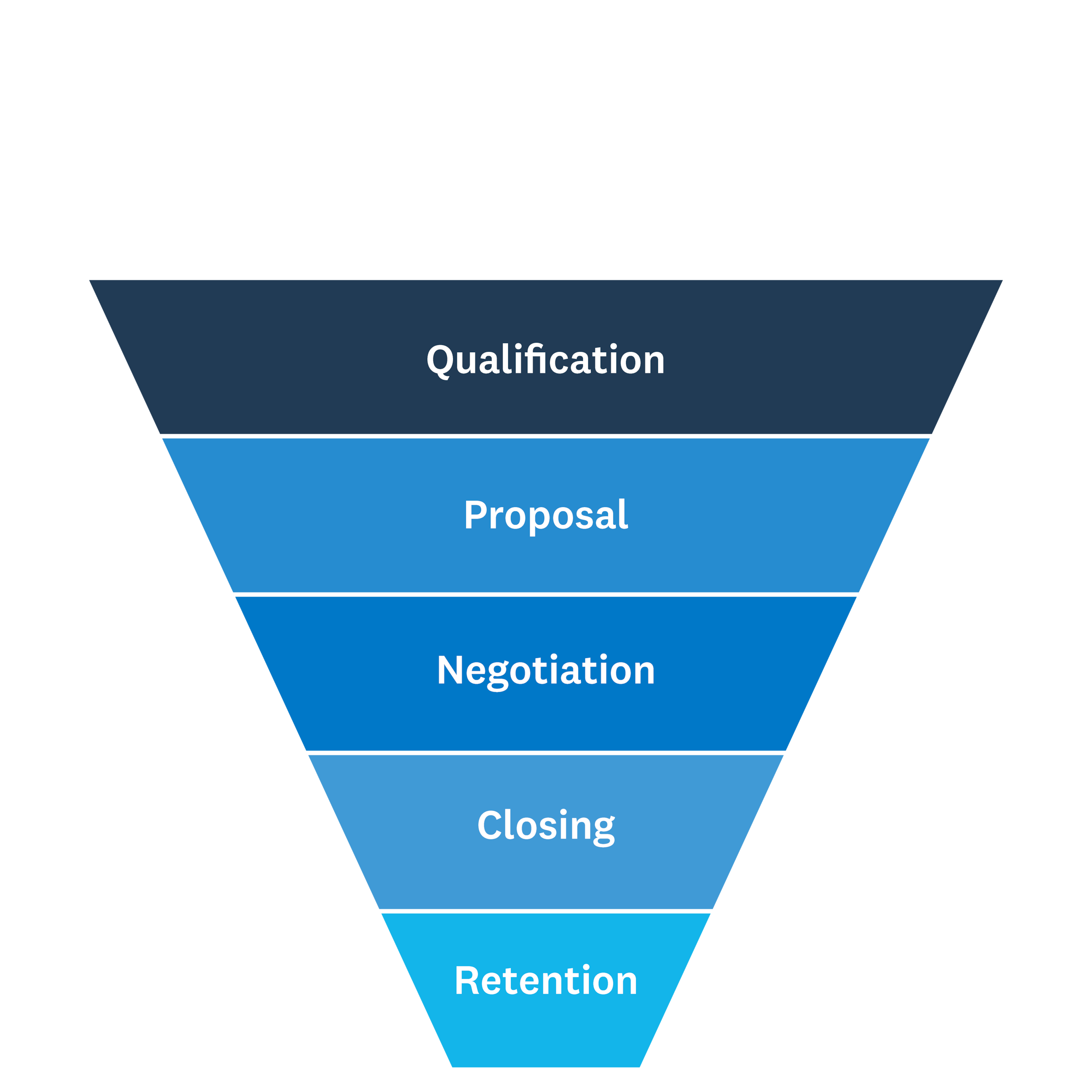
- Qualification: Identify the best-fit prospects based on their needs, budget, and timeframe
- Proposal: Present your product or service to qualified prospects, demonstrating its value
- Negotiation: Address remaining objections and discuss terms, pricing, or contract details
- Closing: Finalise the sale by securing an agreement, processing payments, and completing the transaction
- Retention: Ensure customer satisfaction to encourage repeat business and long-term loyalty
Why sales funnels matter for small businesses
Sales funnels matter because they give small businesses a systematic way to convert more prospects into paying customers. Without a structured approach, leads slip through the cracks and marketing spend goes to waste.
A well-designed funnel delivers measurable advantages that help SMBs compete more effectively with larger companies.
Key benefits include:
- Predict revenue: Smooth out cash flow by understanding exactly how many leads you need to hit your sales targets
- Save resources: Focus your time and marketing budget only on the most promising prospects
- Understand customers: See exactly where people drop off so you can fix bottlenecks and improve the buying experience
- Improve conversion rates: Tailor your messaging to match where the customer is in their journey, making them more likely to buy
How does a sales funnel work?
A sales funnel works by guiding potential customers through a series of steps, each designed to build trust and move them closer to a purchase.
Think of it like a kitchen funnel: you pour a lot in at the wide top, but only a narrow stream comes out the bottom. In business, you attract many potential customers at the top, but only the most interested ones make it through to become buyers.
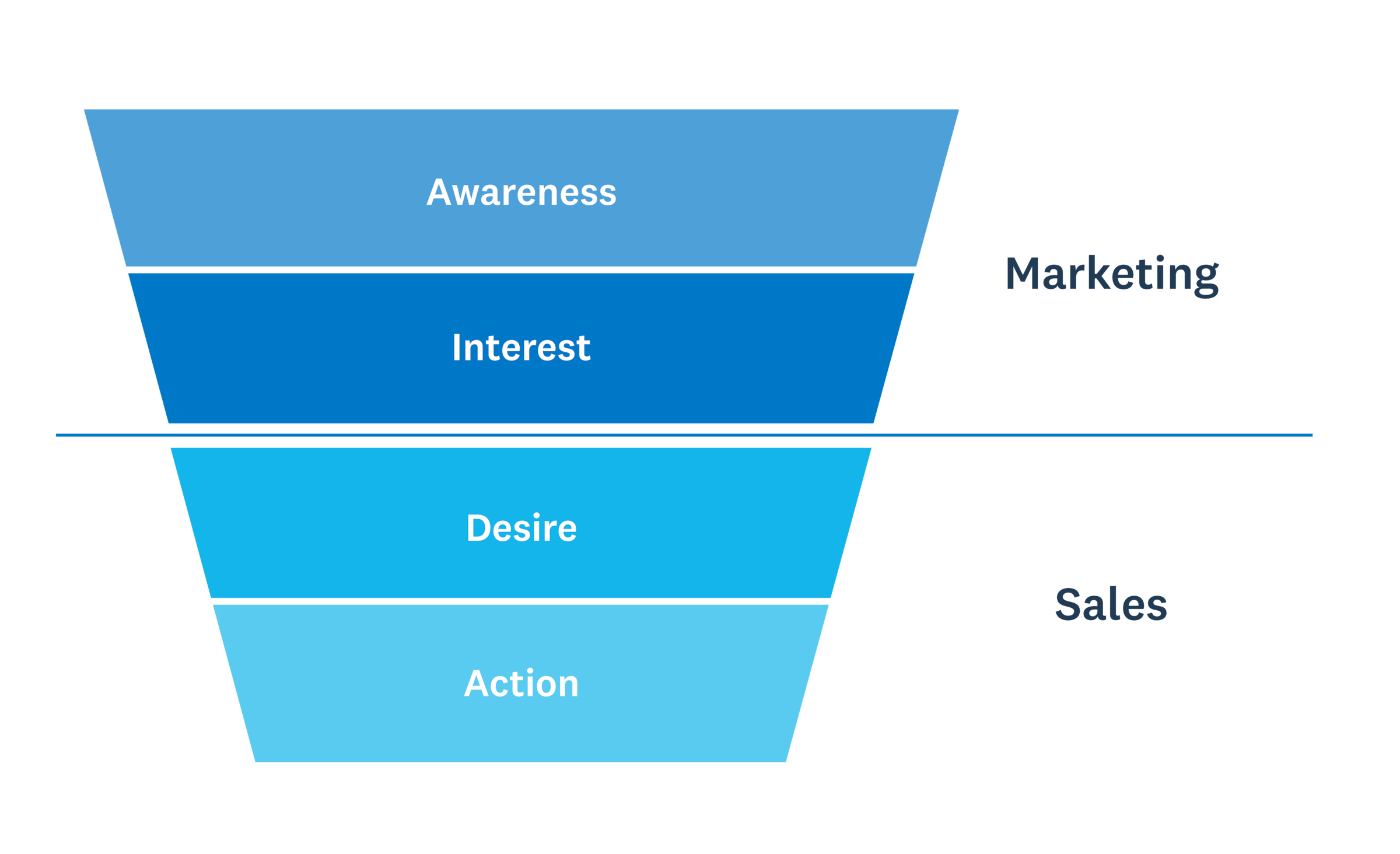
While every business is different, the journey usually follows four key phases:
- Awareness: A potential customer first learns about your business through a social media post, Google search, or recommendation from a friend
- Interest: They engage further by visiting your website, reading a blog post, or signing up for your newsletter
- Decision: They seriously consider purchasing by comparing prices, reading reviews, or requesting a demo
- Action: They complete the purchase by adding items to their cart, signing a contract, or clicking the buy button
By understanding how this works, you can create targeted marketing and sales activities for each stage, making the journey smoother for your customers and more profitable for your business.
Sales funnel examples
Sales funnel examples show how the same basic structure adapts to different business models. While the stages remain consistent, the tactics vary by industry.
Here's how three common business types optimise each stage:
eCommerce sales funnel
The eCommerce sales funnel moves customers from product discovery to purchase with minimal friction. Speed is critical: a site that loads in one second can achieve 2.5x higher conversion rates than one loading in five seconds.
- Attract: Drive traffic through ads, SEO, and social media
- Engage: Showcase products with compelling images and reviews
- Capture: Offer discounts or freebies for email sign-ups
- Nurture: Re-engage with retargeting ads and abandoned cart emails
- Convert: Provide a seamless checkout experience
- Retain: Send personalised product recommendations
B2B sales funnel
The B2B sales funnel focuses on building trust and demonstrating expertise to drive larger or more complex sales, ensuring you build higher market share to gain customers who are in turn more loyal. This process takes time: research shows 63% of leads won't convert for at least three months.
- Attract: Generate leads through content marketing, networking, and referrals
- Engage: Build credibility with webinars, case studies, and whitepapers
- Capture: Gate valuable content and offer free consultations
- Nurture: Follow up with emails, demos, and personalised outreach
- Convert: Present proposals and negotiate terms
- Retain: Provide ongoing support and identify upsell opportunities
SaaS sales funnel
The SaaS sales funnel converts prospects into paying customers through free trials or demos, then retains them by continuing to deliver clear value.
- Attract: Drive traffic through SEO, PPC, and content marketing
- Engage: Build interest with landing pages, videos, and case studies
- Capture: Offer free trials, demos, or limited-access plans
- Nurture: Guide users with onboarding emails, tutorials, and in-app prompts
- Convert: Encourage upgrades with premium features and time-limited offers
- Retain: Keep customers with strong support, regular updates, and loyalty incentives
Video is particularly effective at the engagement stage, with research showing it can increase conversion rates by up to 86%.
How to create a sales funnel
Creating a sales funnel gives you a systematic process for guiding prospects from initial interest to purchase. Follow these five stages to build yours:
1. Qualify your leads
Lead qualification means evaluating each lead's needs, budget, and decision-making authority to determine if they're a good fit.
Understanding demographics (such as knowing there are around 5.3 million businesses with fewer than 10 staff in the UK alone), alongside pain points and purchasing behaviours, helps gauge their probability of converting. This insight lets you tailor your approach throughout the funnel.
External factors also matter. Leads in thriving industries or regions are more valuable than those in struggling markets, such as Retail & Wholesaling, which is currently the most pessimistic sector. Focus your marketing efforts where the potential is highest. Learn more about small business marketing.
Learn more about market research and strategies tailored for SMBs.
2. Propose your product or service
Present your product or service to qualified leads through sales calls, demonstrations, or formal proposals. A personalised approach that directly addresses their pain points and clearly highlights your unique value proposition (UVP) works best.
3. Negotiate the details
Address any remaining objections and work through the specifics of your offer. This stage involves discussing pricing, contract terms, delivery schedules, and any customisation needs.
Listen carefully to concerns and be prepared to adjust where possible whilst maintaining the value of your solution. Clear communication and flexibility help move prospects closer to closing.
4. Close the sale
Secure the agreement by finalising all details and processing the transaction. Make the purchasing process as smooth as possible by removing friction and providing clear next steps.
This might involve sending a contract for signature, processing a payment, or setting up an initial onboarding call. Prompt follow-up and clear documentation help ensure nothing falls through the cracks.
5. Retain your customers
Customer retention begins the moment the sale closes. Deliver a structured onboarding experience that helps new customers get value from your product or service quickly.
Maintain regular contact through check-ins, support resources, and updates. Satisfied customers are more likely to make repeat purchases, provide referrals, and explore additional offerings.
FAQs on sales funnels
Here are answers to common questions about sales funnels.
How long should a sales funnel be?
The length of your sales funnel depends on your business model and product complexity. eCommerce funnels might take minutes or hours, whilst B2B funnels can take weeks or months. Focus on what works for your specific customer journey rather than a set timeframe.
What's the difference between a sales funnel and a marketing funnel?
A marketing funnel focuses on generating awareness and attracting leads, whilst a sales funnel guides qualified prospects towards a purchase. The two work together: marketing brings people in, and sales converts them into customers.
How do I measure sales funnel performance?
Track conversion rates at each stage to identify where prospects drop off. Key metrics include lead-to-customer conversion rate, average deal size, sales cycle length, and customer acquisition cost. Use this data to pinpoint bottlenecks and optimise your funnel.
Can small businesses benefit from sales funnels?
Yes, sales funnels help small businesses compete more effectively by providing a systematic approach to converting leads. They improve resource allocation, increase conversion rates, and make revenue more predictable.
Small business performance little changed*
Read the full report for Xero's small business insights focusing on several core performance metrics, including sales growth, jobs, time to be paid, and late payments.
UK sales:+1.9%*
Small business sales increased an average of 1.9% y/y in the three months to September. Published 31 October 2024.
Disclaimer
Xero does not provide accounting, tax, business or legal advice. This guide has been provided for information purposes only. You should consult your own professional advisors for advice directly relating to your business or before taking action in relation to any of the content provided.
Get one month free
Purchase any Xero plan, and we will give you the first month free.