Trial balance: definition, types and how to prepare
Learn what a trial balance shows, why it matters, and how it helps you check your books.

Written by Lena Hanna—Trusted CPA Guidance on Accounting and Tax. Read Lena's full bio
Published Monday 20 April 2026
Table of contents
Key takeaways
- Prepare a trial balance before creating any financial statements to confirm your total debits equal your total credits and catch calculation mistakes early.
- Recognize that a balanced trial balance does not guarantee error-free books, as missing transactions, duplicate entries, or wrong account classifications can still exist even when the columns match.
- Work through three types of trial balances in order: unadjusted, adjusted, and post-closing, as each one serves a distinct purpose at a different stage of your accounting cycle.
- Fix trial balance errors by tracing them systematically, working backwards from the trial balance to the general ledger and then to journal entries, until you find the source of the mistake.
What is a trial balance?
A trial balance is a financial report that lists all account balances from your general ledger at a specific point in time. It verifies that your books are mathematically accurate before you prepare financial statements.
Many businesses create a trial balance as the first step in closing their books at the end of an accounting period. This 'trial' tests your books for fundamental errors before you prepare financial statements or undergo audits.
Understanding the structure of a trial balance helps you read and prepare one correctly.
Components of a trial balance
The trial balance has a simple three-column layout:
- account names: all active accounts from your chart of accounts, listed on the left
- debit balances: assets and expense accounts
- credit balances: liabilities, equity, and income accounts
The totals of the debit and credit columns should match.
Trial balance example
Here's an example of the trial balance format that shows the closing balances of all accounts in the general ledger at the end of a financial period.
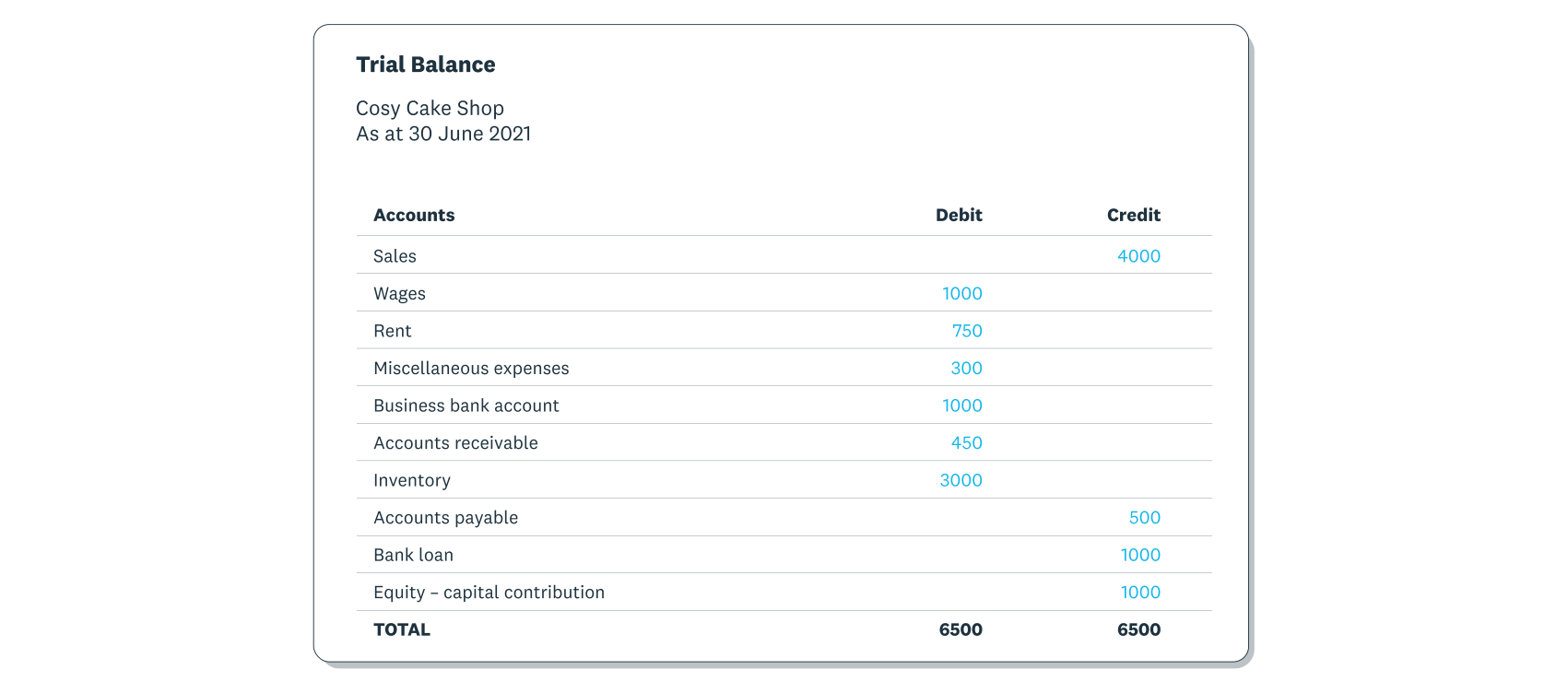
The account names go in the far left column. All debit and credit balances from the general ledger are recorded in the 'Debit' and 'Credit' columns accordingly. The debit and credit columns total the same amount.
What is the purpose of a trial balance?
A trial balance confirms your books are accurate before you prepare financial statements. It serves three key purposes:
- catch mathematical errors: confirm total debits equal total credits in your general ledger, flagging calculation mistakes that need fixing
- summarise all accounts: view every account and its balance in one place for reviewing financial activity over a period
- prepare financial statements: use verified balances as the starting point for creating balance sheets and income statements
How does a trial balance work?
A trial balance works by testing the golden rule of double-entry bookkeeping: total debits must equal total credits.
The report lists every account from your general ledger and places its final balance in either a debit or credit column. When you add up both columns, the totals should be identical. If they match, your books are in balance.
The role of trial balances in financial statements
Trial balances connect directly to your financial statements and compliance requirements. These requirements vary depending on your entity type. New Zealand maintains different accounting requirements for each reporting tier based on cost-benefit considerations.
Here's how they fit into the bigger picture:
- foundation for financial statements: your accountant uses the verified balances to prepare balance sheets, income statements, and official documents like New Zealand's Financial Statements Summary (IR10) tax return
- audit verification: auditors check that debit and credit totals match to confirm your books balance correctly
- error detection: if totals don't match, a missing entry or copying error may be the cause
Keep in mind that balanced totals don't guarantee error-free books. Missing transactions or incorrect account classifications can still exist even when debits equal credits.
Types of trial balances
You'll prepare three types of trial balances at different stages of your accounting cycle. Each serves a specific purpose:
- unadjusted trial balance: created first to gather initial data and spot obvious errors
- adjusted trial balance: prepared after corrections to create accurate financial statements
- post-closing trial balance: completed last to prepare your ledger for the next accounting period
Unadjusted trial balance
An unadjusted trial balance captures all initial data from your general ledger. It records day-to-day transactions before any period-end adjustments.
Common adjustments include:
- accruals: adding unpaid bills or earned but unbilled income
- deferrals: recognising income only when earned
- depreciation: spreading asset costs over multiple years
These adjustments provide a more accurate view of your business's financial position.
Adjusted trial balance
An adjusted trial balance shows the final balances in all accounts after you've made period-end adjustments. You prepare it after the unadjusted trial balance but before creating financial statements like your balance sheet or income statement.
Post-closing trial balance
A post-closing trial balance verifies your books after you've closed temporary accounts and finalised financial statements.
During the closing process, balances from temporary accounts (revenue, expenses, and dividends) move into retained earnings. The post-closing trial balance confirms all debit and credit balances are equal, preparing your general ledger for the next accounting period.
This creates a clear separation between old and new accounting periods.
Trial balance vs balance sheet
A trial balance and a balance sheet both show financial information, but they serve different purposes.
A trial balance is an internal bookkeeping tool that lists all account balances to check your books are mathematically correct. A balance sheet is a formal financial statement that summarises your business's financial position for external stakeholders.
Key differences:
- purpose: a trial balance checks for errors; a balance sheet reports financial position
- audience: a trial balance is for internal use; a balance sheet is for investors, lenders, and tax authorities
- content: a trial balance lists every account; a balance sheet groups accounts into assets, liabilities, and equity
- timing: a trial balance comes first; a balance sheet is prepared from the verified trial balance figures
Think of the trial balance as your quality check before creating the balance sheet.
Trial balance rules and requirements
Follow these rules to ensure your trial balance is accurate:
- balance debits and credits: the sum of all debit balances must exactly match the sum of all credit balances
- include all ledger accounts: list every account in your general ledger that has a balance
- capture a specific date: show account balances on a single day, usually the end of an accounting period
How to prepare a trial balance
Preparing a trial balance confirms your books are ready for financial reporting. Follow these steps to create an unadjusted trial balance:
- Extract account balances: Pull the closing balance from every account in your general ledger
- List all accounts: Write each account name in the left column of your trial balance
- Enter debit balances: Place asset and expense account balances in the debit column
- Enter credit balances: Place liability, equity, and income account balances in the credit column
- Calculate totals: Add up each column separately
- Verify the balance: Confirm the debit total equals the credit total
If your totals don't match, review your ledger entries for transcription errors, omissions, or misclassified transactions.
This produces your unadjusted trial balance. After making period-end adjustments, repeat the process to create your adjusted trial balance. Once you've closed temporary accounts and finalised financial statements, prepare your post-closing trial balance.
Common trial balance errors
The most common trial balance errors involve data entry, missing transactions, or incorrect categorisation:
- transcription errors: data entry mistakes like typing $5,000 instead of $500
- omission errors: leaving transactions out of accounts entirely
- misclassification errors: recording transactions under wrong account headings
Even small errors can affect the accuracy of your financial statements and the decisions you make from them.
How to correct trial balance errors
Fix trial balance errors by working through these steps:
- Review calculations: Check numbers thoroughly and have a second person verify figures
- Check for missing entries: Compare your trial balance against source documents to identify any transactions you might have missed
- Verify account classifications: Confirm each transaction is recorded in the correct account type
- Trace errors systematically: Work backwards from the trial balance to the general ledger, then to journal entries, until you find the mistake
FAQs on trial balances
Here are answers to common questions about trial balances.
What's the difference between a trial balance and a general ledger?
A general ledger contains detailed records of every transaction. A trial balance summarises the closing balances from all general ledger accounts in one report to verify that debits equal credits.
How often should you prepare a trial balance?
Most businesses prepare a trial balance at the end of each accounting period, typically monthly, quarterly, or annually. You may also prepare one before creating financial statements or starting an audit.
Can a trial balance be wrong even if it balances?
Yes. A balanced trial balance only confirms that total debits equal total credits. It won't detect errors like missing transactions, duplicate entries, or transactions recorded in the wrong accounts.
Do you need accounting software to create a trial balance?
No, but accounting software makes the process faster and more accurate. Many accounting platforms automatically generate trial balances from your general ledger data.
Disclaimer
Xero does not provide accounting, tax, business or legal advice. This guide has been provided for information purposes only. You should consult your own professional advisors for advice directly relating to your business or before taking action in relation to any of the content provided.
Get one month free
Purchase any Xero plan, and we will give you the first month free.