Accounting period
Learn what an accounting period is, the main types, and how they work for New Zealand businesses.
Published Thursday 23 July 2026
Table of contents
Key takeaways
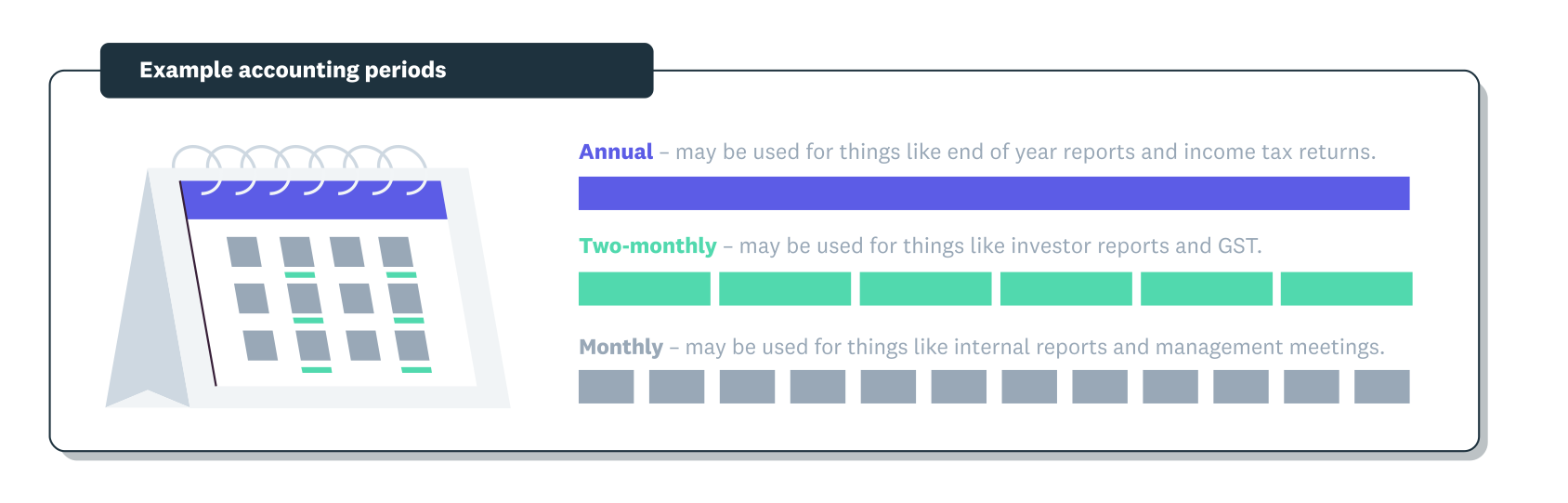
Annual accounting periods don’t have to start in January. Nor do monthly accounting periods have to start on the first of the month.
- An accounting period is any time frame used for financial reporting, and every transaction within that date range forms part of its reports.
- Accounting periods can run as a calendar year, a financial year, a quarter or a month.
- In New Zealand the standard tax year runs from 1 April to 31 March, though you can apply to Inland Revenue for a non-standard balance date.
- Consistent accounting periods let you compare performance over time and meet your tax and reporting deadlines.
What is an accounting period?
An accounting period is any time frame used for financial reporting. Transactions that fall within a given date range form part of the statements or reports for that accounting period.
An accounting period is often 12 months, and you’ll also see it called a reporting period in financial reporting.
Handy resources
Advisor directory
You can search for experts in our advisor directory
Xero Small Business Guides
Discover resources to help you do better business
Get one month free
Try Xero’s fast, simple, powerful online accounting software for your small business
Disclaimer
This glossary is for small business owners. The definitions are written with their requirements in mind. More detailed definitions can be found in accounting textbooks or from an accounting professional. Xero does not provide accounting, tax, business or legal advice.
Types of accounting period
Handy resources
Advisor directory
You can search for experts in our advisor directory
Xero Small Business Guides
Discover resources to help you do better business
Get one month free
Try Xero’s fast, simple, powerful online accounting software for your small business
Accounting periods come in a few standard lengths, and the one you use depends on your reporting needs. A fiscal year is one common option, but it isn’t the only one. Common accounting periods include:
- calendar year: the 12 months from 1 January to 31 December
- financial (fiscal) year: any 12-month period set for tax and reporting
- quarter: a three-month block often used for interim reporting
- month: a single month, often used for management accounts
Accounting periods in New Zealand
In New Zealand the standard tax year runs from 1 April to 31 March, which gives most businesses a standard balance date of 31 March. If that timing doesn’t suit how you organise your finances, you can apply to Inland Revenue for a non-standard balance date.
Why accounting periods matter for your business
Using consistent accounting periods keeps your financial information organised and easy to compare. It also makes recording accounting transactions more reliable, so your reports add up. Clear accounting periods help you:
- compare performance over time and spot trends across periods
- make informed decisions based on up-to-date figures
- meet tax and reporting deadlines with less last-minute admin
Accounting periods and your financial statements
Your financial statements each relate to an accounting period in a slightly different way. Some cover activity across the whole period, while one captures a single moment:
- the income statement and statement of cash flows cover everything that happens across the period
- the balance sheet is a snapshot of your finances at a single point in time
Example accounting periods
Accounting periods don’t have to line up with the calendar. An annual period doesn’t have to start in January, and a monthly period doesn’t have to start on the first of the month.
For example, a business with a 31 March balance date runs its annual accounting period from 1 April to 31 March, and it might close each monthly period on the last Friday rather than the last day.
Simplify your accounting periods with Xero
Keeping track of accounting periods is far easier when your financial data lives in one place. Xero brings your transactions, reports and financial statements together, so each period stays accurate and ready to review.
See how it fits the way you run your business, and you can get one month free.
FAQs on accounting periods
Here are answers to some frequently asked questions about accounting periods.
Is an accounting period always 12 months?
No, an accounting period isn’t always 12 months. While many run for a full year, a period can also cover a quarter, a month or another time frame set for reporting.
What is the difference between an accounting period and a fiscal year?
An accounting period is any time frame used for financial reporting, from a month to a year. A fiscal year is a specific 12-month accounting period set for tax and annual reporting.
When does the accounting period end in New Zealand?
For most New Zealand businesses the standard tax year ends on 31 March. You can apply to Inland Revenue for a different balance date if another timing suits your business better.