General ledger
Learn what a general ledger is, what it records, and how it powers your key financial reports.
Published Thursday 23 July 2026
Table of contents
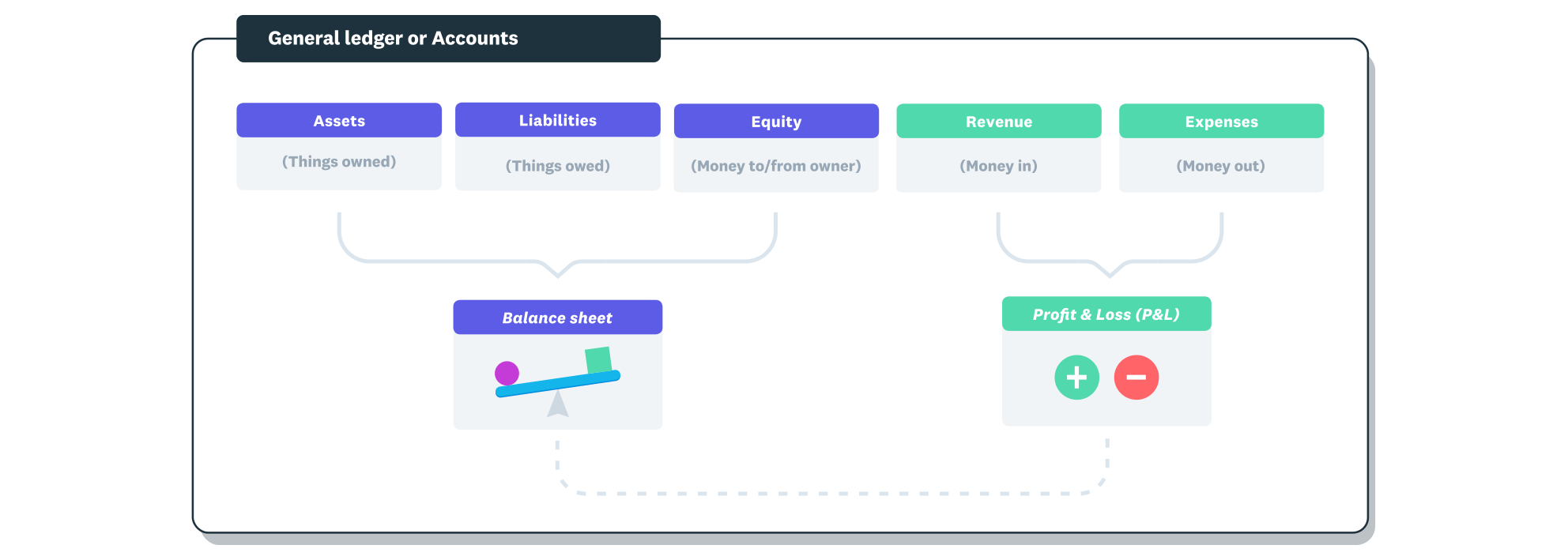
Transactions are entered into the correct account in order to produce the financial reports.
Key takeaways
- A general ledger is the central record of all your business's financial transactions, summarising your revenue, expenses, debts owed and assets owned.
- It groups transactions into 5 account types: assets, liabilities, equity, revenue and expenses.
- The general ledger uses double-entry bookkeeping, so every transaction is recorded in at least 2 accounts to keep your books balanced.
- Your ledger feeds the reports you rely on, including the balance sheet, profit and loss statement and cash flow statement.
What is a general ledger?
A general ledger is a complete record of your business's financial transactions. It summarises your revenue, expenses, debts owed and assets owned, giving you a single source of truth for your finances.
Every sale, purchase and payment eventually lands in the general ledger. That's what makes it the foundation for your financial reports and your tax return.
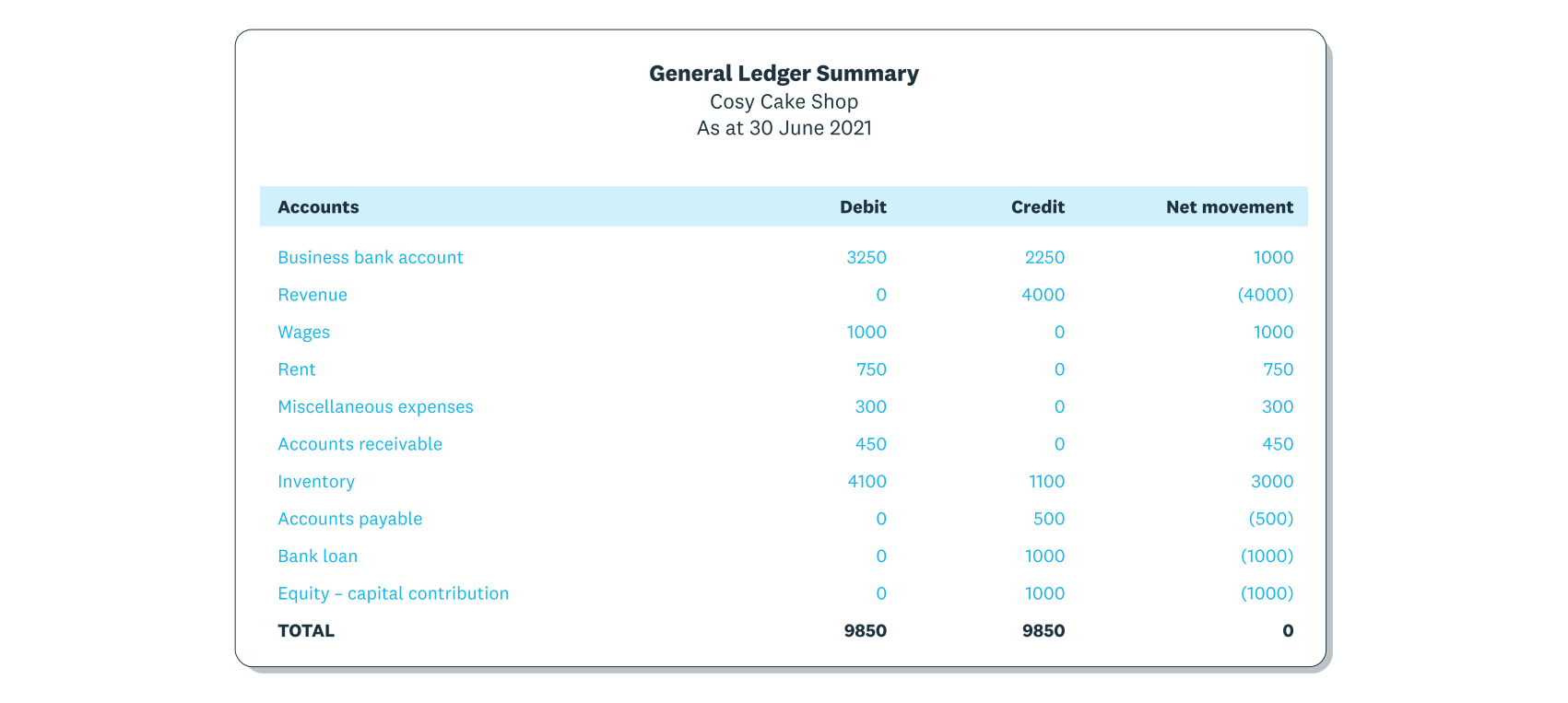
The general ledger summarises the credit and debit transactions for each account.
What is recorded in a general ledger
The general ledger organises every transaction into accounts, and those accounts fall into 5 main types. Each type tells you something different about the health of your business, for example, what you own and what you owe.
- Assets: what your business owns, such as cash, equipment and money owed to you by customers
- Liabilities: what your business owes, such as loans, unpaid supplier bills and tax
- Equity: the owner's stake in the business once liabilities are subtracted from assets
- Revenue: the income you earn from selling goods or services
- Expenses: the costs of running your business, such as rent, wages and stock
How a general ledger works
The general ledger works on double-entry bookkeeping, which means every transaction is recorded in at least 2 accounts: one debit and one credit. This keeps the accounting equation in balance, where Assets = Liabilities + Equity.
If you buy a $500 laptop with cash, your equipment account goes up by $500 and your cash account goes down by $500. The two sides always match, so your books stay balanced. You can learn more in our guide to double-entry bookkeeping and the accounting equation.
In practice, transactions flow through the general ledger in a set order:
- Record journal entries for each transaction as it happens, using journal entries that capture the debit and credit
- Post those entries to the relevant accounts in the general ledger
- Produce a trial balance to check that total debits equal total credits
- Generate your financial statements from the balanced figures
How a general ledger drives reporting
Your financial reports are built directly from the balances in your general ledger. When the ledger is accurate, your reports are accurate, which helps you make confident decisions.
The ledger feeds 3 core reports. The balance sheet draws on your asset, liability and equity accounts to show what your business is worth at a point in time. The profit and loss statement uses your revenue and expense accounts to show whether you're making money. The cash flow statement tracks the movement of cash in and out of the business.
General ledger vs related terms
The general ledger sits alongside a few terms that are easy to mix up. Knowing how they differ helps you understand where each fits in your bookkeeping.
- General journal: the first place transactions are recorded, in date order, before they're posted to the ledger
- Trial balance: a report that lists every ledger account balance to confirm debits and credits match
- Chart of accounts: the full list of accounts your business uses, which organises what goes into the ledger
- Sub-ledgers: detailed records for specific areas, such as accounts receivable, that feed summary totals into the general ledger
You can set up and review your accounts in our guide to the chart of accounts.
Why a general ledger matters for your business
A well-kept general ledger does more than tick a compliance box. It gives you a reliable picture of your finances and saves you time when it counts.
- Accuracy: keeps your financial data consistent and balanced across every account
- Audit trail: records where every dollar came from and where it went
- Reporting: provides the figures behind your balance sheet, profit and loss statement and cash flow statement
- Tax time: makes it faster to prepare returns and support any figures you file
- Spotting errors: helps you catch mistakes, duplicates and unusual transactions early
General ledger example
A simple example shows how entries land in the ledger. Imagine you run a small café and make a $200 cash sale in a single day.
That one sale creates 2 entries in your general ledger. Your cash account increases by $200, and your sales revenue account increases by $200. If you then pay $80 in cash for supplies, your cash account drops by $80 and your supplies expense account rises by $80. At the end of the day, your ledger shows $120 more cash, $200 of revenue and $80 of expenses. Every figure ties back to a real transaction.
Keep your general ledger accurate with Xero
Keeping a general ledger by hand takes time and leaves room for error. Xero records your transactions, posts entries and updates your reports automatically, so your ledger stays balanced without the manual admin.
You can see how it works for your business and get one month free.
FAQs on general ledgers
Here are answers to some frequently asked questions about general ledgers to help you put the term into practice.
What's the difference between a general ledger and a journal?
The general journal is where you first record transactions in date order. The general ledger is where those entries are grouped by account so you can see the balance of each one.
Is a general ledger the same as a chart of accounts?
No, the chart of accounts is the list of all the accounts your business uses. The general ledger holds the actual transactions and balances within those accounts.
Do small businesses still need a general ledger if they use accounting software?
Yes, though the software maintains the ledger for you in the background. Accounting software like Xero records and balances every entry automatically, so you get the ledger without the manual work.
What is general ledger reconciliation?
Reconciliation is the process of checking your ledger balances against source records, such as bank statements, to confirm they match. It helps you catch errors and keep your accounts accurate.
Related Terms
Learn more about general ledgers
Handy resources
Advisor directory
You can search for experts in our advisor directory
Xero Small Business Guides
Discover resources to help you do better business
Online accounting with Xero
Automate your accounting in the cloud
Disclaimer
This glossary is for small business owners. The definitions are written with their requirements in mind. More detailed definitions can be found in accounting textbooks or from an accounting professional. Xero does not provide accounting, tax, business or legal advice.