Balance sheet
Learn what a balance sheet is, what it includes and how to prepare one, with a simple NZ example.
Published Thursday 23 July 2026
Table of contents
Key takeaways
- A balance sheet is a financial report that summarises what your business owns, owes and is worth at a single point in time.
- It's built on the accounting equation: assets equal liabilities plus owner's equity, so the two sides always balance.
- It shows your assets, liabilities and owner's equity, which helps you check whether your business can cover what it owes.
- A balance sheet gives a snapshot at a point in time, while a profit and loss statement shows performance over a period.
What is a balance sheet?
A balance sheet is a financial report that summarises your business's financial position at a single point in time. It's also called a statement of financial position.
It sets out what your business owns, what it owes and what's left over for the owners. Because it captures one moment, most businesses prepare one at the end of a month, quarter or financial year so they can see how their position changes over time.
What a balance sheet includes
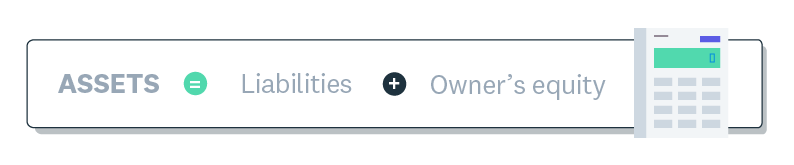
The accounting equation
A balance sheet is made up of three parts: assets, liabilities and owner's equity. Each part tells you something different about your financial position.
Assets
Assets are the things your business owns that have value. They're usually split into current assets, which you expect to use or convert to cash within 12 months, and non-current (or fixed) assets, which you hold for the longer term.
- Current assets: cash, money owed by customers and stock
- Non-current assets: equipment, vehicles, property and other long-term items
Liabilities
Liabilities are the amounts your business owes to others. Like assets, they're grouped by when they fall due.
- Current liabilities: supplier bills, GST owed and short-term loans due within 12 months
- Long-term liabilities: bank loans and other debts repaid over more than 12 months
Owner's equity
Owner's equity is what's left for the owners once you subtract liabilities from assets. It's made up of the capital you've put in plus retained earnings, which are the profits you've kept in the business rather than taken out.
The accounting equation
Every balance sheet is built on one simple formula that ties the three parts together. It's known as the accounting equation.
Assets = liabilities + owner's equity. The two sides must always balance, which is where the balance sheet gets its name. If they don't, something has been recorded incorrectly.
Balance sheet example
A simple example shows how the numbers fit together. Say you run a small NZ cafe and prepare a balance sheet at 31 March.
Your assets add up like this:
- Cash in the bank: NZ$15,000
- Money owed by customers: NZ$5,000
- Equipment: NZ$30,000
That's NZ$50,000 in total assets. Your liabilities are:
- Supplier bills to pay: NZ$8,000
- Bank loan: NZ$22,000
That's NZ$30,000 in total liabilities. Owner's equity is what's left: NZ$50,000 in assets minus NZ$30,000 in liabilities gives NZ$20,000. The equation balances, because NZ$50,000 in assets equals NZ$30,000 in liabilities plus NZ$20,000 in owner's equity.
Why a balance sheet matters
A balance sheet helps you understand your true financial position, not just how much cash is in the bank. It's a key report for anyone weighing up the health of your business.
Owners use it to make decisions, lenders use it to assess loan applications, and investors use it to judge whether the business is worth backing. It also shows your solvency, which is whether your assets can cover your liabilities. Comparing balance sheets over time shows whether your position is getting stronger or weaker.
How to prepare a balance sheet
You can prepare a balance sheet by working through a few clear steps. Follow them in order to make sure everything adds up.
- Choose the reporting date you want the snapshot to reflect, such as the end of a month or financial year.
- List your assets, grouping them into current and non-current, and add up the total.
- List your liabilities, grouping them into current and long-term, and add up the total.
- Work out owner's equity by subtracting total liabilities from total assets.
- Check that it balances, so that assets equal liabilities plus owner's equity.
Balance sheet vs profit and loss statement
A balance sheet and a profit and loss statement answer different questions, so most businesses use both. Together they give a fuller picture of your finances.
A balance sheet is a snapshot of what you own and owe at a single point in time. A profit and loss statement shows your income and expenses over a period, such as a month or year, so you can see how the business performed.
Manage your balance sheet with Xero
Keeping your balance sheet up to date is much easier when your financial data lives in one place. Xero pulls your transactions together so your assets, liabilities and equity stay current.
You can generate a balance sheet whenever you need it, spot trends and make confident decisions without the manual admin. Try it and see your numbers update in real time when you get one month free.
FAQs on balance sheets
Here are answers to some frequently asked questions about balance sheets.
What is the difference between a balance sheet and an income statement?
A balance sheet shows what you own and owe at one point in time. An income statement, also called a profit and loss statement, shows your income and expenses over a period.
What does negative equity mean?
Negative equity means your liabilities are greater than your assets, so owner's equity falls below zero. It can be a warning sign that the business may struggle to cover its debts.
How often should you prepare a balance sheet?
Many businesses prepare one monthly or quarterly, and at least once a year for tax and reporting. The right frequency depends on how closely you want to track your position.
Can a balance sheet tell you if a business is profitable?
Not on its own, because profitability is measured over a period on a profit and loss statement. A balance sheet shows financial position at a point in time, though growing retained earnings can point to past profits.
Related terms
Learn more about balance sheets
Handy resources
Advisor directory
You can search for experts in our advisor directory
Xero Small Business Guides
Discover resources to help you do better business
Financial reporting
Keep track of your performance with accounting reports
Disclaimer
This glossary is for small business owners. The definitions are written with their requirements in mind. More detailed definitions can be found in accounting textbooks or from an accounting professional. Xero does not provide accounting, tax, business or legal advice.