Financial statements: what they are and how to read them
Learn how financial statements help you track performance, manage cash, and make better decisions.
Written by Jotika Teli—Certified Public Accountant with 24 years of experience. Read Jotika's full bio
Published Monday 20 April 2026
Table of contents
Key takeaways
- Recognize that four core financial statements work together to give you a complete picture of your business finances: the balance sheet, income statement, cash flow statement, and statement of changes in equity each reveal a different aspect of your financial health.
- Monitor your cash flow statement regularly, even when your income statement shows a profit, because a business can appear profitable on paper while still lacking enough cash to cover payroll, bills, and day-to-day expenses.
- Use key ratios from your balance sheet, such as the current ratio and debt-to-equity ratio, to make smarter decisions about borrowing, spending, and investing in your business.
- Prepare financial statements at least monthly or quarterly so you can spot trends early, manage costs, and have accurate records ready for tax reporting and securing financing.
Types of financial statements
Financial statements are formal reports that summarise your business's financial activities over a specific period. They help lenders and investors assess your financial health and earnings potential.
These statements typically cover monthly, quarterly, or annual periods. Learn more about monthly financial reports. Four main types make up a complete set of financial statements, as defined by IAS 1 presentation standards, that provide a full picture of your business's finances:
- Balance sheet: shows what you own versus what you owe
- Income statement: tracks your revenue, expenses, and profit
- Cash flow statement: records money moving in and out of your business
- Statement of changes in equity: shows retained earnings and business growth
Together, these statements help you make informed business decisions and demonstrate financial health to lenders and investors.
Balance sheet
A balance sheet shows your business's financial position at a specific point in time. It compares what you own (assets) with what you owe (liabilities).
Assets include:
- cash and inventory
- accounts receivable
- machinery and equipment
- patents and intellectual property
Liabilities include:
- accounts payable
- outstanding loans
- long-term debts
The difference between assets and liabilities equals your business equity. This figure helps determine your business's value and financial stability.
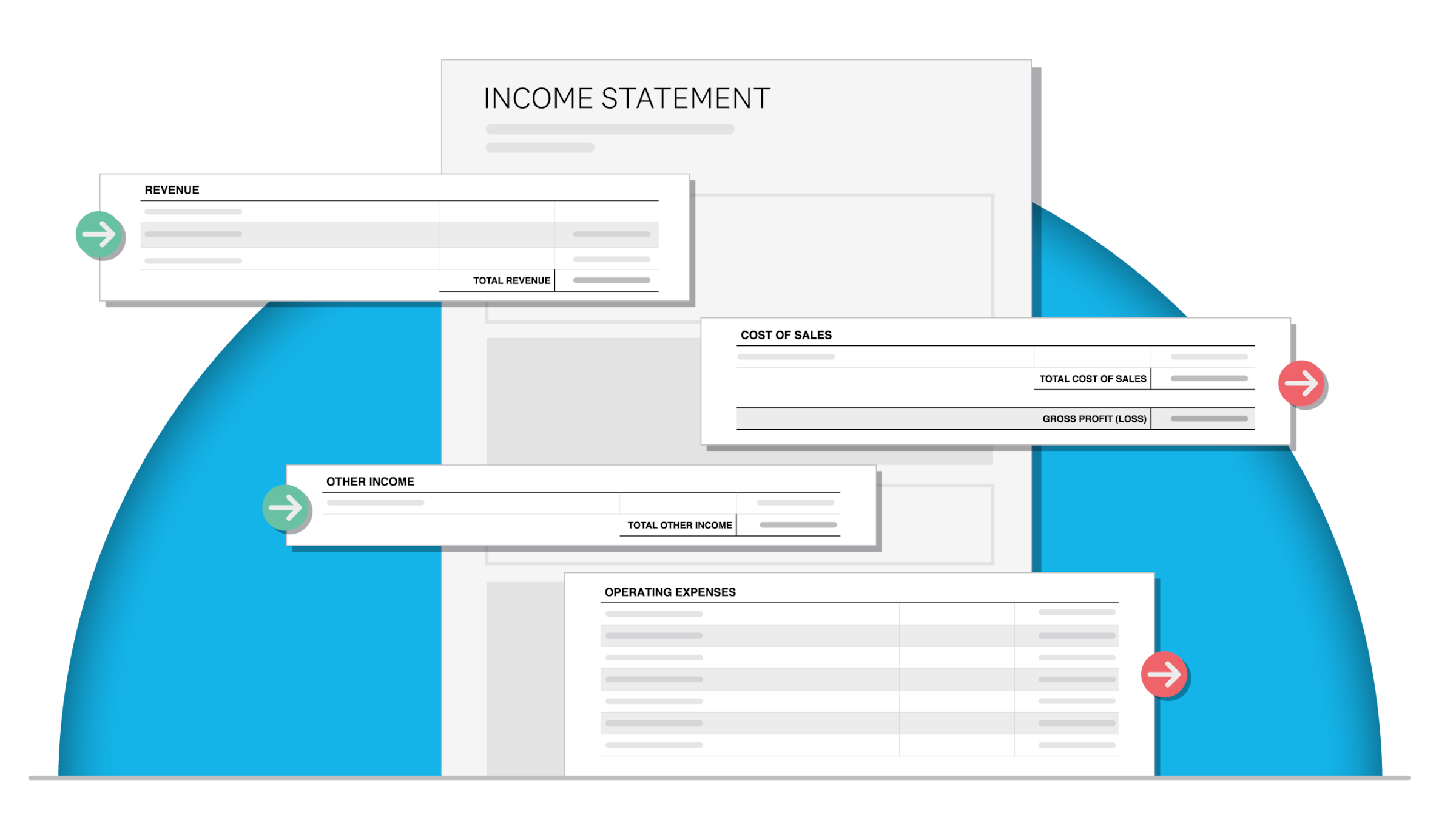
Income statement
An income statement (also called a profit and loss statement) shows your business's revenue and expenses over a specific period. It calculates profit by subtracting total expenses from total revenue.
Here's a simple example of how an income statement calculates net income:
- Revenue: £150,000
- Cost of sales: £70,000 (materials, labour)
- Operating expenses: £50,000 (office rent, utilities)
- Net income: £30,000 (£150,000 minus £120,000 in total expenses)
This statement shows whether your business is profitable and helps you spot areas to reduce costs or increase revenue.
Cash flow statement
A cash flow statement tracks all money moving in and out of your business over a specific period. It's an integral part of your primary financial reporting, as explained in this ACCA guide to cash flow statements. It shows whether you can cover short-term expenses like bills and payroll.
A statement of cash flows breaks down cash flows under three headings, as outlined by ACCA:
- Operating activities: customer sales and daily business transactions
- Investing activities: purchases and sales of assets like machinery or equipment
- Financing activities: loans, equity financing, and dividend payments
This statement helps you manage liquidity and ensure you have enough cash to operate.
Statement of changes in equity
A statement of changes in equity (also called a statement of retained earnings or owner's equity) shows how much profit your business keeps after paying costs and dividends.
Businesses typically retain earnings to:
- repay debt
- reinvest in growth
- build a cash reserve for unexpected costs

How financial statements work together
Understanding how your financial statements connect helps you see the complete picture of your business's financial health. Each statement provides different insights, but they're designed to work as an interconnected system.
For example, the net income you calculate on your income statement flows directly into your balance sheet as retained earnings. It also acts as the starting point for your cash flow statement when using the indirect method.
When you buy a new piece of equipment, your cash flow statement shows the cash leaving your business. At the same time, your balance sheet records the new equipment as an asset. This connection ensures that every financial decision is accurately tracked across your business.
Why financial statements are important for small businesses
Understanding your financial statements helps you make better business decisions:
- Assess financial health: see your profitability, cash flow, and equity position clearly
- Attract investors and secure loans: demonstrate that your business is profitable and can repay debts
- Comply with tax requirements: meet reporting obligations and prepare accurate tax returns
- Track business performance: monitor trends and identify areas for improvement
- Manage cash flow: ensure you have enough money for expenses, payroll, and unexpected costs
How to read and understand financial statements
Reading your financial statements helps you spot trends, identify problems early, and make confident business decisions. Here's how to interpret each type.
Analyse financial performance with the income statement
Your income statement reveals whether your business is making or losing money. Use it to:
- Evaluate profitability: compare total revenue to net income to see if you're generating profit
- Monitor expenses: identify overspending and find opportunities to reduce costs
- Track growth trends: compare current performance with past periods to measure revenue changes
This analysis helps you make pricing decisions, control costs, and plan for sustainable growth.
Your balance sheet provides a different perspective on your business finances.
Manage assets and plan for growth with the balance sheet
Your balance sheet shows what your business owns versus what it owes. Use it to:
- Assess liquidity: compare current assets to current liabilities to see if you can cover short-term obligations
- Evaluate solvency: examine long-term debt and equity ratios to gauge financial stability
- Track asset efficiency: monitor how well inventory, property, and equipment contribute to revenue
Key ratios from your balance sheet, like the current ratio and debt-to-equity ratio, help you make informed decisions about borrowing, spending, and investing.
The cash ratio compares cash and cash equivalents to current liabilities at the balance sheet date.

The quick ratio measures whether quick assets can cover current liabilities.
-calculation-2.1708626946541.png)
The current ratio formula, unlike the quick ratio, includes your business's inventory value (from your balance sheet). Use the current ratio to make decisions about your expenses and cash on hand.

Now let's look at how to analyse your cash flow.
Manage your cash flow with the cash flow statement
Your cash flow statement shows whether your business generates enough cash to meet its obligations. Use it to:
- Analyse operating cash flow: determine if core business activities generate enough cash to sustain operations
- Evaluate investment quality: track capital expenditures to see if you're reinvesting wisely
- Monitor financing activities: review how loans, equity, and dividends affect your cash position
Consistently negative operating cash flow signals problems, even when profits look healthy on paper.
Here's more advice on managing your finances and cash flow. For support in your area, check your local accounting standards.
Finally, review your retained earnings to understand your growth trajectory.
Analyse growth with the retained earnings statement
The retained earnings statement demonstrates two key things about your business:
- Assess growth potential: growing retained earnings suggest your business can reinvest profits without borrowing
- Evaluate financial health: declining retained earnings may indicate profits are being used to cover losses or debts
How to prepare financial statements
Breaking down financial statement preparation into steps makes it manageable. Most small businesses prepare statements monthly or quarterly, with annual statements for tax purposes. Private companies must keep accounting records for at least three years from the date they were made.
FAQs on financial statements
Here are answers to common questions about financial statements.
What are the four main types of financial statements?
The four main types are the balance sheet, income statement, cash flow statement, and statement of changes in equity. Together, they provide a complete picture of your business's financial position and performance.
How often should I prepare financial statements?
Most small businesses prepare financial statements monthly or quarterly for internal management purposes, with annual statements required for tax purposes and external reporting.
What's the difference between an income statement and a cash flow statement?
An income statement shows your revenue and expenses to calculate profit, while a cash flow statement tracks actual cash moving in and out of your business. You can be profitable on paper but still have cash flow problems.
Do I need all four financial statements?
For a complete financial picture, yes. Each statement serves a different purpose. However, small businesses often focus on the income statement and cash flow statement for day-to-day management, while the balance sheet and statement of changes in equity are essential for external reporting and securing financing.
Can accounting software help me create financial statements?
Yes, accounting software automatically generates financial statements from your transaction data. This saves time, reduces errors, and gives you real-time access to your financial information.
Disclaimer
Xero does not provide accounting, tax, business or legal advice. This guide has been provided for information purposes only. You should consult your own professional advisors for advice directly relating to your business or before taking action in relation to any of the content provided.
Get one month free
Purchase any Xero plan, and we will give you the first month free.