Gross profit margin: what it is, how to calculate it and ways to improve
Learn the gross profit margin formula, see how yours compares and find practical ways to improve your margins.
Written by Lena Hanna—Trusted CPA Guidance on Accounting and Tax. Read Lena's full bio
Published Monday 29 June 2026
Table of contents
Key takeaways
- Gross profit margin is the percentage of revenue remaining after you subtract cost of goods sold (COGS), and it reveals how efficiently your business turns sales into profit
- Australian small businesses recorded an average gross profit margin of 36.0% in Q2 2025, with results ranging widely by industry
- Track your margins monthly to spot trends early, compare against industry benchmarks, and identify which products or services drive the strongest returns
- You can improve your gross profit margin by adjusting prices, reducing direct costs, or streamlining operations to cut waste
What is gross profit margin?
Gross profit margin is the percentage of sales revenue remaining after you pay your cost of goods sold (COGS). This metric reveals your business's core profitability before operating expenses like rent, utilities and marketing come into play.
Gross profit margin provides key insights into your business performance. It tells you:
- Production efficiency: how well you convert resources into sellable products or services
- Revenue retention: what proportion of each sale stays in your business after direct costs
- Profitability by area: which products, services, or segments generate the strongest returns, allowing you to focus on items that carry a higher gross margin
- Financial sustainability: whether margins cover operating expenses and generate net profit

Higher gross margins mean you have more money to pay for essential expenses like rent, utilities and marketing, while still making a profit.
Gross profit margin vs gross profit
These 2 terms sound similar but measure profitability differently. Gross profit is a dollar amount; gross profit margin is a percentage.
Gross profit is the dollar amount remaining after subtracting cost of goods sold from revenue (for example, $50,000). Gross profit margin is the percentage that gross profit represents of total revenue (for example, 25%).
Gross margin is another term for gross profit margin. They describe the same percentage-based measure. The percentage is more useful for comparing performance across time periods, products, or competitors because it accounts for differences in revenue size.
Gross profit margin vs markup
Gross profit margin and markup both describe the relationship between cost and price, but they use different starting points. Confusing the 2 can lead to pricing errors that eat into your profits.
Gross profit margin is calculated as a percentage of the selling price. If you sell a product for $100 with $60 in costs, your margin is 40%. Markup is calculated as a percentage of the cost. Using the same example, your markup is 66.7% ($40 profit divided by $60 cost).
Margin will always be a lower number than markup for the same transaction. If you set prices using a 40% markup thinking it gives you a 40% margin, your actual margin will be closer to 28.6%. Always clarify which metric you're using when setting prices or reviewing supplier quotes.
How to calculate gross profit margin
Calculate gross profit margin by subtracting your cost of goods sold from revenue, dividing the result by revenue, then multiplying by 100. You can also use Xero's gross margin calculator to check your numbers.
Gross profit margin formula explained
The formula is: (Gross Profit / Revenue) x 100. The calculation involves 2 straightforward steps:
- Find your gross profit: subtract your cost of goods sold from your sales revenue
- Apply the formula: divide gross profit by revenue, then multiply by 100
Gross profit margin example calculation
Here's how an Australian cleaning business would calculate its gross profit margin.
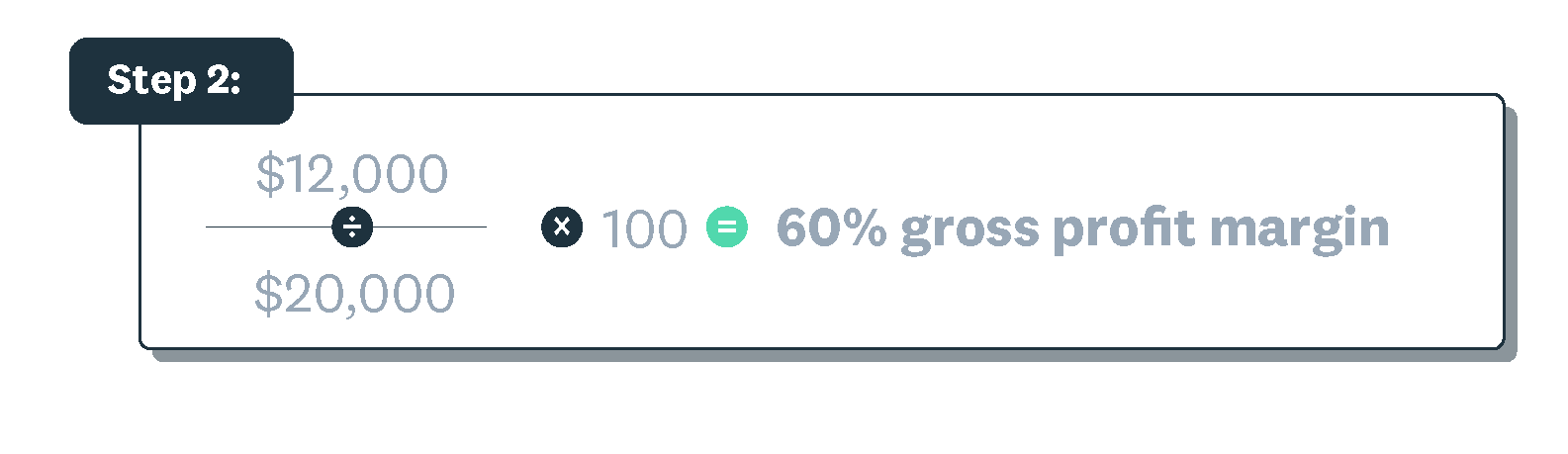
- Calculate gross profit: Revenue of $20,000 (office cleaning services) minus cost of goods sold of $8,000 (cleaning supplies, labour) gives a gross profit of $12,000
- Apply the formula: ($12,000 / $20,000) x 100 = 60% gross profit margin
A 60% gross profit margin means you keep 60 cents of every dollar earned after covering direct costs. That's well above the Australian small business average of 36.0%, reflecting the relatively low material costs in service-based businesses.

Avoid common calculation mistakes
The most common calculation mistake is miscategorising costs. Your cost of goods sold should only include costs directly tied to producing what you sell.
These costs belong in your COGS calculation:
- Raw materials: inventory and supplies used in production
- Direct labour: wages for staff who produce goods or deliver services
- Production overhead: manufacturing costs directly tied to output
Keep these costs separate from your COGS:
- Operating expenses: rent, utilities, and marketing costs
- Administrative costs: office supplies and general business expenses
- Financial costs: interest payments and taxes
Accurate cost categorisation leads to reliable margin calculations and better business decisions.
What is a good gross profit margin?
A good gross profit margin depends on your industry, business model, and stage of growth. There's no single number that works for every business, but industry benchmarks give you a useful starting point for comparison.
In Australia, small businesses recorded an average gross profit margin of 36.0% across all industries in Q2 2025. However, results varied significantly by sector:
- Personal care: 48.44%
- Health and medical supplies: 45.89%
- Food and beverage (non-manufacturing): 39.12%
- Building materials: 28.38%
- Food manufacturing: 25.98%
Service-based businesses typically achieve higher margins than product-based businesses because they carry lower material costs. A consulting firm might see margins above 50%, while a retailer selling physical goods might operate comfortably at 30%.
Rather than targeting a single number, compare your margin against businesses of a similar size and industry. The ATO's small business benchmarks provide another useful reference point for Australian businesses. If your margin falls well below your industry average, it may signal pricing issues or cost inefficiencies worth investigating.
Analysing gross profit margin for business insights
Analysing your gross profit margin reveals which products, services, or business areas generate the strongest returns. Regular analysis helps you spot problems early and find opportunities to improve before they affect your bottom line.
Your margin analysis can guide important business decisions:
- Price competitively: adjust prices based on what the market will bear
- Control costs: identify where spending cuts would have the biggest impact
- Benchmark performance: compare your margins against industry averages to gauge where you stand
Interpreting gross profit margin trends
A single margin figure is useful, but tracking your margins over time tells you far more about business performance. Look for these patterns:
- Revenue strength: which products or services consistently generate higher margins
- Cost fluctuations: how supplier prices or labour costs shift by season
- Trend direction: whether margins are improving, declining, or holding steady
Monthly tracking gives you enough data points to distinguish a temporary dip from a structural problem. If your margins decline for 3 or more consecutive months, investigate whether costs have risen or whether pricing needs adjustment.
Factors affecting gross profit margin
Several external factors can push your gross profit margin up or down, often outside your direct control. Understanding them helps you respond faster.
Key external factors that influence your margins include:
- Demand shifts: falling demand forces price reductions to attract customers, while rising demand allows for higher pricing and improved margins
- Supplier cost increases: material price rises and labour cost inflation directly squeeze your margins unless you adjust pricing to compensate
- Economic conditions: a decline in consumer spending reduces sales volume and pricing power, and inflation affects both your costs and your customers' purchasing ability
These pressures can move quickly. Australian food manufacturers saw gross margins fall 4.5 percentage points in a single quarter (Q2 2025) due to commodity price volatility and packaging cost increases.
Monitor these factors regularly and adjust your pricing strategy as conditions change.
Gross profit margin vs other profit margins
Gross profit margin is just one of 3 profit margins that together give you a complete picture of your business's financial health. Each one measures profitability at a different stage of your operations.
Operating profit margin
Operating profit margin shows the percentage of revenue remaining after you subtract both COGS and operating expenses like rent, utilities, salaries, and marketing. It tells you how efficiently your business runs day-to-day.
The formula is: (Operating Profit / Revenue) x 100. If your gross profit margin is healthy but your operating profit margin is low, your overhead costs may be too high relative to your revenue. This is a signal to review fixed expenses and look for savings.
Net profit margin
Net profit margin is the percentage of revenue left after all expenses, including operating costs, interest, and taxes. It's your true bottom line and the clearest measure of overall profitability.
The formula is: (Net Profit / Revenue) x 100. A business with strong gross and operating margins can still post a low net profit margin if it carries significant debt or faces a large tax bill. Reviewing all 3 margins together helps you pinpoint exactly where profits are being absorbed.
How to improve gross profit margin
Improve your gross profit margin by adjusting prices, reducing costs, or streamlining operations. Each approach works differently, and combining cost-saving strategies with smarter pricing often delivers the strongest results, and the right mix depends on your business.
Adjust your prices
Review your pricing regularly as market conditions shift. Small changes can have a meaningful effect on your margins.
- Respond to competition: if a competitor lowers their price, decide whether to match it or differentiate on value
- Add value to justify increases: improve your products or services to support higher prices
- Test price changes: small adjustments can reveal what customers will pay without hurting sales volume
Reduce your cost of goods sold
Lower your cost of goods sold to keep more of each sale as profit. Focus on the costs that make up the largest share of your COGS first.
- Negotiate with suppliers: build relationships that lead to bulk discounts and better rates
- Compare alternatives: regularly review supplier pricing against competitors
- Reduce waste: minimise materials lost to damage, spoilage, or inefficiency. A CPA case study found that unaccounted for stock losses and destroyed items can reduce gross profit margin by over 10%
Streamline your operations
Efficient operations reduce costs without compromising quality. Focus on processes that eliminate waste and improve productivity across your business.
- Implement inventory management: use inventory tracking systems to reduce overstocking, minimise spoilage, and avoid tying up cash in slow-moving products
- Prevent stock shrinkage: theft and unrecorded losses erode margins silently. Regular stock counts, security measures, and clear staff procedures help protect your inventory
- Audit supplier bills: check every invoice against agreed terms. Billing errors and unexpected surcharges can quietly eat into your margins over time
- Automate repetitive tasks: reducing manual data entry and admin frees up time and reduces the risk of costly errors
Track and improve your gross profit margin with Xero
Knowing your gross profit margin is only useful if you can act on it. Xero's accounting software gives you real-time visibility into your revenue, costs, and margins through profit and loss reports you can customise and review anytime. Instead of chasing numbers in spreadsheets, you can spot margin trends as they happen and make faster, more confident decisions about pricing, costs, and where to focus next; Get one month free.
FAQs on gross profit margin
Here are answers to common questions about gross profit margin.
What's a good gross profit margin?
A good gross profit margin varies by industry. In Australia, small businesses averaged 36.0% across all industries in Q2 2025, with personal care at 48.44% and food manufacturing at 25.98%. Compare your margin to benchmarks for your specific sector and business size.
How often should I calculate gross profit margin?
Calculate your gross profit margin monthly at minimum. More frequent calculations help you spot trends earlier and respond to changes in costs or pricing before they erode your profits.
Can I have a high gross profit margin but still lose money?
Yes. Gross profit margin only accounts for direct costs like materials and labour. You can have strong gross margins but still generate a loss if your operating expenses, such as rent, salaries, and marketing, exceed your gross profit.
What is the difference between margin and markup?
Margin is calculated as a percentage of the selling price, while markup is calculated as a percentage of the cost. A product costing $60 and selling for $100 has a 40% margin but a 66.7% markup.
Is labour included in cost of goods sold?
Direct labour is included in COGS when it's tied to producing goods or delivering services. Administrative and management salaries are classified as operating expenses and don't affect your gross profit margin calculation.
How can accounting software help track gross profit margin?
Accounting software like Xero generates profit and loss reports that break down gross profit margin by product, service, or time period automatically. Features like Analytics Plus let you visualise margin trends over months or quarters, so you can identify which areas of your business need attention without building spreadsheets manually.
Disclaimer
Xero does not provide accounting, tax, business or legal advice. This guide has been provided for information purposes only. You should consult your own professional advisors for advice directly relating to your business or before taking action in relation to any of the content provided.