How to calculate profitability: gross and net margins
Learn how to calculate profitability using simple formulas, key metrics, and examples.

Written by Lena Hanna—Trusted CPA Guidance on Accounting and Tax. Read Lena's full bio
Published Wednesday 22 April 2026
Table of contents
Key takeaways
- Calculate both gross profit margin and net profit margin to understand different aspects of your business: gross profit margin shows what's left after direct costs, while net profit margin shows what's left after all expenses.
- Track your profitability metrics monthly and recalculate immediately after any major cost changes or pricing adjustments, focusing on trends rather than short-term fluctuations to make informed decisions.
- Use accounting software to automate your profitability calculations, which removes manual errors and gives you instant access to profit and loss reports for any time period.
- Compare your profit margins against industry benchmarks, such as those published by the Australian Taxation Office, to see whether your business is competitive and spot areas where you can improve.
Key takeaways
- Calculate both gross profit margin and net profit margin to understand different aspects of your business efficiency and overall profitability. Gross profit margin is revenue minus direct costs, divided by revenue. Net profit margin is revenue minus all expenses, divided by revenue.
- Track your profitability metrics monthly for regular monitoring. Also track them immediately when costs change significantly. Focus on trends rather than daily fluctuations to make informed business decisions.
- Use accounting software to automate how you calculate profitability and access real-time metrics. This eliminates manual errors and provides instant access to profit and loss statements for any period.
- Compare your profit margins against industry benchmarks and small business benchmarks from sources like the Australian Taxation Office. This helps you determine if your business performance is competitive and identify areas for improvement.
What profitability means in small business
Profitability measures how efficiently your business converts sales into profits. It shows what percentage of revenue remains after covering costs.
The two main profitability metrics are:
- Gross profit margin: the percentage of revenue left after direct costs
- Net profit margin: the percentage of revenue left after all expenses
High profitability (fat margins):
- Retains more revenue: keeps a large percentage of sales as profit
- Signals pricing flexibility: may allow room to lower prices and increase sales volume
Low profitability (thin margins):
- Absorbs more costs: most revenue goes toward covering expenses
- Indicates pressure points: may reflect high costs, low pricing, or competitive challenges
Profit vs profitability and their significant differences
- Profit: the dollar amount left after paying expenses
- Profitability: the percentage of revenue you keep after covering costs
This distinction matters. High profitability only boosts your bottom line when paired with strong revenue. You need both good profitability and good sales to grow sustainably.
Why profitability matters to your business
Understanding your profitability helps you make confident decisions about pricing, hiring, and growth. When you know your margins, you can spot problems early and take action before they affect your cash flow.
Tracking profitability supports your business goals by:
- Reducing financial stress: clear visibility into margins removes guesswork when you make decisions
- Showing your buffer above break-even: break-even is 0% profitability, so your margins show how much cushion you have
- Enabling industry comparison: benchmark against similar businesses allocated into size categories to reveal whether your performance is competitive
- Supporting your plans to grow: healthy margins indicate you can afford to invest, hire, or expand
Regularly monitor your metrics to help you spot when costs are creeping up or when you need to adjust pricing. You can address these issues before they become serious problems.
Profitability metrics
Profitability metrics measure how efficiently your business turns revenue into profit at different stages. The two essential metrics for small businesses are:
- Gross profit margin: measures efficiency after paying direct costs
- Net profit margin: measures overall efficiency after paying all expenses
These metrics are also called profitability ratios.
Gross profit margin
Gross profit margin measures the percentage of revenue left after paying direct costs of goods sold (COGS). This figure varies by industry.
For example, the Australian Taxation Office (ATO) provides benchmark ranges for 'cost of sales'. For footwear retailers with turnover of more than $600,000, the benchmark range is 48% to 56% of turnover.
This remaining money covers general expenses like:
- rent and utilities
- marketing and insurance
- administration costs
- staff salaries
Staff costs can significantly impact profitability. In one case study, a business's salary expenses were 53.2% of sales, more than double the industry benchmark of 20–25%.
Net profit margin

The ATO defines it as total business income minus total expenses, divided by total business income to calculate financial ratios industry benchmarks. You can find the ATO's methodology in their data from tax returns.
This is the money you keep to reinvest in growth or distribute to owners.
Businesses may quote net profit before or after taxes. The calculations below focus on net profit before taxes.

*Net profit can be quoted before or after taxes. If quoting after-tax net profit then you need to also subtract taxes.
How to calculate profitability
Calculating profitability converts your profit into a percentage of revenue. This makes it easy to compare performance over time or against industry benchmarks.
The basic formula is: (Profit ÷ Revenue) × 100 = Profitability percentage
To calculate profitability:
- Determine your profit amount (gross or net)
- Divide profit by total revenue
- Multiply the result by 100 for the percentage
How to calculate gross profit margin
You can use the Xero margin calculator.
How to calculate net profit margin
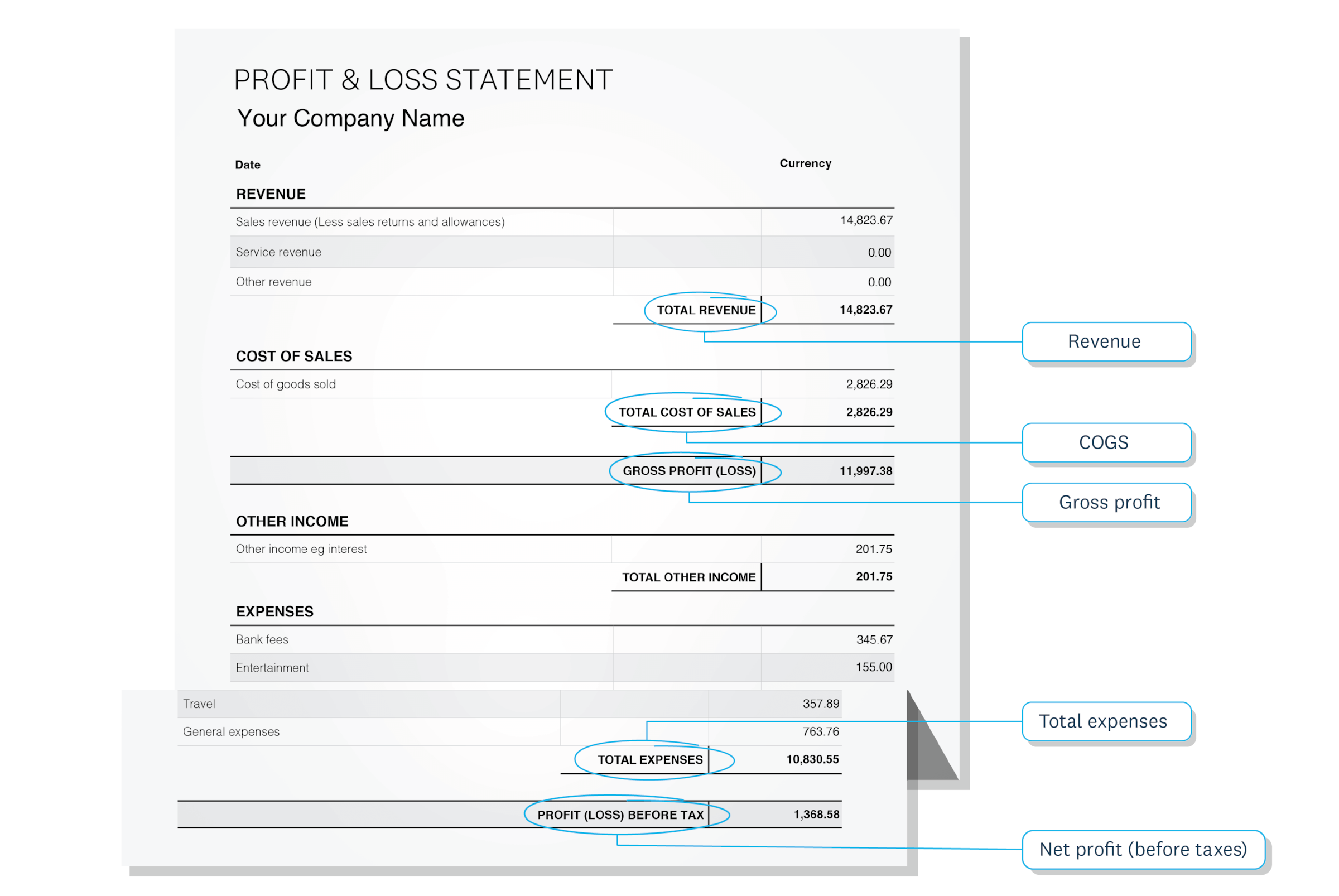
*Net profit can be quoted before or after taxes. If quoting after-tax net profit then you need to also subtract taxes.
You can use the Xero net profit margin calculator.
Example of profitability calculation
Here's how to calculate both margins for a business with $100,000 revenue, $60,000 inventory costs, and $20,000 general expenses:
- Calculate gross profit: $100,000 revenue - $60,000 cost of goods sold = $40,000 gross profit
- Calculate gross profit margin: ($40,000 ÷ $100,000) × 100 = 40% gross profit margin
- Calculate net profit: $100,000 revenue - $80,000 total costs = $20,000 net profit
- Calculate net profit margin: ($20,000 ÷ $100,000) × 100 = 20% net profit margin
Finding the numbers to calculate profitability
You'll find the numbers you need in your standard business records:
- Revenue numbers: located in your sales reports or income statements
- Cost of goods sold: listed in your expense tracking or inventory records
- Total expenses: shown in your profit and loss statements
How to calculate profitability with software
Accounting software automates how you calculate profitability, eliminating manual maths and reducing errors. With Xero accounting software, you can:
- access pre-calculated margins in Xero Analytics
- generate instant profit and loss reports for any time period
- track profitability trends over time with visual dashboards
FAQs on profitability
Here are answers to common questions about measuring and improving profitability in your small business.
What's a good profit margin for a small business?
A good profit margin varies by industry. Net profit margins typically range from 5% to 20% for most small businesses. Check the ATO's industry benchmarks to see how your margins compare to similar businesses in your sector.
How often should I calculate my profit margins?
Calculate your profit margins monthly to track trends and identify issues early. Also recalculate immediately after major cost changes, pricing adjustments, or business decisions that could affect profitability.
What's the difference between gross and net profit margin?
Gross profit margin shows what's left after direct costs of producing your product or service. Net profit margin shows what's left after all business expenses, including overheads, marketing, and administration costs.
How can I improve my profit margins?
Improve your profit margins by increasing prices, reducing direct costs, negotiating better supplier rates, improving operational efficiency, or focusing on higher-margin products and services.
Disclaimer
Xero does not provide accounting, tax, business or legal advice. This guide has been provided for information purposes only. You should consult your own professional advisors for advice directly relating to your business or before taking action in relation to any of the content provided.
Get one month free
Purchase any Xero plan, and we will give you the first month free.