What is revenue? Definition, formula and how to track it
Learn what revenue is, how to calculate it, and how to track it so you can make better business decisions.

Written by Jotika Teli—Certified Public Accountant with 24 years of experience. Read Jotika's full bio
Published Wednesday 22 April 2026
Table of contents
Key takeaways
- Calculate your net revenue by subtracting discounts, returns, and allowances from gross sales to get an accurate picture of your actual earnings.
- Distinguish between operating revenue from your core business activities and non-operating revenue from secondary sources to better understand your primary income drivers.
- Record revenue when you deliver goods or complete services, not when you receive payment, to make sure your financial reports accurately reflect each period's performance.
- Track revenue consistently using automated tools like accounting software rather than manual spreadsheets to reduce errors and save time on financial record-keeping.
Key takeaways
- Calculate your net revenue by subtracting discounts, returns, and allowances from gross sales to get an accurate picture of your actual earnings.
- Track revenue consistently using automated tools like accounting software rather than manual spreadsheets to reduce errors and save time on financial record-keeping.
- Distinguish between operating revenue from your core business activities and non-operating revenue from secondary sources to better understand your primary income drivers.
- Implement revenue recognition principles by recording income when goods are delivered or services completed, not when payment is received, to ensure accurate financial reporting.
What is revenue?
Common sources of revenue include:
- product sales: physical goods like bread from a bakery
- service delivery: professional services like consulting or freelancing
- subscription fees: recurring payments for ongoing services
Types of business revenue
Businesses generate revenue through two main categories. Operating revenue comes from your core business activities, while non-operating revenue comes from secondary sources like investments or asset sales.
Operating revenue
Operating revenue is income from your core business activities, meaning the money you earn from your main products or services. This revenue type matters because it:
- forms the foundation for measuring business performance
- shows whether your core business model is sustainable
- provides funds for expansion and improvement
Examples of operating revenue include:
- sales revenue: income from selling goods and services, like a bakery selling bread and pastries
- service revenue: income from providing services such as consulting or repair work
- subscription revenue: recurring income from subscription-based models, such as gym memberships or streaming services
Sales revenue is often used as a catch-all term for main income-generating activities. Service revenue is used when a business wants to track income from services separately, particularly if it offers both goods and services.
Non-operating revenue
Non-operating revenue is income from activities outside your core operations. These earnings are often irregular and not directly tied to ongoing business performance.
Examples include:
- Interest income: earnings from interest on investments, like depositing retained earnings in a bank
- Dividend income: income from shares in other companies, for example, investing in tracker funds that pay dividends
- Rental income: leasing out property or equipment, such as renting extra space in a bakery
- Gain on sale of assets: income from selling assets like old equipment, such as when a bakery sells its old ovens after upgrading
- Licensing fees: income from allowing others to use intellectual property, like patents or trademarks
- Franchise fees: earnings from franchisees operating under your brand, for example, expanding a bakery through franchising
- Advertising revenue: income from displaying ads on your website or property
How to calculate revenue
Calculating revenue starts with a simple formula, but the method varies depending on your business model.
Use the basic revenue formula
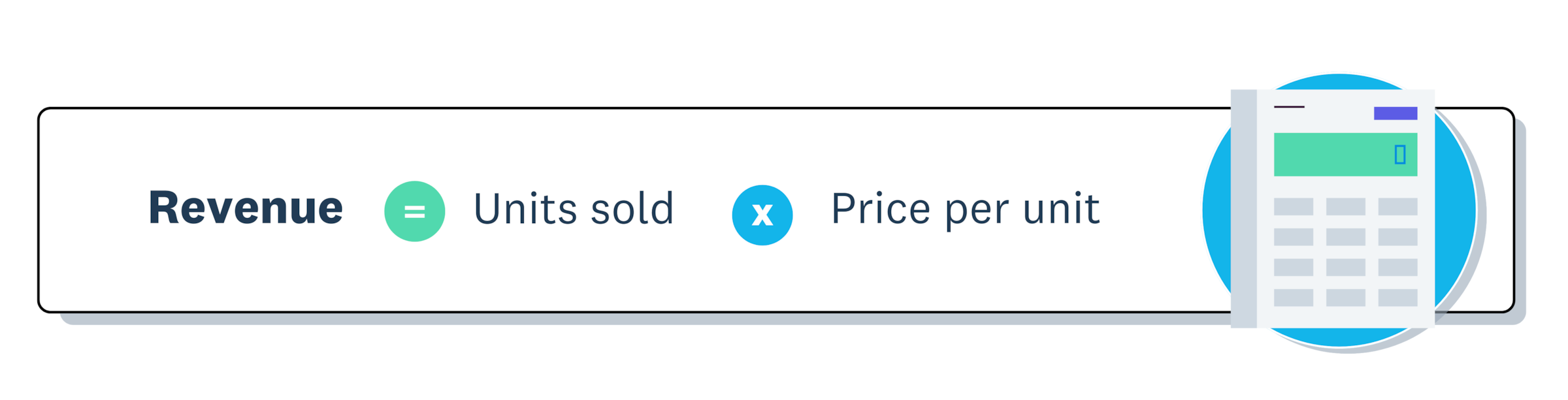
The basic revenue formula is:
Revenue = Units sold × Price per unit
For example, if a bakery sells 100 loaves of bread at $5 each, the revenue is 100 × $5 = $500.
Adjust for different business models
The method for calculating revenue varies depending on your business type.
Service-based businesses
Revenue = Hourly rate × Number of hours worked (for consultants or freelancers)
Subscription-based businesses
Revenue = Number of subscribers × Subscription price (for gyms, streaming services, and so on)
Ecommerce businesses
Each transaction may have a different price, so track every sale individually.
Using ecommerce platforms or accounting software like Xero will help simplify the process.
Calculate net revenue
Net revenue shows your actual earnings after accounting for returns and discounts. The formula is:
Net revenue = (Units sold × Price per unit) – Discounts – Returns
Net revenue provides a realistic view of income by factoring in:
- customer returns: products sent back for refunds
- discounts: price reductions and promotional offers
- allowances: credits given for damaged or defective items
Track your revenue
Tracking revenue consistently helps you maintain accurate records and make better decisions. Follow these steps:
- Choose a tracking method: Spreadsheets work for small businesses but are prone to errors. Point of sale (POS) systems suit physical stores and integrate sales data automatically. Accounting software like Xero provides automation and advanced reporting.
- Record every transaction: log each sale correctly and consistently, and automate as much of the process as possible to reduce errors and save time
Revenue vs other financial metrics
Revenue measures sales performance, but it differs from related financial terms like profit and income. Understanding these differences gives you a clearer picture of your business's financial health.
Revenue vs profit
Revenue is the total money earned from sales and appears at the top of your income statement. Profit is the money remaining after all expenses and appears at the bottom.
Both metrics matter because high revenue doesn't guarantee profitability. Costs can eliminate profits even when sales are strong, so tracking both gives you a true picture of business health.
Revenue vs income
Revenue refers specifically to money earned from your main business activities. Income is a broader term that includes revenue plus any other money the business receives, such as interest from investments or gains from selling an asset.
What is revenue recognition?
Revenue recognition determines when to record revenue in your accounting records. You typically record revenue when you earn it, not when you receive payment.
Here's how it works:
- timing: record revenue when goods are delivered or services completed, though assessing control of goods before transfer can sometimes lead to diversity in practice
- payment: the timing of customer payment doesn't affect when you record revenue
- example: deliver bread in July, get paid in August, record revenue in July
This approach ensures accurate financial reporting for each period.
Revenue is generally recognised according to International Financial Reporting Standards (IFRS). The interpretation of these rules involves areas of complexity, with nine Agenda Decisions clarified by the IFRS Interpretations Committee. In New Zealand, this is governed by NZ IFRS 15, effective for reporting periods from 1 January 2023.
Some small businesses, like sole traders, may use cash accounting. This means revenue is recorded when payment is received, not when earned. New Zealand's Inland Revenue (IRD) provides specific guidance on income timing for professional services to help you make provisional tax payments accurately and on time, such as the May 7 deadline for those with a March balance date.
Learn more about cash vs accrual accounting.
Why tracking revenue is important for your small business
Tracking revenue reveals how much money flows into your business before expenses. This visibility enables smarter financial decisions.
Key benefits include:
- spotting trends: identify patterns in sales performance over time
- planning strategically: make informed decisions about growth and investments
- measuring performance: track progress toward financial goals
Drive business growth
Steady revenue growth helps you reinvest in your business and scale operations.
FAQs on revenue
Here are answers to common questions about revenue.
What's the difference between gross revenue and net revenue?
Gross revenue is your total sales before any deductions. Net revenue is what remains after subtracting returns, discounts, and allowances. Net revenue gives you a more accurate picture of your actual earnings.
When should I recognise revenue in my accounts?
You should recognise revenue when you deliver goods or complete services, not when you receive payment. This is called accrual accounting and ensures your financial reports accurately reflect each period's performance.
How often should I track my revenue?
Track your revenue daily if possible, especially if you run a retail or service business with frequent transactions. At minimum, review your revenue weekly or monthly to spot trends and make timely decisions.
Can I have high revenue but low profit?
Yes, you can have high revenue but low profit if your expenses are too high. Revenue only shows your sales performance, while profit accounts for all your costs. Both metrics are important for understanding your business's financial health.
Disclaimer
Xero does not provide accounting, tax, business or legal advice. This guide has been provided for information purposes only. You should consult your own professional advisors for advice directly relating to your business or before taking action in relation to any of the content provided.
Get one month free
Purchase any Xero plan, and we will give you the first month free.