Profit
Learn what profit is, the three main types, and how to calculate and improve your business profit.
Published Thursday 23 July 2026
Table of contents
Key takeaways
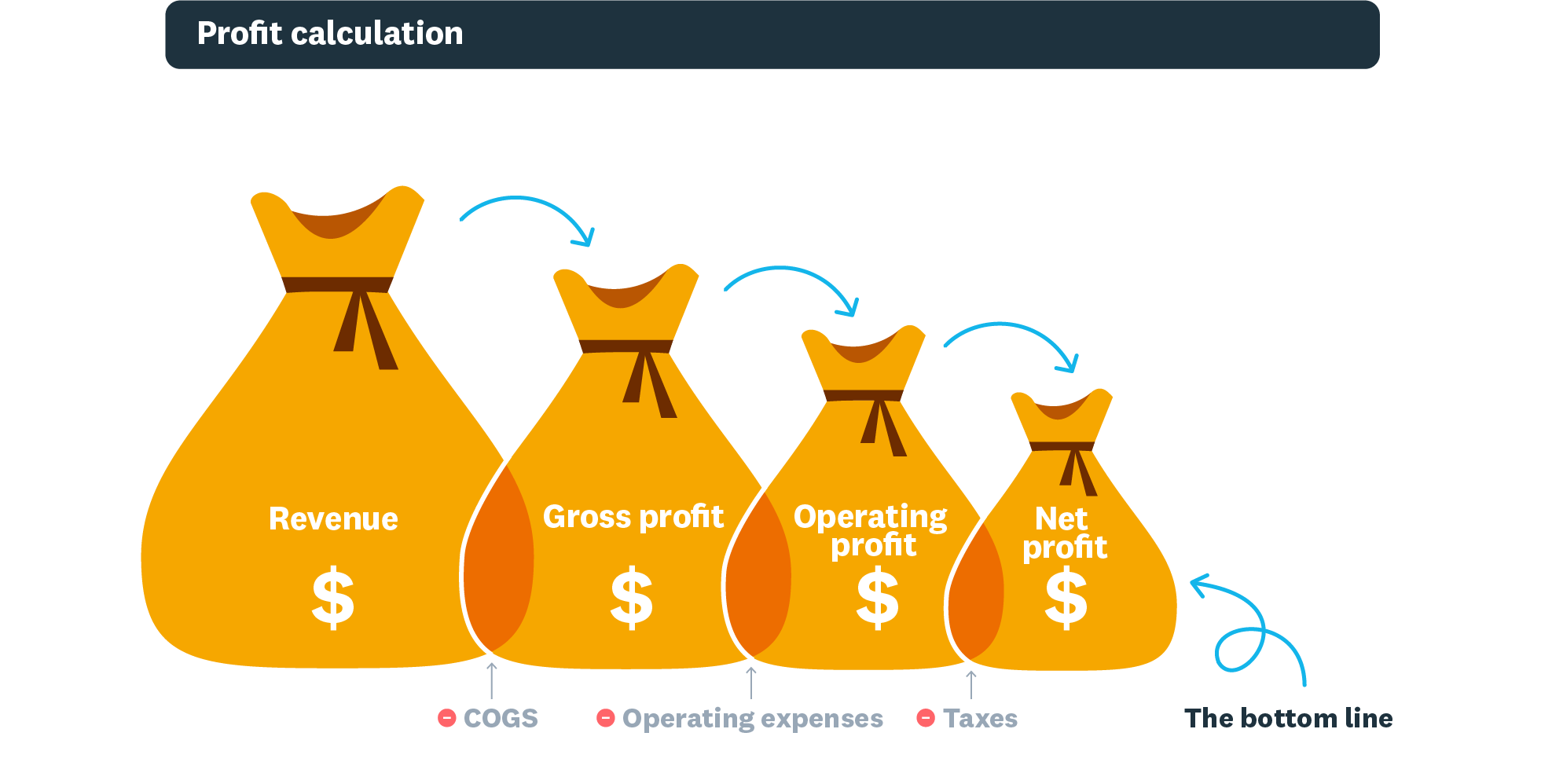
There are three types of profit. Net profit is what you get to keep.
- Profit is what's left after you subtract your expenses from your revenue.
- There are 3 main types of profit: gross profit, operating profit and net profit.
- Profit isn't the same as revenue or cash flow, so it's worth tracking each one separately.
- Watching your profit helps you see how healthy your business is and where to grow.
What is profit?
Profit is the money your business has left over after you subtract your expenses from your revenue. It's what you keep once the costs of running your business are paid.
If your revenue is higher than your costs, you make a profit. If your costs are higher than your revenue, you make a loss.
The three main types of profit
Profit shows up at 3 stages of your accounts, and each one tells you something different. Here's how gross profit, operating profit and net profit compare.
Gross profit
Your gross profit is what's left after you take away the direct costs of making your product or delivering your service. It shows how much you earn before overheads.
Gross profit = revenue − cost of goods sold (COGS)
Operating profit
Your operating profit is what remains after you also subtract the day-to-day costs of running the business, like rent, wages and power. It shows how well your core business performs.
Operating profit = gross profit − operating expenses
Net profit
Your net profit is the bottom line: what you keep after every cost and tax is paid. It's the clearest measure of how much your business actually earns.
Net profit = gross profit minus all other operating expenses and tax
How to calculate profit: a worked example
The easiest way to see how profit works is to run some numbers. Here's a simple example for a New Zealand business over 1 year.
- Start with your revenue: 200,000 NZD in sales
- Subtract your cost of goods sold: 200,000 minus 80,000 = 120,000 NZD gross profit
- Subtract your operating expenses: 120,000 minus 70,000 = 50,000 NZD operating profit
- Subtract your tax: 50,000 minus 14,000 = 36,000 NZD net profit
In this example you keep 36,000 NZD as net profit once all your costs and tax are covered.
Profit vs revenue and cash flow
Profit, revenue and cash flow often get mixed up, but they measure different things. Knowing the difference helps you read your accounts with confidence.
- Revenue, sometimes called turnover, is the total money coming in from sales before you take away any costs
- Profit is what's left after you subtract your expenses from that revenue
- Cash flow is the money moving in and out of your business day to day, which can look healthy even when profit is low
What is profit margin?
Your profit margin shows profit as a percentage of your revenue, so you can compare performance over time or against other businesses. It turns a dollar figure into an easy benchmark.
To go deeper, read our guide on profit margin and how to work it out.
Why profit matters for your business
Profit is one of the clearest signals of how your business is doing. It shows whether your pricing, costs and sales are working together.
Healthy profit gives you money to reinvest, pay down debt or build a buffer for quieter months. It also guides bigger decisions, like when to hire, expand or launch something new.
How to improve your profit
Small changes to your pricing and costs can lift your profit over time. Here are some practical levers to explore.
- Raise your prices where the market allows
- Reduce your direct and overhead costs
- Review your margins and drop unprofitable products or services
- Track the numbers regularly so you can measure profitability and spot trends early
For more ideas on how to increase your profits, take a look at our dedicated guide.
Track your profit with Xero
Keeping an eye on your profit is far easier when your numbers update in real time. Xero brings your revenue, costs and reports together in one place, so you can see your gross, operating and net profit at a glance. Start tracking your profit today and get one month free.
FAQs on profit
Here are answers to some frequently asked questions about profit for small business owners.
What is the difference between gross profit and net profit?
Gross profit is revenue minus the direct cost of your goods, while net profit is what's left after every other expense and tax. Net profit is always the smaller figure.
Is profit the same as revenue?
No, revenue is your total sales before any costs are taken out. Profit is only what remains once you subtract your expenses.
How is profit taxed in New Zealand?
In New Zealand, business profit is generally subject to income tax, which Inland Revenue collects. The rate and rules depend on your business structure, so it's worth checking your situation.
What is a good profit margin?
A good profit margin varies a lot by industry, so compare yours against similar businesses rather than a single benchmark. Tracking your margin over time tells you more than any fixed number.
Related Terms
Learn more about profit
Handy resources
Advisor directory
You can search for experts in our advisor directory
Financial reporting
Keep track of your performance with accounting reports
Disclaimer
This glossary is for small business owners. The definitions are written with their requirements in mind. More detailed definitions can be found in accounting textbooks or from an accounting professional. Xero does not provide accounting, tax, business or legal advice.