What are liabilities?
Learn what liabilities are, the main types, and how to work out and manage what your business owes.
Published Thursday 23 July 2026
Table of contents
Key takeaways
- Liabilities are what your business owes to others, such as loans, unpaid supplier invoices, wages and tax.
- They split into current liabilities due within 12 months and non-current liabilities due later.
- You can work out your total liabilities by subtracting equity from your total assets.
- Keeping liabilities under control protects your cash flow and your ability to borrow.
What are liabilities?
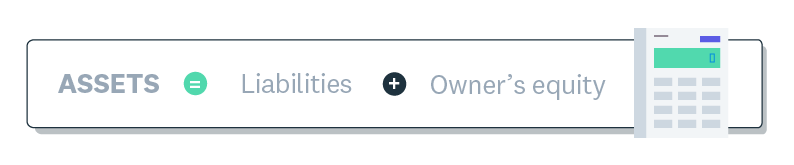
The accounting equation
Liabilities are what your business owes to others: money, goods or services it's due to hand over. They're the opposite of assets, which are what your business owns.
Say you run a plumbing business. A loan on your work vehicle, unpaid supplier invoices, wages owed to your team and GST owed to Inland Revenue are all liabilities. Each one is a claim on your business that you'll need to settle.
Types of liabilities
Liabilities are usually grouped by when they fall due and how certain they are. Most businesses deal with three main types.
Current liabilities
Current liabilities are amounts due within 12 months, such as supplier invoices, GST payable and short-term loan repayments. They give a quick read on the bills your business needs to cover soon.
Non-current liabilities
Non-current liabilities are due more than 12 months out, so they sit further down the track. Common examples are a business term loan, a mortgage on premises or a long-term equipment lease.
Contingent liabilities
A contingent liability is a possible obligation that depends on a future event, like the outcome of a legal claim or a warranty. You record it only when the cost becomes likely and you can estimate it.
Examples of business liabilities
Liabilities show up across almost every part of running a business. Common examples for New Zealand small businesses include:
- goods and services tax (GST) payable to Inland Revenue
- pay as you earn (PAYE) and KiwiSaver contributions owed on behalf of staff
- provisional tax due for the income year
- unpaid supplier invoices, also known as accounts payable
- bank loans, overdrafts and business credit cards
- wages and salaries owed to your team
Liabilities vs assets
Liabilities and assets sit on opposite sides of your balance sheet. Understanding the difference helps you read your financial position at a glance.
Assets are what your business owns and controls, such as cash, stock, equipment and money customers owe you. Liabilities are what your business owes to others. The gap between the two is your equity, or the value left for the owners.
Liabilities vs expenses
Liabilities and expenses are easy to mix up because both involve money going out. The key difference is timing and what each one represents.
An expense is a cost you've already used up to run the business, like rent, power or advertising, and it reduces your profit. A liability is an amount you still owe. A supplier invoice is a liability until you pay it, and the cost behind it is recorded as an expense.
How to work out your total liabilities
You can work out your total liabilities using the accounting equation. It states that assets equal liabilities plus equity.
Rearrange it and your liabilities equal your total assets minus your equity. So if your business owns $200,000 in assets and holds $120,000 in equity, your liabilities come to $80,000.
Your current liabilities also feed common liquidity measures. The current ratio, quick ratio and working capital all use them to show whether you can cover short-term bills.
Why managing your liabilities matters
Staying on top of your liabilities keeps your business solvent, which means you can pay what you owe as it falls due. It also protects your cash flow when income is uneven.
Your liabilities shape your book value, the worth of the business once debts are cleared. Lenders look closely at them too, so a manageable level of debt makes it easier to borrow and grow.
Track your liabilities with confidence in Xero
Xero's online accounting software gives you a real-time view of what your business owes, with bills, tax and loan balances tracked in one place. Get set up and organised in minutes, and get one month free.
FAQs on liabilities
Here are answers to some frequently asked questions about liabilities to help you apply the ideas above.
How do you calculate liabilities?
Add up everything your business owes, from short-term bills to long-term loans. You can also subtract your equity from your total assets to reach the same figure.
Are liabilities the same as debts?
Debts are one type of liability, usually borrowed money like loans and overdrafts. Liabilities are broader and also cover items such as tax owed and unpaid supplier invoices.
What is a contingent liability?
It's a possible obligation that depends on a future event, such as a pending legal claim. You record it only once the cost becomes likely and you can estimate it.
How do liabilities affect the current ratio?
The current ratio divides current assets by current liabilities to gauge short-term financial health. Higher current liabilities lower the ratio, which points to tighter liquidity.
Related Terms
Learn more about liabilities
Handy resources
Advisor directory
You can search for experts in our advisor directory
Xero Small Business Guides
Discover resources to help you do better business
Financial reporting
Keep track of your performance with accounting reports
Disclaimer
This glossary is for small business owners. The definitions are written with their requirements in mind. More detailed definitions can be found in accounting textbooks or from an accounting professional. Xero does not provide accounting, tax, business or legal advice.