Assets
Assets are what your business owns that hold value. Learn the main types, examples, and why they matter.
Published Thursday 23 July 2026
Table of contents
Key takeaways
- Assets are the things your business owns that hold value, from cash and stock to equipment and property.
- In accounting, assets sit on your balance sheet and follow the equation assets = liabilities + owner's equity.
- Assets come in different types: current or fixed, tangible or intangible, and financial.
- Knowing what you own helps you work out your net worth, borrow with confidence, and make better decisions.
What are assets?
Assets are the things your business owns that have value and can help you make money. They range from cash in the bank to the tools you use and the products you sell.
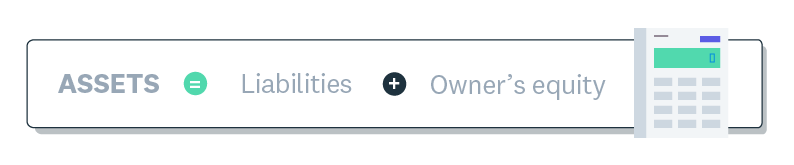
The accounting equation
Say you run a plumbing business. Your assets might include the building you work from if you own it, your stock of pipes and fittings, your vans and tools, and the cash and unpaid customer invoices you're owed.
What are assets in accounting?
In accounting, assets are one part of a simple equation that keeps your books balanced. That equation is assets = liabilities + owner's equity.
Your assets show up on the balance sheet, one of the main financial statements, alongside what you owe and what's left over for you as the owner.
Types of assets
Assets get grouped in a few different ways, depending on how quickly you can turn them into cash and whether you can physically touch them. The main types are current versus fixed, tangible versus intangible, and financial.
Current vs fixed assets
The split between current and fixed comes down to how long you expect to hold something. It's one of the most useful ways to read your balance sheet.
- Current assets are things you expect to use or turn into cash within a year, such as cash, stock, and money customers owe you
- Fixed assets are things you keep and use over the longer term, such as buildings, vehicles, and machinery
Tangible vs intangible assets
Assets can be physical or something you can't hold in your hand. Both kinds add real value to your business.
- Tangible assets have a physical form, such as equipment, stock, and property
- Intangible assets have no physical form, such as your brand, a trademark, or software you own
Financial assets
Some assets get their value from a contract or a claim on someone else, rather than from a physical object. These are known as financial assets.
- Cash and bank deposits
- Shares in another company
- Bonds and other investments
Examples of business assets
The assets on your books will depend on what your business does, but most fall into a handful of familiar groups. Here are common examples, sorted by type.
- Current assets: cash, stock, and unpaid customer invoices
- Fixed assets: premises, vehicles, machinery, and computers
- Intangible assets: your brand, trademarks, patents, and owned software
Assets vs liabilities
Assets and liabilities sit on opposite sides of your balance sheet. Assets are what your business owns, while liabilities are what your business owes.
A loan, an unpaid supplier bill, or a tax bill are all liabilities. When you subtract your liabilities from your assets, what's left is the owner's equity, or the value of the business to you.
How assets are valued
You usually record an asset at what you paid for it, then adjust its value over time. For fixed assets, that adjustment is called depreciation.
Depreciation spreads the cost of an asset across the years you use it, reflecting the wear and tear that reduces its value. A van or a laptop loses value each year, so its book value drops as it ages.
Why assets matter for your business
Assets are a clear signal of your financial health. Knowing what you own, and what it's worth, helps you run your business with more confidence.
- Work out your net worth by comparing what you own with what you owe
- Show lenders you have security when you apply to borrow
- Make sharper decisions about spending, investing, and growth
Track your business assets with Xero
Keeping an accurate picture of your assets gets easier when everything lives in one place. Xero's accounting software helps you track assets, manage depreciation, and see your financial position in real time, so you can start today and get one month free.
FAQs on assets
Here are answers to some frequently asked questions about assets to clear up the finer points.
What are examples of assets?
Common examples include cash, stock, unpaid customer invoices, vehicles, equipment, and property. Intangible examples include your brand, trademarks, and owned software.
What is the difference between current and fixed assets?
Current assets are things you expect to use or turn into cash within a year. Fixed assets are things you keep and use over the longer term, such as buildings and machinery.
What is the difference between assets and liabilities?
Assets are the things your business owns that hold value. Liabilities are the amounts your business owes to other people, such as loans and unpaid bills.
Is labour an asset?
No, labour isn't an asset on your balance sheet because you can't own it. Wages you pay for labour are an expense, not something you record as an asset.
What are intangible assets?
Intangible assets are things of value that have no physical form. Examples include your brand, patents, trademarks, and software you own.
Related terms
Learn more about assets
Handy resources
Advisor directory
You can search for experts in our advisor directory
Xero Small Business Guides
Discover resources to help you do better business
Fixed assets in Xero
Manage your fixed assets with easy-to-use accounting software
Disclaimer
This glossary is for small business owners. The definitions are written with their requirements in mind. More detailed definitions can be found in accounting textbooks or from an accounting professional. Xero does not provide accounting, tax, business or legal advice.