Gross profit vs net profit explained
Gross profit is revenue minus cost of goods sold; net profit is what's left after all expenses and tax.
Published Thursday 23 July 2026
Table of contents
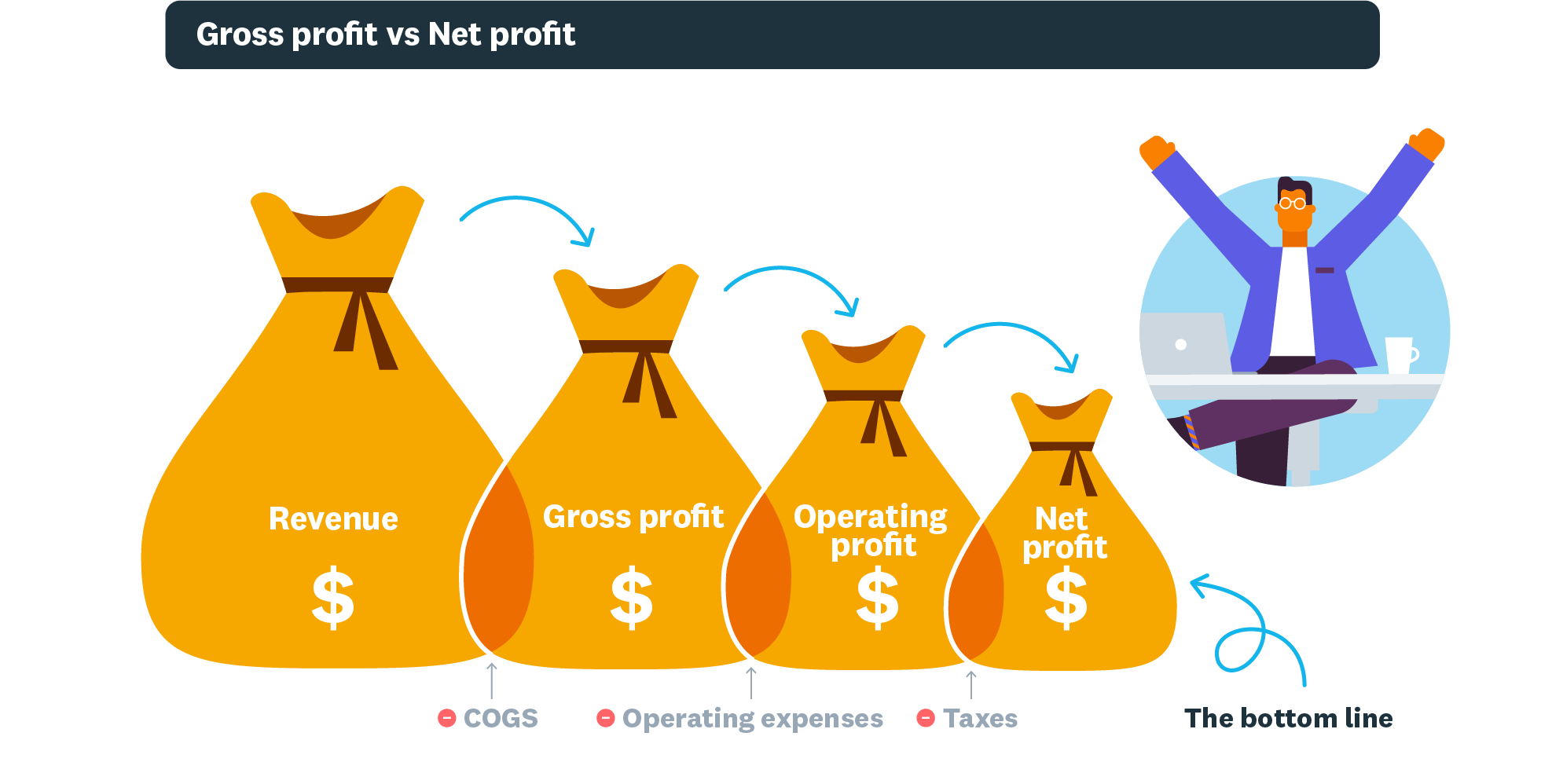
The difference between gross profit and net profit is operating expenses and taxes
Key takeaways
- Gross profit and net profit measure profit at different stages: gross profit comes first, and net profit is what's left at the end.
- You work out gross profit as revenue minus the cost of goods sold (COGS).
- Net profit is gross profit minus all your other operating expenses and tax, so it's often called the bottom line.
- In New Zealand, income tax is calculated on your net (taxable) profit, not on your gross revenue.
What is gross profit?
Gross profit is the money your business keeps from sales after covering the direct cost of producing your goods or services. In plain terms, it's your revenue minus the cost of goods sold (COGS).
COGS covers the costs tied directly to making a sale, such as materials, stock and direct labour. It leaves out overheads like rent, marketing and admin, which come in later. You can dig into what counts in the cost of goods sold guide.
The formula is straightforward:
Gross profit = revenue − cost of goods sold
What is net profit?
Net profit is what's left once you've paid every cost of running your business, not just production. It's your revenue minus all expenses, including COGS, operating expenses, interest and tax.
Because it sits at the very bottom of your profit and loss statement, net profit is known as the bottom line. It tells you whether the business as a whole made money over the period.
The formula builds on gross profit:
Net profit = gross profit − all other operating expenses and tax
Gross profit vs net profit: the key difference
The gap between gross profit and net profit is everything beyond the direct cost of sales: operating expenses, interest and tax. Gross profit shows how efficiently you produce and price your goods, while net profit shows what the whole business keeps.
Say your business earns $250,000 in revenue for the year. Here's how the same revenue produces two different profit figures:
- Revenue: $250,000
- Cost of goods sold: $150,000
- Operating expenses, interest and tax: $70,000
Your gross profit is $250,000 − $150,000 = $100,000. Your net profit takes that $100,000 and subtracts the $70,000 of other costs, which leaves $30,000.
Same sales, but net profit lands $70,000 below gross profit once every other cost is paid.
Gross profit margin vs net profit margin
Turning each profit figure into a percentage of revenue gives you a margin. Margins let you compare performance over time and against others in your industry, whatever your size.
The two formulas are:
Gross profit margin = (gross profit ÷ revenue) × 100
Net profit margin = (net profit ÷ revenue) × 100
Using the example above, the gross profit margin is 40% and the net profit margin is 12%. Gross profit margin points to your pricing and production efficiency, while net profit margin shows how much of each dollar of revenue you actually keep. You can go deeper on how to read these figures in the profit margin guide.
Which profit do you pay tax on?
In New Zealand, income tax is worked out on your net (taxable) profit, not on your gross revenue. You're taxed on what's left after allowable business expenses, rather than on your total sales.
Keeping accurate records of your income and expenses throughout the year helps you see your taxable profit clearly. For your own situation, it's worth checking the current rules or talking to your accountant.
Which profit should you focus on?
Both figures matter, and they answer different questions, so it helps to use them together. Gross profit tells you whether your pricing and production costs stack up, while net profit tells you whether the whole business is healthy.
Watch gross profit and its margin to keep pricing and direct costs in check. Watch net profit to see the full picture, including overheads and tax. You can track both over time with the measure profitability guide, and find practical ways to lift them in the increase profits guide.
Track your profit with Xero
Xero brings your income and expenses together so you can see gross profit, net profit and margins as they change. Reports update as you reconcile, so your numbers stay current without extra admin. Start today and you can get one month free when you choose a plan.
FAQs on gross profit vs net profit
Here are answers to some frequently asked questions about gross profit vs net profit.
Does a business pay tax on gross or net profit?
Businesses are generally taxed on net profit, not gross profit. In New Zealand, income tax applies to your taxable profit after allowable expenses.
Can gross profit be higher than net profit?
Yes, and it almost always is. Gross profit only subtracts the cost of goods sold, while net profit also subtracts operating costs, interest and tax.
Why might a business have high gross profit but low net profit?
It usually means heavy overheads, interest or tax are eating into what's left after production costs. Rent, wages and marketing can turn a healthy gross profit into a thin net profit.
What's the difference between gross profit and gross profit margin?
Gross profit is a dollar figure, while gross profit margin is that figure shown as a percentage of revenue. The margin makes it easier to compare periods or businesses of different sizes.
Related terms
Learn more about profit
Handy resources
Advisor directory
You can search for experts in our advisor directory
Xero Small Business Guides
Discover resources to help you do better business
Financial reporting
Keep track of your performance with accounting reports
Disclaimer
This glossary is for small business owners. The definitions are written with their requirements in mind. More detailed definitions can be found in accounting textbooks or from an accounting professional. Xero does not provide accounting, tax, business or legal advice.