Dropshipping: How It Works and How to Start Your Business
Learn how dropshipping lets you start fast with low costs, no stock, and scalable fulfilment.
Written by Lena Hanna—Trusted CPA Guidance on Accounting and Tax. Read Lena's full bio
Published Saturday 31 January 2026
Table of contents
Key takeaways
- Choose reliable suppliers who offer quality products, competitive pricing, and dependable shipping times, as your business reputation depends entirely on their performance and customer service.
- Focus on finding a profitable niche market by researching demand using tools like Google Trends and analysing competition to identify products with good profit margins.
- Build trust with customers through responsive communication, clear return policies, and professional complaint handling, since repeat business drives long-term success in dropshipping.
- Prepare for tight profit margins and intense competition by developing strong branding and exceptional customer service to differentiate your store from other dropshippers selling similar products.
What is dropshipping?
Dropshipping is a retail fulfillment method where you sell products without holding inventory. Here's how it works:
- You list products on your online store
- Customers place orders with you
- You forward orders to suppliers
- Suppliers ship directly to customers
What is a dropshipper?
A dropshipper is the seller or business owner who runs the online store. You, as the dropshipper, are responsible for marketing the products, managing the customer experience, and processing orders.
You act as the middleman between the customer and the supplier, but from the customer's perspective, they are buying directly from your brand.
Key benefits of dropshipping include:
- No inventory management: Suppliers handle stock and storage
- Reduced logistics:Suppliers manage packaging and shipping
- Focus on growth: Concentrate on marketing and customer service
- Lower startup costs: No upfront inventory investment required
You can focus on managing your online store, marketing, tracking your metrics, and processing orders.
Dropshipping is growing fast. The global market is expected to hit US $476 billion by 2026, according to Statista. While startup costs are low and it's easy to get started, the competition can be fierce and profit margins are often tight.
How does dropshipping work?
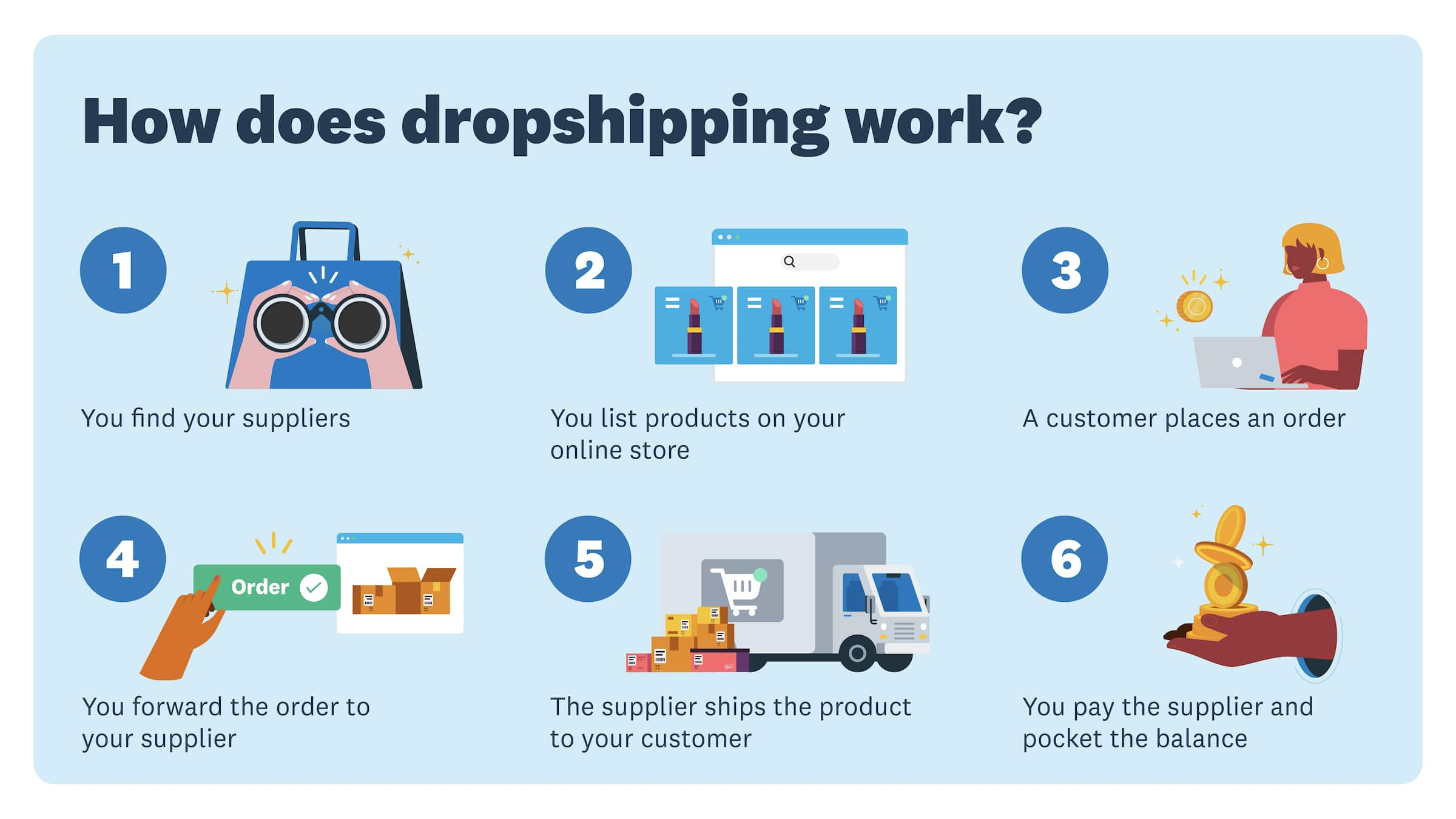
Dropshipping follows a simple sequence from choosing suppliers to delivering customer orders. Here is how the process usually works.
What are dropshipping suppliers?
Dropshipping suppliers are the third-party companies that store, package, and ship products to your customers on your behalf. They can be manufacturers, wholesalers, or specialised fulfilment centres.
Finding a reliable supplier is crucial because they handle the product quality and delivery, which directly impacts your business's reputation.
1. You find your suppliers
Finding reliable suppliers requires careful evaluation. Look for suppliers that offer:
- Quality products: request samples before partnering
- Competitive pricing: Compare wholesale costs across suppliers
- Reliable shipping: Verify delivery times and tracking capabilities
- Dropshipping support: Confirm they work with dropshippers
Once you've found a supplier, make sure they have quality products, competitive prices, and reliable shipping.
Establish clear supplier agreements covering:
- Pricing structure: Wholesale costs and bulk discounts
- Return policies: Who handles customer returns and refunds
- Restocking fees: Charges for returned or unsold items
- Communication protocols: Order processing and issue resolution
If you can, find suppliers with:
- A white-labelling service: they add your branding to the product and packaging so customers feel the product came from your store
- Dedicated systems to streamline the ordering process, like automated integration with your store, dedicated dashboards, or partner-specific email addresses
2. You list products on your online store
Add products to your store with detailed descriptions, high-quality images, and accurate product specs. Your supplier might give you these, or you can create your own branded versions.
Set your prices carefully, factoring in a markup for your profit margins. Customers can compare prices online in seconds, so keep prices competitive. Be sure to account for hidden costs, like platform fees and transaction charges, when calculating your final price.
3. A customer places an order
When a customer orders something, the payment is made directly to you, the dropshipper.
You're now in charge of the transaction, so it's your responsibility to manage refunds and resolve disputes.
4. You forward the order to your supplier
Send the order details to your supplier, including the customer's address, product specifications (size, colour, and so on), and any special requests.
5. The supplier ships the product to your customer
The supplier packages and ships the product directly to your customer.
6. You pay the supplier and pocket the balance
Pay the supplier the agreed wholesale cost and any shipping fees. The difference between what the customer paid and your costs is your profit.
Dropshipping pros and cons
Evaluate dropshipping by weighing these key advantages against potential challenges:
Dropshipping benefits
Scalability
Scalability advantages include:
- Expand product range: Add new items without inventory investment
- Focus on marketing: No warehouse management distractions
- Improve customer service: Dedicate resources to customer relationships
- Optimise operations: Concentrate on website and sales processes
Run your business from anywhere
With no physical storefront or dedicated warehouse, you can run your dropshipping business from anywhere in the world. All you need is an internet connection to monitor sales, process orders, and coordinate with suppliers.
Lower costs
Dropshipping eliminates large investments in inventory. Instead, you pay your supplier only after you've made a sale, reducing financial risk.
Overhead costs are lower for dropshippers too. Because you don't store or handle goods, you have fewer retail cost overheads, like warehousing.
Lower costs help your business become profitable more quickly and make dropshipping very accessible, even if you're short on startup funds.
Improved cash flow
You only pay your dropshipping suppliers after receiving customer payments, so you aren't tying up funds in inventory. This boosts your cash flow and therefore your finances.
Lower environmental impact
Dropshipping is a more sustainable approach for eco-conscious entrepreneurs because there is less waste from unsold stock and lower emissions thanks to fewer transportation steps.
Dropshipping drawbacks
Like any business model, dropshipping has some challenges to consider.
Complex shipping arrangements
Dropshippers often have multiple suppliers, so it's hard to give customers exact delivery times. Customers might even receive items from the same order separately.
International orders may bring delays and fees that can hurt your reputation.
Lower profit margins
Because you're buying each item from the supplier as it's ordered, you can't take advantage of bulk buying or the wholesale discounts associated with it. Some suppliers might even charge you extra for processing smaller orders.
Dropshipping profit margins are notoriously tight, so you'll have a smaller budget for marketing and growing your store.
Intense competition
The low barriers to entry attract plenty of sellers, so competition is fierce. Price wars with your competitors can squeeze profit margins even further.
This means you'll need to work harder to stand out; by offering something unique, strengthening your brand, and delivering exceptional customer service.
Dependence on suppliers
Dropshippers rely heavily on their suppliers, so choosing reliable partners is essential. Customers may blame you for inconsistent quality, shipping delays, poor communication, and damaged packaging.
Branding limitations
Building a strong brand to create memorable experiences for customers and earn their loyalty is harder for dropshippers.
Many suppliers don't offer white-labelling services, which creates a disconnect for customers who buy from your branded ecommerce dropshipping store but receive their orders in generic packaging.
Dropshipping vs traditional retail
Dropshipping differs from traditional retail in three key ways:
Inventory management:
- Dropshipping: No stock holding required
- Traditional retail: Must purchase and store inventory
Initial investment:
- Dropshipping: Low startup costs, pay suppliers after sales
- Traditional retail: High upfront investment in stock and storage
Operational risks:
- Dropshipping: Dependent on supplier reliability
- Traditional retail: Risk of unsold stock and theft
With these in mind, some products are better suited to dropshipping than traditional retail. Here are some dropshipping examples of products.
- Niche products: Trial new or niche products (such as eco-friendly cleaning supplies or vegan skincare) by dropshipping without committing to large stock orders.
- High-value items: With dropshipping, there's no need to buy expensive inventory (like designer bags or luxury watches) upfront, and you won't need to securely store and insure them either.
- Trendy or seasonal items: Dropshipping is great for items like fashion accessories, heated blankets, or Christmas ornaments as it minimises the risk of unsold stock.
Dropshipping business models
Dropshipping business models vary based on your supplier relationships and product types. The three main models are:
Wholesale dropshipping:
- Partner with wholesalers for diverse product ranges
- Lower risk for testing new products
- Access to bulk pricing tiers
Print on demand dropshipping:
- Products created only after customer orders
- Ideal for custom designs on standard items
- Longer shipping times due to production delays
Retail dropshipping:
- Source products from retailers like Amazon
- Huge product selection available immediately
- Lower profit margins due to retail pricing
How to start dropshipping
Launch your dropshipping business by following these essential steps to establish a profitable online store:
Find your market niche
Find your market niche using this approach:
- Choose your interests: Select products you're passionate about
- Research demand: Use Google Trends to identify growing markets
- Analyse competition: Study successful stores in your niche
- Validate profitability: Calculate potential profit margins
Use tools like Google Trends to spot growing trends, and search on platforms like Amazon or eBay for in-demand products. It'll help you stand out if you can sell unique, hard-to-find items.
Choose reliable suppliers
You want a supplier who delivers quality products smoothly and efficiently. Look for suppliers with the right location, reputation, prices, and fees. Check their minimum order requirements, packaging quality, and dispatch times.
Platforms like Spocket, Modalyst, and DSers help connect your online store with proven suppliers by letting you:
- Browse supplier catalogues
- Import products directly to your store with auto-filled descriptions and images
- Customise product details to fit your brand voice
Create your online store
Build a user-friendly online store for customers to browse and purchase products.
- Choose a platform like WooCommerce, Shopify, BigCommerce, or Wix
- Pick a payment processor such as Stripe or PayPal
- Add your products and include detailed descriptions, clear images, and accurate specs
- Customise your branding by incorporating your branding into the site's design for a cohesive look
Plan your marketing strategy
Effective marketing will grow your dropshipping business. Here are a few tips:
- Set up social media profiles: choose platforms that align with your audience, for example TikTok for younger customers. Post regularly to showcase products, highlight lifestyle benefits, and share tutorials.
- Use digital advertising: run pay-per-click (PPC) campaigns on Google, Facebook, and Instagram to attract customers. Target interests to reach your ideal customer.
- Encourage customer reviews: Reviews are proven to build trust and drive sales. Offer small discounts for reviews, and display positive reviews on your website. Apply feedback to improve your service.
Top five dropshipping tips
The advantages of dropshipping are flexibility and agility, but like any business, it takes innovation and attention to detail to succeed.
Here are five tips to help your dropshipping startup succeed.
Know your customer
You'll stand out from the crowd if customers feel you know them. So earn their loyalty by catering to their specific needs and aim to be the store they immediately think of when they need products in your area.
Be trustworthy and responsive
Customers who trust you give you repeat business. So answer enquiries promptly, have clear return policies, and handle complaints professionally.
Go with suppliers that deliver quality
Since you don't handle inventory directly, you have less control over the quality of delivered products. So only work with reliable suppliers: request samples, monitor customer feedback, and make sure they resolve issues quickly.
Stay organised
Keep accurate financial records, manage your cash flow, and stay on top of your taxes to keep operations running smoothly.
Be passionate
Passion keeps you motivated and committed during tough times, and customers love a store owner who's enthusiastic about their products.
Streamline your dropshipping business with Xero
Xero accounting software makes dropshipping much easier. It integrates with ecommerce platforms, forecasts cash flow in real time, and supports multiple currencies for international sales. Get one month free and when you're ready, there are more tools for your business in the Xero App Store.
FAQs on dropshipping
Here are answers to common questions about dropshipping.
Can I start dropshipping with no money?
No, starting dropshipping requires some initial investment. Essential startup costs include domain registration, web hosting, and marketing budget for customer acquisition.
How much do dropshippers make?
Dropshipper earnings range from about $200 to more than $50,000 a month, depending on your niche, profit margins, and marketing effectiveness.
What is the best dropshipping platform?
The best platform for you depends on your business needs. Popular platforms are:
- Spocket connects you with US and European suppliers that offer fast shipping
- Modalyst has a wide range of products, including unique brands and print-on-demand options
- DSers is an official AliExpress partner for low-price suppliers and bulk orders
Disclaimer
Xero does not provide accounting, tax, business or legal advice. This guide has been provided for information purposes only. You should consult your own professional advisors for advice directly relating to your business or before taking action in relation to any of the content provided.
Get one month free
Purchase any Xero plan, and we will give you the first month free.