Dropshipping NZ: how to start and find top suppliers
Learn how dropshipping NZ works, how to find suppliers, and how to start selling online.
Written by Jotika Teli—Certified Public Accountant with 24 years of experience. Read Jotika's full bio
Published Monday 20 April 2026
Table of contents
Key takeaways
- Register your dropshipping business with a New Zealand Business Number (NZBN) and sign up for GST if your turnover reaches or is expected to reach $60,000 in any 12-month period to stay compliant with NZ law.
- Choose suppliers based on product quality, realistic shipping times to New Zealand, customer service responsiveness, and compatibility with your ecommerce platform before committing to any partnership.
- Factor supplier location into your delivery promises, as NZ-based suppliers typically deliver in 2–5 business days, Australian suppliers in 5–10 days, and international suppliers in 2–4 weeks.
- Track all costs, including platform fees, supplier prices, shipping, and transaction fees, from day one so you can set accurate prices and protect your profit margins.
Key takeaways
• Register your dropshipping business properly by obtaining a New Zealand Business Number (NZBN) and understanding your tax obligations, including GST registration if your turnover was at least $60,000 in the last 12 months or is expected to exceed that threshold annually.
• Evaluate potential suppliers thoroughly by checking their product quality through samples, verifying shipping times to New Zealand, testing their customer service responsiveness, and ensuring platform compatibility before committing to partnerships.
• Research and verify supplier legitimacy by checking business registrations, reading customer reviews, testing communication quality, and confirming delivery capabilities to avoid unreliable partnerships that could damage your customer relationships.
• Track your finances meticulously from day one by monitoring supplier costs, calculating profit margins, and maintaining clear records of all transactions to ensure your dropshipping business remains profitable and sustainable.
What are dropshipping suppliers and companies?
Understanding the different types of suppliers is essential for building a successful dropshipping business. Dropshipping suppliers are third-party companies that store inventory and ship products directly to your customers on your behalf. You never handle the stock yourself.
Here's how the different types work:
- Suppliers store inventory and ship products directly to your customers
- Dropshipping companies connect you to multiple suppliers through one platform
- Your role: Market products and manage customer relationships without handling inventory
How dropshipping works
The dropshipping process follows four steps:
- Customer orders: A customer purchases from your online store
- Order forwarding: You send the order details to your supplier
- Fulfilment: Your supplier packages and ships the product directly to the customer
- Delivery: The customer receives the product with your branding
Dropshipping suppliers operate worldwide. For NZ-based businesses, supplier location directly affects delivery times. Local NZ suppliers typically deliver in 2–5 business days, Australian suppliers in 5–10 days, and international suppliers in 2–4 weeks.
Is dropshipping legal in New Zealand?
Understanding the legal requirements helps you start your dropshipping business correctly. Yes, dropshipping is legal in New Zealand. It's a legitimate business model, but you must meet the same compliance requirements as any other NZ business. Getting these basics right protects you and builds customer trust.
Key compliance requirements include:
- Business registration: Register for a New Zealand Business Number (NZBN), choose your business structure, and remember that you'll need to file an annual return and pay a fee of $49.74 (plus GST) to keep your information correct on the Companies Register
- Consumer laws: Comply with the Fair Trading Act and Consumer Guarantees Act, which protect customers from misleading claims and ensure acceptable product quality
Getting compliance right from day one helps you avoid penalties and build a sustainable business. An accountant or bookkeeper can advise on your specific tax obligations and business structure.
How to start dropshipping in New Zealand
Starting a dropshipping business in New Zealand takes five key steps. Here's how to go from idea to first sale:
- Choose your niche and products: Pick a product category you're passionate about that has proven customer demand
- Find reliable suppliers: Research and partner with trustworthy suppliers who offer quality products and timely shipping to NZ
- Set up your online store: Select an ecommerce platform like Shopify or WooCommerce to build your website and list products
- Market your business: Use social media, search engine optimisation (SEO), and online advertising to attract customers
- Manage your finances: Track your sales, expenses, and profit from day one to make confident business decisions
How to find dropshipping suppliers
Use these proven methods to find dropshipping suppliers:
- Online directories: Browse vetted suppliers on platforms like SaleHoo and Spocket
- Direct outreach: Contact manufacturers and wholesalers directly via email or phone
- Search engines: Search terms like "wholesale dropshipping NZ" or "dropshipping suppliers"
- Social media: Explore LinkedIn and industry groups for supplier connections
- Trade shows: Attend industry events to network with suppliers in person
Other sourcing strategies include:
- Marketplace research:Search Amazon, eBay, or Etsy for products, sort by lowest price, then research those sellers to establish direct relationships
- Reverse engineering: Buy from suspected dropshippers and check the return address on the package to identify their supplier
- In-person networking: Attend trade shows to build relationships and negotiate deals directly with suppliers
Tips for contacting and negotiating with dropshipping suppliers
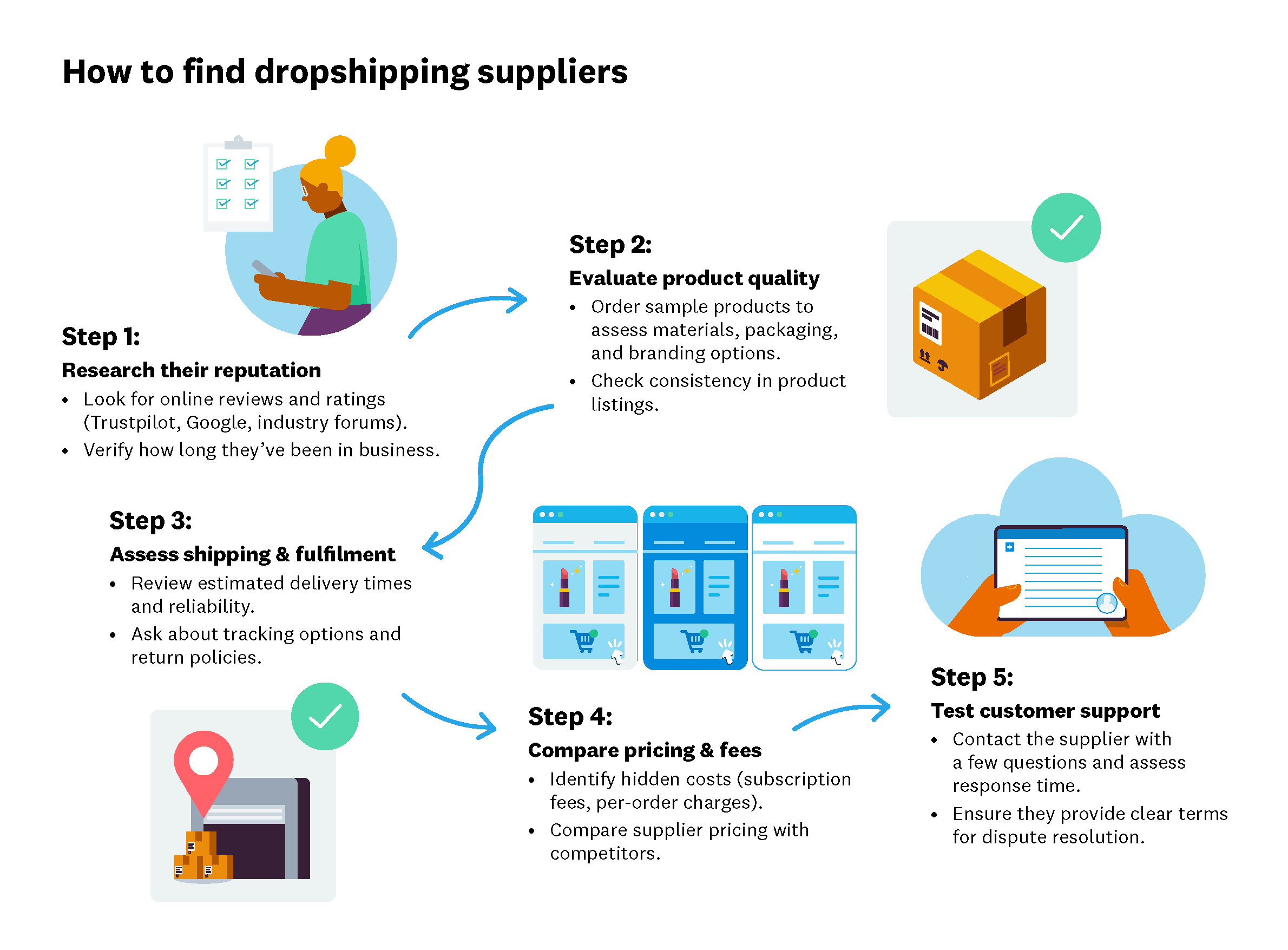
Before partnering with any supplier, verify their reliability:
- Check legitimacy: Confirm business registration and certifications
- Read reviews: Search for customer feedback on product quality and service
- Test communication: Send enquiries and evaluate response times
- Order samples: Assess product quality and packaging standards
- Confirm shipping: Verify delivery times and costs to New Zealand
When negotiating with suppliers, keep these principles in mind:
- Communicate clearly: State your expectations upfront and ask questions to create a fair agreement
- Stay flexible: Be firm on requirements but open to how suppliers can meet them
- Think long-term: Offer ongoing business in exchange for better pricing or terms
- Be professional: Come prepared with your business figures and treat all suppliers respectfully
Companies that dropship
Once you understand your supplier options, you can choose the right partnerships for your business. Dropshipping companies act as intermediaries between you and suppliers, providing access to vetted supplier networks and product catalogues.
There are two main types of suppliers:
- Manufacturers: Create products and sell directly, but often require bulk purchases upfront
- Wholesalers: Buy from manufacturers and sell smaller quantities at slightly higher per-unit prices
For dropshippers testing new products, wholesalers typically offer lower risk because you don't need to commit to bulk orders.
Best dropshipping companies in New Zealand
Before committing to any supplier partnership, evaluate them against these criteria:
- Product quality: Check customer reviews and order samples before listing products
- Shipping speed: Confirm realistic delivery times to New Zealand customers
- Customer service: Test response times and support quality with enquiries
- Integration: Verify compatibility with your chosen ecommerce platform
Some dropshipping companies integrate better with specific platforms, so confirm your ecommerce setup first.
SaleHoo
SaleHoo is a supplier directory and dropshipping platform based in New Zealand. It offers two main tools: a directory of vetted suppliers, and a Shopify integration that lets you import products directly to your store.
Pros
- You can choose from 2.5 million products
- You can access over 8,000 suppliers who are pre-vetted by SaleHoo
- You can import 500 products on the cheapest plan or unlimited products on the Premium plan
Cons
However, keep these limitations in mind:
- Only two pricing plans to choose from: Basic or Premium
- No dedicated onboarding account manager with the Basic plan
- No free trial
Spocket
Spocket connects you to a supplier directory you can filter by location, making it easier to find suppliers with faster shipping times. You pay no commission fees, only the product cost plus a monthly subscription.
Pros
- You can order product samples to check the quality meets your standards
- You can use Shopify, BigCommerce, WooCommerce, and Wix integrations
- Suppliers are vetted and verified
- You get 24/7 chat support on any of the plans
Cons
However, keep these limitations in mind:
- The starter plan only lets you sell 25 unique products
- Spocket manages all supplier communication on your behalf through the platform
AliExpress
AliExpress offers over 100 million products with no subscription fees, making it popular with dropshippers worldwide. It's owned by Alibaba, the Chinese B2B retail platform.
Pros
- No subscription or monthly membership fees
- Compatible with a range of platforms, including Shopify, WooCommerce and DSers
- The availability of products at cheap wholesale prices offers the potential for higher profit margins
Cons
However, keep these limitations in mind:
- You'll need to invest significant time into researching quality and trending products
- Many suppliers are based in Asia, so delivery times may be longer with free or standard shipping options
- Check the legitimacy and reputation of your chosen suppliers
Colourblocker
Colourblocker is a Sydney-based platform that ships to New Zealand, offering faster delivery than Asian suppliers. Product categories include kitchen and homeware, electronics, and accessories.
Pros
- Colourblocker typically approves applications for dropshipping accounts quickly (within 48 hours)
- No monthly subscription or fulfilment fees: you only pay for the products you buy
- 48-hour processing time for orders
- Easy integration with platforms such as Shopify, WooCommerce, and Amazon
Cons
However, keep these limitations in mind:
- Delivery times can be up to 10 business days, depending on location
- Express shipping is only available for wholesale orders
- You pay to ship returned items, and Colourblocker charges a restocking fee for returns
Wholesale dropshipping in New Zealand
Once you've established your dropshipping business, you might consider wholesale partnerships for better margins. Wholesale dropshipping means partnering directly with wholesalers who buy products in bulk from manufacturers, then ship individual orders to your customers.
Wholesale dropshipping offers several benefits:
- Lower product costs through bulk pricing
- Access to diverse product catalogues
- Direct supplier relationships
Keep these considerations in mind:
- May require minimum order quantities
- Higher upfront investment than standard dropshipping platforms
This model works well once you've identified your best-selling products and want to improve margins.
Dropshipping costs and profitability in New Zealand
Before launching your dropshipping business, understand the financial commitments involved. Dropshipping has low startup costs, but it's not free. Understanding your expenses helps you price products correctly and protect your margins.
Common costs include:
- Ecommerce platform fees: $30–$300 per month depending on your platform
- Supplier costs: The wholesale price of each product you sell
- Marketing and advertising: Variable costs to attract customers to your store
- Transaction fees: 2–3% per sale for payment processing
Your profit is the difference between your selling price and total costs (product, shipping, and fees). Track these numbers from day one to ensure your business stays financially healthy.
Is dropshipping worth it?
Deciding whether dropshipping suits your business goals requires weighing the benefits against the challenges. Dropshipping is worth considering if you want to start selling online with minimal upfront costs and no inventory management.
Dropshipping offers these key advantages:
- Start with minimal capital investment
- Avoid inventory storage costs entirely
- Work from anywhere with location independence
You'll also face these main challenges:
- Accept lower profit margins than traditional retail
- Sacrifice some control over shipping and quality
- Depend heavily on supplier reliability
Find out more in What is dropshipping and How to dropship.
Is dropshipping possible in New Zealand?
Yes, dropshipping works in New Zealand, but you must follow local requirements for starting an online business. Check that your products can legally be sold here, especially if sourcing from overseas suppliers, and ensure your pricing complies with NZ tax laws.
The global dropshipping market continues to grow, creating opportunities for NZ businesses. However, with many suppliers based overseas, factor in shipping costs and delivery times when choosing partners for NZ customers.
Managing your dropshipping business finances
Strong financial management is just as important as finding reliable suppliers. Successful dropshipping requires reliable suppliers and solid financial management. Track your supplier costs, monitor profit margins on each product, and maintain clear records of all transactions to spot what's working.
Get one month free to streamline your dropshipping finances with automated invoicing, expense tracking, and up-to-date profit reports.
FAQs on dropshipping suppliers in New Zealand
Here are common questions about dropshipping in New Zealand.
Is dropshipping profitable in New Zealand?
Yes, dropshipping can be profitable in New Zealand, but margins are typically lower than traditional retail. Your profit is the gap between what customers pay and your total costs (product, shipping, and fees). Careful financial tracking from day one is essential.
How much money do you need to start dropshipping in NZ?
You can start with $500–$2,000. Main costs include your ecommerce platform subscription ($30–$300/month), business registration, and initial marketing. Because you don't buy inventory upfront, startup costs are significantly lower than traditional retail.
Do I need to register my dropshipping business in NZ?
Yes, you need to register if you're trading for profit. Get a New Zealand Business Number (NZBN) and register with Inland Revenue (IRD) for tax purposes.
What's a realistic success rate for dropshipping?
Around 10–20% of dropshippers achieve consistent profitability, according to industry estimates. Success typically comes down to thorough product research, reliable supplier partnerships, realistic profit margins, and disciplined financial tracking. Those who treat it as a serious business rather than a quick scheme have better outcomes.
How long does shipping take with NZ dropshipping suppliers?
Delivery times vary significantly by supplier location. NZ-based suppliers typically deliver in 2–5 business days, Australian suppliers in 5–10 business days, and international suppliers (particularly from Asia) in 2–4 weeks. Factor these timeframes into your customer expectations and product listings.
Disclaimer
Xero does not provide accounting, tax, business or legal advice. This guide has been provided for information purposes only. You should consult your own professional advisors for advice directly relating to your business or before taking action in relation to any of the content provided.
Get one month free
Purchase any Xero plan, and we will give you the first month free.