Gearing ratio: What it is, why it matters, and how to calculate
Learn how gearing ratio helps you assess financial risk, and how to calculate it.

Written by Shaun Quarton—Accounting & Finance Content Writer and Growth Marketer. Read Shaun's full bio
Published Wednesday 22 April 2026
Table of contents
Key takeaways
- Calculate your gearing ratio regularly using total debt divided by total equity, and aim to keep it between 25% and 50% to balance growth funding with financial stability.
- Recognize that a ratio above 50% signals heavy debt reliance, which increases your vulnerability to cash flow disruptions and may concern lenders or investors reviewing your financial health.
- Use different gearing ratio types for different purposes: the debt-to-equity ratio works best for quick financial health checks, while broader gearing ratios give you a deeper view when making long-term strategic decisions.
- Monitor your gearing ratio quarterly or before any major financial decision to spot early signs of financial distress and keep your debt structure aligned with your growth goals.
What is the gearing ratio?
A gearing ratio measures how much of your business is funded by debt compared to equity. It shows the balance between borrowed money and your own investment.
The two key components are:
- Debt: borrowed money like loans and credit lines that must be repaid with interest
- Equity: your investment in the business, including retained earnings and share capital
This ratio reveals how much you rely on borrowed funds versus owner investment. It gives you insight into your financial risk and stability, which is crucial to ensure your business doesn't breach bank covenants.
Lenders, investors, and stakeholders use gearing ratios to assess financial stability. For large loans, banks often carry out annual reviews to monitor a business's ongoing health.
What different ratios signal:
- Higher ratio: shows greater reliance on debt, which means increased financial risk and makes your business more susceptible to economic downturns, but also potential for higher returns
- Lower ratio: shows a stronger equity position, reducing risk but potentially limiting growth opportunities
Why does your gearing ratio matter?
Your gearing ratio matters because it directly affects your ability to borrow, attract investors, and manage cash flow. Tracking this metric helps you make informed financial decisions and maintain business stability.
Monitoring your ratio provides five key benefits:
- Better borrowing decisions: determine if you can take on more debt without straining cash flow
- Improved funding access: balanced ratios signal stability to investors and lenders
- Strategic planning: align your debt structure with growth goals and risk tolerance
- Cash flow management: lower ratios free up cash for reinvestment
- Risk prevention: apply financial metrics to pick up on the signs of financial distress and spot vulnerabilities before they become problems
Types of gearing ratios
Four main gearing ratios measure different aspects of your financial leverage and risk:
- Debt-to-equity ratio: compares total debt to equity, showing reliance on borrowed funds versus owner investment
- Debt-to-capital ratio: measures what percentage of total capital comes from debt rather than equity
- Equity ratio: shows what portion of assets you own outright without debt obligations
- Times interest earned ratio: confirms you can cover interest payments with current earnings
Here's how debt-to-equity and gearing ratios compare.
Debt-to-equity ratio versus gearing ratio
Debt-to-equity and gearing ratios both measure financial leverage but serve different purposes.
- Debt-to-equity ratio: focuses specifically on long-term debt compared to shareholder equity
- Gearing ratio: uses multiple formulas to assess various debt types against capital structure
Understanding when to use each ratio helps you choose the right tool for your analysis.
When to use the debt-to-equity ratio versus the gearing ratio
Choose the right measure based on what your business needs right now:
- Debt-to-equity ratio: best for quick financial health checks and simple comparisons of debt and equity
- Gearing ratio: best for a deeper view of all your debt types when making strategic planning and long-term decisions
How to calculate the gearing ratio
Calculating your gearing ratio takes four straightforward steps.
- Calculate total debt: include all financial liabilities such as loans, bonds, and credit lines
- Determine total equity: add retained earnings and share capital
- Apply the formula: choose one of two common calculations. The debt-to-equity formula is (Total Debt ÷ Total Equity) × 100. The debt-to-capital formula is (Total Debt ÷ (Total Debt + Total Equity)) × 100.
- Interpret results: A higher percentage means greater reliance on borrowed funds. A lower percentage indicates a stronger equity position and financial stability.
Example gearing ratio calculations
Here's a practical example of how to calculate a couple of gearing ratios:
- Total debt: $50,000
- Total equity: $100,000
Using the debt-to-equity formula:
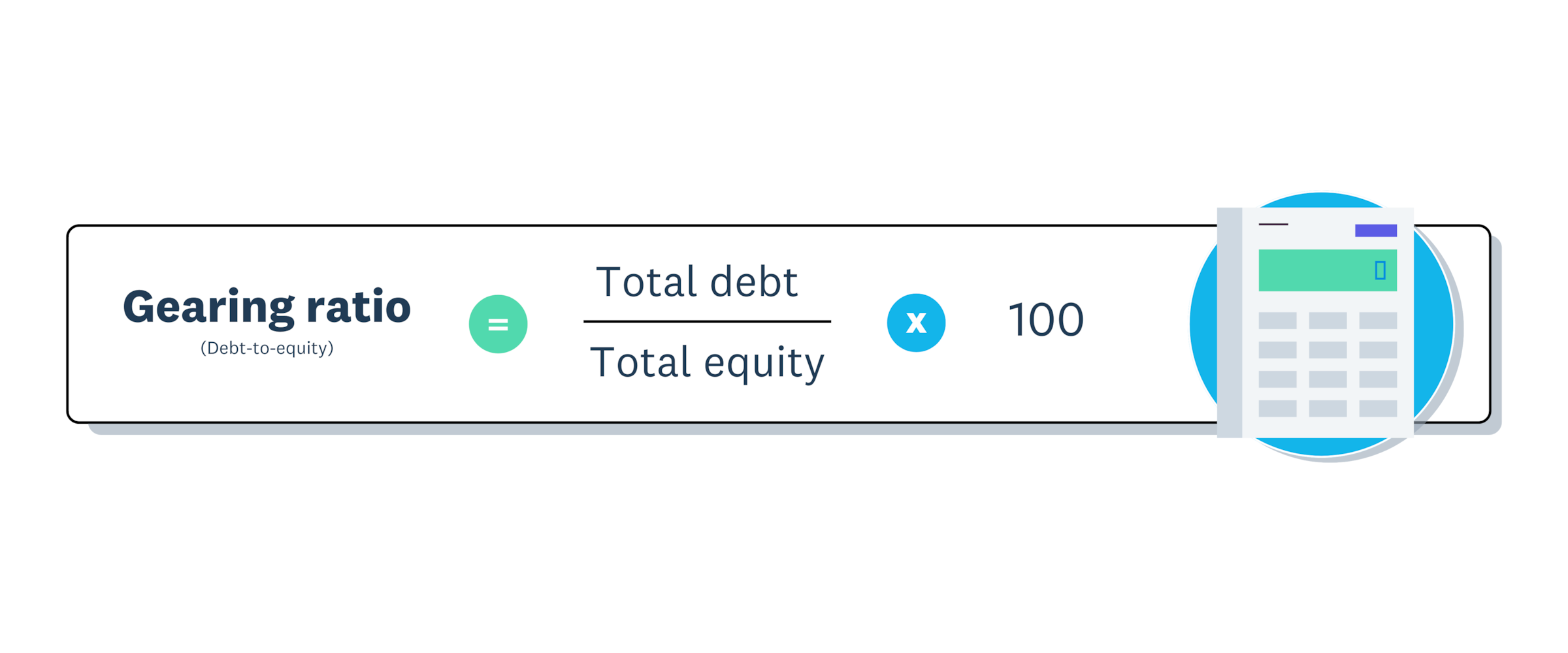

- Gearing ratio = (Total debt / Total equity) × 100
- Gearing ratio = ($50,000 / $100,000) × 100
- Gearing ratio = 50%
Using the debt-to-capital formula:
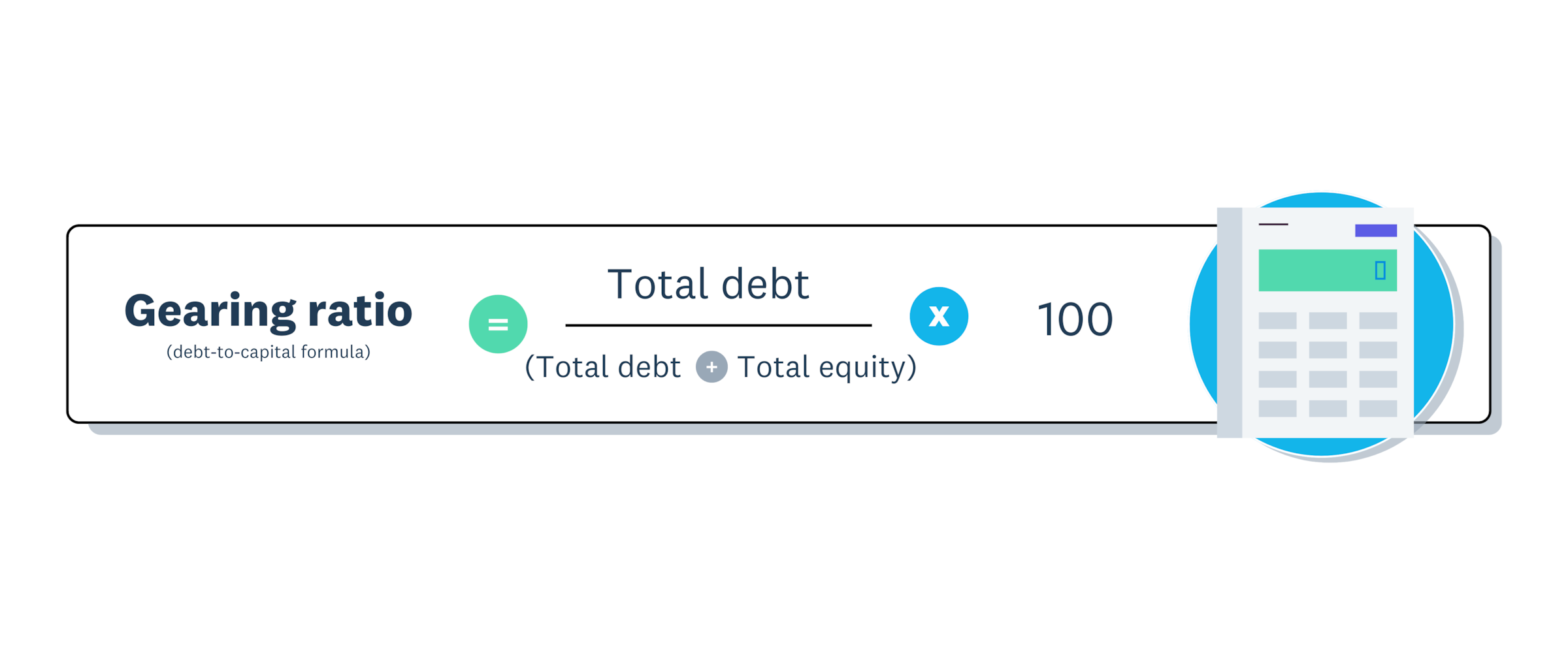

- Gearing ratio = (total debt / (total debt + total equity)) × 100
- Gearing Ratio = ($50,000 / ($50,000 + $100,000)) × 100
- Gearing Ratio = ($50,000 / $150,000) × 100
- Gearing Ratio = 33.3%
What is a good gearing ratio?
A good gearing ratio typically falls between 25%–50% for most small businesses. This range balances growth funding with financial stability, though the right ratio depends on your industry and goals.
General benchmarks to assess your position:
- Below 25%: lenders see this as low risk, but you may grow more slowly if you avoid using debt
- 25%–50%: this range often balances funding growth with staying financially stable
- Above 50%: lenders see this as high debt reliance and it's typically considered a higher risk, requiring steady cash flow and close monitoring to stay on top of repayments
The right ratio for your business depends on your goals, industry, and how comfortable you are with risk. An accountant can help you find the sweet spot for your situation.
Gearing ratio analysis
Gearing ratio analysis reveals your financial risk level and guides borrowing decisions. Use these benchmarks to assess your position:
- Low gearing (below 30%): indicates a strong equity position with minimal financial risk
- Moderate gearing (30–50%): indicates a balanced approach suitable for most small businesses
- High gearing (above 50%): indicates heavy debt reliance requiring careful cash flow management
Typical gearing ratios vary significantly by industry, growth stage, and risk tolerance. Many small and medium-sized businesses keep a 30%–50% debt mix, using borrowed funds to support growth while relying on equity for stability.
Striking the right balance is key to managing financial risk and sustainable growth.
Let's look at the key differences between high and low gearing approaches.
High versus low gearing: what's the difference?
High versus low gearing represents different funding strategies with distinct risk-reward profiles.
High gearing approach
- Strategy: fund growth primarily through borrowed money
- Best for: suits stable cash flow businesses or high-growth industries
- Benefits: enables faster expansion and growth opportunities
- Risks: increases vulnerability to cash flow disruptions and economic downturns
Low gearing approach
- Strategy: rely mainly on equity and retained earnings for funding
- Best for: suits risk-averse businesses or those with unpredictable revenue
- Benefits: provides financial stability and flexibility during downturns
- Risks: limits growth potential and may reduce return on equity
FAQs on gearing ratio
Here are answers to commonly asked questions about gearing ratios.
What does a high gearing ratio mean?
A high gearing ratio means your business relies heavily on debt compared to equity. This typically indicates higher financial risk, as you have more obligations to repay lenders regardless of business performance.
Can a gearing ratio be too low?
Yes, a very low gearing ratio might suggest you're missing growth opportunities. While it indicates financial stability, it could mean you're not using debt strategically to fund expansion and increase returns.
How often should you calculate your gearing ratio?
Calculate your gearing ratio quarterly or whenever making major financial decisions. Regular monitoring helps you track trends and maintain a healthy balance between debt and equity.
What's the difference between gearing ratio and leverage ratio?
Gearing ratio and leverage ratio are similar metrics that both measure debt levels. Gearing ratio typically focuses on long-term debt compared to equity, while leverage ratio may include all forms of debt and liabilities.
Does industry affect what's considered a good gearing ratio?
Yes, industry standards vary significantly. Capital-intensive industries like manufacturing often have higher acceptable gearing ratios, while service-based businesses typically maintain lower ratios due to fewer fixed assets.
Get one month free
Purchase any Xero plan, and we will give you the first month free.