Net profit margin
Learn what net profit margin is, how to calculate it, and what counts as a good margin.
Published Thursday 23 July 2026
Table of contents

How to calculate net profit margin
Key takeaways


- Net profit margin shows what portion of your revenue is left as profit after every expense is deducted.
- You work it out with a simple formula: net profit margin = (net profit ÷ revenue) × 100.
- A good margin varies by industry, so it's best judged against industry benchmarks and your own past results.
- Net profit margin measures overall profitability, while gross profit margin looks only at revenue minus the cost of goods sold.
What is net profit margin?
Net profit margin is your net profit divided by your revenue, times 100. It tells you what percentage of your revenue is actual profit once all your expenses are paid.
The figure is a quick read on how efficiently your business turns sales into profit. A higher margin means more of every dollar you earn stays with the business, which gives you room to reinvest, save, or pay yourself.
Handy resources
Advisor directory
You can search for experts in our advisor directory
Profit & Loss template
Download Xero’s profit and loss statement template to show how much money your business is making
Financial reporting
Keep track of your performance with accounting reports
Disclaimer
This glossary is for small business owners. The definitions are written with their requirements in mind. More detailed definitions can be found in accounting textbooks or from an accounting professional. Xero does not provide accounting, tax, business or legal advice.
Net profit margin formula
The formula for net profit margin is short, and you only need two numbers from your accounts: your net profit and your revenue for the same period. You can find both figures on your profit and loss statement.
net profit margin = (net profit ÷ revenue) × 100
How to calculate net profit margin
Calculating your net profit margin takes a few steps, starting with your revenue and working down to your net profit. Follow this order and you'll have your margin as a percentage.
- Add up your total revenue for the period.
- Subtract the cost of goods sold to find your gross profit.
- Subtract all other operating expenses and taxes to find your net profit.
- Divide your net profit by your revenue.
- Multiply the result by 100 to get your net profit margin as a percentage.
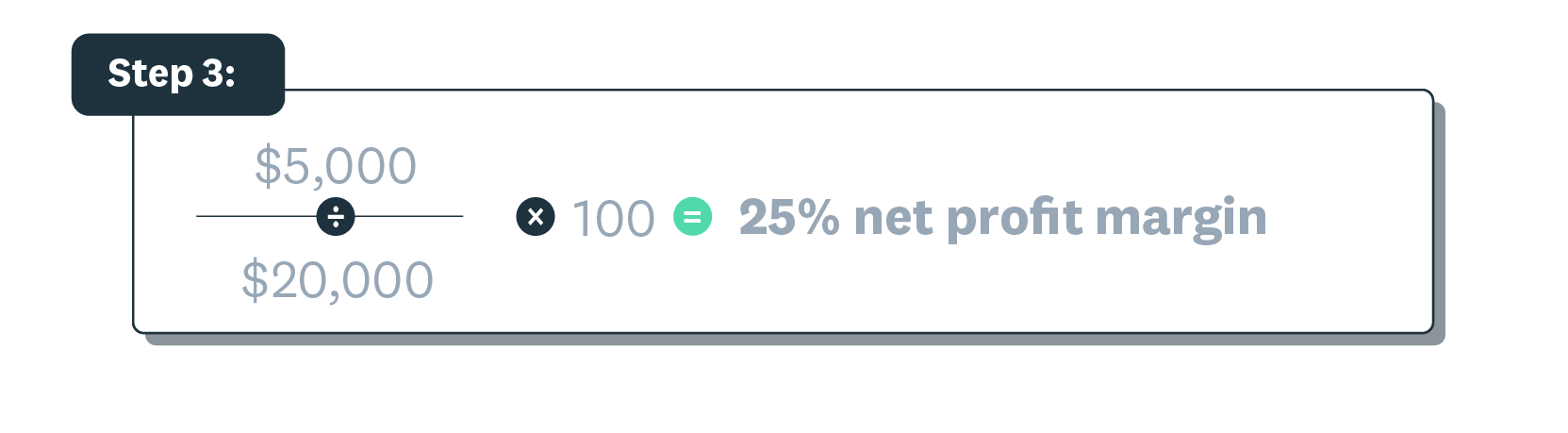
Say your business makes $20,000 cleaning offices. The cost of goods sold is $8,000, which leaves you with a gross profit of $12,000. You then spend another $7,000 on operating expenses and taxes, so your net profit is $5,000. Your net profit margin is 5,000 ÷ 20,000 × 100 = 25%.
What counts as revenue and expenses
Revenue is the total money your business brings in from sales before anything is taken out. To reach net profit, you deduct several types of cost from that revenue.
Net profit deducts the cost of goods sold, your operating expenses, any interest, and tax from your revenue. The cost of goods sold covers what you spend to deliver your product or service, while operating expenses cover the running costs of the business, such as rent, wages, and utilities.
What is a good net profit margin?
There's no single number that counts as a good net profit margin, because it depends heavily on your industry. A margin that's healthy for a supermarket might be low for a software business.
The most useful comparisons are against benchmarks for your own industry and against your own past performance. Tracking your margin over time shows whether your profitability is improving, holding steady, or slipping.
Gross profit margin vs net profit margin
Gross and net profit margins both measure profitability, but they account for different costs. Knowing the difference helps you see where your money is going.
Your gross profit is revenue minus the cost of goods sold, so gross profit margin reflects how efficiently you produce what you sell. Net profit is gross profit minus all other operating expenses and taxes, so net profit margin reflects the profitability of the whole business once every cost is accounted for.
Track your profit margins with Xero
Keeping an eye on your net profit margin is far easier when your numbers are in one place and updated as you go. Xero brings your revenue and expenses together so you can see your profitability without the manual admin.
You can get one month free when you start with Xero and track your profit margins from day one.
FAQs on net profit margin
Here are answers to some frequently asked questions about net profit margin to help you put the figure to work.
Is net profit margin the same as net profit?
No, they're related but different. Net profit is a dollar amount left after expenses, while net profit margin expresses that profit as a percentage of your revenue.
What is a good net profit margin?
It depends on your industry, so there's no universal target. Compare your margin to typical figures in your sector and to your own results over time.
What is the difference between gross and net profit margin?
Gross profit margin only subtracts the cost of goods sold from revenue. Net profit margin subtracts all operating expenses and taxes as well, so it reflects total profitability.
How can I improve my net profit margin?
You can lift your margin by raising prices, increasing sales, or reducing costs such as the cost of goods sold and operating expenses. Reviewing your expenses regularly helps you spot where savings are possible.