Accounting period
Learn what an accounting period is, the main types, and how they work for Canadian businesses.
Published Thursday 23 July 2026
Table of contents
Key takeaways
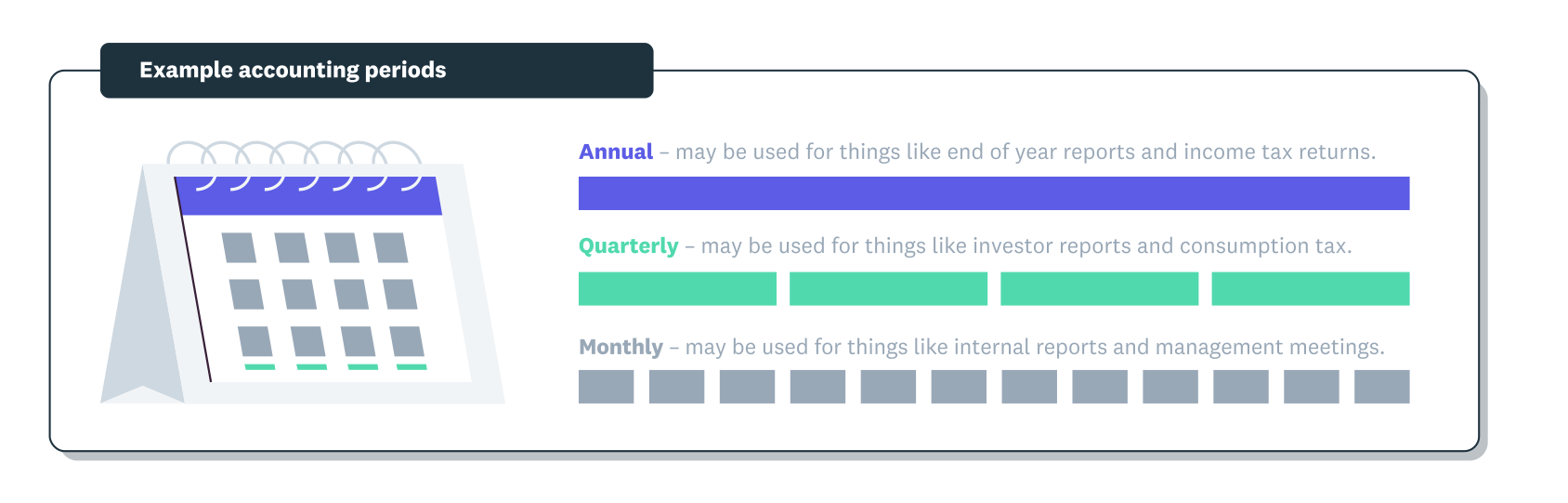
Annual accounting periods don’t have to start in January. Nor do monthly accounting periods have to start on the first of the month.
- An accounting period is the span of time a business uses to group transactions for its financial reporting.
- It can run for a month, a quarter, or a year, and it can follow the calendar or a fiscal year that starts on another date.
- Accrual accounting decides which period a transaction lands in, based on when income is earned or an expense is incurred rather than when cash moves.
- In Canada, the CRA sets different rules for corporations and sole proprietors, so your business structure shapes the periods you report on.
What is an accounting period?
An accounting period is any span of time a business uses for financial reporting. Transactions dated within that range are grouped into the statements and reports for that period.
You'll also hear it called a reporting period, and the 2 terms mean the same thing. An accounting period is often 12 months, but it can be shorter, such as a quarter or a single month.
Handy resources
Advisor directory
You can search for experts in our advisor directory
Xero Small Business Guides
Discover resources to help you do better business
Try Xero for free
Try Xero’s fast, simple, powerful online accounting software for your small business
Disclaimer
This glossary is for small business owners. The definitions are written with their requirements in mind. More detailed definitions can be found in accounting textbooks or from an accounting professional. Xero does not provide accounting, tax, business or legal advice.
Most businesses run several accounting periods at once. You might track a 12-month period for income tax, a quarterly period for sales tax, and a monthly period for internal reporting, all feeding the same set of financial statements.
Handy resources
Advisor directory
You can search for experts in our advisor directory
Xero Small Business Guides
Discover resources to help you do better business
Try Xero for free
Try Xero’s fast, simple, powerful online accounting software for your small business
Why accounting periods matter
Accounting periods give your numbers a consistent shape, so you can trust what they tell you. Here's why they're worth setting up well.
- Comparing performance across periods to spot trends
- Setting a regular reporting rhythm you can plan around
- Building budgets and forecasts on like-for-like figures
- Catching errors and cash flow issues early
Types of accounting periods
Accounting periods come in a few common shapes, and you can use more than one at a time. The main types are set out below.
- Calendar year: runs from 1 January to 31 December
- Fiscal year: any 12-month span, for example 1 April to 31 March
- Quarterly: 3-month periods, often used for tax and management reporting
- Monthly: single months, often used for internal management reporting
- 52-53 week or 4-4-5 periods: week-based calendars used by some retailers to line up periods with trading weeks
Accounting period vs fiscal year
These 2 terms get mixed up, but they aren't quite the same thing. An accounting period is any reporting time frame, whether that's a month, a quarter, or a year.
A fiscal year is a specific 12-month accounting period a business uses for its annual accounts and tax. So every fiscal year is an accounting period, but not every accounting period is a fiscal year.
How accrual accounting decides the period
The method you use to record transactions decides which period they belong to. Under accrual accounting, you record income and expenses in the period they're earned or incurred, not when cash actually changes hands.
The matching principle sits behind this. It pairs an expense with the revenue it helped earn, so both show up in the same period and your profit for that period reflects what really happened.
What happens at the end of an accounting period
At the end of an accounting period, you tidy up the books so the figures are complete and final. The close usually follows these steps.
- Record any outstanding transactions and adjustments for the period.
- Reconcile your accounts, such as matching bank transactions to your records.
- Prepare the financial statements for the period.
- Close and lock the period so the figures don't change afterwards.
Accounting periods in Canada
In Canada, your accounting periods for tax follow rules set by the Canada Revenue Agency (CRA), and they depend on your business structure. Here's a general guide to how it works.
- A corporation's tax year is its fiscal period, and it can't be longer than 53 weeks (371 days).
- A corporation has to file its T2 income tax return within 6 months of the end of its fiscal period.
- Sole proprietors and most partnerships generally report business income on a calendar-year basis, ending 31 December, though an eligible individual can elect a non-calendar fiscal period.
- For your GST/HST returns, the CRA assigns a reporting period (annual, quarterly, or monthly) based on your annual taxable supplies, and you can choose to file more often.
Rules can change and your situation may be specific, so it's worth checking the latest guidance with the CRA or an advisor before you settle on a period.
How to choose an accounting period
The right accounting period fits how your business is set up and how it trades. Weigh up these factors before you decide.
- Your business structure, whether you're incorporated or a sole proprietor
- Your tax obligations and the reporting periods the CRA expects
- Your seasonality and business cycle, so periods line up with how you trade
- Keeping the period consistent year to year, so your figures stay comparable
Keep every accounting period on track with Xero
Xero accounting software keeps your transactions organized by period as you go, so nothing slips through the cracks. You can reconcile day to day, then pull together clear reports and financial statements when a period ends.
That means less scrambling at close and more confidence in the numbers you report.
See how Xero can keep every accounting period on track and get one month free.
FAQs on accounting periods
Here are answers to some frequently asked questions about accounting periods.
Is an accounting period always 12 months?
No. A period can be a month, a quarter, or a year, and businesses often run more than one length at the same time for different purposes.
What's the difference between an accounting period and a fiscal year?
A fiscal year is the specific 12-month period used for annual accounts and tax. An accounting period is any reporting time frame, so a fiscal year is one type of accounting period.
Can you change your accounting period?
Sometimes, though changes are usually restricted and may need approval, especially for tax. Check the current rules with the CRA or an advisor before making a change.
What happens at the end of an accounting period?
You record final adjustments, reconcile your accounts, and prepare your statements. Then you lock the period so the figures stay fixed.