Balance sheet
Learn what a balance sheet is, what it includes, and how to read one to check financial health.
Published Thursday 23 July 2026
Table of contents
Key takeaways
- A balance sheet shows what your business owns, what it owes, and the owner's equity left over at a single point in time.
- It's built on one rule: assets always equal liabilities plus owner's equity.
- Reading it tells you whether your business is solvent and how its value is changing over time.
- Lenders, investors, and you rely on it to judge financial health and make confident decisions.
What is a balance sheet?
Before you dig into the parts, here's the plain definition you can start from.
A balance sheet is a financial report that summarizes what your business owns, what it owes, and the owner's equity at a single point in time. It's also known as a statement of financial position.
What's included on a balance sheet?
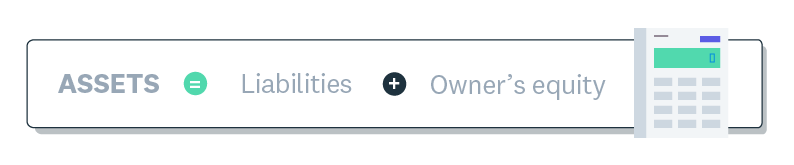
The accounting equation
A balance sheet has three parts, and each one answers a different question about your finances. Assets are what you own, liabilities are what you owe, and owner's equity is what's left for you once debts are settled.
- Assets: things your business owns, from cash and inventory to equipment and property
- Liabilities: amounts your business owes, such as supplier bills, loans, and taxes
- Owner's equity: the capital you've put in plus retained earnings, which is profit kept in the business after any dividends
Assets and liabilities are each split by timing, so you can see what's short term and what's long term. Current items land inside 12 months, and non-current items stretch beyond a year.
- Current assets: cash and anything you expect to convert to cash within 12 months, like accounts receivable and inventory
- Non-current assets: longer-term holdings such as property, vehicles, and equipment
- Current liabilities: debts due within 12 months, such as accounts payable and short-term loans
- Non-current liabilities: obligations due after 12 months, such as a mortgage or a long-term loan
The accounting equation
The three parts of a balance sheet aren't independent; they're tied together by a single formula. That formula is why the report is called a balance sheet in the first place.
The accounting equation is assets = liabilities + owner's equity. Everything your business owns is funded either by money you owe or by money you and the business have built up, so the two sides always match. If they don't balance, you likely have missing or incorrect data to track down.
How to read a balance sheet
A balance sheet is a snapshot, so reading it well means looking at what it measures and what that tells you. It weighs the value of what you own against what you owe, then shows the owner's equity that remains.
Two things stand out once you know where to look. First, it shows whether your business is solvent, meaning you can cover your debts. Second, by comparing balance sheets from different dates, you can see whether your business gained or lost value over time.
Balance sheet example
A short worked example makes the equation easier to picture. Imagine a small café checking its finances on 31 December.
The café adds up its assets first, then its liabilities.
- Cash in the bank: 15,000
- Accounts receivable: 3,000
- Equipment and fittings: 42,000
- Accounts payable: 8,000
- Bank loan: 22,000
Total assets come to 60,000 and total liabilities come to 30,000. Slot those into the accounting equation and owner's equity is 30,000, because 60,000 assets minus 30,000 liabilities leaves 30,000. The sheet balances: 60,000 in assets equals 30,000 in liabilities plus 30,000 in owner's equity.
Key balance sheet ratios
The numbers on a balance sheet become more useful when you turn them into ratios. Two ratios give you a quick read on short-term health and how much of the business is funded by debt.
- Current ratio: current assets divided by current liabilities, which shows whether you can cover short-term debts; a result above 1 means you can
- Debt-to-equity ratio: total liabilities divided by owner's equity, which shows how much you rely on borrowing versus your own capital
Balance sheet vs income statement vs cash flow statement
The balance sheet is one of three core financial statements, and each covers a different angle. Knowing what sets them apart helps you pick the right one for the question you're asking.
- Balance sheet: a snapshot of assets, liabilities, and owner's equity at a single point in time
- Income statement: a summary of revenue, expenses, and profit over a period, so you can see if you're making money
- Cash flow statement: a record of cash moving in and out over a period, so you can see if you have enough on hand
Why a balance sheet matters for small businesses
A balance sheet does more than tidy up your records; it shapes real decisions. It gives you and the people you work with a clear view of where the business stands.
Lenders and investors read it to judge risk before they commit money, and a strong sheet can help you secure financing. For you, it flags problems early, like debts creeping up faster than assets, so you can act before cash gets tight. It also grounds bigger decisions, from taking on a loan to buying equipment, in real numbers.
Simplify your balance sheet with Xero
Keeping a balance sheet accurate takes time when you're doing it by hand. Xero brings your finances together in one place and builds your balance sheet from your everyday transactions, so it stays up to date with less manual admin.
You can see your assets, liabilities, and owner's equity whenever you need them, and you can get one month free.
FAQs on balance sheets
Here are answers to some frequently asked questions about balance sheets to clear up the common sticking points.
What is a balance sheet also known as?
A balance sheet is also known as a statement of financial position. Both names describe the same report of assets, liabilities, and owner's equity at a point in time.
What are the 3 main parts of a balance sheet?
The three main parts are assets, liabilities, and owner's equity. Together they show what you own, what you owe, and what's left for the owner.
What's the difference between a balance sheet and an income statement?
A balance sheet is a snapshot of your financial position at one point in time, while an income statement covers revenue and expenses over a period. One shows what you're worth; the other shows whether you made a profit.
Does a balance sheet show net income?
No, a balance sheet doesn't show net income directly; that figure lives on the income statement. Net income does feed into the balance sheet through retained earnings within owner's equity.
Do accounts receivable go on a balance sheet?
Yes, accounts receivable go on the balance sheet as a current asset. They represent money customers owe you that you expect to collect within 12 months.
Related terms
Learn more about balance sheets
Handy resources
Advisor directory
You can search for experts in our advisor directory
Xero Small Business Guides
Discover resources to help you do better business
Financial reporting
Keep track of your performance with accounting reports
Disclaimer
This glossary is for small business owners. The definitions are written with their requirements in mind. More detailed definitions can be found in accounting textbooks or from an accounting professional. Xero does not provide accounting, tax, business or legal advice.