Cash vs accrual accounting
Learn how cash and accrual accounting differ, what the CRA requires, and how to choose.
Published Thursday 23 July 2026
Table of contents
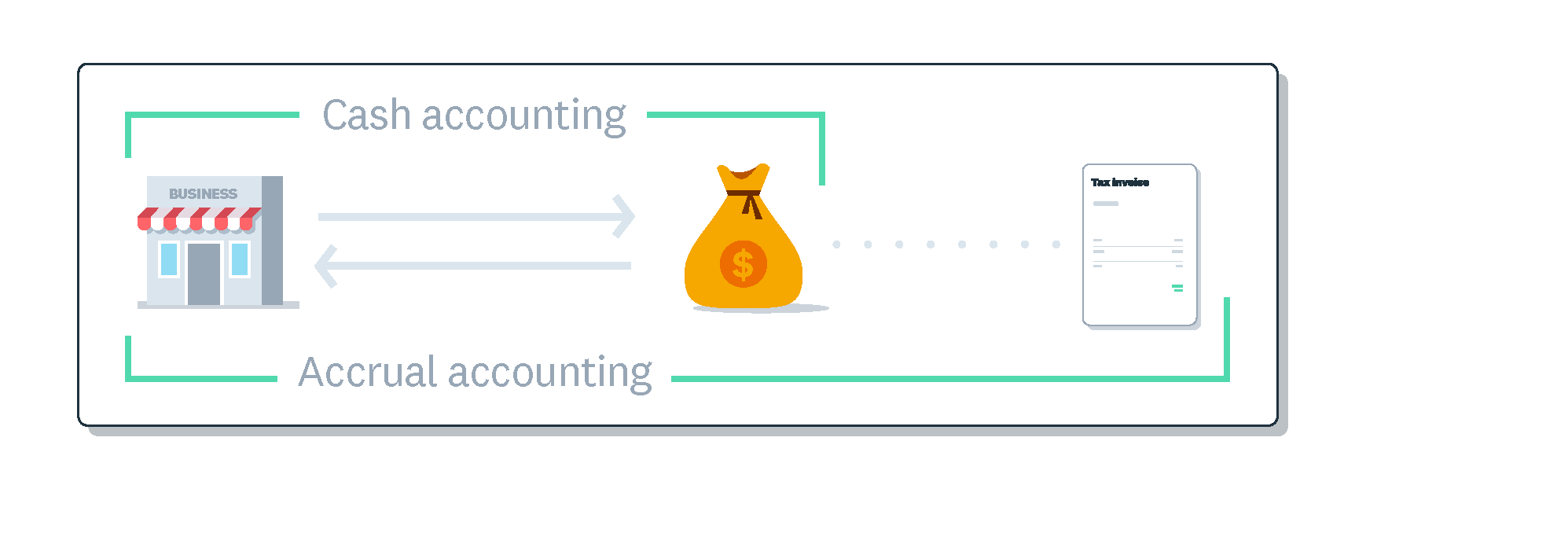
Cash accounting focuses only on cash changing hands, not outstanding bills or invoices.
Key takeaways
- Accrual accounting records income and expenses when a sale or purchase is agreed. Cash accounting records them only when money actually moves.
- Cash accounting is simple and shows your real-time cash position, so it suits many sole proprietors and freelancers.
- Accrual accounting tracks accounts receivable and payable and gives a fuller long-term view, which lenders and investors often expect.
- In Canada, most self-employment income must use the accrual method, and the accrual method is required for GST/HST.
What is the difference between cash and accrual accounting?
The difference between cash and accrual accounting comes down to timing. Accrual accounting records income and expenses when a sale or purchase is agreed, while cash accounting waits until money changes hands.
Getting to grips with each method is part of good small business accounting. The method you use shapes how your revenue, expenses, and profit appear at any point in time.
Cash accounting gives you a clear picture of the money you have right now. Accrual accounting gives you a fuller picture of what you have earned and what you owe, even before the cash moves.
What is cash accounting?
Cash accounting records income when you receive payment and records expenses when you pay them. It follows the money, so a sale only counts once the cash lands in your account.
This method is straightforward and keeps your books close to your bank balance. It suits sole proprietors, freelancers, and small service businesses that deal mostly in immediate payments and want a simple view of their cash. Because it stays close to your day-to-day money, cash accounting can make everyday small business bookkeeping feel more manageable.
What is accrual accounting?
Accrual accounting records income when you earn it and expenses when you incur them, regardless of when the cash moves. A sale counts the moment you invoice, not the day you get paid.
This method relies on double-entry bookkeeping and the matching principle, so revenue lines up with the costs that produced it. It suits businesses that invoice customers, hold inventory, or need clear reporting for lenders and investors.
Cash vs accrual accounting: key differences
Both methods track the same income and expenses, but they record them at different points and show different things. The key differences between cash and accrual accounting sit in a few areas.
- Timing: cash accounting records transactions when money moves, while accrual accounting records them when a sale or purchase is agreed
- Accounts receivable and payable: accrual accounting tracks money owed to you and money you owe through accounts receivable and payable, while cash accounting does not
- Matching principle: accrual accounting matches revenue to the expenses that earned it, giving a truer picture of profit for each period
- Financial view: cash accounting shows your short-term cash position, while accrual accounting shows a fuller long-term view of performance
Your choice also affects how you handle recording accounting transactions, since each method sets a different point for when a transaction hits your books.
Example of cash vs accrual accounting
A simple invoice shows how the two methods differ in practice. Picture a business that issues a $1,000 invoice in one month and gets paid the next.
Under cash accounting, you record the $1,000 as income in the month the payment arrives, because that is when the money changes hands. Under accrual accounting, you record the $1,000 in the month you issue the invoice, because that is when you earn the income.
Same sale, same $1,000, but two different months on your books depending on the method you use.
Which accounting method does the CRA require?
The method you can use in Canada depends on the type of income you earn. The Canada Revenue Agency (CRA) sets clear rules on this.
Farmers, fishers, and self-employed commission agents may use either the cash method or the accrual method. All other self-employment income must use the accrual method.
You also need to use the accrual method for GST/HST. So even if your business qualifies for cash accounting on its income, your GST/HST reporting still follows the accrual method.
How to choose the right method for your business
The right method depends on your business size, structure, and the kinds of transactions you handle. Start with what the CRA allows, then weigh the practical fit.
Cash accounting tends to suit smaller service businesses, sole proprietors, and freelancers who take payment at the point of sale and want a simple, real-time view of their cash. If most of your income and expenses settle straight away, cash accounting keeps things clear.
Accrual accounting suits businesses that invoice customers, carry inventory, or need to report to a lender or investor. If you often wait to get paid or pay suppliers on terms, accrual accounting gives a more accurate picture of where you stand.
How to switch between cash and accrual accounting
You can move between methods, but the steps depend on the direction of the change. The CRA treats each switch differently.
- To change from the cash method to the accrual method, get permission in writing from your CRA tax services office before your filing due date
- To change from the accrual method to the cash method, apply the change on your next return and include a statement of adjustments
Keep clear records of the change so your figures reconcile cleanly from one method to the next.
Simplify cash and accrual accounting with Xero
Whichever method fits your business, the right software keeps your income, expenses, and reports organized in one place. Xero handles the day-to-day tracking so you can see your numbers clearly and make confident decisions, and you can try it all when you get one month free.
FAQs on cash vs accrual accounting
Here are answers to some frequently asked questions about cash vs accrual accounting.
Which method does the CRA require in Canada?
Farmers, fishers, and self-employed commission agents can use the cash method, but all other self-employment income must use the accrual method. GST/HST reporting always uses the accrual method.
Can a small business switch from cash to accrual accounting?
Yes, but you need written permission from your CRA tax services office before your filing due date. Plan the switch early so you have time to get approval.
Does cash accounting track accounts receivable and payable?
No, cash accounting only records money once it moves, so it does not track amounts owed to or by you. Accrual accounting is the method that captures accounts receivable and payable.
Which method is better for a small business?
Cash accounting is often the simpler choice for small service businesses that get paid on the spot. Accrual accounting is the better fit once you invoice regularly, hold inventory, or report to lenders.
Related Terms
Learn more about cash vs accrual accounting
Handy resources
Advisor directory
You can search for experts in our advisor directory
Xero Small Business Guides
Discover resources to help you do better business
Financial reporting
Keep track of your performance with accounting reports
Disclaimer
This glossary is for small business owners. The definitions are written with their requirements in mind. More detailed definitions can be found in accounting textbooks or from an accounting professional. Xero does not provide accounting, tax, business or legal advice.