What is a balance sheet?
A balance sheet summarises what your business owns, owes, and is worth at a point in time.
Published Thursday 23 July 2026
Table of contents
Key takeaways
- A balance sheet is a financial snapshot showing what your business owns (assets), what it owes (liabilities), and the owner's stake (equity) at a specific point in time.
- The balance sheet formula is Assets = Liabilities + Owner's Equity, and both sides must always equal each other for the report to be accurate.
- Reviewing your balance sheet regularly helps you track business growth, assess whether you can cover your debts, and make confident decisions about spending, borrowing, or investing.
- Used alongside a profit and loss statement and cash flow statement, a balance sheet gives you a complete picture of your business's financial health.
What is a balance sheet?
A balance sheet is a financial report that summarises the financial position of your business at a specific point in time. It lists what your business owns, what it owes, and the difference between the 2, which represents the owner's equity.
You might also hear it called a statement of financial position. Balance sheets are typically prepared at the end of a reporting period, such as monthly, quarterly, or at financial year-end. However, with cloud accounting software, you can generate one whenever you need it.
Business owners, accountants, lenders, and investors all use balance sheets to understand a company's financial standing. If you're applying for a loan or seeking investment, a balance sheet is one of the first documents a lender or investor will ask to see.
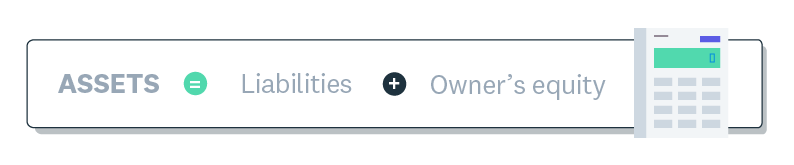
The accounting equation
Along with the profit and loss statement and the cash flow statement, the balance sheet forms part of the 3 core financial statements that paint a full picture of your business's financial health.
Why is a balance sheet important?
Your balance sheet is one of the most useful tools for understanding where your business stands financially. It gives you a clear view of your business's net worth at any given moment.
Lenders and investors rely on balance sheets to assess whether your business is a sound investment. A healthy balance sheet, with strong assets and manageable liabilities, can make it easier to secure funding when you need it.
Balance sheets also support better decision-making. By comparing balance sheets from different periods, you can spot trends in your assets, debts, and equity. This helps you decide when to invest in growth, reduce debt, or adjust spending.
In Australia, businesses that are required to lodge financial reports with the Australian Securities and Investments Commission (ASIC) need to include a balance sheet. Even if your business isn't required to report, keeping an up-to-date balance sheet helps you stay on top of your obligations and track how your business value changes over time.
The balance sheet formula
The balance sheet is built on a simple equation known as the accounting equation.
Assets = Liabilities + Owner's Equity
This formula means that everything your business owns (assets) is funded either by what it owes to others (liabilities) or by the owner's investment and retained profits (equity). The 2 sides must always be equal, which is why it's called a balance sheet.
Here's a simple example. If your business has $150,000 in total assets, $80,000 in liabilities, and $70,000 in owner's equity, the equation balances: $150,000 = $80,000 + $70,000. If the 2 sides don't match, there's likely missing or incorrect data that needs reviewing.
Components of a balance sheet
A balance sheet is divided into 3 main sections: assets, liabilities, and owner's equity. Each section gives you different information about your business's financial position.
Assets
Assets are everything your business owns or is owed. They're split into 2 categories based on how quickly they can be converted to cash.
Current assets are items you expect to use or convert to cash within 12 months. These include:
- Cash and bank balances
- Accounts receivable (money owed to you by customers)
- Inventory
- Prepaid expenses, such as insurance or rent paid in advance
Accounts receivable is often one of the largest current assets for small businesses. According to Xero Small Business Insights, Australian small businesses waited an average of 23.9 days to be paid in the December quarter of 2025, the fastest quarterly result since tracking began in 2017. Faster payment times mean your receivables convert to cash sooner, strengthening your balance sheet.
Non-current assets are longer-term items your business holds for more than 12 months. These include:
- Property and land
- Equipment, vehicles, and machinery
- Intangible assets, such as patents or trademarks
Liabilities
Liabilities are what your business owes to others. Like assets, they're categorised by when they're due.
Current liabilities are obligations you need to settle within 12 months. These include:
- Accounts payable (money you owe to suppliers)
- Wages and superannuation owed to employees
- Short-term loans or credit card balances
- Tax obligations, such as GST or PAYG
Keeping on top of your payables matters for your business relationships and your balance sheet. Xero Small Business Insights data from 520,000 Australian small businesses shows that late payments averaged just 6.6 days past due in the December quarter of 2025, the second lowest on record. Paying on time keeps your current liabilities predictable and supports healthier cash flow.
Non-current liabilities are debts due beyond 12 months. These include:
- Long-term business loans or mortgages
- Deferred tax liabilities
- Lease obligations extending beyond the current year
Owner's equity
Owner's equity represents the owner's stake in the business after all liabilities have been subtracted from assets. It shows the net value that belongs to you.
Owner's equity typically includes:
- Capital contributions (money you've invested in the business)
- Retained earnings (profits kept in the business rather than withdrawn)
- Drawings (money or assets you've taken out of the business, which reduce equity)
If your business has been profitable and you've reinvested those profits, your equity grows over time. This is a strong signal that your business is building long-term value.
How to read a balance sheet
Reading a balance sheet doesn't require an accounting degree. A few key ratios and comparisons can tell you a lot about your business's financial health.
Check your liquidity. Compare your current assets to your current liabilities. If your current assets are comfortably higher, you're in a good position to cover short-term debts. This is sometimes called the current ratio.
Look at your debt-to-equity ratio. Divide your total liabilities by your owner's equity. A lower ratio generally means your business relies less on borrowed money, which lenders and investors view favourably.
Compare periods. Pull up balance sheets from different dates and look for trends. Are your assets growing? Are liabilities increasing faster than equity? Comparing over time helps you spot patterns before they become problems.
Watch for healthy indicators. A strong balance sheet typically shows growing equity, manageable debt levels, and enough liquid assets to cover upcoming obligations. If you're unsure how to interpret your numbers, a Xero advisor can help you make sense of the detail.
How to prepare a balance sheet
Preparing a balance sheet is straightforward, especially if you keep your financial records up to date. Here are the steps to follow.
- Choose your reporting date. Decide the specific date your balance sheet will represent. This could be the end of a month, quarter, or financial year.
- List all your assets. Record your current assets first (cash, receivables, inventory), then your non-current assets (property, equipment). Add them up for a total assets figure.
- List all your liabilities. Record your current liabilities (payables, short-term loans), then non-current liabilities (long-term debt). Add them up for a total liabilities figure.
- Calculate owner's equity. Add up your capital contributions and retained earnings, then subtract any drawings. This gives you your total equity.
- Check that it balances. Your total assets should equal total liabilities plus owner's equity. If the numbers don't match, review your entries for missing or duplicated transactions.
If you're using accounting software like Xero, you can generate a balance sheet automatically from your existing data, saving you time and reducing the risk of errors. You can also use a free balance sheet template to get started.
Balance sheet example
Here's a simplified balance sheet for a fictional Australian small business, Coastal Café, as at 30 June 2025.
Current assets
- Cash in bank: $18,000
- Accounts receivable: $4,500
- Inventory (food and supplies): $3,000
Non-current assets
- Kitchen equipment: $25,000
- Furniture and fit-out: $12,000
Total assets: $62,500
Current liabilities
- Accounts payable (suppliers): $5,200
- GST owing: $1,800
- Wages payable: $2,500
Non-current liabilities
- Business loan: $15,000
Total liabilities: $24,500
Owner's equity
- Owner's capital: $20,000
- Retained earnings: $18,000
Total owner's equity: $38,000
Total liabilities + owner's equity: $62,500
Both sides equal $62,500, so the balance sheet balances. This tells you the café owns $62,500 in assets, owes $24,500 to others, and the owner's stake is worth $38,000.
Balance sheet vs profit and loss statement
Both the balance sheet and the profit and loss statement (also called an income statement) are essential financial reports, but they measure different things.
A balance sheet shows your financial position at a single point in time. It captures what you own, what you owe, and your equity on a specific date. Think of it as a photograph of your finances.
A profit and loss statement shows your financial performance over a period, such as a month, quarter, or year. It tracks revenue, expenses, and whether you made a profit or loss during that time. Think of it as a video of your finances.
The 2 reports connect through retained earnings. If your profit and loss statement shows a profit, and you keep that profit in the business, it increases retained earnings on your balance sheet, which in turn grows your owner's equity.
For a complete view of your business's financial health, you need both reports working together alongside a cash flow statement.
Limitations of a balance sheet
While a balance sheet is a powerful tool, it has some limitations to keep in mind.
It's a snapshot, not a trend. A balance sheet shows your position on a single date. It won't tell you how you got there or where you're heading. Comparing multiple balance sheets over time gives you a clearer picture of trends.
It uses historical cost. Assets are typically recorded at their original purchase price, not their current market value. This means a piece of equipment might be worth more or less than the figure on your balance sheet.
Some valuable assets don't appear. Intangible items like your brand reputation, customer loyalty, or a skilled team aren't captured on a standard small business balance sheet, even though they contribute real value.
It needs context. A balance sheet on its own only tells part of the story. Pair it with your profit and loss statement and cash flow statement for a full understanding of your business's financial health.
Simplify your financial tracking with Xero
Keeping your balance sheet up to date doesn't have to be time-consuming. Xero's cloud accounting software automatically pulls in your bank transactions, tracks your receivables and payables, and lets you generate financial reports, including balance sheets, in just a few clicks.
With real-time data and customisable reporting, you can check your financial position whenever you need to and make confident business decisions backed by accurate numbers. Get one month free.
FAQs on balance sheets
Here are some frequently asked questions about balance sheets.
What is a balance sheet in simple terms?
A balance sheet is a financial report that lists what your business owns, what it owes, and the owner's stake at a specific date. It gives you a snapshot of your business's net worth.
What are the 3 main components of a balance sheet?
The 3 main components are assets (what you own), liabilities (what you owe), and owner's equity (the difference between the 2). Together, they follow the formula Assets = Liabilities + Owner's Equity.
How often should a small business prepare a balance sheet?
Most small businesses prepare a balance sheet at least quarterly and at financial year-end. With accounting software, you can generate one at any time to check your current position.
What is the difference between a balance sheet and a profit and loss statement?
A balance sheet shows your financial position at a single point in time, while a profit and loss statement shows your income and expenses over a period. The profit or loss flows into retained earnings on the balance sheet.
Who needs a balance sheet?
Any business that wants to understand its financial position benefits from a balance sheet. Lenders, investors, and regulatory bodies like ASIC may also require one.
Related terms
Learn more about balance sheets
Handy resources
Advisor directory
You can search for experts in our advisor directory
Xero Small Business Guides
Discover resources to help you do better business
Financial reporting
Keep track of your performance with accounting reports
Disclaimer
This glossary is for small business owners. The definitions are written with their requirements in mind. More detailed definitions can be found in accounting textbooks or from an accounting professional. Xero does not provide accounting, tax, business or legal advice.