What are assets?
Learn what business assets are, the main types, and why they matter.
Published Thursday 23 July 2026
Table of contents
Key takeaways
- Assets are resources your business owns or controls that provide future economic value, and they form one side of the accounting equation: Assets = Liabilities + Equity.
- Business assets fall into several categories, including current and non-current, tangible and intangible, and financial assets, each with different roles on your balance sheet.
- Understanding the difference between assets and liabilities helps you assess your business's financial health and make informed decisions about growth and spending.
- Tracking your assets accurately gives you a clearer picture of what your business is worth and helps you stay on top of tax obligations like depreciation and amortisation.
What are assets?
An asset is anything your business owns or controls that holds economic value. Assets can be physical items like equipment and vehicles, or non-physical items like patents and customer relationships.
The accounting equation
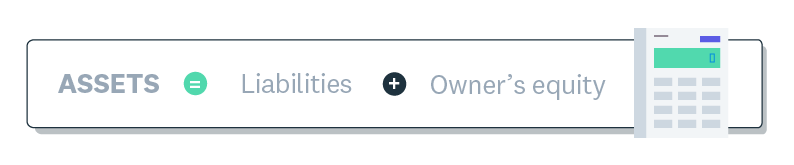
In accounting, assets sit on one side of a key formula called the accounting equation:
Assets = Liabilities + Equity
This equation is the foundation of every balance sheet. It means that everything your business owns (assets) is funded either by what you owe to others (liabilities) or by what you've invested and earned (equity).
Think of it this way: if a plumber buys a $10,000 van using $6,000 from a bank loan and $4,000 from their own savings, the van is the asset ($10,000), the loan is the liability ($6,000), and the savings are equity ($4,000). The equation balances.
Assets matter because they represent the resources your business uses to operate, generate revenue, and grow. Knowing what assets you hold, and what they're worth, helps you make confident financial decisions, apply for finance, and meet your tax and reporting obligations.
Types of assets
Business assets are grouped in several ways depending on how they're used, how long you hold them, and whether you can physically touch them. Understanding these categories helps you classify your assets correctly on your balance sheet and manage them over time.
The most common classification frameworks are:
- Current vs non-current: based on how quickly the asset can be converted to cash
- Tangible vs intangible: based on whether the asset has a physical form
- Financial assets: investments like stocks, bonds, and securities
Each category has its own accounting rules for valuation, depreciation, or amortisation. The sections below break down each type so you can identify where your business assets fit.
Current assets
Current assets are resources your business expects to use, sell, or convert to cash within 12 months. They're the most liquid assets on your balance sheet and play a direct role in your day-to-day cash flow.
Common current assets include:
- Cash and cash equivalents: money in your bank accounts and any short-term deposits you can access immediately
- Accounts receivable: money your customers owe you for goods or services already delivered
- Inventory: stock or materials your business holds for sale or production
- Prepaid expenses: payments you've made in advance for things like insurance, rent, or subscriptions
Keeping a close eye on your current assets helps you understand whether your business has enough short-term resources to cover its upcoming bills and obligations.
Non-current assets
Non-current assets are resources your business holds for longer than 12 months. These are the long-term investments that support your operations over time rather than being sold or consumed quickly.
Typical non-current assets include:
- Property: land or buildings your business owns
- Equipment and machinery: tools, computers, manufacturing equipment
- Vehicles: cars, vans, or trucks used for business purposes
- Furniture and fittings: office desks, shelving, and fixtures
Most non-current assets lose value over time through wear and use. In accounting, this is called depreciation. Depreciation spreads the cost of an asset across its useful life, so rather than recording the full expense upfront, you claim a portion each year.
Tracking depreciation accurately is essential for your tax returns and gives you a realistic picture of what your long-term assets are currently worth.
Tangible vs intangible assets
Another way to classify assets is by whether they have a physical form. This distinction affects how you value and account for them over time.
Tangible assets
Tangible assets are items you can physically see and touch. They include property, vehicles, equipment, inventory, and cash. Most tangible assets are depreciated over their useful life, as outlined in the non-current assets section above.
Intangible assets
Intangible assets don't have a physical presence but still hold significant value for your business. They include:
- Intellectual property (IP): original designs, software, or creative works your business has developed
- Goodwill: the premium paid when acquiring another business, reflecting its reputation and customer base
- Patents: exclusive rights to an invention or process
- Trademarks: registered brand names, logos, or slogans
Instead of depreciation, intangible assets with a finite useful life are reduced in value through amortisation. Like depreciation, amortisation spreads the cost over the period the asset provides value. Intangible assets with an indefinite life, like certain trademarks, aren't amortised but are reviewed annually for impairment.
Financial assets
Financial assets are investments your business holds that derive their value from a contractual right or ownership claim. While they're more common in larger companies, small businesses may hold them too.
Examples of financial assets include:
- Shares or stocks: ownership stakes in other companies
- Bonds: loans made to governments or corporations that pay interest over time
- Term deposits: fixed-term savings accounts held with a bank
- Managed funds: pooled investment vehicles
If your business holds financial assets, they're recorded on your balance sheet at their current market value (or amortised cost, depending on the type). Any gains or losses from changes in value may affect your tax position, so it's worth keeping accurate records.
Assets vs liabilities
Assets and liabilities are 2 sides of the same financial picture. Understanding how they relate helps you gauge your business's overall financial health.
Assets are what your business owns. Liabilities are what your business owes. The difference between the 2 is your equity, also called net assets. This relationship is captured in the accounting equation:
Assets = Liabilities + Equity
On a balance sheet, assets are listed on one side and liabilities plus equity on the other. When total assets exceed total liabilities, your business has positive equity, meaning you own more than you owe. If liabilities are greater, your business may be in a negative equity position, which can signal financial difficulty.
Reviewing your balance sheet regularly helps you spot trends, plan for growth, and make informed borrowing or investment decisions. It's also something lenders and investors look at when assessing your business.
Examples of business assets
Business assets vary widely depending on your industry and size. Here's a categorised overview of the most common types you're likely to encounter.
Cash and receivables
- Cash in business bank accounts
- Petty cash
- Outstanding customer invoices (accounts receivable)
- Short-term deposits
Physical assets
- Office or retail premises
- Vehicles (delivery vans, company cars)
- Tools, machinery, and equipment
- Office furniture and computers
- Inventory and raw materials
Intangible and intellectual property
- Business brand and trademarks
- Patents and proprietary technology
- Customer lists and contracts
- Goodwill from acquisitions
- Software licences
Financial investments
- Shares in other businesses
- Government or corporate bonds
- Term deposits and managed funds
For a sole trader or small business, your asset list might be as straightforward as a van, a laptop, some tools, and the cash in your bank account. For a growing business, it could extend to property, intellectual property, and financial investments. Whatever the mix, keeping accurate records of your assets helps you understand your financial position and plan ahead.
Track and manage your business assets with Xero
Staying on top of your business assets doesn't have to mean spreadsheets and manual tracking. With Xero's cloud-based accounting software, you can record and manage your assets in one place, help track depreciation, and pull up-to-date reports whenever you need them.
Xero connects to your bank accounts for up-to-date transaction data, making it simpler to reconcile asset purchases and monitor your cash position. Whether you're a sole trader with a handful of tools or a growing business with property and equipment, Xero gives you clearer visibility over what you own and what it's worth. Get one month free.
FAQs on assets
Here are some frequently asked questions about assets and how they work in a business context.
What are examples of assets in accounting?
Assets in accounting include cash, accounts receivable, inventory, property, equipment, vehicles, patents, and trademarks. They're recorded on your balance sheet and represent resources your business controls that have economic value.
What is the difference between current and non-current assets?
Current assets can be converted to cash within 12 months, like inventory and receivables. Non-current assets are held for longer than 12 months, like property and equipment, and typically lose value over time through depreciation.
How do assets appear on a balance sheet?
Assets are listed on the left side (or top section) of a balance sheet, usually grouped into current and non-current categories. They must balance against the combined total of your liabilities and equity on the other side.
What is the difference between assets and liabilities?
Assets are what your business owns or controls, while liabilities are what it owes to others. Subtracting total liabilities from total assets gives you your equity, which represents the net value of your business.
What are intangible assets?
Intangible assets are non-physical resources that hold value, such as patents, trademarks, goodwill, and intellectual property. They're recorded on the balance sheet and, if they have a limited useful life, their value is reduced gradually through amortisation.
Handy resources
Advisor directory
You can search for experts in our advisor directory
Xero Small Business Guides
Discover resources to help you do better business
Fixed assets in Xero
Manage your fixed assets with easy-to-use accounting software
Disclaimer
This glossary is for small business owners. The definitions are written with their requirements in mind. More detailed definitions can be found in accounting textbooks or from an accounting professional. Xero does not provide accounting, tax, business or legal advice.